
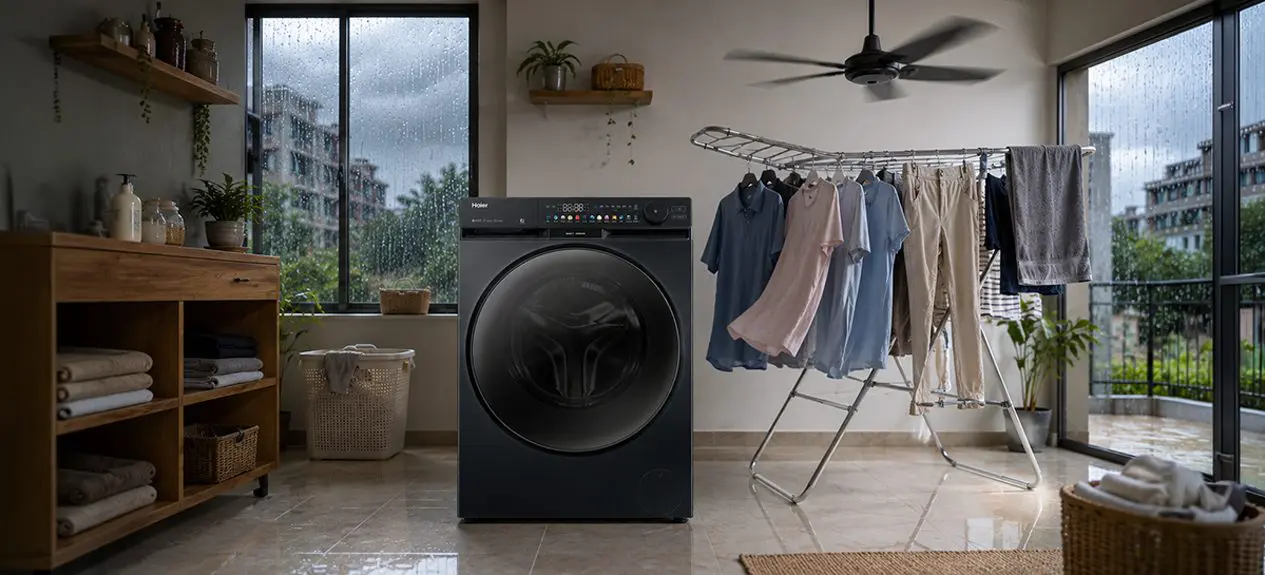

During the monsoon, laundry becomes a genuine household concern. Clothes accumulate, the drying rack is seldom empty, and garments often remain damp at the seams well after being hung out. Sometimes they need a rewash once the smell sets in. Anyone who has wrung a shirt twice and left it beneath a fan, hoping it dries in time, knows this issue well.
Drying clothes faster indoors during monsoon isn’t really about fighting the weather. It’s about managing air, moisture, and timing a bit smarter. A few habit changes, along with a washing machine that pulls its own weight, cut drying time down quite a bit even on the wettest days of the season.
Why Do Clothes Take So Long to Dry in the Rainy Season
Monsoon air already carries a heavy load of moisture, and that is the real problem behind slow drying. With so much water already in the atmosphere, the air simply cannot absorb much more from wet clothes on a rack. Add weak sunlight and poor airflow, and fabric ends up holding water far longer than usual. Thicker fabrics such as denim, towels, and bedsheets suffer the worst, sometimes staying damp for a full day or more. This delay is exactly why musty smells show up so fast, since damp fabric left standing turns into a breeding spot for bacteria.
Quick Cloth Drying Hacks You Can Try Today
A few deliberate adjustments to your washing routine can make a genuine difference. These quick cloth drying hacks require no special equipment, and once they become habit, they demand very little extra effort.
- Run an extra spin cycle before hanging clothes out. Removing more water at the washing stage saves time later.
- Space garments properly on the rack instead of cramming them together, since air needs room to move.
- Point a table fan or ceiling fan straight at the drying area. Moving air pulls out moisture faster than still air.
- Roll heavier items like towels or jeans inside a dry cotton cloth and squeeze the extra water out.
- Dry clothes near a window that gets cross-ventilation, even without direct sun.
- Avoid overloading one single drying rod at a time. Fewer clothes per rod means the whole batch dries faster.
- Iron clothes while slightly damp, on medium heat. It finishes the drying job and leaves fabric crisp.
None of this needs new equipment or spending money. Put together, these small steps genuinely shave hours off your usual drying time.
Indoor Clothes Drying Tips for Small Spaces
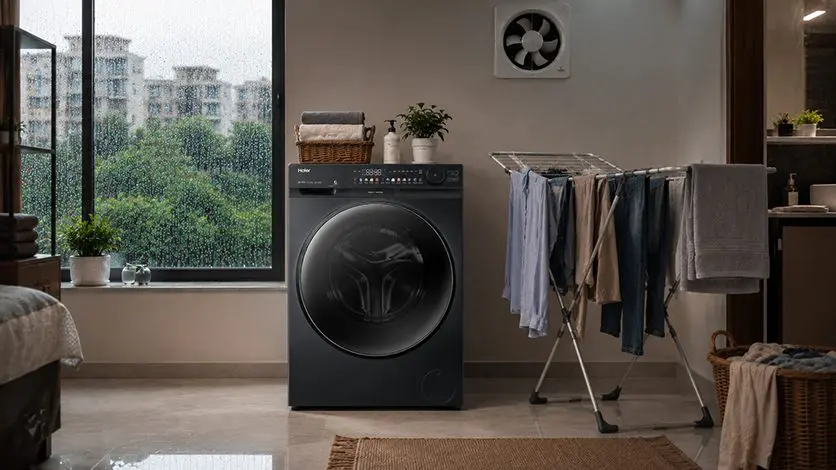
Apartment living during monsoon presents its own difficulty, primarily the absence of a balcony with genuine airflow. A few indoor clothes drying tips can help you manage that space constraint effectively.
- Position clothes near the kitchen or bathroom exhaust fan and switch it on for an hour immediately after washing. This single measure draws out a surprising amount of moisture from a closed room.
- Hang clothes near the kitchen or bathroom exhaust fan and switch it on for an hour right after washing. That one trick pulls out a surprising amount of moisture from a closed room.
- Shift your laundry schedule to mornings instead of evenings, where your routine allows it. Daytime humidity stays high too, but you get more hours of ambient warmth working in your favour before night falls. A portable dehumidifier, if you own one, does wonders in a shut room, and pays for itself across the whole season, not just on laundry days.
- Keep drying racks a little away from walls and furniture. Clothes touching a damp wall stay wet for much longer, and the wall itself can start developing mould patches if airflow stays blocked too long.
How to Prevent Damp Smell in Clothes During Monsoon
Wash clothes as soon as they pile up instead of letting a damp load sit overnight. A splash of white vinegar in the rinse cycle neutralises odour-causing bacteria without leaving behind a smell of its own. Pick quicker drying fabrics where you can, since synthetic blends and lighter cottons shed water faster than heavy natural fibres. Once clothes are fully dry, store them only then. Even slightly damp fabric shoved into a cupboard can develop that smell within a day.
How Haier Helps You Win the Monsoon Laundry Battle
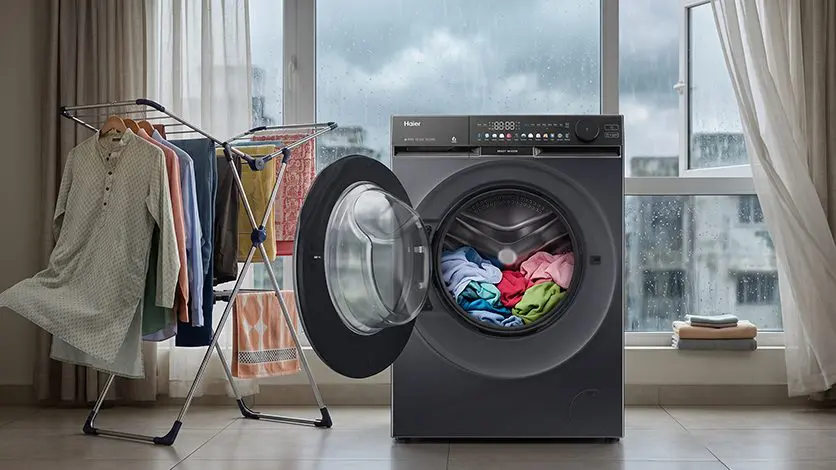
At Haier, we build our washing machines keeping real Indian weather in mind, and monsoon happens to be one season we design for quite specifically. A washing machine’s job doesn’t stop at cleaning. It plays a direct part in how fast, and how fresh, your clothes come out the other side.
- Essence Wash pre-mixes detergent into a concentrated spray and sends it straight onto fabric, instead of waiting for it to dissolve in a tub of water. A full load washes in around 39 minutes for loads up to 2.5 kg, so clothes reach the drying stage sooner.
- Ultra Fresh Air solves a specific monsoon complaint, the one where you forget a load inside and come back to a sour smell. It circulates air inside the drum and runs a light spin roughly every 54 minutes after the cycle ends, keeping the drum dry even on busy days.
- Steam paired with Anti-Bacteria Treatment works toward genuine hygiene, not just surface freshness. Select machines diffuse steam into the drum along with detergent, relaxing the fibres and working into stubborn stains, while heat pushes back against bacteria and dust mites that thrive in humid conditions.
- Spin technology does the heaviest lifting on actual drying time. Our Direct Motion Motor connects directly to the drum, no belt or pulley involved, delivering spin speeds up to 1400 RPM on front load models. Paired with the 525mm Super Drum, clothes spread out evenly during the spin, pulling water out more thoroughly before anything leaves the machine. Top load models lean on similar thinking through the Tub Dry function, and semi-automatic machines carry their own spin tub running up to 1300 RPM.
We offer three ranges built for different kinds of homes. The front load range brings our most advanced fabric care and hygiene technology into a single machine. The top load range suits households after fast, no-fuss operation with strong spin performance and the Oceanus Wave Drum. The semi-automatic range remains a practical pick for homes wanting a dedicated high RPM tub, useful on days when air drying alone won’t cut it. Whichever range ends up suiting your home, our goal stays the same throughout. Help clothes leave the wash carrying as little water as possible, so the monsoon air outside has that much less work left to do.
Conclusion
Getting through monsoon laundry need not mean damp clothes and lingering odours week after week. A combination of thoughtful drying habits and a washing machine that reduces moisture at the very source makes the season considerably more manageable for any household. Small, consistent measures, from adjusting spin cycles to improving indoor ventilation, accumulate into noticeably drier and fresher clothes over time, even when the rain shows no sign of relenting.
Choosing the right equipment for your home, paired with a few disciplined habits, ensures that monsoon laundry stops being a recurring source of frustration and instead becomes a routine you can manage with confidence, season after season.
Frequently Asked Questions
How do Haier washing machines help make drying easier during heavy monsoon weather?
Haier machines rely on high-RPM spin technology and the 525mm Super Drum to extract maximum water during the wash cycle. This leaves less moisture behind, so clothes need less time on the rack, even in continuous humidity.
What role do Haier clothes dryers and washer-dryer combos play?
Our washer-dryer combo, the F11 series, for instance, washes and dries clothes in a single unit. That removes dependence on outdoor weather, which turns out especially handy when sunlight and drying space both stay unreliable for days.
How do Haier fabric care technologies protect clothes during intensive spin and dry cycles?
Technologies like the Direct Motion Motor and 525mm Super Drum cut down friction and tangling during high-speed spins. This protects fabric fibres from unnecessary stretching or wear, so clothes hold their shape well even through frequent, faster cycles.
How can you prevent musty and foul damp-cloth smells when drying clothes indoors?
Ultra Fresh Air circulates air inside the drum and runs periodic spins after washing finishes, keeping things dry and ventilated. Paired with Anti-Bacteria Treatment, this stops the bacterial growth that usually causes that musty, damp cloth smell indoors.