
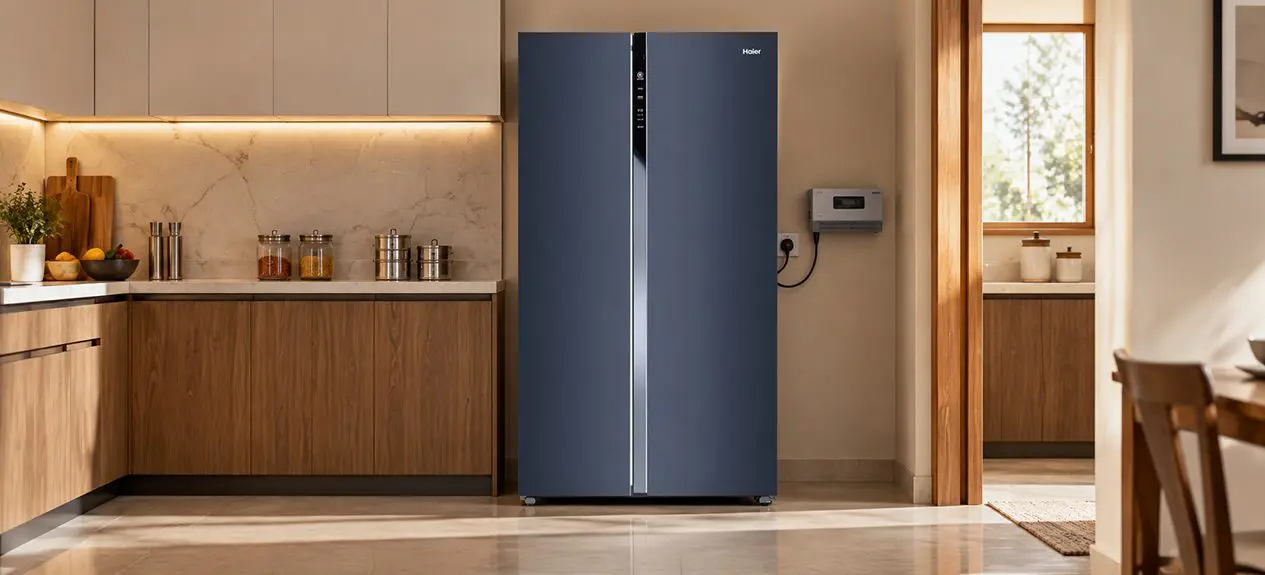

Fresh produce, milk, cooked meals, and frozen food may all depend on refrigerators for safe, organised storage. Since these items remain inside for hours or days, steady cooling becomes part of the household routine rather than something noticed only when the refrigerator stops working.
A refrigerator continues operating while the family sleeps, works, or steps out. If lights dim, fans slow down, or power returns abruptly after an outage, the changing supply may raise concerns about the appliance and its internal components.
Using a stabilizer for fridge operation can provide added protection, but it is not necessary for every model or every home. The decision depends on the refrigerator’s approved voltage range and the actual supply reaching the socket. Let’s take a look at the insights!
Do You Need a Voltage Stabilizer for Your Refrigerator?
Many people don’t know, “What is a fridge stabilizer?” It monitors incoming voltage and may regulate the output or disconnect power beyond its working range. Many units also delay reconnection after an interruption.
Also, there’s no universal answer to “Is stabilizer required for fridge?” Begin with the product manual. An external stabilizer may be necessary when the local supply regularly moves outside the stated operating range or the manufacturer recommends additional protection. If the voltage remains within that range, the refrigerator may not require one.
Understanding why these operating limits matter begins with what unstable voltage can do to the compressor and electrical components.
Why Do Voltage Fluctuations Damage Fridges?
A compressor needs suitable voltage to start and run. A severe drop may cause repeated starting attempts, while a surge can stress control boards and other electrical parts. Frequent interruptions may also prompt an early restart.
Risk grows when voltage repeatedly crosses the model’s permitted limits. Have the socket tested if lights often flicker or the refrigerator repeatedly cuts out.
Read More: How Voltage Influences Refrigerator Operation
However, an unstable local supply does not mean every refrigerator automatically needs an external stabilizer. Some models are engineered to operate across a broader voltage range, while inverter technology manages compressor operation according to cooling demand.
Understanding the difference between these functions helps you judge the protection already built into the appliance.
Stabilizer-Free and Inverter Refrigerators
The label stabilizer free refrigerator means the appliance can operate across a specified voltage range without an external unit. It does not cover every surge, drop, wiring fault, or lightning event.
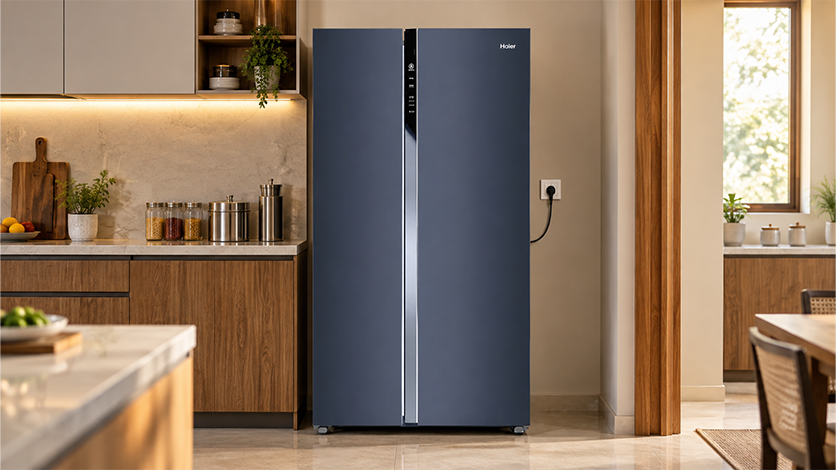
If you are looking for one such model, you can go for the Haier 596L Graphite Black 2-Door Convertible Side-by-Side Refrigerator. It combines stabilizer-free operation with Expert Inverter Technology. The refrigerator also comes with Deo Fresh Technology that absorbs odours and impurities inside while supporting food storage rather than electrical protection.
What ‘Stabilizer-Free Operation’ Really Means?
Consumers often ask, “Which fridge does not need a stabilizer?” A model may not require one when its documented range covers the supply at home. Check the specifications instead of relying on “inverter” or “stabilizer-free” alone. If the supply crosses those limits, seek authorised advice.
Read More: Stabilizer-Free Operation and Protection from Voltage Fluctuations
If the manual or local power conditions indicate that external protection is needed, the next step is to match the stabilizer to the refrigerator.
How to Choose the Right Fridge Stabilizer?
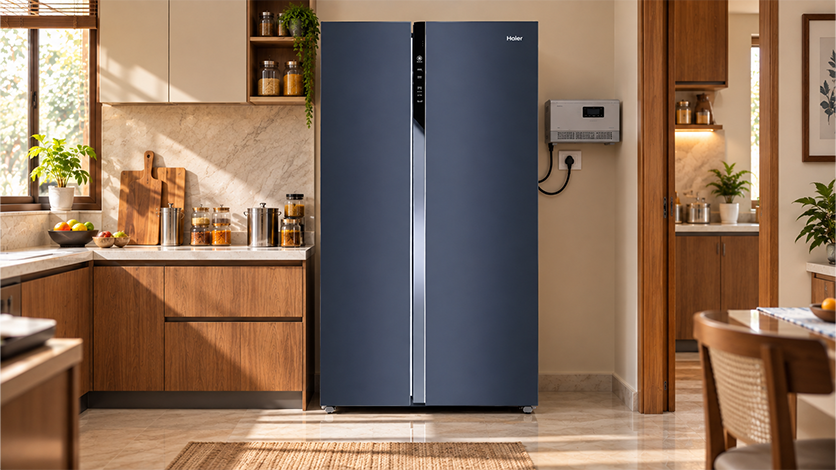
For those asking, “How to choose a fridge stabilizer?” begin with the appliance, not the price. Match these details with a refrigerator stabilizer:
Voltage Range and Capacity (VA) Rating
The stabilizer’s input range should cover the lowest and highest socket voltage. Its output must suit the refrigerator. For the VA rating, follow the appliance manual and compatibility chart, allowing for compressor starting demand. An undersized unit may trip.
The best stabilizer for refrigerator use has the correct rating, high- and low-voltage cut-off, restart delay, and a clear warranty. However, the refrigerator stabilizer price varies with range, VA capacity, controls, and mounting design.
Mounting and Placement
Are you also thinking, “Can I put my stabilizer on top of my fridge?” Avoid it unless both manuals permit it. The top may be warm, vibrate, or require ventilation clearance. Use a dry, ventilated surface or approved wall mount, away from heat and moisture. Connect through a properly earthed socket.
Once the rating and placement have been considered, one question often remains: whether newer refrigerator technologies remove the need for external protection.
Do Inverter and 5-Star Fridges Still Need One?
An inverter compressor adjusts to cooling demand; a 5-star rating concerns energy performance. Neither term specifies voltage protection. An inverter fridge stabilizer may still help where the supply crosses the approved range.
The answer to “Does a refrigerator need a stabilizer?” is model- and location-specific. Compare the manual with measured voltage and seek advice if they do not align.
Use This Stabilizer Buying Checklist Before You Decide
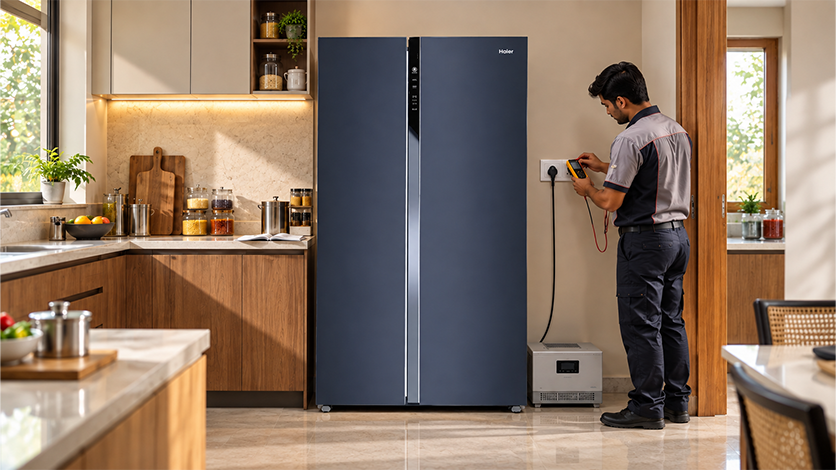
The decision should not come down to a general assumption that every refrigerator needs a stabilizer. Before purchasing one, compare the appliance requirements with the power conditions in your home. Confirm:
- The refrigerator model and its approved voltage range
- The lowest and highest voltage recorded at the socket
- A refrigerator-compatible VA rating with starting allowance
- High- and low-voltage cut-off and restart delay
- Earthing, plug type, cable length, and installation position
- Product warranty and authorised service availability
- Whether Haier recommends an external unit for that model
If the refrigerator already supports stabilizer-free operation across the voltage range available at home, an additional unit may not be necessary. Where the supply frequently crosses those limits, a correctly rated stabilizer for fridge can provide another layer of protection.
Check the manual, keep ventilation clear, and use a qualified electrician where wiring needs attention. For advice based on your specific model, contact Haier Service & Support.
FAQs
Does a refrigerator need a voltage stabilizer?
It may need one if the manual requires it or local voltage crosses the approved range.
Which fridge does not need a stabilizer?
A stabilizer-free model may work without one while the input remains within its specified range.
What does ‘stabilizer-free operation’ mean?
It means the fridge can operate across a stated voltage range without an external unit.
How do I choose a stabilizer for my fridge?
Match the voltage range and VA rating to the manual and measured supply.
Can I place the stabilizer on top of the fridge?
Prefer a dry, ventilated surface or approved wall mount unless both manuals allow it.
Do inverter refrigerators need a stabilizer?
They may need one if supply crosses the model’s permitted range.
What is the price of a refrigerator stabilizer?
Prices vary by voltage range, VA rating, protection features, brand, and warranty. Compare specifications before cost.