
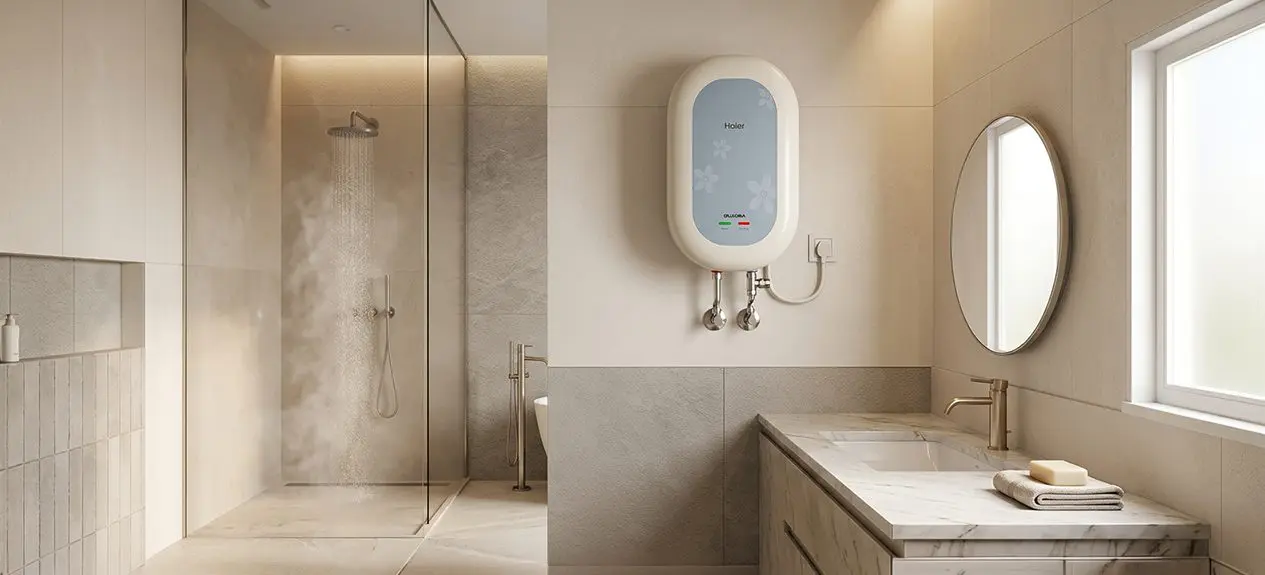

A geyser for bathroom use is a practical way to bring hot water into daily life, though how well it performs depends on the type of heater, its capacity, the installation, and the safety measures in place around it. In most homes, a correctly installed electric water heater delivers reliable hot water without demanding much space.
Planning hot water for a bathroom renovation involves more than picking a geyser off a shelf. Wiring, plumbing, mounting position, ventilation, water pressure and servicing access all need to be worked out before the bathroom itself is finished.
Is Using a Geyser Good or Bad? The Honest Answer
A geyser isn’t really good or bad on its own. If a geyser is sized correctly and installed properly, it can help to give you a safe, convenient hot water supply. However, a poor installation, unsuitable wiring, weak ventilation or skipped maintenance can turn that same appliance into an avoidable risk.
Electric storage geysers are common because they hold heated water ready for use. You should choose the right capacity and make sure installation follows the safety standards.
Are Geysers Safe? Common Safety Concerns
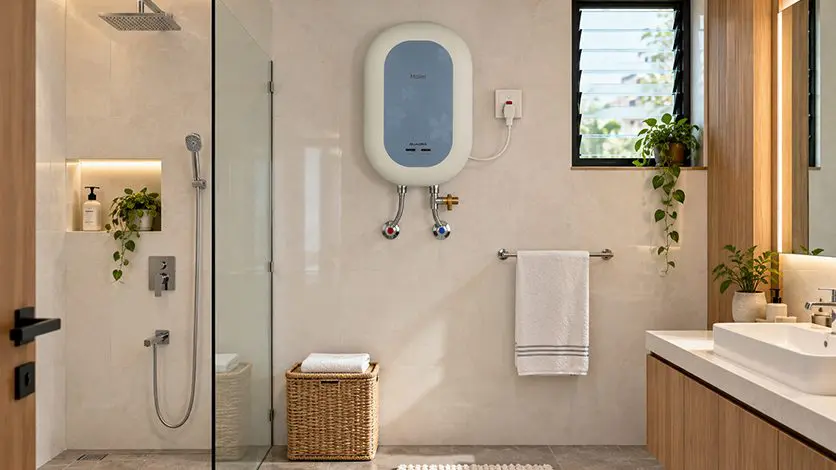
Whether is a geyser safe comes down largely to the appliance, its installation, and how well it’s maintained afterward. Most modern water heaters build in several safety mechanisms, but those only function properly when installation and upkeep are done right.
Electric Shock and Current Leakage
Electric water heaters bring electricity and water into close contact, so protecting against leakage current isn’t optional. Proper earthing, suitable wiring, a correctly rated circuit breaker and careful installation all reduce that risk considerably.
BIS standards for stationary storage-type electric water heaters cover electrical, thermal, mechanical and fire hazards specifically.
A bathroom installation shouldn’t run off an ordinary extension board or an unsuitable socket. Electrical work here belongs to a qualified electrician, not a DIY job.
Gas Geyser Safety (LPG, Ventilation, CO Risk)
Gas geysers need extra caution, since combustion produces exhaust gases that include carbon monoxide. They have no place in poorly ventilated or enclosed bathrooms, where those gases can build up with nowhere to go.
Proper ventilation and correctly arranged flues aren’t optional either. LPG and PNG water heaters fall under applicable Indian Standards, including specific requirements for domestic gas water heaters.
Overheating, Pressure and “Blast” Myths
A well-designed storage geyser controls both temperature and pressure as a matter of course. Problems tend to surface only when a safety component fails, pressure exceeds what the unit is rated for, or maintenance gets neglected over time.
Modern electric water heaters rely on thermostats and thermal cut-outs to keep heating in check. BIS guidance specifically calls out thermal cut-outs as a key protection against overheating.
Is Geyser Hot Water Safe for Health and Skin?
For everyday household use, hot water from a well-maintained geyser is generally fine for bathing. The real concern is water that’s too hot, which can dry out or irritate skin, and even cause burns, particularly for children or anyone with sensitive skin.
Water temperature is worth keeping at a comfortable level rather than pushing it higher than necessary. Regular cleaning and upkeep also help keep the system running hygienically.
Is geyser water good for health? The honest answer comes down to temperature and water quality, not the act of heating itself. A geyser heats the water it’s given; it doesn’t make otherwise clean water unsafe.
Advantages and Disadvantages of Using a Geyser
The real geyser pros and cons depend heavily on which type you choose and how it gets used day to day.
Electric storage geysers offer a steady, convenient hot water supply for showers, bathing and other household needs, and they come in enough capacities to suit anything from a single bathroom to a larger household. Their downsides are fairly predictable: ongoing electricity use, the physical space a tank takes up, and a short wait while the water heats.
Instantaneous heaters skip the storage tank altogether, though they bring their own electrical and flow-rate requirements to work around.
Gas geysers heat water quickly and can work well wherever gas supply and ventilation are already sorted. That speed comes with a trade-off though: installation demands far more attention to combustion, exhaust and airflow than an electric unit ever would.
Planning Hot Water for a Bathroom Renovation
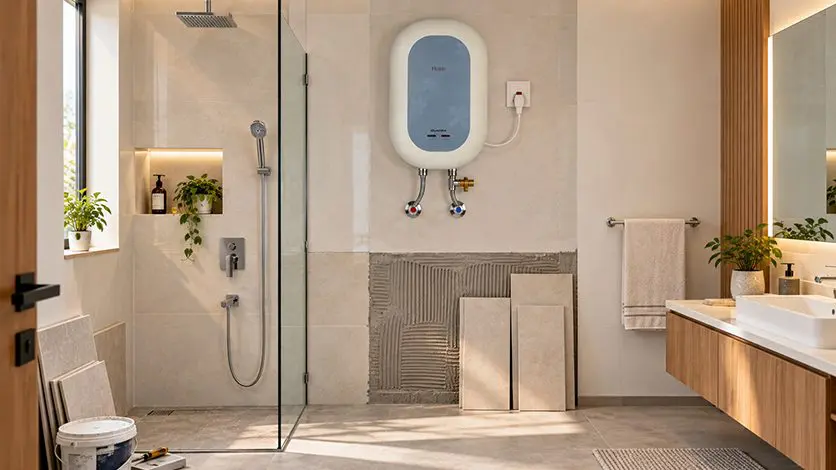
A renovation is exactly the right moment to plan the entire hot water system, rather than bolting a geyser on after the bathroom is already finished.
Where to Place the Geyser in a Bathroom
The geyser needs a wall that can actually support it, with enough clearance around it for installation, day-to-day use and future servicing. It shouldn’t crowd shower doors, windows, electrical fittings or other fixtures in the bathroom.
Gas models add another layer to this: the location has to allow for safe combustion-air supply and proper exhaust routing. Electric storage geysers tend to fit more easily into most bathroom layouts, largely because they skip the ventilation requirements gas units carry.
Choosing the Right Geyser Type for Your Bathroom
Electric storage geysers suit households that want a ready reserve of hot water on hand. Instantaneous electric models make more sense where space is tight and hot water needs to arrive on demand. Gas models require a closer look at both ventilation and fuel supply before they’re a realistic option.
For a typical family bathroom, capacity should track the number of users, their bathing habits, available space and actual water demand, not simply whichever model happens to be the largest on offer.
Best Geyser for a Small Bathroom
The best geyser for a small bathroom is one that fits the available wall space while still meeting the hot water needs of whoever uses it. A compact storage model works well where a reasonable amount of hot water is needed for bathing, while an instantaneous unit suits spaces where room is genuinely scarce.
Our Haier 15L Square Spa Ivory 5 Star Water Heater is a solid fit for a compact bathroom setup. Wall-mounted and built at 2kW, it comes with a 15L tank, shock-proof and overheat protection, IPX4 water resistance, and an 8-bar working pressure rating, along with a 4-year product warranty and 7 years of coverage on the tank.
Electrical, Plumbing and Ventilation Points to Plan
The wiring feeding a geyser needs the right rating for the unit, along with earthing and circuit protection done properly. On the plumbing side, that means correct inlet and outlet connections, isolation valves where needed, and pressure safety components built into the setup.
The wall itself has to bear the filled weight of the storage heater, not just the empty unit. Gas geysers need particular attention paid to ventilation and exhaust routing, following the relevant installation requirements closely.
Safety Features to Look For (ISI Mark, Thermal Cut-off, etc.)
When choosing a water heater, recognised Indian Standard compliance and proper certification are worth confirming upfront. BIS covers this ground through separate standards for stationary storage electric water heaters, instantaneous electric water heaters, and domestic LPG water heaters.
A few features matter more than the rest: thermal cut-off or dual thermal protection, over-pressure protection, electrical insulation, suitable water resistance, and protection against current leakage. Earthing and circuit protection sit right alongside these as non-negotiables.
Our Haier 15L Square Spa Ivory model uses Dual Thermal Proof for exactly this reason, pairing a first-stage temperature cut-off with a second-stage thermostat, on top of shock-proof and over-pressure protection.
Geyser Safety and Renovation Checklist
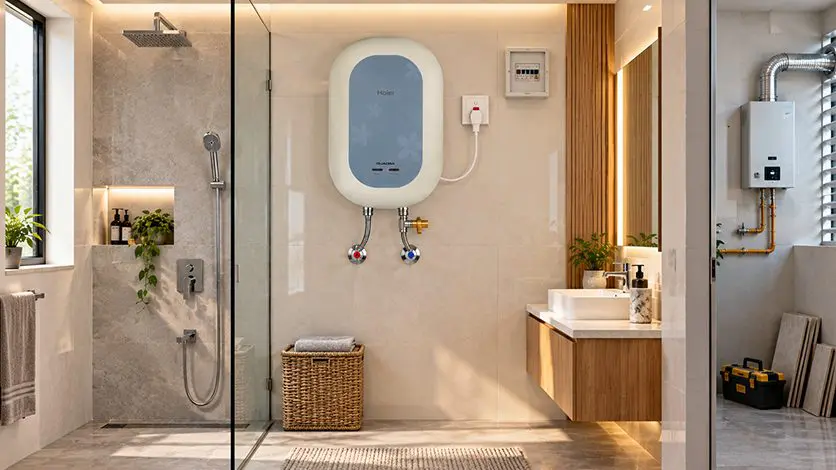
A safe geyser installation starts with choosing the right type and capacity, followed by proper electrical and plumbing work. The mounting position should leave enough room for servicing, and gas appliances need particular care around ventilation and exhaust.
Before wrapping up the renovation, confirm the mounting surface, wiring, earthing, circuit protection, plumbing connections, water pressure and access to safety controls. These details matter more than opting for a larger or more powerful appliance, and together they form the basis of practical geyser safety tips for any renovated bathroom.
FAQs
Is using a geyser good or bad?
A geyser that’s properly selected, installed and maintained is a practical way to get hot water. Most risks trace back to poor installation, unsuitable wiring, excessive temperatures or neglected maintenance rather than the appliance itself.
Is a geyser safe to use in a bathroom?
Electric geysers can be installed safely in a bathroom as long as earthing, circuit protection, wiring and mounting all meet requirements. Gas geysers need additional care around ventilation and exhaust.
Is geyser hot water safe for health and skin?
Geyser-heated water is generally fine for bathing once the temperature is kept in check. Water that’s too hot can cause burns, dryness or skin irritation, especially with repeated exposure.
Are gas geysers safe?
Gas geysers work safely when installed correctly with adequate ventilation and proper exhaust arrangements. Poor ventilation risks letting combustion gases, including carbon monoxide, build up indoors.
Which type of geyser is safest?
Electric geysers avoid the combustion and exhaust concerns that come with gas models, making them a common choice for many bathrooms. Their safety still hinges on correct earthing, wiring and circuit protection.
What is the best geyser for a small bathroom?
A compact electric storage or instantaneous model tends to suit a small bathroom, depending on hot-water demand and available space. Capacity should match the number of users rather than being chosen by size alone.
Where should a geyser be placed in a bathroom?
It needs a structurally sound wall with enough clearance for regular use and servicing. Keeping it away from spots where wiring could be exposed to water is equally important.
What safety features should I look for in a geyser?
Thermal cut-off, over-pressure protection, electrical safety measures, appropriate water resistance and compliance with Indian Standards are all worth checking. Proper earthing and circuit protection round out the essentials.
What are the disadvantages of a gas geyser?
Gas geysers need a steady fuel supply, proper combustion ventilation and safe exhaust routing to work well. Poor installation or weak ventilation raises the risk of carbon monoxide exposure.
Which geyser is best for a home bathroom?
The right choice depends on household size, water demand, available bathroom space, fuel access and electrical infrastructure. Electric storage models remain a practical default for most homes.
Is a gas geyser risky?
A gas geyser can pose risks if combustion gases aren’t vented safely or if installation falls short. Correct ventilation, exhaust routing, regular maintenance and professional installation keep that risk in check.