
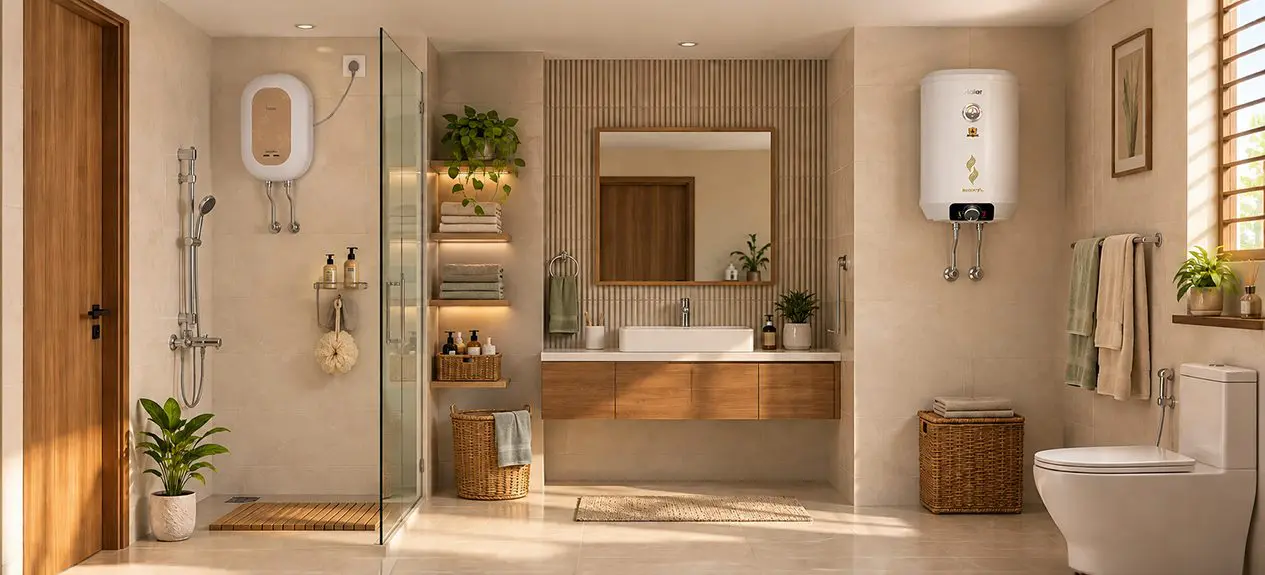

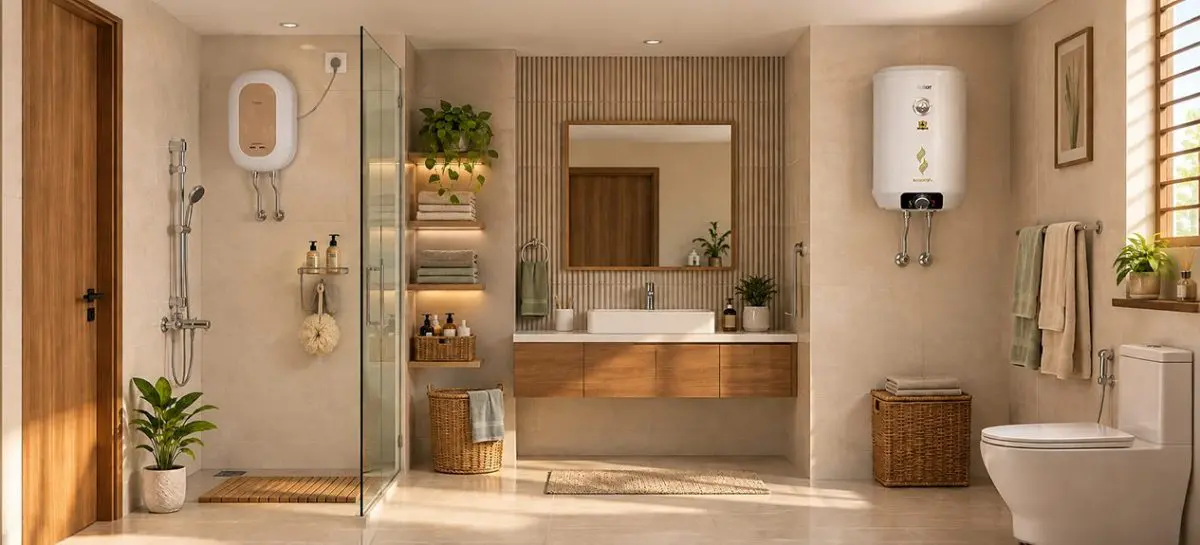
Choosing the right water heater matters more in a large household, where several people need hot water at different times of the day. The choice between an instant vs storage geyser impacts the heating time, water availability, bathroom space, electrical load and everyday convenience.
For a joint family, this decision should be made on usage patterns rather than simply picking the most powerful appliance on offer. Understanding the gap between instant and storage systems makes it easier to settle on the right setup for each bathroom, kitchen or utility area in the house.
Instant vs Storage Geyser: What Is the Difference?
An instant geyser heats water as it passes through the appliance, without holding onto any large reserve. A storage geyser works differently, heating water inside an insulated tank and keeping it ready until it’s needed.
The difference is between heating on demand and heating in advance. Instant models generally take up less room, while storage models handle larger quantities of hot water over a stretch of time far more comfortably.
How Instant (Tankless) Geysers Work
An instant water heater raises the temperature of water as it flows through the unit using a heating element. Since there’s little to no storage tank involved, hot water starts coming through shortly after the heater is switched on.
Pros of Instant Geysers
The compact build makes instant heaters a good fit wherever bathroom or kitchen space runs tight. They don’t need to keep a large volume of water hot at all times, which cuts down on standby heat loss.
They also suit point-of-use needs well, kitchen sinks being the obvious example, where only a modest amount of hot water is needed at any given moment.
Disadvantages of Instant Geysers
Instant models come with limits on flow rate and how much water they can heat at a given temperature rise. Pushing for higher-capacity instantaneous heating also tends to demand a fair amount of electrical power.
In a large household, a single small instant heater often can’t keep pace with consecutive showers or several users drawing hot water back to back.
How Storage Geysers Work
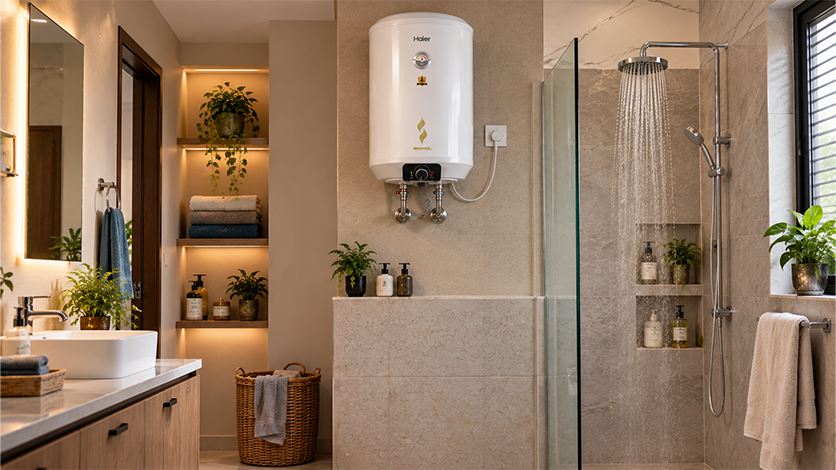
A storage water heater holds an insulated tank that heats and stores a set quantity of water. Once heated, that stored water is ready to be drawn through the bathroom fittings whenever needed.
The tank essentially acts as a reserve, which proves especially useful when several people need hot water within a short window of each other.
Pros of Storage Geysers
Storage heaters come in larger capacities, which makes them well suited to family bathrooms with higher hot-water demand. A tank sized correctly can supply multiple users without forcing the heating element to run continuously through every single shower.
Good insulation also helps the water stay warm between uses. Most modern storage models include thermostatic control along with several built-in safety mechanisms.
Our Haier 25L Square 5-Star Water Heater, for instance, offers 25L of storage along with shock-proof, overheat and over-pressure protection, IPX4 water resistance, an 8-bar rated working pressure, and a dual thermostat. It runs at 2kW too, which suits households wanting a bigger stored supply without jumping to a heavier electrical load.
Disadvantages of Storage Geysers
Storage models need more wall space simply because of the tank. There’s also a waiting period once the stored hot water runs out and the tank needs to heat a fresh batch.
You should not buy a tank capacity higher than what’s needed, as it takes up more space. That’s why the capacity is worth matching to what your home actually needs rather than buying bigger for the sake of it.
Instant vs Storage: Side-by-Side Comparison
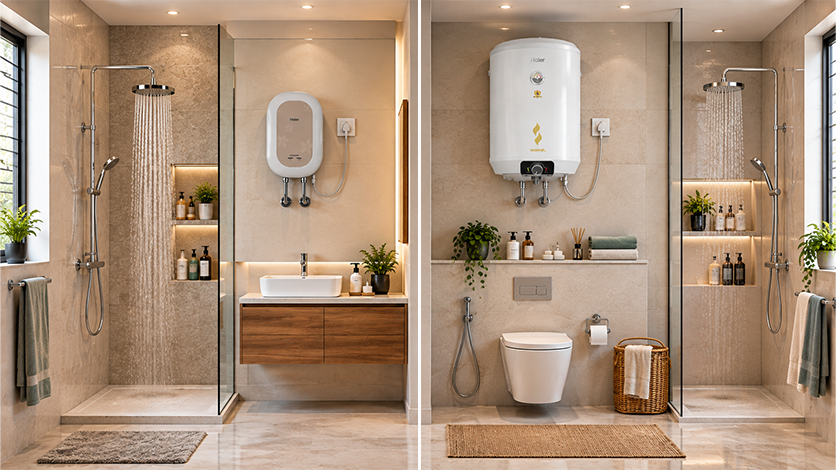
You should make your choice between the instant vs storage geyser based on your daily usage and the total members in your family.
Hot Water Output and Waiting Time
Instant heaters can give you water on demand. However, their output depends heavily on heating power and water flow. Storage water heaters, on the other hand, store heated water in a tank, which you can use at any time.
For a joint family, that stored reserve comes in handy when several members need to bathe one after another without much of a gap.
Electricity Use and Running Cost
Neither type comes out cheaper automatically in every household. An instant heater avoids some standby losses since it isn’t storing a large volume of hot water around the clock. A storage model, on the other hand, runs its heating element for a set stretch and then simply maintains the water at the chosen temperature afterward.
Actual geyser electricity consumption depends on water volume, incoming water temperature, the temperature setting chosen, how often it’s used, insulation quality and overall heating efficiency.
Space, Installation and Price
Instant heaters tend to be compact and easier to fit into smaller spaces. Storage models need stronger wall support and more clearance, since a filled tank carries considerably more weight.
Installation also has to account for wiring, earthing, circuit protection, plumbing connections, water pressure and future service access. Initial cost swings depending on capacity, heating technology, safety features and the controls included.
Which Is Best for a Joint Family Home?
For a joint family, the right pick really comes down to how many people share each bathroom and how closely their bathing schedules overlap.
Why Storage Usually Wins for Large / Joint Families
A storage geyser generally suits high-volume household use better, since it keeps a ready reserve of hot water waiting for the next person in line. Larger capacities also absorb heavier demand from busy family bathrooms with less trouble.
This is exactly why a storage geyser for joint family use tends to work so well when several people need hot water during the morning or evening rush.
Capacity still needs to be right, though. Too small a tank runs out fast, while an oversized one eats up more space and energy just keeping water warm that nobody’s using yet.
Where Instant Geysers Still Help (Kitchens, En-suites)
Instant heaters continue to earn their place in spots with limited or occasional demand. A kitchen, guest bathroom, utility area or individual en-suite rarely needs a large stored supply to begin with.
Their compact footprint also makes them the easier fit where wall space runs short. That said, it’s worth checking the electrical load carefully before installation, particularly with higher-power models.
Combining Both Across Multiple Bathrooms
A joint-family home doesn’t have to run the same heater type in every corner. A larger storage unit can cover the main family bathroom, while instant heaters handle lower-demand spots like kitchens or smaller bathrooms.
Splitting hot-water demand this way spreads the load across the house instead of leaning on one appliance to do everything.
How to Choose: Instant or Storage (Checklist)
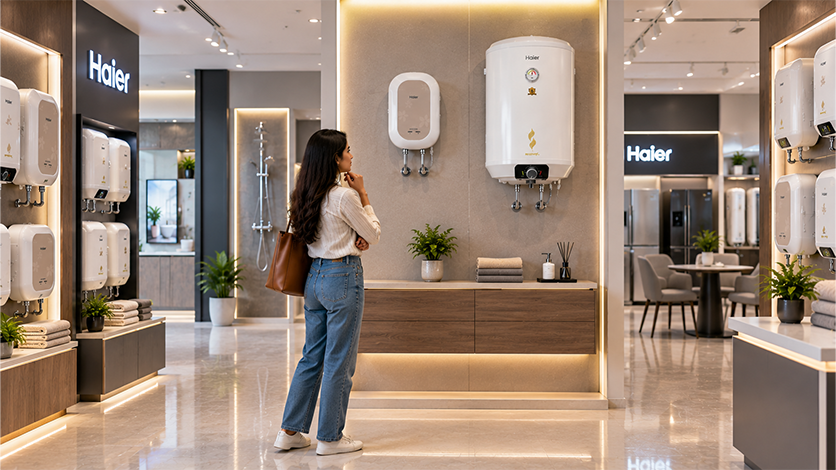
The question of which geyser is best instant or storage ultimately comes down to water demand, household size, available space and the electrical setup already in place. For most large or joint families, a properly sized storage model provides the reserve needed for repeated bathing, while instant models handle smaller, point-of-use jobs well.
A tankless water heater India setup works nicely when compactness and on-demand heating are the priority, but a storage system still holds the edge whenever several people need substantial quantities of hot water. It’s worth assessing each bathroom on its own terms and choosing capacity, power rating and safety features to match actual usage, rather than applying the same solution across the entire home. For most joint households weighing this decision, the best geyser for joint family use ends up being a correctly sized storage unit paired with smaller instant heaters where they make sense.
FAQs
Which geyser is best, instant or storage?
Instant geysers are better for kitchen use and households that need less water. Storage geysers are generally more suitable when larger quantities of hot water are needed.
What is the difference between an instant and a storage water heater?
An instant heater heats water as it flows through the appliance, while a storage heater heats and retains water in an insulated tank.
Which geyser is best for a joint family home?
If you have a joint family, you should choose the storage water heater as it holds a large quantity of hot water which can be used by your family members.
Is an instant geyser good for a large family?
It can be useful for individual bathrooms, kitchens, or other low-demand locations. For several consecutive showers, a suitably sized storage geyser generally provides a more practical hot-water reserve.
Is a tankless water heater worth it in India?
It can be used where space is limited and hot-water demand is relatively low. Its suitability depends on required flow rate, temperature rise, electrical capacity, and the number of users.
Which uses more electricity, an instant or a storage geyser?
There is no universal answer. Consumption depends on water volume, temperature settings, usage frequency, heating efficiency, and standby losses rather than the heater type alone.
Can I use both instant and storage geysers in one home?
Yes. Using storage heating for high-demand bathrooms and instant heating for kitchens or smaller bathrooms can be a practical way to meet different hot-water requirements.
What are the disadvantages of instant geyser?
Common limitations include restricted flow at higher temperature rises, higher electrical requirements for powerful models, and limited suitability for large volumes of simultaneous hot-water demand.
What are the side effects of instant geyser?
An instant geyser does not inherently cause health side effects when properly installed and operated. Excessively hot water, electrical faults, incorrect installation, or inadequate safety measures can create risks.
Which instant water heater is best for a home?
The right model depends on the intended location, water flow, temperature requirement, electrical load, and capacity. Safety features, appropriate pressure ratings, and professional installation should also be considered.