
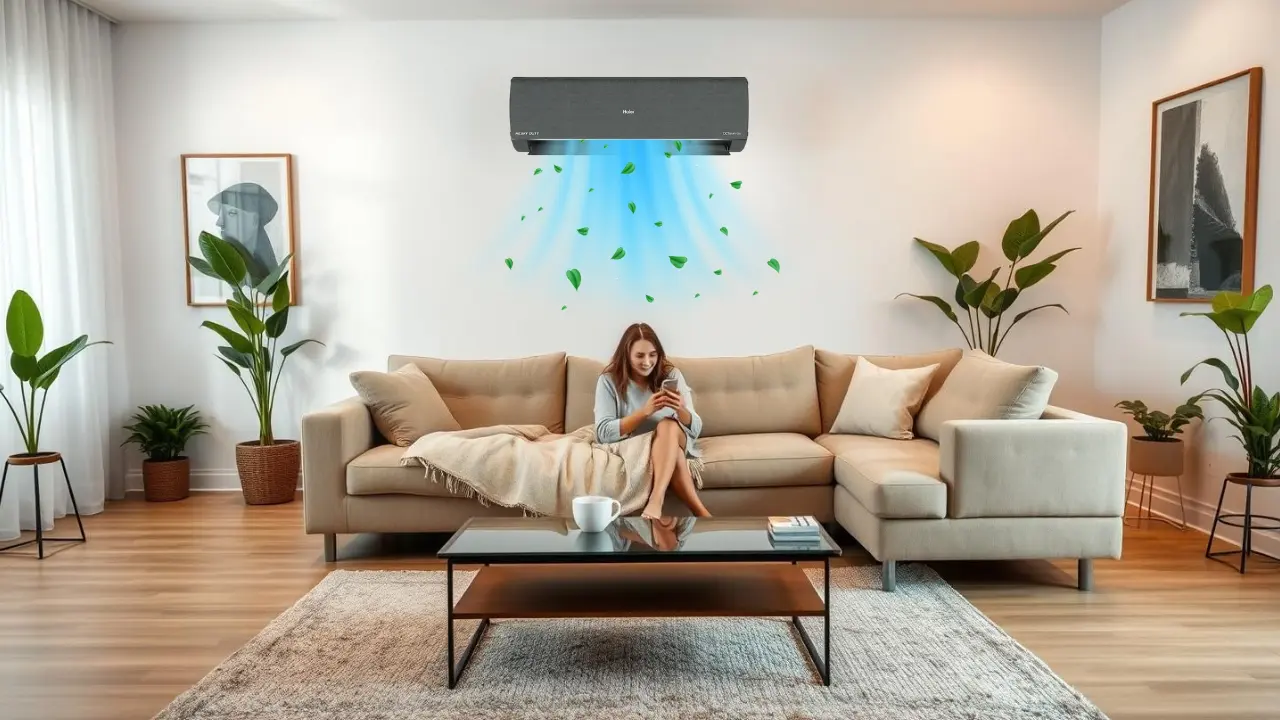

Have you ever opened your eyes to find your pillow soaked, blankets damp, and still feel like you’ve spent the night in a cloud? If yes then let me tell you, you are not alone.
Let me introduce you to the unofficial season of what I call Wet Pillow Syndrome. It’s that annoying condition during the Indian monsoon season when there is too much humidity that makes your skin stick to bedsheets . This sticky situation only gets worse because even though the air conditioner is on, it does nothing to alleviate that suffocating feeling of mugginess.
The sensation can certainly be irritating for those who enjoy a good night’s sleep but I wonder if it could simply be fixed with just one AC setting?
First, What’s Really Causing the Wet Pillow Phenomenon?

It’s not just heat. Humidity is the hidden villain in most monsoon sleep troubles.
Humidity is what makes 28°C feel like 35°C. It’s what turns a normal night into a clammy, restless battle with your blanket. Your pillow soaks in moisture from the air and your body, trapping it like a sponge. And if your AC isn’t doing more than cooling, it’s missing the point.
This is why a normal “cool” setting often doesn’t cut it during the monsoon. You need something smarter. More adaptive.
That’s where Humidity Control Mode (sometimes called Dry Mode) comes in.
The Real Game-Changer: Humidity Control Mode

What is Humidity Control Mode?
Imagine an air conditioner that doesn’t just cool the room, but actively regulates moisture levels to keep the air crisp, not clammy.
That’s exactly what Humidity Control Mode does. Instead of merely blowing cold air, this setting draws out excess humidity from the room, balancing the temperature and making the environment breathable and dry, not desert-dry but comfortable-dry.
It’s like a dehumidifier built into your AC. And in places like Mumbai, Chennai, or Kolkata, it can be life-changing during monsoon.
Why Cooling Alone Isn’t Enough
Most people assume that running the AC at 22°C will fix all their climate woes. But here’s the reality:
- Cool air doesn’t always mean dry air
- Humidity builds up invisibly until your skin starts to feel it.
- And sleep quality drops significantly when relative humidity crosses 60%.
Dry Mode targets this sweet spot. It pulls moisture out of the air, brings relative humidity to a comfortable level (around 50–55%), and keeps your room cool and breathable.
It’s especially effective:
- During rainy days when temperature is moderate but humidity is high
- In bedrooms prone to condensation and poor ventilation
- In cities with coastal or tropical climates
Science-Backed Benefits of Using This Setting
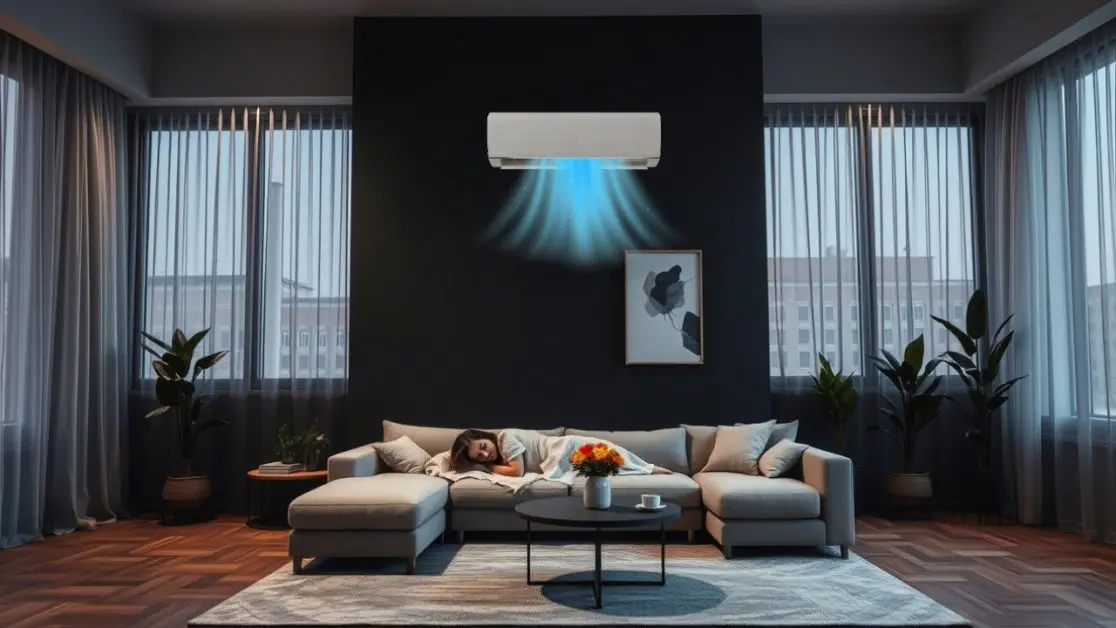
Here’s why every sleep-deprived Indian should give Dry Mode a chance:
1. Better Sleep Quality
Dry air helps regulate your body’s natural cooling mechanisms. It prevents night sweats, keeps your bedding fresh, and ensures deeper REM sleep cycles.
2. Prevents Mold and Dust Mites
Humidity fuels allergens. By reducing moisture, Dry Mode helps prevent fungus, dust mites, and mold buildup in your home. That musty smell in your closet? It’s humid. Gone.
3. Saves Energy
Most Dry Modes run the compressor intermittently, saving electricity compared to full-blown cooling. That’s less strain on your wallet without sacrificing comfort.
4. Protects Furniture and Electronics
Wooden cabinets warping? Electronics feeling sticky? High humidity is often the culprit. A balanced indoor climate prolongs the life of your interiors.
But Here’s the Catch: Not All ACs Do It Well
Dry Mode isn’t a new concept. But many traditional air conditioners do a half-hearted job. They either run too cold or don’t extract enough moisture.
What you need is a system that doesn’t just have Dry Mode it should intelligently regulate and adapt to actual room conditions.
This is where newer technology comes into play.
Enter Smart Humidity Control: More Than Just a Button

Some of the latest ACs like Gravity Series have taken this feature to the next level. Instead of just toggling between Cool and Dry, they sense humidity in real-time and auto-adjust settings for optimal comfort.
Think of it as climate control, not just air conditioning.
Key Features That Matter:
- iFD Tech + Supersonic Cleaning: Ensures clean air and prevents internal buildup of mold or bacteria due to trapped humidity.
- Hexa Inverter Technology: Efficiently maintains temperature while auto-balancing humidity, reducing both noise and power bills.
- Sensation Mode: Allows users to select between humidity preference, temperature, or air flow making it your comfort, your way.
- Auto Convertible Plus Inverter: Adjusts cooling power depending on room size, crowd, and even humidity levels, ensuring the Dry Mode is never overdone.
The point is: the one AC setting alone may stop wet pillow syndrome, but it works best when it’s backed by intelligent design.
Real-Life Scenario: Monsoon in Kolkata vs Jaipur
Let’s say you live in Kolkata the monsoon hits hard, and your windows fog up faster than your chai cup. A regular AC might cool the room, but you’ll still wake up sticky. Dry Mode here is non-negotiable.
Now shift to Jaipur, where humidity is lower but nights are hot. In that case, Cool Mode may suffice, but if there’s an unexpected shower or monsoon burst, having an auto-sensing humidity feature helps avoid that nasty surprise of waking up soaked.
So location matters. But more importantly, having the flexibility of humidity control matters more.
How to Use Dry Mode the Right Way
To get the most out of this setting:
- Turn it on during high humidity days, not necessarily the hottest ones.
- Keep windows and doors closed for maximum effect.
- Set temperature between 24–26°C (not too low; Dry Mode isn’t about intense cooling).
- Run it for 1–2 hours before bedtime to prep the room.
- Let your AC filter dry out most modern ACs do this automatically post usage to avoid moisture buildup.
Bonus Tip: Combine this with a ceiling fan on low speed to circulate dry air evenly.
Why Most People Miss This Trick
Because we’re conditioned to think ACs = Cooling. We never question what else that magic remote can do.
Most people skip Dry Mode simply because they don’t know what it does. Or worse, assume it’s just a weaker version of Cool Mode.
But once you try it, especially during monsoon, it becomes a non-negotiable part of your bedtime ritual. Like brushing your teeth only this time, it’s for your sleep and sanity.
So, Is It Time to Switch?

If you’re still battling night sweats, puffy pillows, and clammy walls, then yes it’s time. But don’t just look for any AC. Look for one that understands monsoon.
That’s where brands like Haier India are standing out. Their Gravity Series ACs aren’t just equipped with Dry Mode they are designed for Indian seasons, which means the tech is trained to handle the unique challenge of tropical climates and sudden humidity spikes.
Here’s what makes the Gravity Series an ideal pick:
- Supersonic Self-Clean: Evaporator coils clean themselves at -15°C to prevent mold great for high-humidity cities.
- iCLEAN Tech: One-touch button to initiate self-cleaning, maintaining fresh airflow and reducing allergen risks.
- Intelli Convertible 7-in-1: Gives you full control over cooling power, airflow, and yes humidity too.
And best of all? These ACs are energy-efficient, smart-home ready, and built with Indian homes in mind.
Final Thoughts: Don’t Just Cool. Control.
This monsoon, don’t settle for cold and clammy weather. Sleep better, breathe easier, and say goodbye to soggy pillows for good.
Because in the end, cooling without dehumidifying is like bathing without drying off.
It’s time your AC started doing both.
Ready for Monsoon-Proof Comfort?
Explore how India’s Gravity Series ACs can help you beat the wet pillow syndrome without breaking your budget or sleep.
Check out the latest models and features at Haier India and upgrade to comfort that truly adapts to you.