


The smell tells the story.
Every Indian household knows it. The monsoon has just passed. The air is cooler, but your room carries a faint, musty reminder of damp days gone by. You switch on the AC hoping for crisp, fresh air and instead, you’re greeted by a smell that feels like wet clothes forgotten in the cupboard.
That smell isn’t just unpleasant. It’s a signal.
Why does your AC smell damp after rains?

Moisture is both the hero and the villain of the Indian monsoon. While it cools our cities and brings green back to life, it also sneaks into walls, cupboards, and yes your AC.
Every time you open your AC during a humid day, moisture clings to filters and coils. Dust settles on top. Microorganisms thrive in the mix. Once the rains retreat, the dampness lingers inside the unit even as the outside weather improves.
The result? Air that should feel like a mountain breeze ends up carrying the memory of a damp towel.
Hygiene isn’t optional it’s the hidden system of comfort
Think of your AC as more than a cooling machine. It’s part of your home’s ecosystem. When neglected, it doesn’t just fail at cooling it disrupts your sense of comfort, sleep, and even health.
A damp AC can:
- Spread bacteria and allergens into your living space.
- Make your furniture and fabrics absorb unpleasant odours.
- Lower energy efficiency, driving up electricity bills.
Clean air isn’t just about feeling fresh. It’s about invisible systems, sleep quality, family health, even the way your home feels during festive gatherings.
So how do you reset your AC after the rains?

Here are five hygiene tips that go beyond surface cleaning:
1. Start with the filters
Filters are the first line of defence, and after monsoon they’re the first casualty. Remove them, wash them under running water, and let them dry fully before reinserting. This simple ritual removes trapped moisture, dust, and mould spores.
2. Coil care matters
The cooling coils collect condensation during humid months. If ignored, they become breeding grounds for mildew. Use a soft brush or cloth to gently clean visible dust, or schedule a professional service if the buildup is heavy.
3. Don’t ignore the drain line
Clogged drains are silent troublemakers. When water fails to escape, it stagnates inside, creating the classic musty smell. Flushing the drain pipe with a mild cleaning solution can work wonders.
4. Run the fan mode
Before using your AC regularly again, switch it to fan-only mode for 30 minutes. This dries out any hidden moisture inside. It’s like airing your mattress simple, invisible, and effective.
5. Use tech to your advantage
Modern ACs, like the Haier Gravity AI Series 1.6 Ton , are designed with hygiene in mind. Features such as smart self-cleaning and anti-bacterial filters reduce manual effort. These small but smart interventions ensure your AC breathes out freshness, not dampness.
What Indian households can learn from the season
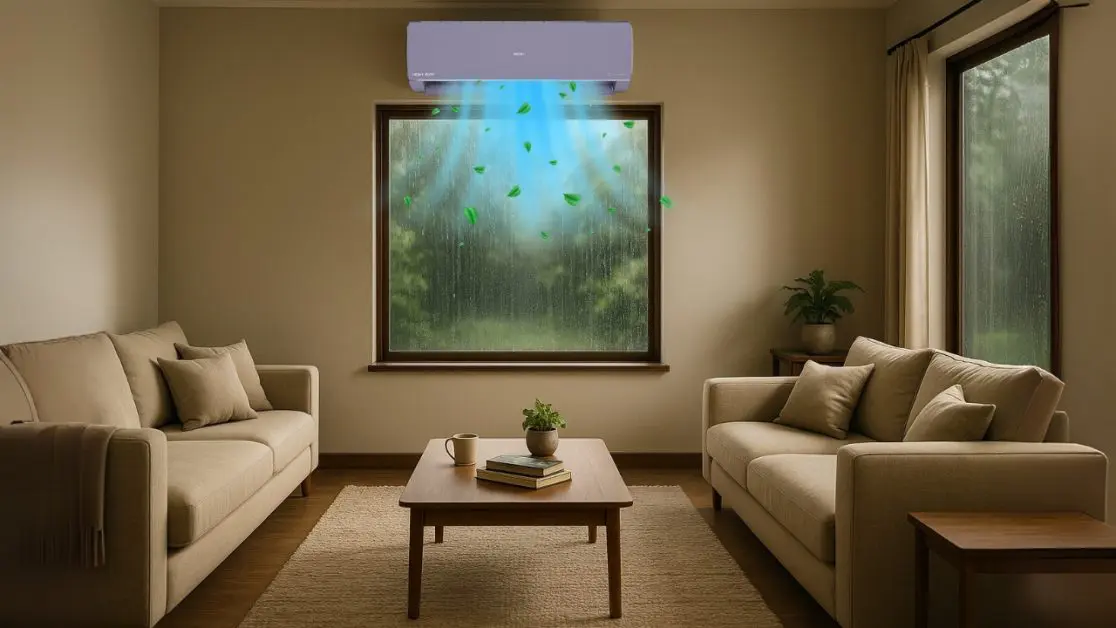
The monsoon tests everything about our homes, our clotheslines, our patience. But it also teaches us systems thinking. Just like you wouldn’t leave damp laundry folded away, you shouldn’t let your AC carry monsoon moisture into the months ahead.
- For parents: It means cleaner air for kids studying late at night.
- For working professionals: It means a fresh, energising home office without lingering odours.
- For couples or solo dwellers: It means your home feels welcoming, not weary.
The invisible hygiene of appliances is what makes everyday life smooth.
AC hygiene is not just maintenance it’s a lifestyle shift
We often think of appliance care as chores. Something to “get done.” But what if you saw it as a design principle for your home?
- Just as we rotate mattresses or air out quilts before Diwali
- Just as we reorganise fridges when seasons change
- We also reset our ACs after the rains.
It’s not about fixing a problem. It’s about building a rhythm.
Why Haier’s Gravity Series fits the post-monsoon mindset
The Haier Gravity Series AC isn’t just about energy savings with its 5-Star rating. It’s about hygiene as a default setting. With AI Smart technology, self-cleaning modes, and efficient airflow systems, it gives Indian households one less worry in already humid months.
- AI Smart features mean you don’t have to guess the right settings your AC adjusts intelligently.
- Self-cleaning coils ensure bacteria and odours don’t build up, even if you forget.
- 5-Star efficiency keeps bills in check when fans alone aren’t enough.
In other words: technology that anticipates the mess, not just reacts to it.
The bigger picture: invisible hygiene defines visible comfort
The truth is, no guest ever compliments you on your clean AC filters. But they do notice the air that feels light and fresh.
Comfort is invisible until it’s missing. That’s why appliance hygiene especially after rains isn’t a side note. It’s the silent architecture of a home that feels alive, not damp.
Actionable rhythm for your home

Here’s a simple framework you can adopt after every monsoon:
1. Clean visible parts – filters, coils, outer body.
2. Air out invisible parts – fan mode, drain line.
3. Leverage technology – use self-clean or antibacterial modes.
4. Mark a calendar reminder – treat it like seasonal wardrobe changes
When care becomes cyclical, freshness becomes permanent.
Final thought: comfort is built, not bought
Your AC is more than a purchase. It’s a partner in the rhythms of Indian life: sticky summers, wild monsoons, festive winters. But comfort doesn’t happen automatically.
It’s built through small, regular acts of care.
So the next time you walk into a fresh, cool room after the rains, remember it wasn’t just the weather that improved. It was you, choosing hygiene as the hidden hero of comfort.