
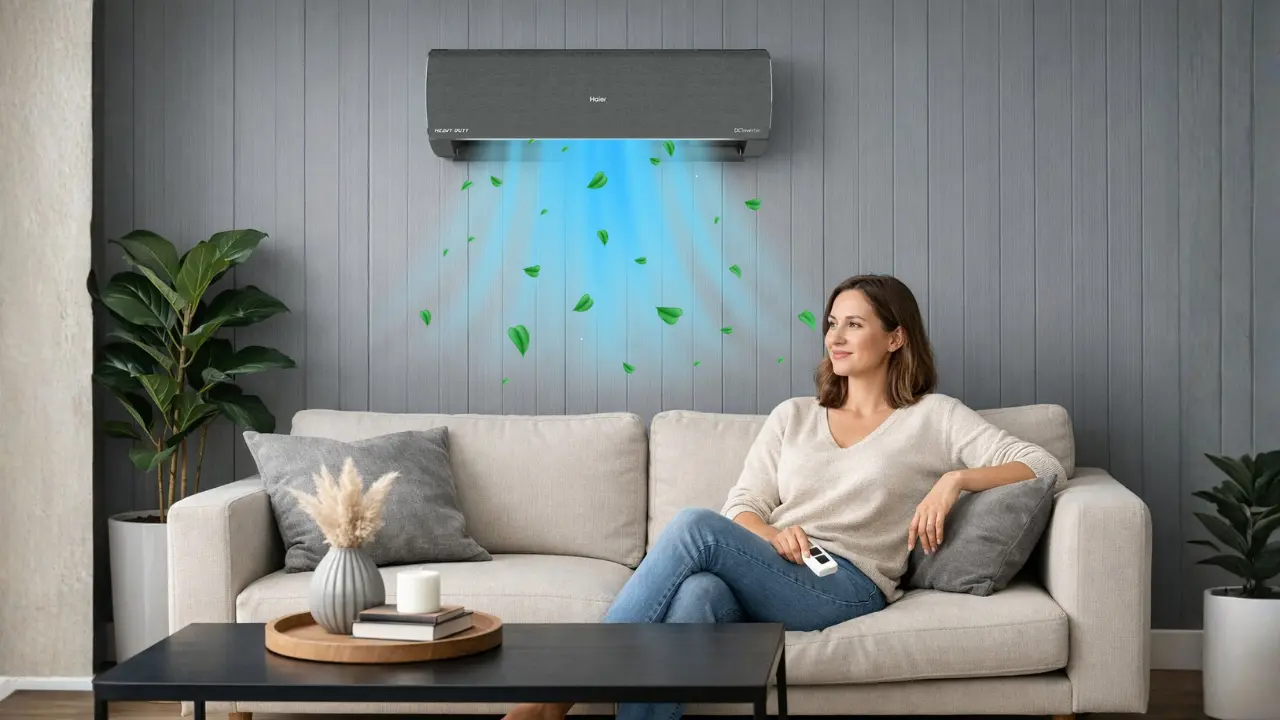

AI Human Detection prevents cooling empty rooms by sensing real human presence, learning daily movement patterns, and automatically reducing or switching off cooling when no one is around.
Instead of relying on timers or guesswork, the system responds to actual activity, cutting energy waste while keeping comfort ready when people return.
That is the promise.
The real story is more human.
The everyday problem we quietly accept.
It usually happens without drama.
You step out to take a work call.
A child leaves the room to watch TV.
Someone forgets to switch off the AC before heading out for groceries.
The room keeps cooling.
Cold air.
Empty space.
Electricity ticking away.
Most Indian homes waste energy this way every single day. Not because people are careless. Because systems expect humans to remember everything.
That assumption is outdated.
Why traditional cooling logic no longer fits real homes
Most air conditioners still work on old ideas.
Option one: Manual control
Someone turns the AC on.
Someone turns it off.
It sounds simple.
It fails constantly.
People forget. Children fall asleep. Guests move between rooms.
Option two: Timers
Set a time.
I hope life follows the schedule.
It never does.
Dinner runs late.
Meetings stretch.
Weekend naps ignore alarms.
Option three: Motion-blind automation
The AC cools the entire room at full capacity, regardless of where people actually are.
Comfort stays on.
Logic stays off.
This is not a technology problem.
It is a design problem.
What AI Human Detection actually changes
AI Human Detection flips the logic.
Instead of asking, “Did you remember to switch me off?”
It asks, “Is anyone actually here?”
This is the quiet shift.
According to Haier’s AI Atmox system, AI Human Detection uses sensors and intelligent models to detect human presence and adjust cooling automatically, without manual intervention .
No reminders.
No timers.
No micromanagement.
Just awareness.
How the system thinks, in simple terms
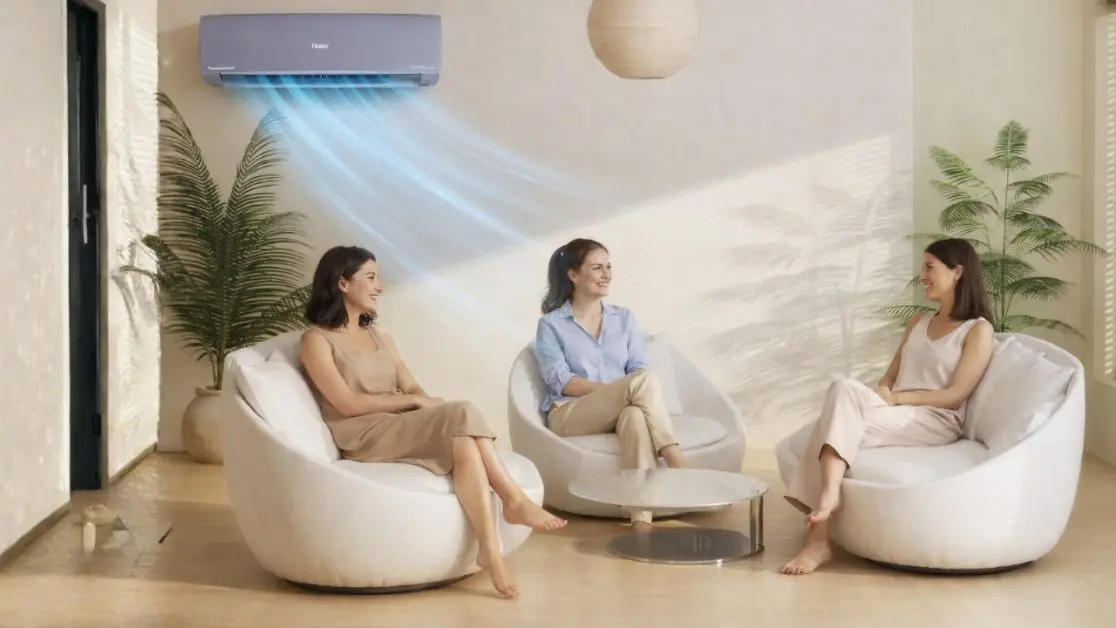
AI Human Detection does not behave like a switch.
It behaves like a host.
First, it notices
Human movement within range.
Patterns of presence.
Duration of activity.
The system understands the difference between someone resting quietly and a room being truly empty.
Then, it waits
If no activity is detected, cooling does not shut off instantly.
That would feel harsh.
Instead, the system gradually shifts into energy-saving modes, allowing for natural pauses like bathroom breaks or quick interruptions.
Finally, it acts
If the room stays empty, cooling reduces further or switches off automatically.
No guilt.
No cold air was wasted.
This layered response is what separates intelligence from automation.
Why this matters in Indian households
Indian homes are not static.
They are fluid.
Parents move between the kitchen and living room.
Children bounce between study and play.
Work-from-home blurs every boundary.
Cooling one empty room while another is occupied is incredibly common.
AI Human Detection responds to this reality.
It’s cool for people.
Not for square footage.
The hidden cost of cooling empty rooms

Energy waste is not abstract.
It shows up in three real ways.
1. Higher electricity bills
Cooling empty rooms adds invisible hours of usage.
Over a month, this adds up fast.
2. Overworked machines
Unnecessary runtime increases wear.
Compressors work harder than needed.
Maintenance arrives sooner.
3. Mental load
People constantly remind each other to switch off appliances.
That stress adds up too.
The smartest systems remove this friction entirely.
What makes AI Human Detection different from basic sensors
Not all detection is equal.
Basic motion sensors react to movement.
AI Human Detection understands context.
Here is the difference
- Motion sensors trigger on any movement, even curtains or pets
- AI Human Detection learns human behavior patterns
- It adapts to real usage over time
- It balances comfort with efficiency automatically
According to Haier’s AI-Atmox Power Manager explanation, the system shifts into deeper energy-saving modes when no activity is detected, without compromising comfort when users return .
This is not reactive.
It is predictive.
A simple example from daily life
Think about a ceiling fan.
You leave the room.
It keeps spinning.
You only notice later.
Now imagine if the fan slowed down.
Then stopped.
Without you thinking about it.
That is what AI Human Detection does for cooling.
Invisible help.
Real savings.
How this supports sustainable living without effort
Most people want to save energy.
Few want to manage dashboards or settings.
AI Human Detection fits perfectly into this gap.
The system-level benefits
- Reduces unnecessary power consumption
- Lowers peak electricity usage
- Encourages efficient behavior without policing users
It makes good habits automatic.
And automatic habits stick.
Why this is not about features
It is tempting to talk about sensors, chips, and algorithms.
That misses the point.
This is about trust.
A system that notices when you leave.
Respect your comfort.
Stops wasting resources on your behalf.
That is the real upgrade.
Technology works best when it disappears.
Where Haier fits into this story
Haier’s approach to AI Human Detection sits inside a broader system called AI Atmox, which combines climate control, energy monitoring, and intelligent adaptation into a single experience.
The important part is not the name.
It is philosophy.
Build appliances that understand real homes.
Not idealized ones.
The bigger pattern at work
Zoom out.
This is not just about air conditioners.
It reflects a larger shift in how technology enters daily life.
From control to awareness.
From commands to context.
From effort to ease.
Systems that notice.
Systems that adapt.
Systems that step back when not needed.
That is the future of living spaces.
What this changes for families, professionals, and new homeowners
For families, it removes constant reminders.
For professionals, it cuts background anxiety.
For new homeowners, it sets better habits from day one.
No behavior change required.
Just better systems.
The insight worth remembering
Cooling should follow people.
Not rooms.
Once you see it that way, everything else feels outdated.
AI Human Detection is not about saving power alone.
It is about designing homes that pay attention.
Quietly.
Reliably.
Every day.
Frequently Asked Questions
Why do I keep forgetting to switch off the AC when I leave the room?
Because modern life is fragmented. Calls, children, doorbells, deliveries your brain is already overloaded. Expecting perfect memory for appliances is unrealistic. AI Human Detection removes the need to remember at all.
Is it normal that my AC runs even when no one is in the room?
Yes. Most ACs rely on manual switches or timers, not awareness. They don’t know whether a room is occupied, only that they were turned on.
I’m tired of reminding everyone at home to switch off the AC. What actually fixes this?
Systems that respond to presence, not habits. AI Human Detection shifts responsibility from people to the appliance itself.
Why don’t timers work well in my daily routine?
Because life doesn’t follow schedules. Meetings run long, naps stretch, kids move unpredictably. Timers assume fixed behavior, homes are fluid.
Does leaving the room for 5–10 minutes mean the AC should shut off immediately?
No intelligent systems understand that. AI Human Detection waits, observes, and gradually reduces cooling instead of reacting harshly.
My family moves between rooms all day. Can cooling actually keep up with that?
Yes, when it’s presence-aware. AI Human Detection cools where people actually are, not where cooling was last switched on.
How much electricity is wasted by cooling empty rooms?
More than most people realize. Even 1–2 extra hours per day compounds into noticeably higher monthly bills without adding any comfort.
Does switching the AC on and off frequently damage it?
Abrupt manual switching can increase wear. AI systems avoid this by gradually shifting into energy-saving modes instead of hard cut-offs.
I want lower bills, but I don’t want to constantly monitor usage. Is that possible?
That’s exactly the point of AI Human Detection savings without supervision.
I step out for a call and suddenly it turns into a long conversation. What happens to cooling then?
AI human detection senses continued absence and gradually scales down power. The AC doesn’t assume you’re still there just because it’s switched on.
Is this just a motion sensor? What if I’m sitting still or sleeping?
No-wastage cooling systems don’t rely on crude motion triggers alone. They combine activity patterns and time-based interpretation, so stillness isn’t treated as absence.