
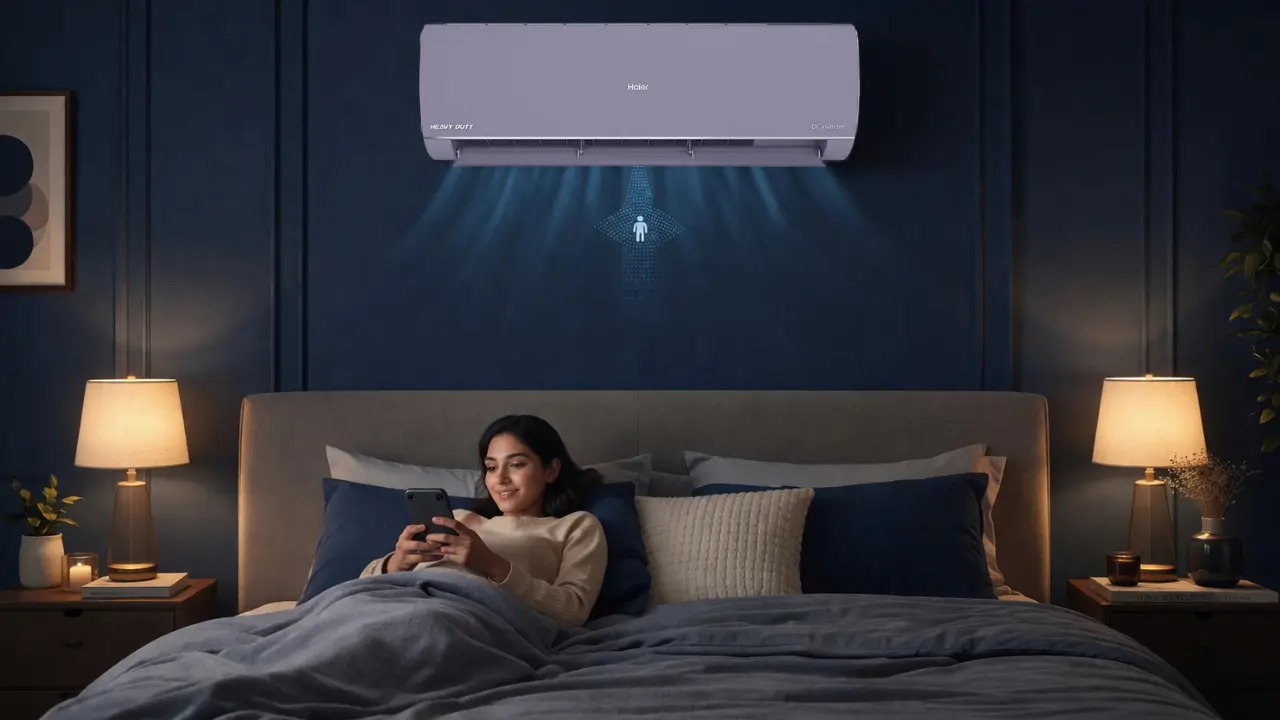

AI human detection saves electricity by sensing when people are present and automatically adjusting cooling or switching to energy-saving modes.
Instead of running continuously, the system reduces power usage when rooms are empty, preventing energy waste while maintaining comfort when it actually matters.
The ₹500 mistake most homes repeat every month.
Walk into a typical Indian home at 2:30 pm.
The AC is still running.
Nobody is home.
The curtains are drawn. The room is empty. But the compressor hums like it has a purpose.
It doesn’t.
This is not a rare moment. It is a pattern.
And patterns cost money.
Electricity bills in Indian households often spike not because of how much we use, but when we use unnecessarily.
Studies from energy agencies show that cooling alone can contribute to 40 to 60 percent* of a household’s electricity consumption during peak summer months.
Now layer one more truth.
Most of that energy is wasted when nobody is actually in the room.
That is where AI human detection changes the story.
Not by working harder.
But by working smarter.
What Is AI Human Detection in Air Conditioners?
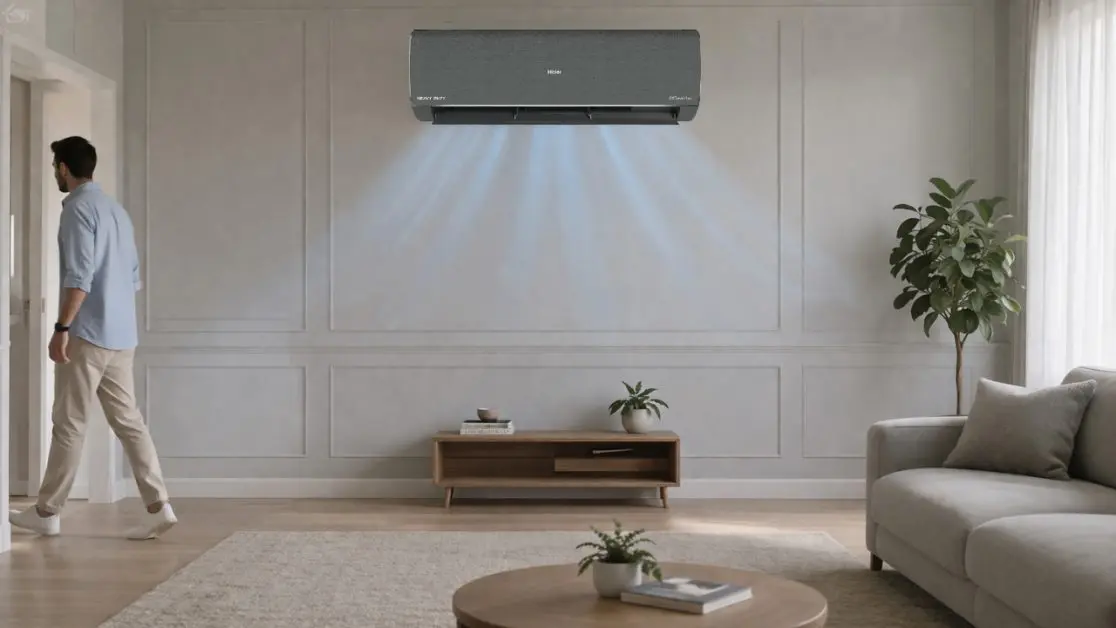
AI human detection is not just a sensor. It is a decision system.
It observes.
It interprets.
It acts.
Modern systems like those powered by AI-driven platforms analyze movement, presence, and absence in real time to optimize cooling behavior.
How It Works in Simple Terms
- Sensors detect human presence within a defined range
- The system tracks inactivity over time
- It automatically shifts to energy-saving mode
- It reduces cooling intensity or turns off if the room stays empty
In some advanced setups, the system can detect absence within minutes and switch to low-power mode in 15 minutes or turn off within 30 minutes
No reminders.
No remote.
No human effort.
The Hidden System: Why Electricity Gets Wasted
Most appliances follow a simple rule.
They wait for instructions.
You switch them on.
They keep running.
Even when logic says they should stop.
This creates three invisible inefficiencies:
1. Static Operation in a Dynamic World
People move.
Rooms empty out.
Schedules change.
But traditional ACs keep running as if nothing has changed.
2. Manual Dependence
Someone has to remember to switch it off.
Most people don’t.
Not because they are careless.
Because they are busy.
3. Delayed Correction
Even when someone notices, the correction happens late.
And energy has already been wasted.
Electricity waste is not dramatic. It is silent and repetitive.
AI Human Detection Fixes the System, Not the Symptom
This is the real shift.
AI human detection does not just reduce power.
It removes the decision burden from people.
Three Ways It Saves Electricity
1. It Eliminates Empty Room Cooling
The system detects absence and reduces or stops cooling.
- No cooling for unused spaces
- No unnecessary compressor load
- No wasted units
Result: Immediate reduction in electricity consumption
2. It Switches to Smart Energy Modes Automatically
Instead of shutting down abruptly, the system transitions intelligently.
- Eco mode activation
- Gradual power reduction
- Temperature stabilization
According to the product system shown in the AI Atmox platform, this ensures energy savings without compromising comfort
Result: Lower power usage with consistent comfort
3. It Aligns Cooling With Real Human Behavior
AI does something traditional systems never could.
It learns.
- Tracks usage patterns
- Adjusts based on daily habits
- Optimizes cooling cycles over time
This creates a personalized energy model for each home.
Result: Long-term efficiency, not just one-time savings
A Simple Comparison: Traditional vs AI Human Detection
| Scenario | Traditional AC | AI Human Detection AC |
| Room left empty | Keeps running | Detects absence and reduces power |
| User forgets to switch off | Continuous cooling | Auto-adjusts or shuts down |
| Energy usage pattern | Fixed | Learns and adapts |
| Electricity bill impact | Higher over time | Reduced through optimization |
Technology does not save electricity. Decisions do. AI simply makes better ones.
The Indian Home Context: Why This Matters More Here
Indian homes are dynamic systems.
Not static environments.
Think about a normal day
- Morning rush
- Empty house during work hours
- Afternoon heat buildup
- Evening return
- Night cooling
Now ask a simple question.
Should your AC behave the same way all day?
It shouldn’t.
But most still do.
That is the gap AI human detection fills.
Three Real-Life Scenarios Where It Makes a Difference
Scenario 1: The Working Couple
They leave at 9 am.
Return at 7 pm.
Traditional system:
- AC accidentally left on
- Runs for 8 hours unnecessarily
AI system:
- Detects no presence
- Switches to energy-saving mode
- Cuts down hours of waste
Cost saved: Hundreds of units monthly
Scenario 2: The Family Living Room
Kids play. Parents move between rooms.
Cooling demand shifts constantly.
Traditional system:
- Cools entire room equally
- Wastes energy in unused corners
AI system:
- Detects activity
- Adjusts cooling dynamically
Cost saved: Better efficiency per hour
Scenario 3: The Solo Professional
Late nights. Irregular schedule.
Sometimes I sleep with the AC on.
Traditional system:
- Runs all night at full capacity
AI system:
- Detects inactivity
- Reduces cooling intensity
Cost saved: Lower night-time energy consumption
The Economics of AI Human Detection
Let’s break it down clearly.
Costs
- Slightly higher upfront appliance cost
- Learning curve for smart features
Benefits
- Lower monthly electricity bills
- Reduced manual effort
- Longer appliance lifespan due to optimized usage
- Better environmental impact
The Trade-Off
Pay a little more once.
Save a little every day.
Small daily savings beat big one-time decisions.
Where Haier Fits Into This Shift
Haier’s AI-driven ecosystem integrates human detection as part of a larger intelligence system.
Not as a standalone feature.
Through platforms like AI-powered climate systems, the AC:
- Detects occupancy
- Switches to energy-saving modes
- Tracks electricity usage
- Adjusts cooling dynamically
The system does not just cool.
It thinks before it cools.
That is the difference.
The Bigger Pattern: Homes Are Becoming Self-Aware
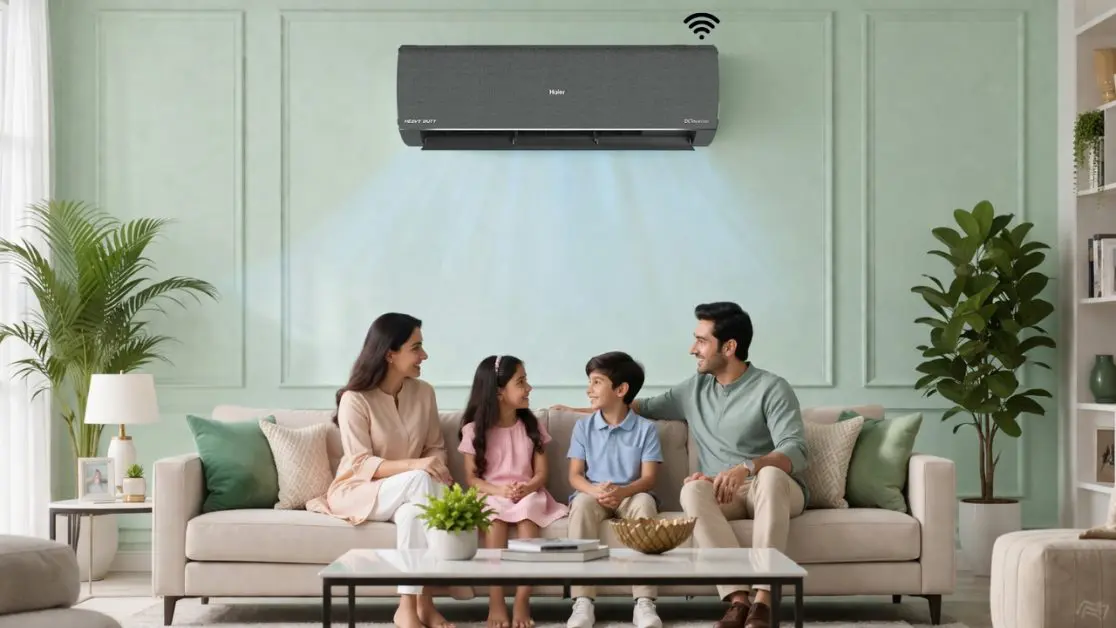
This is not just about air conditioners.
It is about how homes are evolving.
Three stages of appliance intelligence
- Manual era
You control everything - Automated era
Timers and presets assist you - Adaptive era
Systems learn and act independently
AI human detection belongs to the third stage.
And once you experience it, going back feels inefficient.
The Insight That Sticks
Electricity is not wasted when machines run.
It is wasted when machines run without purpose.
AI human detection gives machines a sense of purpose.
Only cool when needed.
Only consume when required.
Only operate when it makes sense.
What This Means for Your Home
The real decision is not about buying a feature.
It is about choosing a system.
Three choices every household now has
- One option is to continue with manual control and accept energy waste
- The second option is to use timers and partial automation
- The third option is to let AI systems manage energy intelligently
Each comes with a cost.
Each comes with a level of effort.
But only one reduces both.
Final Thought: Comfort Without Awareness Is Expensive
Most people chase comfort.
Few think about how that comfort is created.
AI human detection shifts the focus.
From cooling rooms.
To understand people.
And when appliances start understanding people, something interesting happens.
Homes stop reacting.
They start anticipating.
And that is where real savings begin.
Frequently Asked Questions
Why do I always forget to turn off my AC when I leave home?
Because switching off appliances is not part of a fixed routine. Your brain prioritizes urgent tasks, not repetitive ones like turning off the AC.
Is my electricity bill high because I use AC a lot or because I use it carelessly?
Often it’s about when you use it. Running an AC in empty rooms contributes significantly to wasted electricity.
Do I really need “smart” features, or is this just marketing?
If your usage is inconsistent or you often forget to turn things off, smart features solve a real behavioral problem not just a technical one.
I feel guilty leaving my AC on all day. Is that actually a big deal?
Yes. Even a few hours of unnecessary cooling daily can add up to hundreds of units per month.
What exactly is AI human detection in my AC?
It’s a system that detects human presence, tracks inactivity, and adjusts cooling automatically to save energy.
How does my AC know I’m not in the room?
Sensors detect movement (or lack of it) over time and trigger energy-saving actions.
Does the AC turn off immediately when I leave?
Usually no. It first reduces power, then may switch off after a set inactivity period.
Can I learn my daily routine over time?
Yes. Advanced systems analyze patterns and optimize cooling based on your habits.
Is this the same as a motion sensor light?
Not exactly. AI detection is more advanced, it interprets patterns, not just movement.