
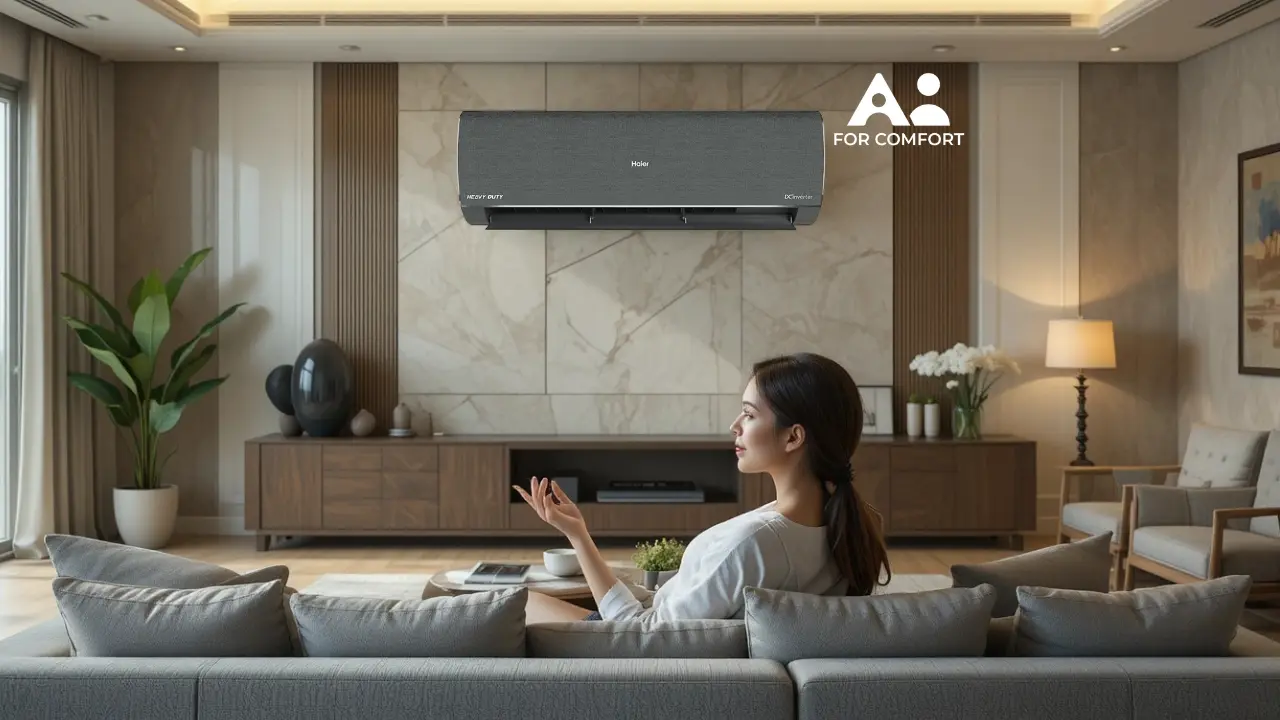

AI makes air conditioning smarter by learning how you live, predicting what you need, and adjusting cooling automatically to balance comfort, energy savings, and convenience.
Instead of reacting to button presses, modern AI ACs observe patterns, sense environments, and quietly optimize themselves in real time.
That shift changes everything.
Not just how rooms feel, but how homes think.
The real problem with traditional air conditioning
Every Indian home knows this moment.
You walk in after a long commute. The room is warm. You switch on the AC. You wait. You adjust the temperature. Later, it feels too cold.
You switch it off. At night, you wake up freezing. In the morning, the electricity bill arrives and raises questions.
Traditional ACs work on instructions, not understanding.
They cool because you told them to.
They stop because you remembered to.
They waste power when you forget.
That system assumes you are always paying attention.
Real life does not work that way.
AI changes the job of an air conditioner
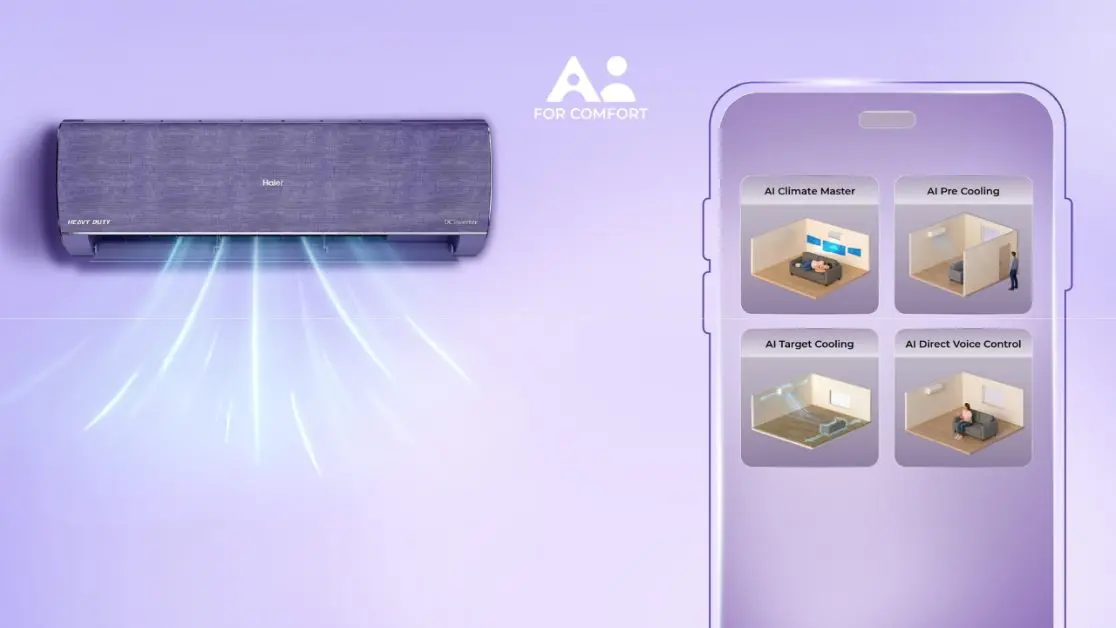
The biggest shift AI brings is subtle.
The AC stops waiting for commands and starts making decisions.
AI-powered air conditioning systems use sensors, machine learning, and predictive models to observe three things constantly:
- Your environment
- Your habits
- Your energy usage
Then they connect the dots.
Comfort stops being manual.
Efficiency stops being accidental.
This is not about fancy features. It is about removing friction from daily life.
AI climate control starts with learning, not cooling
What does it actually learn?
AI climate control systems track patterns over time. When you usually turn the AC on. How long you keep it running. What temperature changes you make. How the outside weather behaves in your city.
Over weeks, this builds a behavioural map.
For example:
- Hot afternoons need faster cooling
- Humid evenings need gentler airflow
- Night usage needs stability, not power
Instead of one fixed mode, the system adapts continuously.
According to Haier’s AI Climate Control architecture, the system combines environmental data with real-time learning to auto-adjust performance for any season or condition, without requiring constant manual input.
The insight here is simple.
Comfort improves when machines adapt to people, not the other way around.
Pre-cooling is not a luxury, it is timing intelligence
Why waiting to cool feels inefficient
Cooling a room after you enter always costs more energy. The compressor works harder. The temperature gap is wider. The experience feels delayed.
AI solves this with prediction.
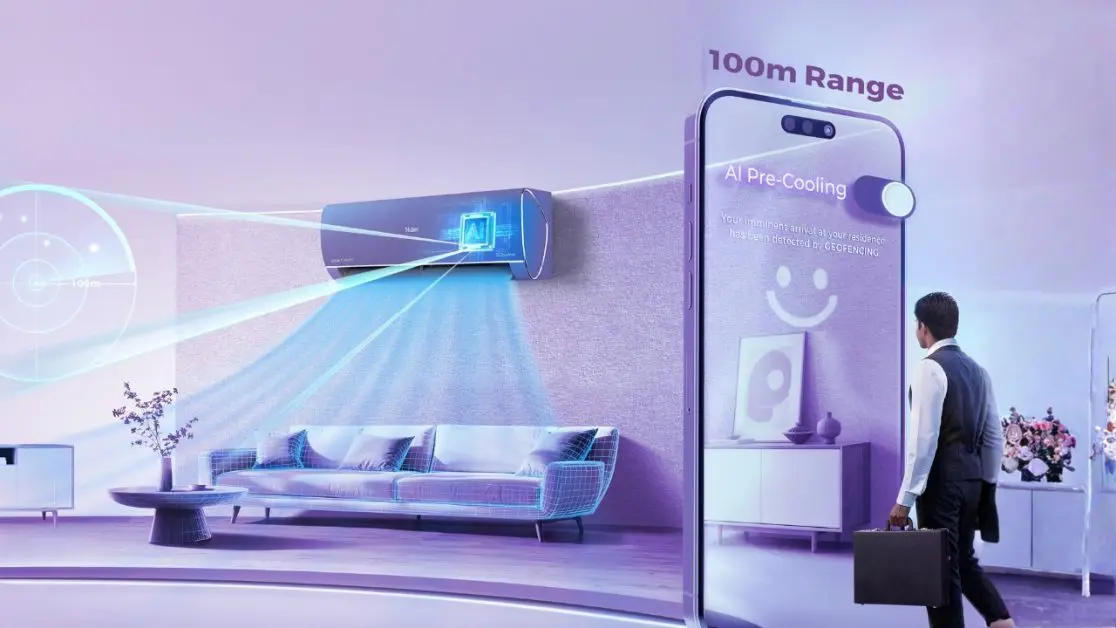
AI-powered pre-cooling systems use location awareness and habit learning to anticipate arrival. When you enter a predefined range near your home, cooling begins automatically.
By the time you unlock the door, the room feels ready.
No timers.
No scheduling stress.
No wasted cooling when plans change.
This feature alone reframes what convenience means in Indian homes where routines shift daily.
The system is not cooling for the sake of it. It is cooling because it knows you are coming.
Target cooling shows how AI thinks in zones
Why cooling the whole room is inefficient
Most of us sit in one place.
On the sofa.
At the work desk.
On the bed.
Yet traditional ACs cool the entire room equally.
AI target cooling changes that logic.
Using installation position data and spatial modelling, AI directs airflow precisely where people are. Cooling becomes focused, faster, and more efficient.
The benefits stack up quickly:
- Faster comfort where you sit
- Lower power draw overall
- Reduced overcooling in unused areas
This is systems thinking in action.
When attention narrows, efficiency rises.
AI Eco 2.0 modes turn savings into a dynamic process
Why fixed energy modes fall short
Most energy-saving modes are static. They reduce compressor load and hope for the best.
AI Eco 2.0 works differently.
It continuously measures the gap between room temperature and set temperature, then adjusts cooling intensity in stages.
For example:
- Large temperature gap triggers stronger cooling
- Smaller gaps shift to gentler modes
- Near-equilibrium reduces power automatically
This creates a sliding scale instead of an on-off switch.
According to Haier’s AI Eco 2.0 framework, these real-time adjustments prevent overcooling while maintaining comfort, helping households reduce unnecessary electricity consumption.
The key insight here is balance.
Efficiency is not about using less all the time. It is about using exactly what is needed.
Human detection changes how empty rooms behave
Why empty rooms should never stay fully cooled
One of the most overlooked energy leaks in homes is empty space.
People leave rooms.
ACs keep running.
Bills quietly grow.
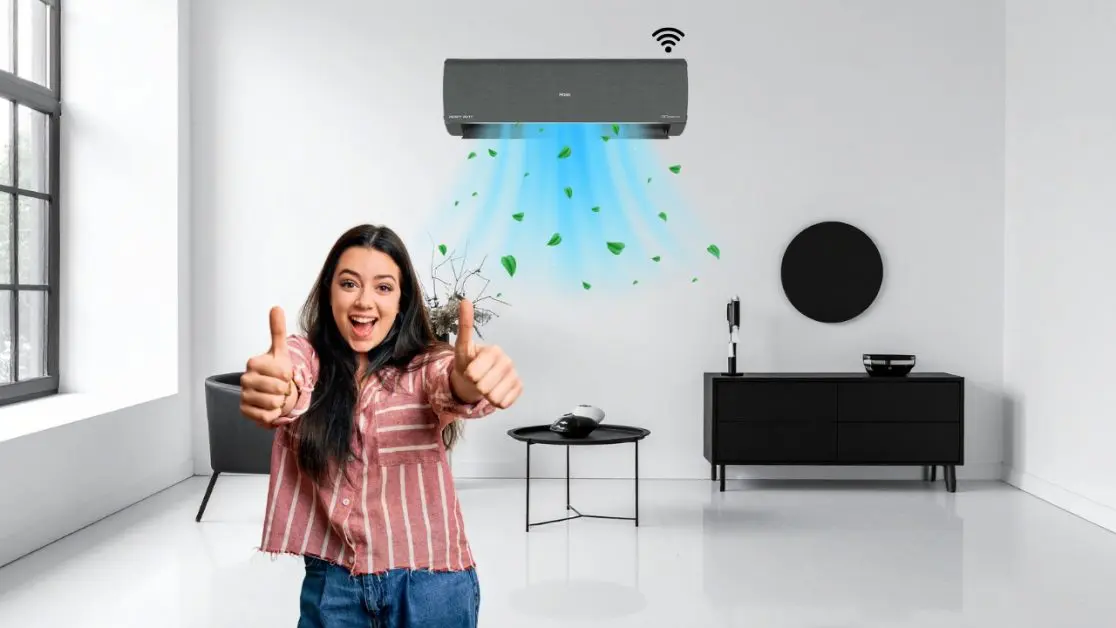
AI-powered human detection fixes this automatically.
Sensors detect occupancy patterns. When no activity is sensed:
- Cooling intensity reduces
- Energy-saving modes activate
- Power switches off after extended inactivity
No reminders.
No guilt.
No wasted power.
This is especially powerful for families with kids, work-from-home professionals, and shared households where rooms are constantly in flux.
The system adapts to absence just as intelligently as it adapts to presence.
Electricity monitoring makes energy visible
Why awareness changes behaviour
Most people do not overspend on electricity intentionally. They simply cannot see consumption clearly.
AI-powered Electricity monitoring 2.0 changes that relationship.
Instead of monthly surprises, users can view:
- Daily and weekly usage
- Normal vs Eco runtime
- Consumption displayed in currency
- Custom energy targets
When energy becomes visible, decisions improve naturally.
You adjust settings earlier.
You trust Eco modes more.
You stop guessing.
According to Haier’s AI Atmox Power Manager design, this transparency helps households stay in control without micromanaging settings.
The system nudges better choices without lecturing.
Self-cleaning is intelligence applied to maintenance
Why performance drops silently over time
Dust buildup reduces cooling efficiency. Manual cleaning is often delayed or skipped.
AI-powered self-cleaning systems automate this entirely.
Using frost-based indoor cleaning and reverse airflow outdoor cleaning, the AC maintains heat exchange efficiency without manual intervention.
Cleaner coils mean:
- Faster cooling
- Lower power usage
- Longer appliance life
This is not just about hygiene.
It is about preserving performance invisibly.
The smartest systems protect themselves.
Why AI air conditioning matters more in India
India’s climate is not stable.
Temperatures swing.
Humidity shifts.
Usage patterns vary wildly across seasons.
AI thrives in complexity.
Instead of fixed assumptions, AI systems respond to real conditions in real time. That makes them especially valuable in Indian homes where no two days feel the same.
From peak summer afternoons to monsoon evenings and mild winters, AI adapts continuously.
This is why brands like Haier focus on AI Eco 2.0 systems rather than isolated features.
The intelligence compounds.
The bigger pattern behind smarter cooling
Zoom out and a pattern appears.
AI in air conditioning is not about control.
It is about delegation.
You delegate comfort.
You delegate efficiency.
You delegate optimization.
The machine handles the variables so you can focus on living.
That same shift is happening everywhere. At work. In mobility. In homes.
Smart systems succeed when they reduce cognitive load.
Air conditioning just happens to be one of the most visible places where this change feels immediate.
What this means for modern households
The future of cooling is not colder air.
It is considered air.
Air that knows when to arrive.
Air that knows where to flow.
Air that knows when to stop.
AI makes air conditioning smarter every day not by adding complexity, but by removing effort.
And when technology fades into the background, that is when it finally works.
Comfort becomes quiet.
Efficiency becomes automatic.
Homes feel calmer.
That is not a feature list.
That is progress.
Frequently Asked Questions
What does an AI air conditioner actually learn about me?
It learns when you turn the AC on, how long you use it, your preferred temperatures, and how weather behaves in your city. Over time, it builds a behavioral comfort map unique to your household.
Does AI cooling mean more complexity for me?
No. It means less. AI shifts decision-making from you to the machine. Comfort, efficiency, and timing happen automatically in the background.
Is pre-cooling just a luxury feature?
No. It’s timing intelligence. It reduces energy spikes, improves comfort, and avoids wasted cooling when plans change.
How is AI Eco 2.0 different from regular energy-saving modes?
Regular Eco modes are static. AI Eco 2.0 dynamically adjusts cooling intensity based on the real-time gap between room temperature and your set temperature.
Why am I always shocked by my electricity bill?
Because consumption is invisible. AI-powered electricity monitoring shows daily usage, Eco vs normal runtime, and even cost in currency.
Is self-cleaning just about hygiene?
No. Cleaner coils mean faster cooling, lower power use, and longer appliance life.
What does AI air conditioning really change in daily life?
It reduces cognitive load. You stop managing comfort and start delegating it. The system handles variables quietly so you can focus on living.