


When a big screen meets intelligent picture processing and finely tuned sound, the TV stops being a device. It becomes part of how the home feels.
Not louder. Not sharper for the sake of it. Just more aware of what is playing, who is watching, and what the room needs at that moment.
This is the thinking behind large-screen TVs like the S90 QLED 254cm (100) Google TV with AI Center Max (H100S90FUX). It is not designed to impress in a showroom. It is designed to settle into everyday life and quietly raise the quality of it.
Why does the big screen moment feel different at home?
Think about how viewing actually happens in Indian homes.
The lights are rarely off. Someone is walking through the room. The phone rings. The fan is running. The window curtains are half open. Content switches from news to sports to OTT to music videos in one evening.
A big screen magnifies everything in that environment.
- Good picture looks incredible
- Average picture looks distracting
- Poor sound feels unbearable
This is why screen size alone never solves the problem.
A 254cm (100) screen without intelligence only makes compromises more visible.
The hidden rule of big screens
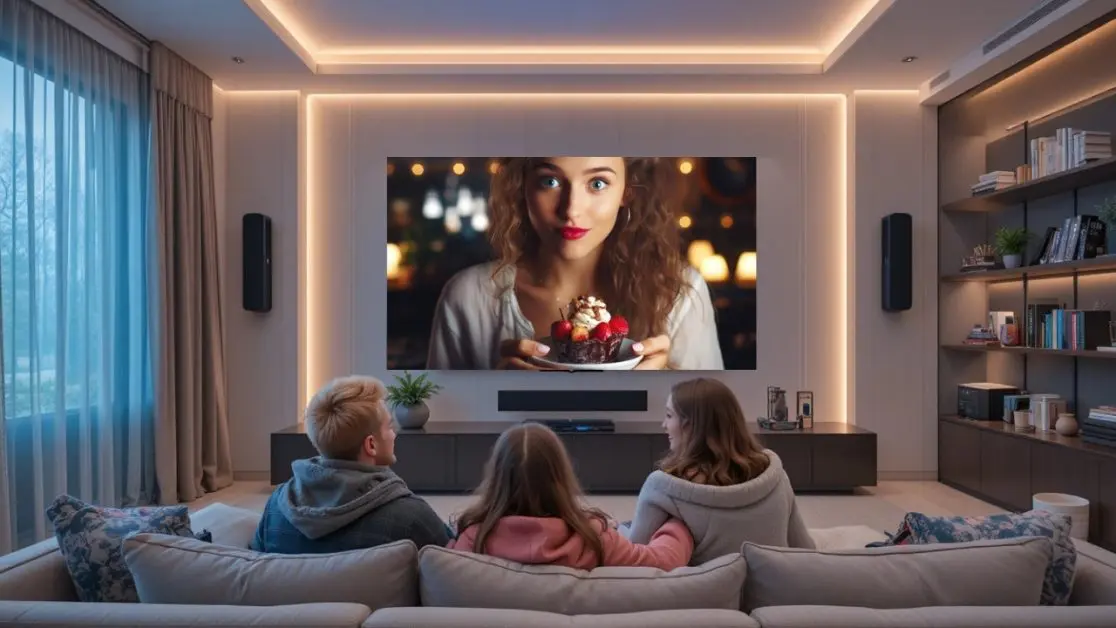
Here is the rule most people discover too late.
The bigger the screen, the smarter the system behind it needs to be.
Large displays reveal motion issues. They expose colour imbalance. They make flat sounds feel hollow.
This is where AI picture technology and well-tuned audio stop being featured and start becoming necessities.
What AI picture actually fixes in daily viewing
AI picture technology is often misunderstood as a visual enhancement trick.
In reality, it is a correction system.
The AI Ultra Sense Processor inside the S90 QLED 254cm (100) Google TV with AI Center Max analyses content in real time. It recognises scenes, motion patterns, brightness levels, and colour profiles, then adjusts picture parameters dynamically to keep visuals natural and comfortable.
That matters because real viewing is messy.
- Sports have rapid motion and wide camera pans
- Movies rely on shadow detail and depth
- OTT shows vary wildly in quality
- Older content needs intelligent upscaling
Static picture modes cannot keep up with this mix.
AI can.
Why Indian living rooms need adaptive visuals
Indian homes are not controlled cinema spaces.
- Lights stay on during matches
- Daytime viewing is common
- Screens are watched from different angles
- Content runs for hours, not minutes
AI-driven picture systems adjust automatically instead of asking users to constantly tweak settings.
The result is not a dramatic picture.
It is a comfortable one.
Big screens expose sound mistakes instantly
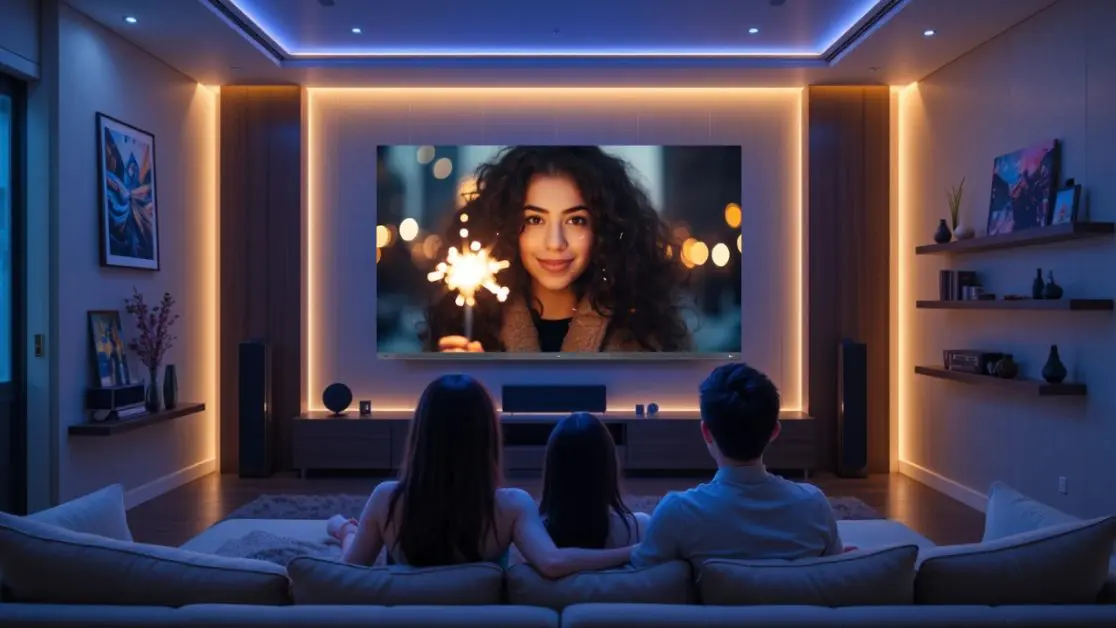
Picture quality usually gets the spotlight.
Sound quietly ruins the experience.
On a 254cm (100) display, poor audio separation becomes obvious within minutes. Dialogue feels disconnected. Background music overlaps voices. Action scenes lose impact.
This is why audio tuning matters as much as display technology.
Why KEF tuning changes the way sound feels
KEF approaches sound differently.
It focuses on precision, balance, and spatial accuracy. Not volume.
In TVs like the Haier S90 QLED 254cm (100) Google TV with AI Center Max, KEF-tuned 2.1 channel speakers with a dedicated subwoofer work alongside Dolby Atmos processing to create sound that feels placed, not pushed.
What that means in daily life:
- Dialogues remain clear without increasing volume
- Music feels full but not overpowering
- Crowd noise in sports surrounds you naturally
- Action scenes have depth without distortion
Sound becomes immersive without becoming tiring.
The system effect no one explains clearly
Picture and sound are often discussed separately.
Real comfort comes when they work as a system.
AI picture processing sharpens motion and depth.
KEF-tuned sound matches that clarity with accurate placement. Dolby Vision IQ and HDR10+ adjust visuals scene by scene. Dolby Atmos maps sound spatially across the room.
The experience feels coherent.
Nothing feels overdone.
Three ways people usually upgrade their TV
Most upgrades fall into one of these patterns.
1. Size-first upgrade
- Focus only on screen size
- Minimal attention to processing or sound
- Feels impressive initially, tiring over time
2. Feature-first upgrade
- Chasing specs and certifications
- Requires manual adjustments
- Inconsistent across content types
3. System-first upgrade
- Size supported by AI picture and tuned sound
- Adapts automatically
- Feels effortless every day
Only the third option scales with real homes and real habits.
Why effortlessness matters more than perfection
Perfect picture settings do not survive daily use.
Someone changes a mode. Content quality shifts. Lighting changes.
The best systems absorb that chaos.
AI-driven TVs reduce decision fatigue. They quietly adjust so viewers can focus on content instead of controls.
Comfort becomes the real upgrade.
Big screens are no longer just for movies
Viewing habits have expanded.
- Live sports need smooth motion
- OTT shows need consistent colour and contrast
- Gaming needs responsiveness
- Music streaming needs balanced sound
The Haier S90 QLED 254cm (100) Google TV with AI Center Max integrates high refresh rate support, gaming optimisation features, and smart content curation through Google TV to handle all these use cases without switching devices or settings.
One screen. Many roles.
Design matters when a screen becomes the room’s anchor
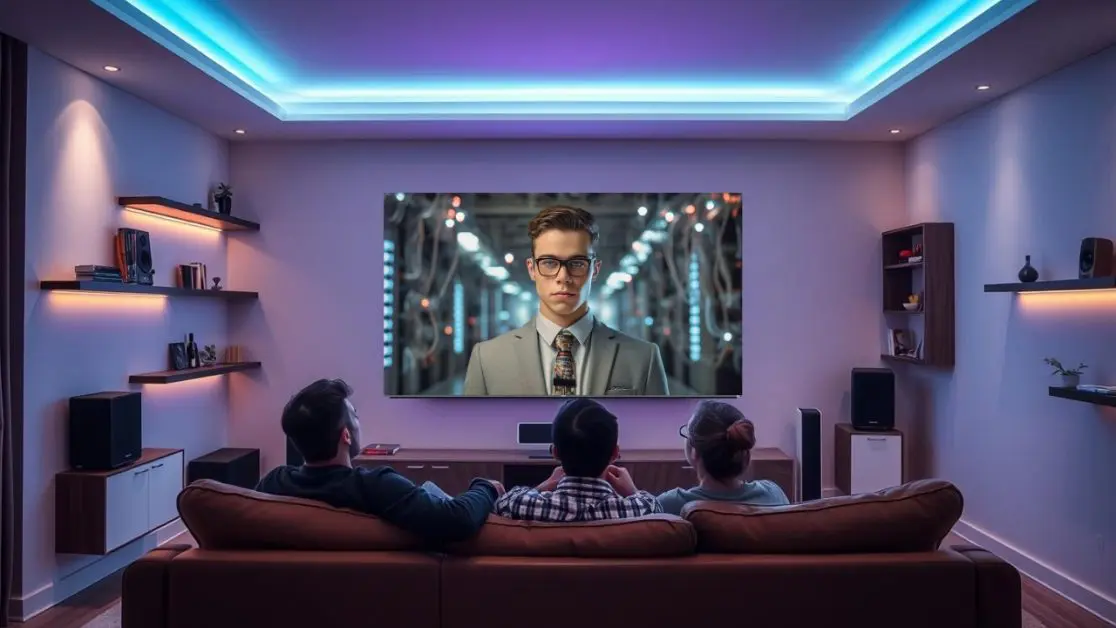
A 254cm (100) screen carries visual weight.
Design choices suddenly influence how a room feels.
Slim bezels, clean lines, and a balanced stand help the screen blend into the space rather than dominate it. When design is considered, the TV feels intentional, not overwhelming.
A large screen should elevate the room, not shout for attention.
The bigger pattern behind smarter TVs
This shift reflects a larger change in how people make decisions.
People no longer want more control.
They want fewer interruptions.
They want technology that understands patterns and adjusts quietly in the background.
AI picture processing and KEF sound tuning are not luxury additions. They are responses to how modern homes actually function.
The insight worth carrying forward
Size amplifies everything.
- Good systems feel cinematic
- Poor systems feel exhausting
When intelligence guides the experience, bigger becomes better.
When it does not, bigger simply becomes louder.
What this means for modern homes
The future of home entertainment is not about spectacle.
It is about thoughtfulness.
Screens that respond instead of demand.
Sound that surrounds instead of overwhelms.
Systems that respect attention instead of competing for it.
That is where big screens, AI picture technology, and KEF sound truly meet.
Not in a spec sheet.
But in everyday life.
Frequently Asked Questions
I don’t want to keep changing picture settings. Will a 100-inch TV handle that automatically?
Yes, if it’s built as a system. TVs like the Haier S90 QLED 254cm (100) Google TV with AI Center Max use AI-based picture processing that adjusts brightness, contrast, colour, and motion in real time. The idea is to remove daily decision fatigue, not add to it.
My living room lights stay on most of the time. Does a big screen still work?
This is exactly where AI picture systems matter. Features like Dolby Vision IQ dynamically adapt the picture based on ambient light, so the screen stays comfortable whether it’s daytime news or a late-night movie.
Sports look jittery on my current TV. Will a bigger screen make that worse?
A bigger screen exposes motion flaws instantly. AI Ultra Sense Processor technology analyses motion patterns in real time, smoothing fast pans and player movement so sports feel fluid instead of chaotic.
What difference does KEF tuning actually make in daily use?
KEF focuses on precision and balance, not loudness. In the Haier S90, KEF-tuned 2.1 channel speakers with a dedicated subwoofer ensure:
1. Clear dialogue without raising volume
2. Natural crowd noise in sports
3. Depth in action scenes without distortion
4. Music that feels full but never tiring
Is an AI picture just a marketing term?
Not here. AI pictures work as a correction system, constantly analysing scenes, brightness, colour balance, and motion to keep visuals natural instead of exaggerated.
Is a 100-inch TV only for movies?
Not anymore. Modern viewing includes:
1. Live sports with smooth motion
2. OTT shows needing consistent colour
3. Gaming requiring responsiveness
4. Music streaming needing balanced sound
System-first TVs are built for this mix.