
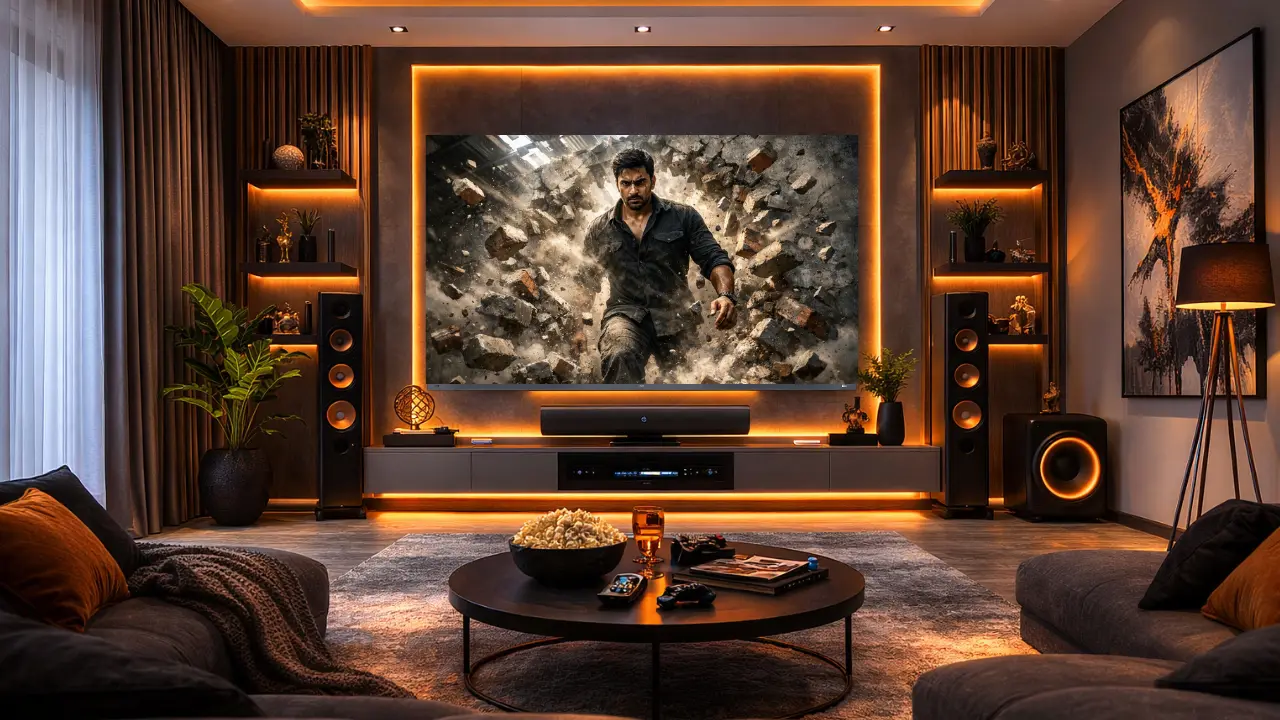

AI Picture automatically analyses every frame and adjusts brightness, contrast, colour, and motion in real time so that what you watch looks balanced, sharp, and natural without manual tuning. It recognises content, studies lighting conditions, and optimises visuals instantly.
In simple words, the screen thinks before you do.
Now let us understand why this matters inside a real Indian home.
Why do most TVs look stunning in showrooms but ordinary at home?
You have seen this.
In stores, visuals look dramatic. Colours pop. Blacks feel deep. Motion looks fluid.
Then you bring the TV home.
Afternoon sunlight reflects on the screen. Dark scenes look washed out. Cricket whites look flat. Suddenly, you are searching for picture settings.
The issue is not quality. It is context.
Each format demands different visual tuning.
A static preset cannot handle that complexity.
AI Pictures exist because modern viewing habits are dynamic.
AI Picture Is Not a Filter. It Is a Decision Engine.
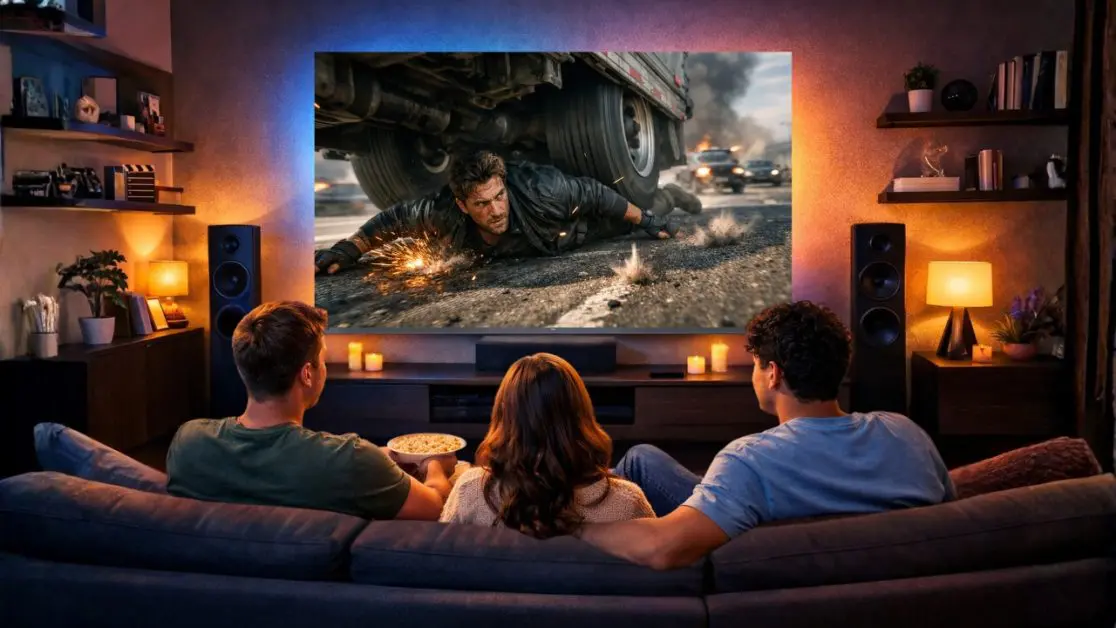
Many assume AI Picture is a colour enhancer.
It is not.
It is a real-time processing system.
Here is what happens internally on advanced displays like the Haier QD Mini LED AI Smart Google TV range:
- Scene recognition detects sports, cinema, news, or gaming.
- Ambient light sensing measures room brightness.
- Local dimming adjusts light zone by zone.
- Motion optimization refines fast transitions.
- AI contrast mapping enhances shadow detail without overexposure.
All of this happens in milliseconds.
No remote intervention required.
When AI Picture works on the Haier 254cm (100) QD Mini LED AI Smart Google TV New M96 Series, the sheer screen size magnifies both strengths and flaws. Intelligence becomes essential. On a 254cm (100) display, small inaccuracies become visible. AI processing prevents that.
Big screens demand smarter brains.
What Exactly Does AI Picture Optimise Automatically?
Let us simplify this with clarity.
| Visual Parameter | AI Adjustment | Practical Impact |
| Brightness | Adapts to room light | No glare during daytime |
| Contrast | Deepens blacks intelligently | Better cinematic depth |
| Colour Accuracy | Calibrates tones dynamically | Natural skin and scenery |
| Motion Clarity | Smoothens fast movement | Sharper sports visuals |
| Upscaling | Enhances lower resolution content | Cleaner OTT streaming |
This is not cosmetic tuning.
It is contextual enhancement.
During an IPL match, AI processing identifies rapid motion and improves clarity. During a dim thriller scene, it lifts dark detail without washing out the image.
Different content. Different optimisation.
Three Real-Life Viewing Moments Where AI Picture Changes Everything
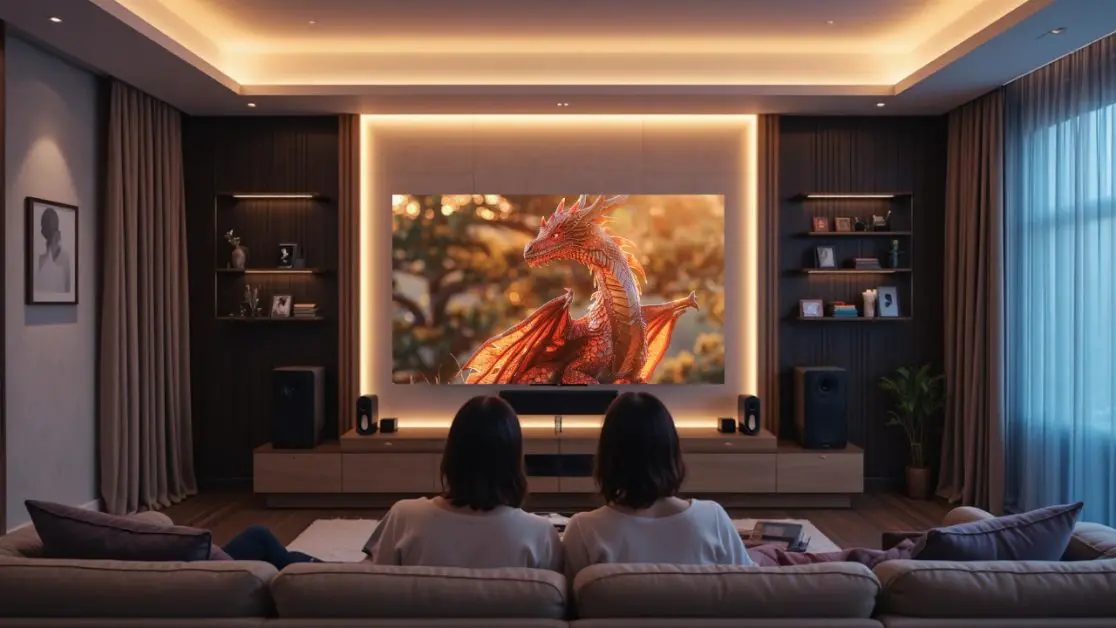
Technology only matters when it solves something familiar.
1. The Sunday Cricket Gathering
Bright daylight. Windows open. Relatives discussing every ball.
On the Haier 189cm (75) QD Mini LED Smart AI Google TV New M92 Series, AI adjusts brightness and motion to maintain clarity even in strong ambient light.
Cost: Zero manual effort.
Benefit: Clear pitch texture and smoother camera pans.
2. The Late-Night Movie Binge
Lights off. Only the TV illuminates the room.
Traditional displays lose shadow detail in dark scenes. AI-driven local dimming on QD Mini LED panels enhances contrast zone by zone.
Result: Deeper blacks. Clearer faces. Reduced eye strain.
3. Gaming After Work
Fast movement. Rapid colour shifts. Split-second decisions.
AI Picture optimises response and clarity automatically, ensuring smoother transitions and sharper edges.
One device. Multiple needs. Automatic adaptation.
Why QD Mini LED Makes AI Picture More Powerful
AI software needs strong hardware.
Quantum Dot Mini LED technology enables:
- Thousands of micro backlight zones
- Higher peak brightness levels
- Precise local dimming
- Wider colour spectrum
Industry panel reports confirm Mini LED panels deliver significantly higher brightness and superior contrast control compared to standard LED.
When AI processing integrates with QD Mini LED on the Haier 164cm (65) QD Mini LED AI Smart Google TV New M92 Series, you get precision lighting controlled by intelligent algorithms.
Software interprets. Hardware executes.
That coordination creates immersive depth.
Is an AI Picture Only About Beauty?
No.
It is about efficiency and comfort too.
Adaptive brightness lowers intensity in darker rooms. Reduced over-brightness helps manage power consumption and eye comfort. According to global energy studies, smarter display calibration contributes to better power management in consumer electronics.
AI Picture supports:
- Reduced eye strain
- Balanced luminance
- Context-aware power optimisation
Small adjustments daily. Meaningful savings long term.
Your Real Choices as a Viewer
Let us look at this honestly.
You have three options:
1. Adjust settings manually every time
- High involvement
- Time-consuming
- Inconsistent results
2. Stick to one preset mode
- Easy
- Compromised performance
- Limited adaptability
3. Let AI Picture optimise automatically
- Minimal effort
- Context-aware performance
- Consistent clarity
Smart defaults reduce friction.
Friction shapes experience.
Why AI Picture Fits the Rhythm of Modern Indian Homes
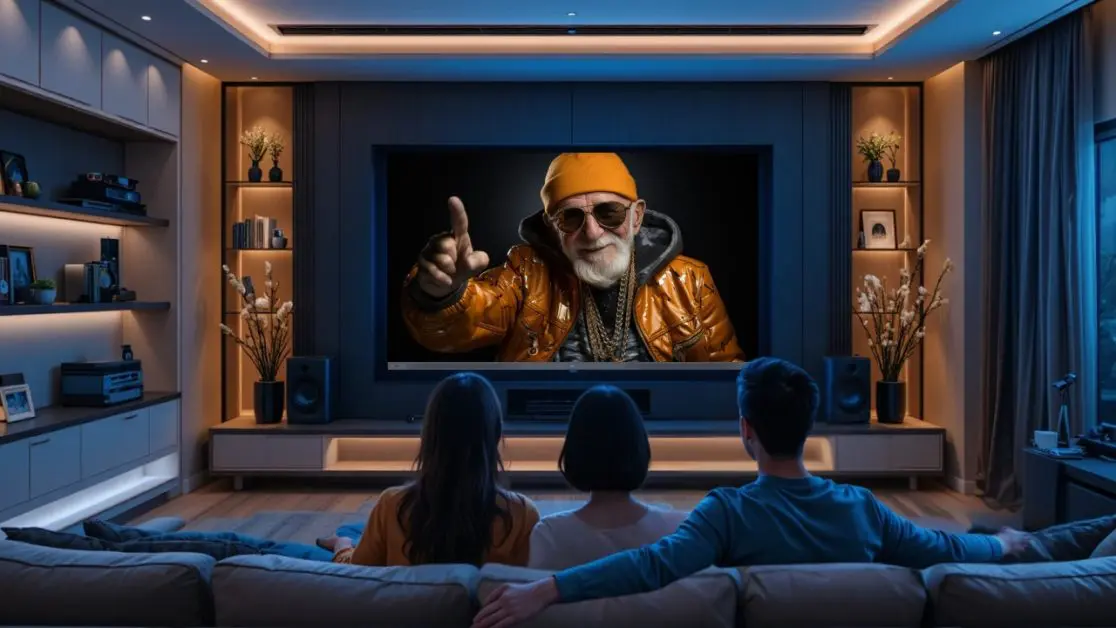
Homes today are multi-generational and multi-device.
Morning news. Afternoon cartoons. Evening cricket. Late-night OTT. Weekend gaming.
Millennial couples want convenience. Gen Z prefers seamless streaming. Parents expect reliability.
AI Picture supports all without requiring technical knowledge.
A smart appliance should not demand constant attention.
It should quietly adapt.
The Larger Insight: Intelligence Removes Micro-Decisions
Here is the hidden pattern.
Every small manual adjustment adds cognitive load.
Brightness tweak. Contrast tweak. Mode switch.
AI Picture removes these micro-decisions.
When systems understand context, comfort becomes automatic.
The philosophy extends beyond television. Smart ACs adjust cooling. Refrigerators manage temperature zones. Automation reduces mental load across appliances.
Technology should simplify, not complicate.
Final Thought: The Screen That Thinks Ahead
If your TV automatically adjusts when sunlight shifts, if dark scenes reveal detail without glare, if cricket motion feels smooth without settings changes, that is AI Picture working silently.
On models like the Haier 254cm (100) QD Mini LED AI Smart Google TV New M96 Series, intelligence becomes visible at scale.
On the Haier 189cm (75) QD Mini LED Smart AI Google TV New M92 Series, it balances everyday viewing. On the Haier 164cm (65) QD Mini LED AI Smart Google TV New M92 Series, it brings premium optimisation to compact living rooms.
Smarter visuals. Automatically.
No overthinking. No constant adjusting.
Just a screen that understands context.
And that is what modern living rooms deserve.
Frequently Asked Questions
Why does my TV look amazing in the showroom but ordinary in my living room?
Showrooms use controlled lighting and optimized demo content. At home, sunlight, room lighting, and different content types affect picture quality. AI Picture adjusts brightness, contrast, and colour automatically based on your environment.
Do I really need to change picture settings every time I switch from movies to cricket or OTT shows?
Normally yes, because different content needs different visual tuning. AI Picture removes this manual step by detecting content type and adjusting the display automatically.
I get confused between Standard, Movie, Dynamic, and Sports modes. Which one should I actually use?
Preset modes are static and may not work for every situation. AI Picture acts like a dynamic mode that continuously adapts instead of forcing you to choose one preset.
If my TV has AI Picture, should I stop adjusting picture settings manually?
In most cases, yes. AI processing is designed to automatically optimise brightness, contrast, colour balance, and motion based on real-time viewing conditions.
Is AI Picture just a colour filter that makes everything brighter?
No. AI Picture is a real-time processing system that analyses scenes, lighting conditions, and motion to adjust multiple parameters simultaneously.
What exactly does AI Picture change automatically on my TV?
It optimises brightness, contrast, colour accuracy, motion clarity, and upscaling depending on the content and lighting conditions.
How does my TV know whether I’m watching sports, movies, or news?
AI scene recognition analyses frames in real time and detects patterns associated with specific types of content, adjusting settings accordingly.
Does AI Picture also adjust based on room lighting?
Yes. Ambient light sensors measure room brightness and adapt screen brightness and contrast to maintain clear visuals.