

AI Picture Technology in smart TVs uses machine learning and real-time processing to analyse
what is playing on screen, understand the viewing environment, and automatically fine-tune picture settings so visuals look clearer, more balanced, and more lifelike without constant manual adjustment.
That is the straight answer.
The real story begins when you place this technology inside an Indian home.
Because picture quality is not judged in a lab.
It is judged during weeknight matches, weekend movies, late dinners, and half-lit living rooms.
The moment every household recognises
It is around 9 pm.
Dinner plates are still on the table.
Someone switches off the tube light.
Another person turns on a warm lamp near the sofa.
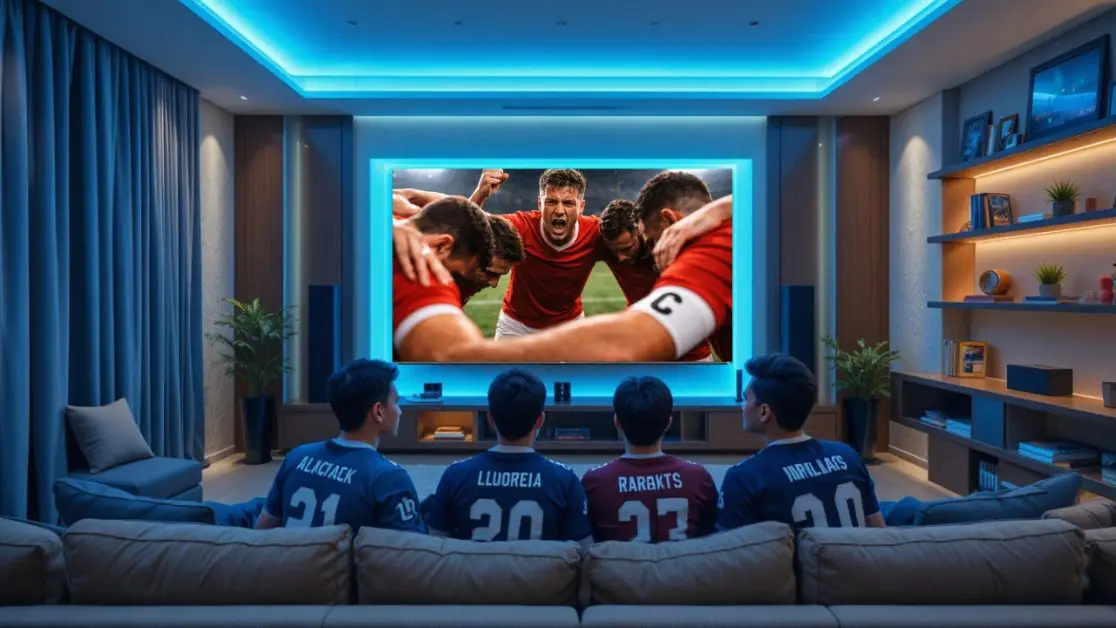
The cricket match moves under floodlights.
On many TVs, this is where the experience quietly breaks.
- The pitch looks flat
- Players blend into shadows
- Fast motion loses clarity
Not because the TV is cheap.
But because the environment changed and the TV did not.
AI Picture Technology exists to close this exact gap.
What AI Picture Technology actually does behind the scenes
Traditional TVs show content using fixed rules.
AI-powered TVs work like living systems.
They constantly observe, learn, and respond in real time.
At any moment, an AI picture engine is processing three things:
- What type of content is playing
- How fast and complex the visuals are
- What the room lighting and viewing conditions look like
Based on this, the TV adjusts picture settings dynamically.
Not once per movie.
Not once per mode.
But scene by scene.
Think of AI Picture Technology like an experienced editor
A good editor does not treat every scene the same.
They brighten a dark moment.
They sharpen motion in action scenes.
They soften colours for emotional close-ups.
AI Picture Technology applies this thinking automatically.
The difference is speed.
An editor works after filming.
AI works while you are watching.
The four invisible jobs AI picture systems perform
Most people hear feature names.
What matters more is the function.
1. Content and scene recognition
AI identifies what kind of content is on screen.
- Live sports
- Movies
- Animation
- Gaming
- News
Each needs a different visual approach.
Sports prioritise motion clarity.
Movies prioritise contrast and depth.
Animation prioritises colour balance.
AI switches priorities automatically without asking you to change picture modes.
2. Motion clarity management
Fast motion exposes weak processing instantly.
AI picture engines track object movement across frames and predict motion paths.
This reduces blur and judder before the eye notices it.
When combined with high refresh rate panels, motion feels smoother and more natural during sports and gaming.
The intelligence between frames matters as much as the panel itself.
3. Brightness and contrast adaptation
Your living room lighting changes constantly.
Morning daylight.
Evening bulbs.
Late night darkness.
AI Picture Technology detects ambient light and adjusts brightness and contrast in real time so visuals remain comfortable and detailed without eye strain.
This is especially important during long viewing sessions.
4. Colour and depth optimisation
Human eyes notice faces first.
AI picture systems prioritise natural skin tones and depth by fine-tuning colour saturation, contrast, and highlights based on the scene.
The goal is not to exaggerate the colour.
The goal is realism.
Why manual picture modes are starting to feel outdated
Most TVs still offer picture modes like Standard, Movie, Vivid, or Sports.
These modes assume your room and content stay constant.
They never do.
AI Picture Technology removes decision fatigue.
It adapts continuously instead of forcing you to choose.
Convenience is the real upgrade.
Where AI Picture Technology matters most in Indian homes
This technology proves its value in everyday situations people rarely plan for.
Late-night cricket matches
Floodlit stadiums create uneven brightness.
AI processing preserves shadow detail without washing out the pitch.
Weekend family movie nights
Multiple seating angles and mixed lighting.
AI balances brightness and contrast across the room.
Gaming after work
Fast inputs and motion-heavy visuals.
AI motion handling reduces blur and screen tearing.
Festive evenings
Decor lights, lamps, and changing brightness.
AI adapts automatically so the picture stays stable.
The system behind modern AI picture engines
Modern smart TVs use dedicated processors trained on thousands of visual scenarios.
These processors:
- Analyse every frame
- Compare patterns using learned data
- Apply real-time optimisation rules
This happens continuously while content plays.
The smarter the processor, the more natural the picture feels.
How this comes together in a real product
Some TVs treat AI features as separate checkboxes.
Others build them as a single coordinated system.
The S90 QLED 254cm (100) Google TV AI Center Max (Model: H100S90FUX) is designed around this systems-first approach.
Instead of isolating picture, sound, and motion, it brings them together through AI Center Max, creating a unified intelligence layer across visuals, audio, and gaming.
At the core is the AI Ultra Sense Processor, co-developed with MediaTek, which enables fast scene recognition and intelligent tuning of colour, contrast, depth, and motion in real time .
This processor works alongside technologies like Dolby Vision IQ and HDR10+, allowing the TV to adjust picture quality based not just on content, but also on ambient light conditions.
The result is not dramatic effects.
It is consistent.
Why AI Picture Technology is not about maximum settings

There is a common misconception.
More brightness does not equal a better picture.
More saturation does not equal realism.
AI Picture Technology optimises for balance.
It aims for comfort, clarity, and accuracy rather than intensity.
That is why the best AI picture feels subtle.
You only notice it when it is missing.
A simple way to judge AI picture quality
While watching, ask three questions:
- Does the picture stay stable when scenes change quickly?
- Do faces look natural across different lighting?
- Does motion stay smooth without looking artificial?
If the answer is yes, the AI is doing its job quietly.
That is the goal.
The real cost and benefit equation
AI Picture Technology adds value in everyday use.
Benefits
- Less manual adjustment
- Better viewing comfort
- Consistent quality across content
Considerations
- Slightly higher price tier
- Greater reliance on processor quality
In practical terms, the benefit compounds over time.
Every hour watched benefits from intelligent optimisation.
Why this technology will soon feel essential
Once people experience TVs that adapt automatically, static picture settings feel outdated.
This mirrors what happened with smartphones and adaptive brightness.
At first, it felt optional.
Now it feels obvious.
AI Picture Technology is moving in the same direction.
The bigger shift happening in living rooms
Homes are no longer collections of devices.
They are becoming systems that respond intelligently.
AI Picture Technology reflects this shift.
It removes friction.
It reduces decisions.
It adapts quietly.
In busy households, that matters more than any specification.
Good technology does not demand attention.
It earns trust by staying out of the way.
That is what AI Picture Technology in smart TVs is really about.