


Modern televisions are becoming far smarter than the screens many of us grew up with. AI-powered picture technology can now analyse every frame on the screen and automatically adjust brightness, colour, contrast, and motion.
Instead of relying on fixed picture settings, the television adapts in real time to whatever you are watching.
In simple terms, the screen understands the content first and then decides how it should look.
But to understand why this matters, it helps to picture a very familiar scene.
The friday night scene every home recognises.
It is around 9:15 pm.
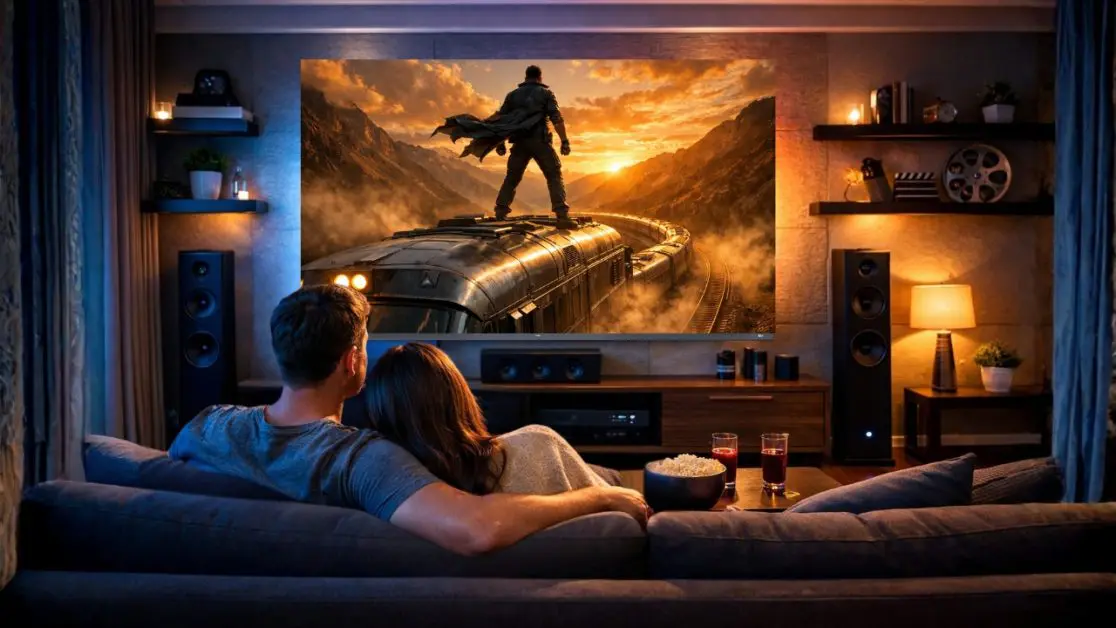
Dinner is finished. Plates are stacked near the sink. Someone brings popcorn in a steel bowl. After a long debate about what to watch, the family finally settles on a movie.
The lights dim. The opening scene begins.
But something feels slightly wrong.
Dark scenes look flat. Fast action feels blurry. Dialogue seems to disappear under background music.
The film itself is good.
The screen just isn’t doing it justice.
This experience is common in many homes, and it happens because televisions traditionally treat every type of content the same way.
Cricket. Movies. Animation. News.
Everything runs on the same preset.
But the way people watch television today has changed dramatically.
Millions of viewers in India now watch content across streaming platforms, live sports broadcasts, YouTube videos, and gaming consoles. Each of these formats behaves very differently on a screen.
Modern television needs to recognise that difference.
Once it does, it stops acting like a simple display and starts behaving more like a visual interpreter.
Why Traditional Picture Settings No Longer Work
Most televisions were designed around fixed picture settings.
A single brightness level.
A single contrast setting.
One motion profile.
The assumption was that most content would behave in a predictable way.
But today’s viewing habits prove otherwise.
Think about a typical evening at home.
You might watch:
- A bright IPL match filmed with high-speed cameras
- A dark thriller on an OTT platform
- A YouTube vlog recorded on a phone camera
- A racing game running at very high frame rates
Each of these requires a different visual treatment.
Yet many televisions still apply the same picture preset to everything.
The results are easy to notice.
Sports can look blurry during fast movement.
Dark scenes lose detail.
Daytime viewing can make colours appear washed out.
The issue is not always the screen itself.
It is the lack of context.
AI picture systems solve this by first recognising what is happening on the screen and then adjusting the display accordingly.
Recognition changes the viewing experience.
AI Picture Is More Than a Simple Filter
Many people assume that AI picture enhancement simply boosts colours or increases brightness.
In reality, it does much more.
Modern televisions process visual data continuously. Every frame passes through a system that analyses motion, brightness levels, contrast, and scene composition.
For instance, the Haier 165cm (65) QD Mini LED AI Smart Google TV H65M92EUX uses an AI Ultra Sense processor that studies each scene in real time and adjusts contrast, colour accuracy, and motion automatically.
You can think of it as a decision engine.
Every frame enters the system.
The processor studies it.
Then the television decides how the image should appear.
What Happens Inside an AI Picture System
AI picture processing usually combines several different technologies.
Scene Recognition
The system identifies whether the content is a movie, sports broadcast, animation, or game. It then applies the most suitable picture profile automatically.
AI Motion Processing
The processor tracks object movement frame by frame. This helps reduce blur during fast action scenes such as sports or racing.
HDR Enhancement
Brightness and contrast are adjusted dynamically to preserve details in both bright highlights and dark shadows.
Depth Processing
Some systems analyse foreground and background elements separately, creating a stronger sense of depth and realism.
The technology behind this process is complex.
But the result is simple: better picture quality without needing to adjust settings manually.
Indian Living Rooms Are Not Movie Studios
Many display technologies were originally designed for controlled viewing environments.
Dark rooms.
Carefully positioned seating.
Minimal reflections.
But Indian living rooms often look very different.
In real homes you may have:
- Sunlight entering through balconies in the afternoon
- Tube lights reflecting off bright walls
- Multiple viewing angles across sofas and chairs
- Frequent switching between streaming apps
Lighting conditions can change throughout the day.
That is why many modern televisions now include ambient sensing features.
For example, AI Ambient Sense technology adjusts brightness and colour temperature depending on the lighting in the room. This keeps visuals balanced whether you are watching during the day or late at night.
The television adapts to the room.
The viewer does nothing.
And that is where the real convenience lies.
Three Systems Quietly Changing Television
The next generation of televisions is not just about sharper resolution.
It is about intelligence.
Three key systems now work together to improve the experience.
1. Content Awareness
AI systems analyse the type of content being played.
Sports require smoother motion.
Movies benefit from deeper contrast.
Animation often needs brighter colours.
Once the system recognises the pattern, it adjusts the picture automatically.
Benefit: Better visuals without manual settings.
Trade-off: Requires powerful processors.
2. Environmental Awareness
Light sensors monitor the brightness of the room.
During daylight the screen becomes brighter.
At night the highlights soften to reduce glare.
Benefit: More comfortable viewing and reduced eye strain.
Trade-off: Requires constant calibration.
3. Behaviour Awareness
Smart platforms are also learning how people watch content.
Systems like Google TV organise shows, apps, and films based on viewing preferences, making it easier to find something to watch.
Benefit: Less searching, more watching.
Trade-off: Depends on software ecosystems and data processing.
Together, these systems create something new.
Not just a television.
A responsive entertainment environment.
Technologies Powering the Next Generation of TVs
Behind the intelligence of modern televisions are several important display technologies.
QD Mini LED Displays
QD Mini LED technology uses thousands of tiny LEDs for backlighting.
More dimming zones allow more precise control of light across the screen. The result is deeper blacks, brighter highlights, and stronger contrast.
Large displays such as the Haier 254cm (100) QD Mini LED AI Smart Google TV H100M96EUX use advanced local dimming to maintain brightness and detail even on very large screens.
Night scenes finally look like night instead of dull grey.
High Refresh Rate Panels
Fast-moving content can be difficult for traditional displays.
Sports broadcasts and gaming often require higher refresh rates to appear smooth.
Many modern televisions now support refresh rates of 120Hz or even 144Hz, which helps reduce motion blur during action scenes.
The improvement is especially noticeable during cricket matches or racing games.
Immersive Spatial Audio
Picture quality becomes more powerful when sound matches the scale of the visuals.
Technologies such as Dolby Atmos create layered audio that surrounds the viewer from multiple directions.
When sound moves naturally with on-screen action, the viewing experience becomes far more immersive.
What AI Picture Means for Everyday Homes
Technology matters most when it improves everyday moments.
Consider a few familiar situations.
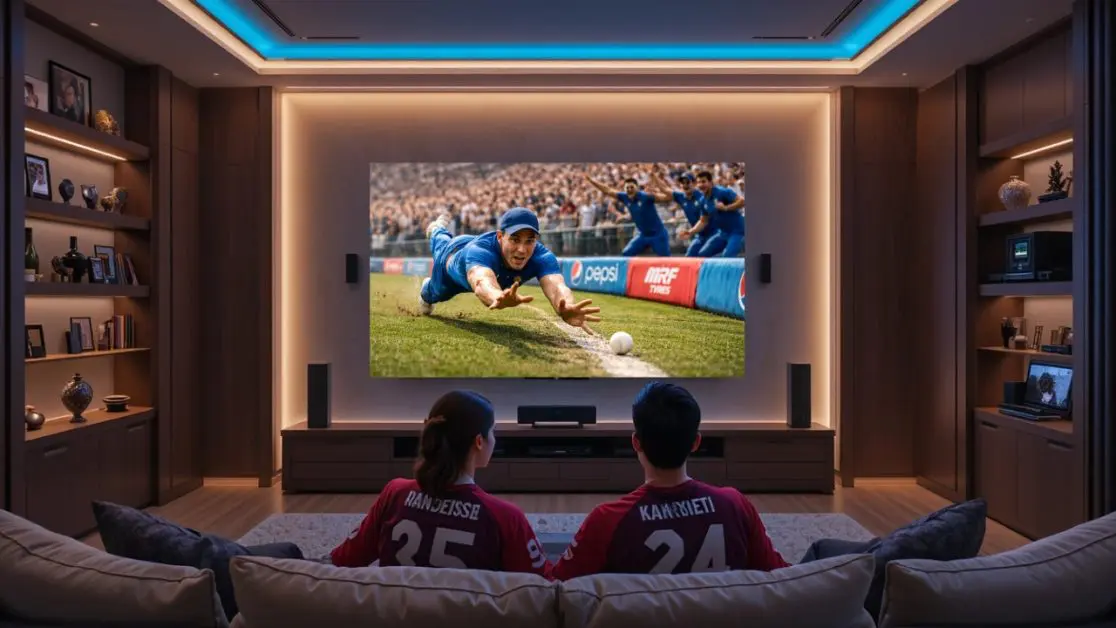
Weekend Cricket
AI motion processing keeps fast deliveries sharp.
High refresh rates reduce blur.
Spatial audio recreates the atmosphere of the stadium.
Family Movie Nights
AI HDR preserves details in dark scenes.
Ambient sensing balances brightness automatically.
Dolby Atmos fills the room with cinematic sound.
Gaming Sessions
Variable refresh rates prevent screen tearing.
Faster response times improve gameplay.
Large displays increase immersion.
The pattern is clear.
AI reduces friction.
And friction is often the hidden enemy of entertainment.
The Quiet Importance of Design
Technology often gets the spotlight, but design also plays an important role.
Modern televisions are increasingly designed to blend into living spaces.
Slim profiles.
Minimal bezels.
Wall-mounted installations.
Models such as the Haier 189cm (75) QD Mini LED AI Smart Google TV H75M92EUX combine thin frames with elegant stands that fit naturally into contemporary interiors.
A television should complement a room, not dominate it.
The Bigger Shift Behind AI Picture Technology
Many technologies follow the same path of evolution.
At first, devices require constant manual control.
Later, systems begin assisting users.
Eventually, technology adapts automatically.
Televisions are now entering that final stage.
AI manages the complexity behind the scenes while viewers simply enjoy the result.
The best technology tends to stay invisible.
Like lights that dim automatically in the evening.
Or appliances that quietly manage themselves.
A smart television works the same way.
It recognises what you are watching and adjusts before you even touch the settings.
The Future of Television Is Intelligence
It is easy to assume that the future of television is only about larger screens.
But the real transformation is happening elsewhere.
The future belongs to intelligent displays.
Screens that understand content.
Systems that adapt to the home environment.
Technology that removes unnecessary decisions.
AI-powered picture technology does more than improve visuals.
It simplifies the experience of watching.
And when technology removes friction, something interesting happens.
The room fades away.
The story takes over.
That is when television begins to feel like cinema.
Frequently Asked Questions
Do I still need to change picture modes on my TV if it has AI picture processing?
Most AI TVs automatically detect content like movies, sports, or games and apply optimized settings. Manual switching becomes largely unnecessary.
Why does my movie look different depending on the picture mode I choose?
Different modes adjust brightness, contrast, and motion processing differently. AI systems analyse the scene and apply the best combination automatically.
Should I keep my TV on Standard mode or Cinema mode for everyday viewing?
Cinema mode is usually best for movies, but AI picture engines dynamically adjust settings depending on the content.
Is AI picture enhancement better than manually calibrating a TV?
Manual calibration can be very precise, but AI processing adapts continuously in real time, which works better for mixed viewing like streaming, sports, and gaming.
Why do cricket matches sometimes look blurry on my TV?
Motion blur happens when the refresh rate or motion processing cannot keep up with fast-moving objects.
What is motion smoothing and why do some people dislike it?
Motion smoothing adds artificial frames to reduce blur, but it can make movies look overly smooth or unnatural.
Does a 120Hz or 144Hz refresh rate really make a difference?
Yes. Higher refresh rates improve motion clarity, especially for sports and gaming.
How does AI motion processing reduce blur during sports broadcasts?
AI tracks moving objects frame by frame and adjusts motion interpolation to keep them sharp.