
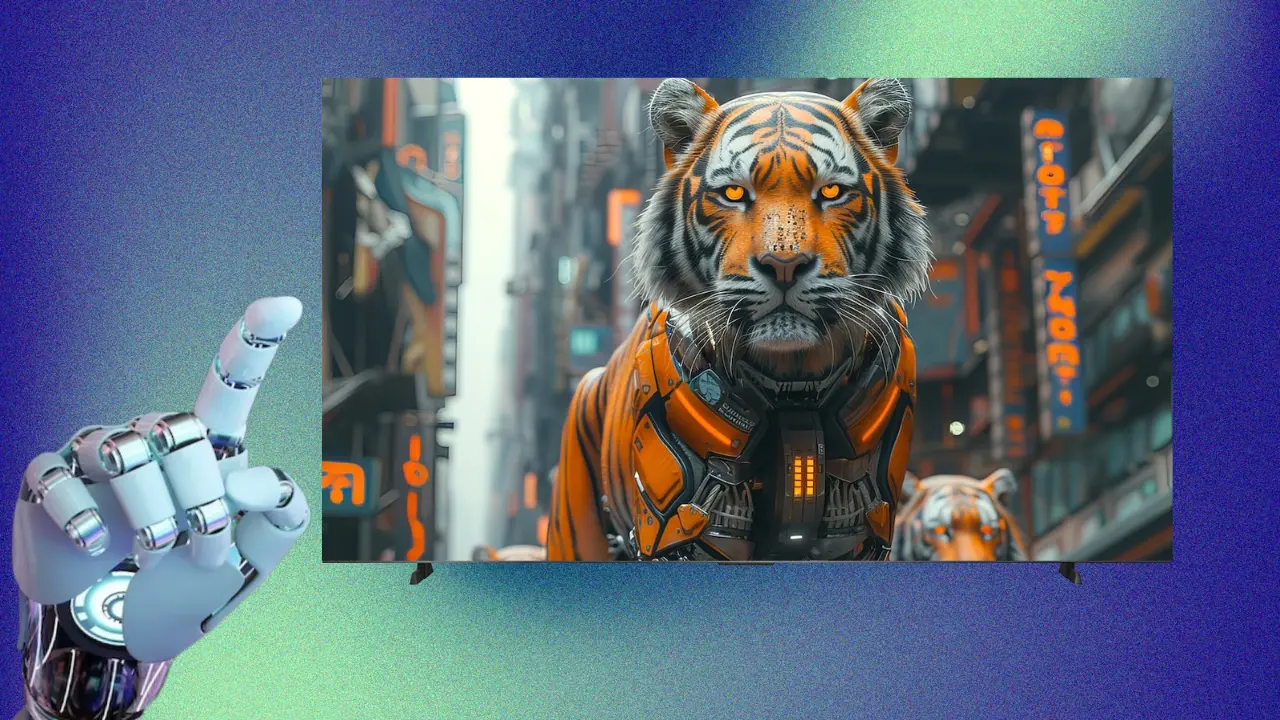

AI-powered picture quality removes the need for manual TV settings by automatically understanding what you are watching, the light in your room, and how motion and colour should behave in that moment.
Why do TV settings still feel like work in 2026?
It usually starts the same way.
A new TV arrives.
The screen looks incredible in the showroom.
At home, something feels slightly off.
Cricket looks too bright at night.
Movies feel dull in the afternoon.
Cartoons look fine, but live sports feel strange.
So you open settings.
Brightness. Contrast. Motion. Colour temperature.
Ten minutes later, nothing feels settled.
This is not a user problem.
It is a system problem.
For years, picture quality assumed one thing.
That people enjoy tuning screens.
Most Indian households do not.
They just want the picture to look right, every single time.
The quiet shift from control to intelligence

AI-powered picture quality changes the role of a TV.
Earlier, a TV waited for instructions.
Now, it takes responsibility.
Modern systems like AI Center Max on the Haier S90 QLED 254cm (100) Google TV continuously observe three things:
- What is playing: sports, movies, animation, gaming
- How it is filmed: resolution, frame rate, colour depth
- Where it is played: room lighting, shadows, time of day
Then the TV adjusts in real time.
Not with one preset.
But with thousands of small decisions happening every second.
Great picture quality is not about more settings. It is about better timing.
Why picture presets stopped being enough
Most TVs still offer picture modes.
Standard.
Movie.
Vivid.
Sport.
They help, but they are blunt tools.
A cricket match shot under harsh afternoon sun needs different tuning than one under floodlights.
A movie watched at noon behaves differently than the same movie at 11 pm.
Presets cannot react.
AI systems can.
On large displays like the Haier S90 QLED 254cm (100) Google TV, this difference becomes even more noticeable. Bigger screens amplify every flaw. AI corrects them before you see them.
How AI-powered picture quality actually works
Think of AI picture processing as an experienced editor living inside the TV.
It does not apply one rule.
It layers many.
Here is what happens quietly in the background:
- Scene recognition
The TV identifies whether the frame shows a stadium, a close-up face, a landscape, or animation. - Motion intelligence
Fast-moving objects like balls, bikes, or action scenes are tracked separately from the background. - Depth and contrast optimisation
Foreground elements stay sharp without crushing shadows or over-brightening highlights. - Colour balance control
Skin tones remain natural. Greens stay realistic. Reds do not bleed.
This entire process is handled by the AI Ultra Sense Processor working within the AI Center Max ecosystem on the Haier S90 QLED TV.
You never see the adjustments.
You only see the result.
A real Indian living room moment
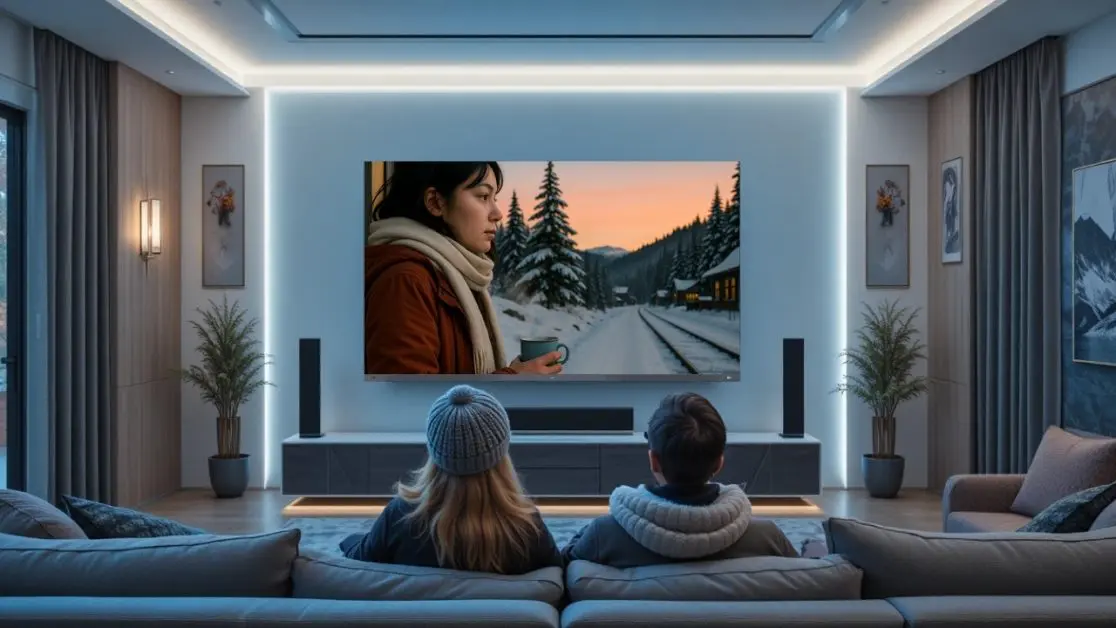
Picture a typical Sunday evening.
The lights are dim.
A family is watching a thriller on OTT.
Later, someone switches to cricket highlights from the afternoon match.
Without AI:
- The movie feels too dark
- The match looks overly sharp or artificial
- Someone reaches for the remote again
With AI-powered picture quality on a TV like the Haier S90 QLED 254cm (100) Google TV:
- The TV senses low ambient light and enhances clarity without glare
- Motion handling adapts instantly for sports
- Colour and contrast rebalance automatically
The TV adapts to the home.
The home does not adapt to the TV.
Why this matters more in modern Indian homes
Indian homes today are multi-purpose.
Living rooms double as workspaces.
Lighting changes throughout the day.
Viewing distance shifts constantly.
Large-screen TVs like the Haier S90 QLED 254cm (100) demand smarter processing because they reveal more detail and more imperfections.
AI-powered picture quality fits this reality.
It supports:
- Compact apartments with mixed lighting
- Open layouts where sunlight shifts across the day
- Families with different viewing habits across age groups
One screen.
Many contexts.
Manual settings struggle here.
AI thrives.
What AI removes, and what it quietly adds
This shift is not about removing control.
It is about removing friction.
What disappears:
- Endless tweaking
- Confusing jargon
- Trial-and-error adjustments
What replaces it:
- Consistency
- Visual comfort
- Confidence
The TV becomes predictable in the best way.
When technology understands context, effort disappears.
Haier S90 QLED and the idea of integrated intelligence
The Haier S90 QLED 254cm (100) Google TV with AI Center Max is built around the idea that picture quality should work as a system, not as isolated features.
AI Center Max integrates:
- AI Scene Detection
- AI Colour Boost Pro
- AI HDR Enhancer Pro
- AI Motion and AI Depth tuning
Instead of reacting after a problem appears, the system anticipates what the scene needs and adjusts instantly
This is why large screens feel cinematic without feeling overwhelming.
An overlooked benefit: eye comfort
There is another advantage people rarely talk about.
Viewing comfort.
Overly sharp edges, excessive brightness, and aggressive contrast lead to fatigue.
Especially during long binge sessions or match nights.
AI-powered picture systems balance brightness with room lighting and smooth visual extremes automatically.
You may not notice it immediately.
But your eyes will thank you later.
The bigger pattern behind AI-powered screens
This shift is not limited to TVs.
Smart refrigerators manage cooling cycles automatically.
Smart ACs adapt to weather and usage patterns.
Smart TVs now manage picture quality on their own.
The pattern is clear.
First, technology offers control.
Then, it offers convenience.
Finally, it offers understanding.
The best technology feels invisible.
Who benefits the most
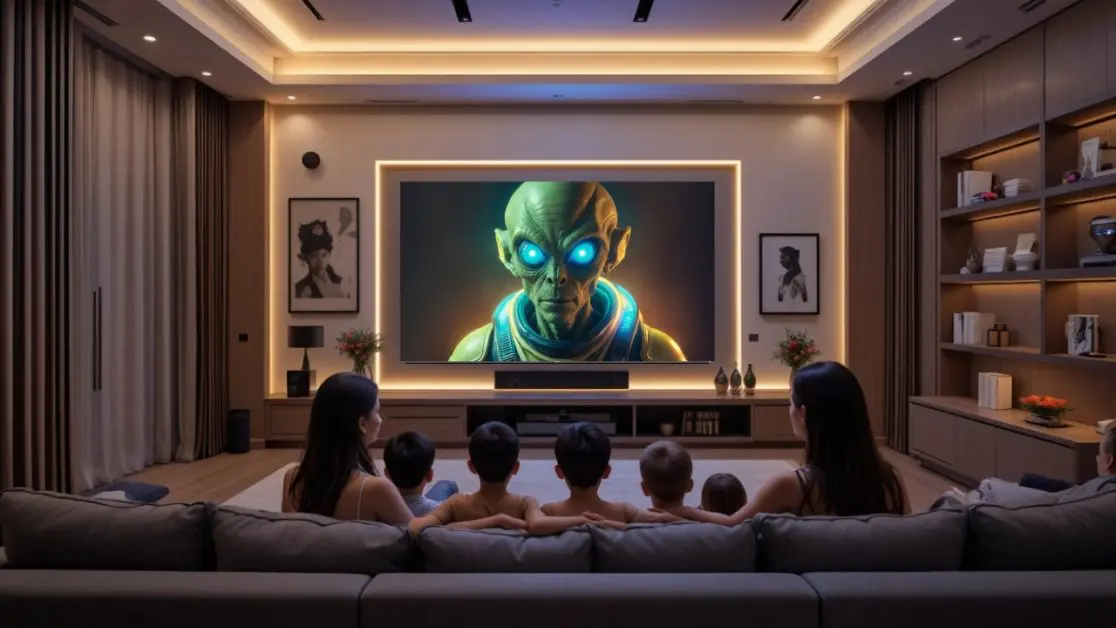
AI-powered picture quality helps different people in different ways:
- Working professionals
Better night viewing after long days, no setup required. - Families
One TV that works well for cartoons, sports, and movies. - New homeowners
Fewer technical decisions during installation. - Older users
No need to remember or adjust picture settings.
The system adapts quietly, in the background.
Manual control still exists. It just stops being necessary
For those who enjoy tweaking, settings are still available.
But they are optional.
AI handles the baseline.
You intervene only if you want to.
That is the real upgrade.
The idea worth remembering
AI-powered picture quality is not about making TVs smarter.
It is about making everyday viewing simpler.
When screens stop asking for attention, people focus on what matters.
The match.
The movie.
The shared moment.
Large-screen TVs like the Haier S90 QLED 254cm (100) Google TV with AI Center Max do not just display content.
They understand the room they live in.
And once you experience that, manual settings start to feel like a thing from another time.
Frequently Asked Questions
Why does my TV still expect me to understand brightness, contrast, and motion settings in 2026?
Most TVs still assume users enjoy manual control. In reality, most households want consistency. AI-based systems shift responsibility from the viewer to the TV itself.
Why does cricket look too bright at night but dull in the afternoon?
Sports broadcasts change lighting conditions dramatically. AI systems recognise these shifts and retune brightness, contrast, and colour instantly.
Why does fast motion in sports sometimes feel unnatural or overly sharp?
Traditional motion smoothing applies one rule to everything. AI motion intelligence tracks fast-moving objects separately from the background, keeping movement smooth without looking artificial.
Does AI picture processing add lag or slow things down?
No. Adjustments happen in milliseconds at the processor level. You don’t see transitions, only stable visuals.
How does AI-powered picture quality actually work behind the scenes?
It layers multiple processes simultaneously:
1. Scene recognition (faces, landscapes, stadiums)
2. Motion tracking for fast objects
3. Depth and contrast optimisation
4. Real-time colour balance correction
All of this runs continuously without presets.
Is AI just a marketing word for picture modes?
No. Presets are static. AI systems make thousands of micro-adjustments per second based on context.
Do large TVs really need smarter processing than smaller ones?
Yes. The larger the screen, the more important real-time optimisation becomes.
Can AI actually make viewing more comfortable, not just sharper?
Yes. Comfort is a byproduct of balanced visuals, not extreme ones.