
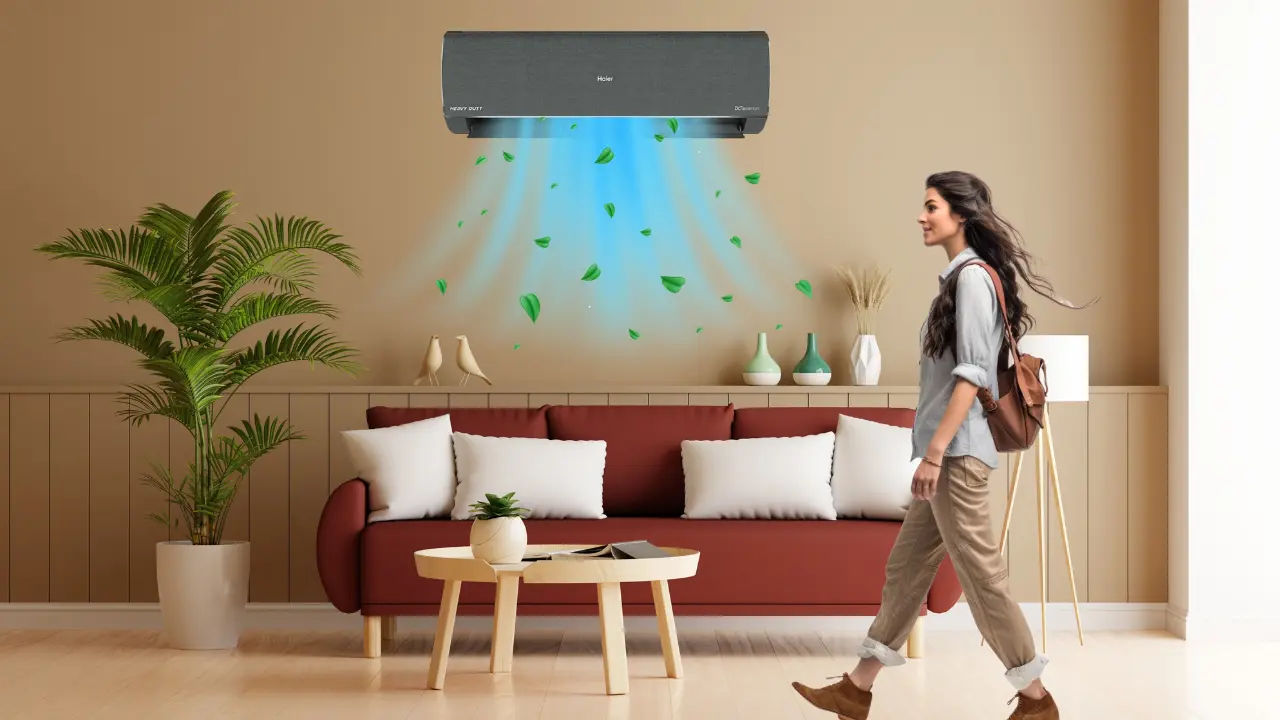

AI Pre Cooling removes the waiting period by starting the cooling process before you even reach home.
Instead of reacting after you switch on the AC, the system predicts arrival, understands usage patterns, and pre-conditions the room so comfort is ready when you are.
The result is instant relief, lower energy spikes, and no more standing in front of the AC wondering how long it will take.
The moment everyone in India knows too well
You unlock the door after a long day.
The heat hits first.
Shoes come off slowly.
The fan goes on.
Then the AC.
And then you wait.
Five minutes.
Sometimes ten.
Sometimes longer in peak summer.
This wait has become so normal that most homes accept it as the price of cooling. But that assumption is outdated.
The wait exists not because cooling is hard, but because traditional systems start too late.
That is the real problem AI Pre Cooling solves.
Why waiting for cooling was never inevitable
Conventional air conditioners work on a simple idea.
Someone enters the room.
Someone presses a button.
The machine reacts.
This reactive loop creates three issues.
- Delayed comfort
Cooling starts only after discomfort is already felt. - Power spikes
The compressor works harder to pull down temperature quickly. - Overcooling habits
People set lower temperatures than needed, just to feel relief faster.
These are not user mistakes. They are system limitations.
AI Pre Cooling changes the system itself.
What AI Pre Cooling actually does
AI Pre Cooling shifts cooling from reaction to anticipation.
Instead of waiting for manual input, the system learns patterns, predicts occupancy, and starts cooling in advance.
According to Haier’s AI Atmox platform, the system uses behavioral learning and geofencing to detect when a user is approaching home and begins pre-cooling automatically within a defined range of around 100 metres .
That single shift removes the waiting experience entirely.
You do not feel cooling happen.
You arrive in comfort.
A simple way to understand it
Think of a pressure cooker.
You do not turn it on when guests start eating.
You start it earlier so food is ready at the right time.
AI Pre Cooling applies the same logic to air.
Cooling is not a reaction anymore.
It is preparation.
How AI knows when to start
This is where systems thinking matters.
AI Pre Cooling does not rely on one signal. It combines multiple inputs.
The system reads patterns, not just commands
AI learns daily routines over time.
- When you usually leave work
- How long your commute takes
- When the room is typically occupied
- Seasonal temperature behavior
This learning happens passively. No manual schedules. No constant updates.
Geofence based anticipation
Once the system recognizes that you are nearing home, it triggers pre-cooling. By the time the door opens, the room is already approaching the target comfort zone.
This is why the wait disappears.
Why this matters more in Indian homes
Indian conditions amplify the problem of delayed cooling.
- High ambient temperatures
- Dense urban heat
- Afternoon humidity
- Compact apartments that trap warmth
Waiting for cooling is not a small inconvenience here. It directly affects how evenings begin.
AI Pre Cooling acknowledges this reality instead of ignoring it.
Three ways households usually deal with heat
Before AI Pre Cooling, most homes used one of these approaches.
Option one: Turn on the AC earlier
This works. But it wastes electricity if plans change.
Option two: Lower the temperature aggressively
This gives faster relief but increases power consumption and discomfort later.
Option three: Accept the wait
This costs nothing financially but drains comfort daily.
AI Pre Cooling quietly replaces all three options with a better system.
The hidden benefit most people miss
Instant comfort feels good.
But the bigger win is energy behavior.
When cooling starts gradually and early:
- Compressors avoid peak load stress
- Temperature stabilises instead of overshooting
- Users stop lowering set points unnecessarily
Haier’s AI Climate Control ecosystem integrates pre-cooling with adaptive modes that prevent overcooling and optimize power usage in real time .
Comfort improves. Bills stay controlled.
That balance is the real achievement.
Why this feels different from timers
Many people ask the same question.
Is this not just a smart timer?
No.
Timers assume fixed schedules.
AI adapts to real life.
If you come home early, the system adjusts.
If you stay out late, it holds back.
If the weather changes, it recalibrates.
Timers are rigid.
AI is responsive.
Where AI Pre Cooling fits into daily life
The impact shows up in small moments.
- Parents walking in with tired kids
- Couples returning after grocery runs
- Professionals stepping in after late calls
- Elderly family members sensitive to heat
No one waits.
No one adjusts settings.
Comfort is already present.
That is the difference between smart features and thoughtful design.
The system behind the experience
AI Pre Cooling does not work alone.
It connects with a broader intelligence layer that includes:
- AI Climate Control for adaptive temperature management
- AI Target Cooling to focus airflow where people are
- AI AI Eco 2.0 that reduce power once comfort is reached
- Electricity monitoring 2.0 to track usage patterns
Together, these systems remove guesswork entirely .
The user experience feels simple because the system underneath is complex.
Why this is not about speed
Most brands talk about faster cooling.
That misses the point.
Speed still assumes waiting.
AI Pre Cooling removes waiting altogether.
The best technology does not arrive loudly.
It arrives quietly, already done.
A useful way to judge smart appliances
Here is a practical filter.
If a feature asks for attention, it adds work.
If it removes attention, it adds value.
AI Pre Cooling belongs firmly in the second category.
No reminders.
No scheduling stress.
No extra thinking.
What this signals about the future of home comfort
AI Pre Cooling is not a standalone trick.
It reflects a broader shift.
Homes are moving from command-based systems to predictive environments.
- Lights that adjust automatically
- Appliances that learn usage
- Climate that prepares instead of reacts
This is not about novelty.
It is about reducing mental load.
The bigger insight
People do not want more controls.
They want fewer decisions.
Waiting for cooling was never about temperature.
It was about friction.
AI Pre Cooling eliminates that friction by changing when cooling begins, not how powerful it is.
And once you experience a room that is already comfortable when you arrive, waiting starts to feel strangely outdated.
That is how good systems work.
They make old habits quietly disappear.
Frequently Asked Questions
Why does my evening mood depend so much on how fast the AC cools?
Because comfort sets the emotional tone of the evening. AI Pre Cooling ensures the transition from outside heat to indoor comfort is immediate, not delayed.
Is AI Pre Cooling useful for kids and elderly family members?
Yes. It’s especially helpful for people sensitive to heat, since they don’t have to wait or adjust settings; the environment is already stable.
Is AI Pre Cooling just about faster cooling?
No. Faster cooling still assumes waiting. AI Pre Cooling removes waiting entirely by shifting cooling earlier in time.
How does AI Pre Cooling know when I’m coming home?
Systems like Haier India’s AI Atmox use behavioral learning + geofencing. They learn your routine and detect when you’re within a defined distance (around 100 meters), then start cooling automatically.
Does AI Pre Cooling actually save electricity?
Yes, indirectly. It reduces compressor stress, avoids peak power draw, and stops overcooling habits all of which stabilise energy consumption.