
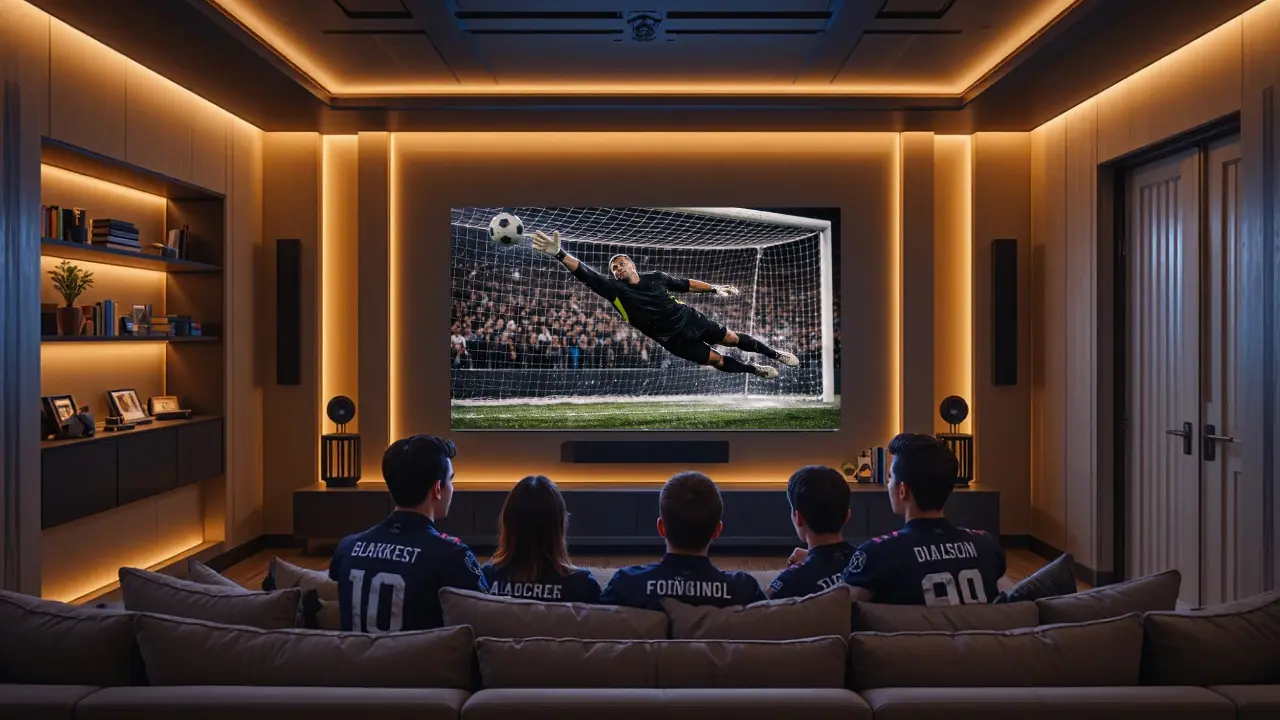

AI scene detection enhances dark stadium shots by recognising low-light sports environments in real time and then adjusting brightness, contrast, shadow detail, and motion handling accordingly.
Instead of over-brightening the screen or losing detail in shadows, the TV adapts scene by scene so night matches remain clear, balanced, and immersive.
Now let us slow down and talk about why this matters in real Indian homes.
The late-night match problem every household knows
It is 8:30 pm.
Dinner plates are still on the table.
Someone is making chai in the kitchen.
The match has just moved under floodlights.
On many TVs, this is where the experience breaks.
- The pitch looks fine, but players melt into shadows
- The ball disappears during fast deliveries
- Jerseys lose colour accuracy
- Crowd shots turn into dark noise
This is not a broadcast issue.
It is a processing issue.
Dark stadium shots are complex.
And complexity exposes weak systems.
Why dark stadium scenes are hard to display
A night stadium is not truly dark.
It is uneven.
- Harsh floodlights on the pitch
- Deep shadows in the stands
- Fast movement across the frame
- Constant camera switches
Traditional TVs treat the entire screen as one lighting condition.
They apply blanket brightness and contrast adjustments.
That creates two flawed choices.
One option is boosting brightness
- Blacks turn grey
- Depth is lost
- The image looks flat
The second option is preserving blacks
- Players disappear in shadows
- Facial details are lost
- The game feels distant
Both approaches compromise the experience.
This is where AI scene detection steps in.
What AI scene detection actually means
AI scene detection is not a filter.
It is pattern recognition.
The TV analyses every frame and asks practical questions in real time.
- Is this a night stadium or a studio shot?
- Are objects moving fast or slow?
- Where are the highlights and where are the shadows?
- Is this sports content, cinema, or live TV?
Once the scene is identified, the TV adjusts only what is necessary.
Not globally.
Locally.
This is how clarity improves without destroying the atmosphere.
Why sports benefit more than movies

Movies are colour-graded intentionally.
Sports are unpredictable.
Live sports footage comes from multiple cameras with different exposure levels.
Lighting changes every few seconds.
No preset can handle this well.
AI scene detection adapts frame by frame.
That is why dark stadium shots improve dramatically during live matches.
The role of Mini LED in dark stadium clarity
AI alone is not enough.
The display hardware matters.
Mini LED technology uses hundreds of local dimming zones to control light more precisely across the screen.
In Haier’s M80F Mini LED range, this allows:
- Bright floodlights to stay bright
- Shadows to remain deep and detailed
- Minimal light bleeding between zones
For example, the Haier M80F Mini LED 165cm (65) Google TV (H65M80FUX) uses 180 local dimming zones to manage contrast effectively in complex scenes like night stadiums.
This precision gives AI something meaningful to work with.
How AI protects shadow detail without washing out blacks
Dark scenes should feel dark.
The goal is not to make night look like day.
AI scene detection focuses on local contrast, not brute-force brightness.
That means:
- Players stay visible without glowing
- Jerseys retain natural colour
- The pitch remains bright without spilling into the stands
The result feels realistic, not artificial.
This balance is what separates premium viewing from merely bright screens.
Motion clarity matters more at night than during the day
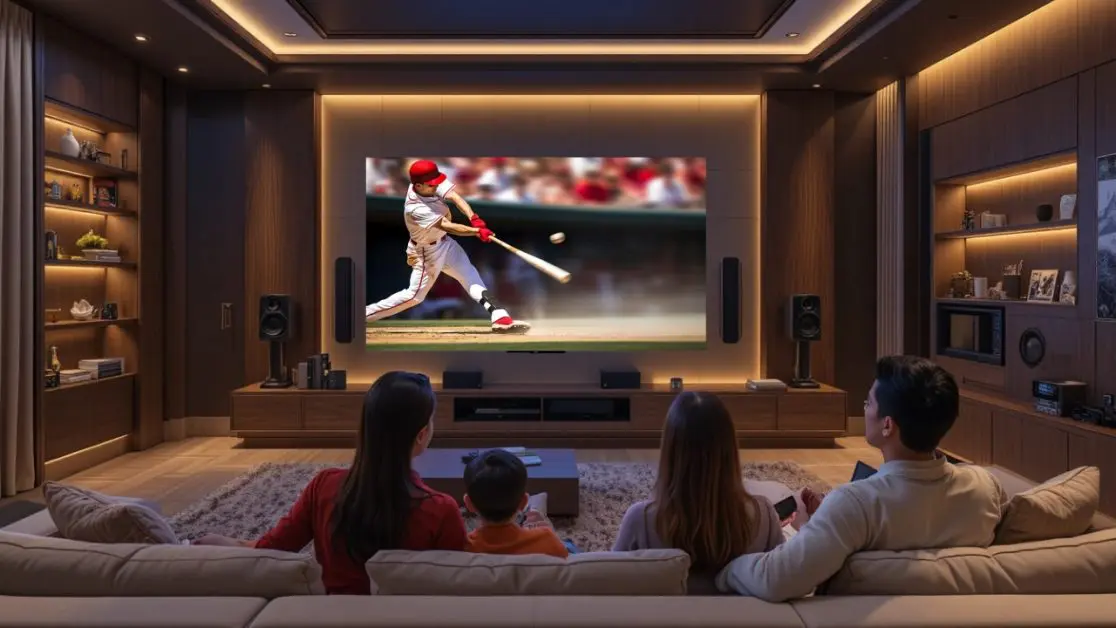
Motion blur becomes more visible in dark scenes.
A fast-moving ball under lights is the ultimate test.
Any delay or blur stands out instantly.
AI-powered motion processing identifies fast-moving objects separately from static backgrounds.
In the M80F Mini LED series, MEMC technology works alongside AI processing to:
- Keep ball movement sharp
- Reduce motion blur during fast pans
- Maintain clarity during replays
This is especially noticeable during wide-angle stadium shots where darkness dominates the frame.
Why crowd shots finally feel alive
Crowd reactions are emotional moments.
They are also usually the darkest shots.
AI scene detection recognises human faces and shapes even in low light, gently lifting mid-tones while preserving black levels.
You begin to notice:
- Waving flags
- Applause
- Expressions
Not just shadowy silhouettes.
Sport feels more human when the crowd is visible.
Sound and picture work together in night matches
Dark stadium shots are often paired with subtle audio cues.
Crowd noise.
Footsteps.
Commentary pauses.
The Sound by KEF system with 2.1 channel 50W output in the M80F Mini LED TVs adds weight to these moments.
Combined with Dolby Atmos support, the experience feels fuller and more immersive, especially during tense night matches.
The picture draws you in.
Sound keeps you there.
Why Indian living rooms need smarter processing
Indian homes are rarely pitch dark.
There is ambient light from kitchens, balconies, and nearby streets.
People move in and out of the room.
Phones light up constantly.
AI scene detection compensates for this by preserving contrast even in mixed lighting conditions.
Dark stadium shots remain visible without forcing you to turn off every light in the house.
This makes shared viewing more comfortable and practical.
A simple comparison worth seeing
| Without AI Scene Detection | With AI Scene Detection |
| Crushed or grey blacks | Deep blacks with detail |
| Players blend into background | Clear subject separation |
| Ball disappears in motion | Sharper motion clarity |
| Flat crowd shots | Visible depth and faces |
| Manual setting changes | Automatic scene adaptation |
This is not a cosmetic upgrade.
It is a structural one.
Why bigger screens demand better AI
The larger the screen, the less forgiving it becomes.
On an 85-inch display, flaws in dark stadium shots are impossible to ignore.
That is why AI scene detection becomes essential on large screens like the Haier M80F Mini LED 215cm (85) Google TV and Haier M80F Mini LED 189cm (75) Google TV.
Big screens amplify both brilliance and mistakes.
AI ensures you only notice the brilliance.
Where Haier fits into everyday viewing
Haier’s approach is not about overwhelming users with settings.
AI Smart Voice by Google Assistant, Google TV recommendations, Dolby Vision, Mini LED, and intelligent picture processing work quietly in the background.
You do not switch modes mid-match.
You do not tweak brightness every over.
The TV adapts as the game unfolds.
That is the kind of smart technology that fits naturally into daily life.
The insight worth remembering
Great picture quality is not about brightness alone.
It is about judgement.
AI scene detection brings judgement to the screen.
And once you experience a night match where players stay visible, motion stays sharp, and darkness feels intentional, it changes how you watch sport.
Because when the lights go down in the stadium, your viewing experience should not.