

Why does September always smell like damp corners and soggy socks?
Because it’s the month when rain turns friendly homes into uninvited science experiments. The monsoon that cools our evenings also sneaks in moisture that clings to clothes, bedsheets, and even the insides of wardrobes. Fungus finds a playground.
And no matter how much you love the smell of wet earth, nobody loves the smell of fungus on freshly washed laundry.
Monsoon is beautiful – until it isn’t
Think of a Mumbai balcony in September. On one side, chai and pakoras. On the other, bedsheets that refuse to dry for three days straight. By the fourth day, they smell like they’ve been stored in a forgotten storeroom.
This is the paradox of Indian monsoons. They refresh the land but test our patience indoors. Every Indian household has its version of this story:
- Parents who wash school uniforms only to find them still damp the next morning.
- Singles in Bengaluru who try sun-drying jeans, only to drag them back in after another surprise downpour.
- Families in Kolkata who run ceiling fans at full speed, hoping to chase away the wet heaviness of September air.
Moisture is not just inconvenient. It’s fertile ground for bacteria and fungus.
The hidden system behind laundry problems
Here’s the thing: fungus is not the villain, it’s the environment. High humidity plus warmth equals a perfect breeding ground. Once spores settle on damp clothes, they multiply fast.
So what looks like “my clothes smell bad” is really a deeper system at work:
1. Rain traps humidity indoors.
2. Clothes stay damp longer.
3. Fungus grows invisibly, leaving odors and sometimes skin irritations.
That’s the system modern technology tries to disrupt.
Enter the invisible shield – Anti-Bacterial Technology
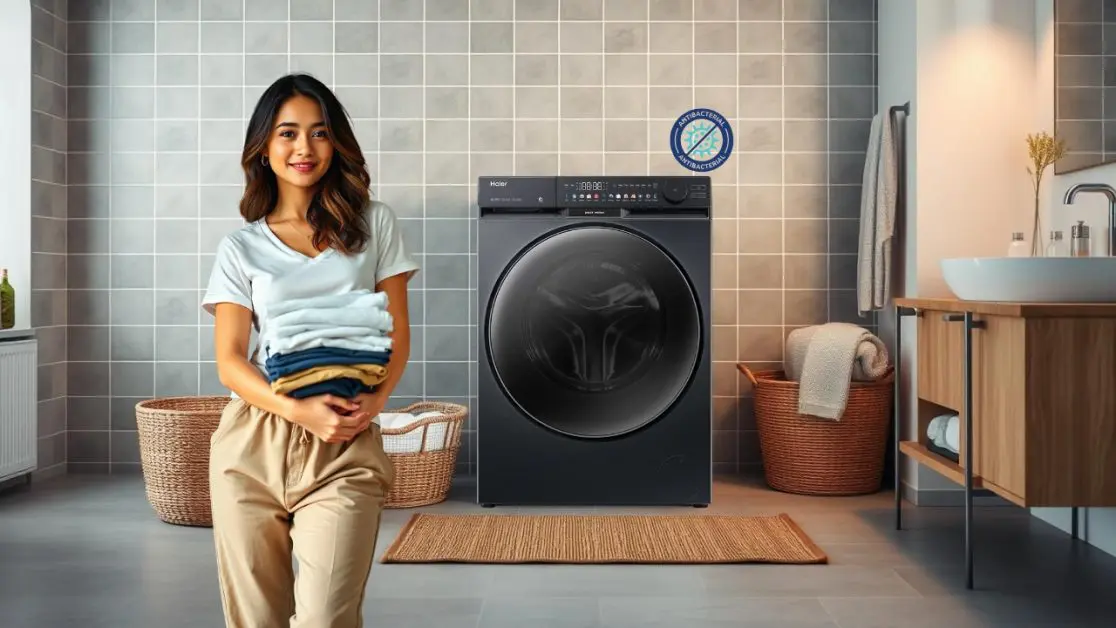
Now imagine your washing machine doesn’t just wash clothes it protects them even after the cycle ends. That’s where Haier’s Anti-Bacterial Technology (ABT) comes in.
This isn’t a marketing flourish. It’s a smart surface treatment applied to parts of the washing machine most exposed to moisture and residue like the detergent drawer and gasket. Those are the very places fungus loves to start colonies.
By coating them with anti-bacterial material, Haier cuts down the chance of microbial buildup. Which means fewer odors, safer clothes, and a drum that stays fresh even when the weather outside insists otherwise.
Why it matters in September
September in India isn’t just wet, it’s relentless. Even if you manage to dry a shirt by the window, the damp smell can cling. Fungus spores don’t care about your deadlines or your evening plans. They care about survival.
Which makes an anti-bacterial layer more than just a feature. It’s peace of mind for:
- Parents who don’t want their baby’s clothes smelling musty.
- Young professionals who need crisp, clean formals despite endless rain.
- Elderly households where health sensitivities mean laundry hygiene is non-negotiable.
It’s not a luxury. It’s a necessity, quietly built into the design.
How Haier builds for Indian monsoons
Haier’s front-load washing machines do more than wash. They anticipate the quirks of our seasons:
- Super Drum 525: larger space for clothes to move freely, ensuring thorough cleaning.
- Direct Motion Motor: less vibration, longer life, and quieter cycles even during late-night washes.
- Refresh Function: a steam-based cycle that revives clothes stuck in the machine, reducing odors and wrinkles.
- Smart App control: the Hai Smart App lets you start or schedule cycles without stepping out in the rain.
And tucked into all this is the Anti-Bacterial Technology, a small detail solving a large September headache.
The psychology of fresh laundry
It’s easy to dismiss laundry as routine. But think of how you feel pulling out a crisp, fresh shirt versus one with a faint musty odor. One gives you confidence; the other makes you second-guess whether people can smell it too.
Laundry isn’t just about hygiene. It’s about dignity, comfort, and the invisible armor we wear into our day. Which is why features like ABT matter: they protect not just clothes, but moods.
What are the options?

When monsoon hits, households usually juggle three strategies:
1. Old-school drying hacks
Running fans overnight, iron-drying damp clothes, even sprinkling talc inside wardrobes. Economically, yes. Effective, not always.
2. Dehumidifiers and room heaters
These reduce moisture indoors but raise electricity bills. They treat the environment, not the clothes.
3. Appliances designed with anti-fungus protection
Like Haier washing machines with ABT, they solve the problem at its root. Clothes come out not just clean but shielded against bacterial buildup.
Each option has costs and benefits. The smart choice is the one that aligns with lifestyle and health priorities.
Aphorism worth remembering
Fresh laundry is not just about clean clothes, it’s about a home that refuses to let fungus write its own script.
A glimpse into the future of home care
What’s striking is how appliance design is shifting. It’s no longer enough for machines to wash, cool, or cook. They need to be protected. To anticipate the environments we live in.
For India, that means building for dust, heat, and yes monsoon dampness. An Anti-Bacterial Technology may sound small, but it reflects a bigger truth: the best technology is invisible until you need it.
September, reimagined
Picture this:
- School uniforms washed at night, pulled out crisp the next morning.
- Bedsheets smelling like fabric softener, not damp storerooms.
- Wardrobes free of that sticky moisture smell that September usually guarantees.
That’s what ABT does. It doesn’t fight the rain outside, it protects the home inside.
The bigger implication
Every year, Indian households adjust to monsoon with hacks and compromises. But as technology adapts, fewer compromises are needed.
Haier’s washing machines, with ABT as one of many thoughtful features, are proof that design can address lifestyle pain points directly. They don’t just sell convenience, they quietly restore control in a season known for chaos.
Closing thought
September’s fungus fears are real. But so is the relief of knowing your washing machine has already thought about them.
In the end, that’s the real upgrade: not a new button, but the feeling that your appliance understands the season better than you do.