
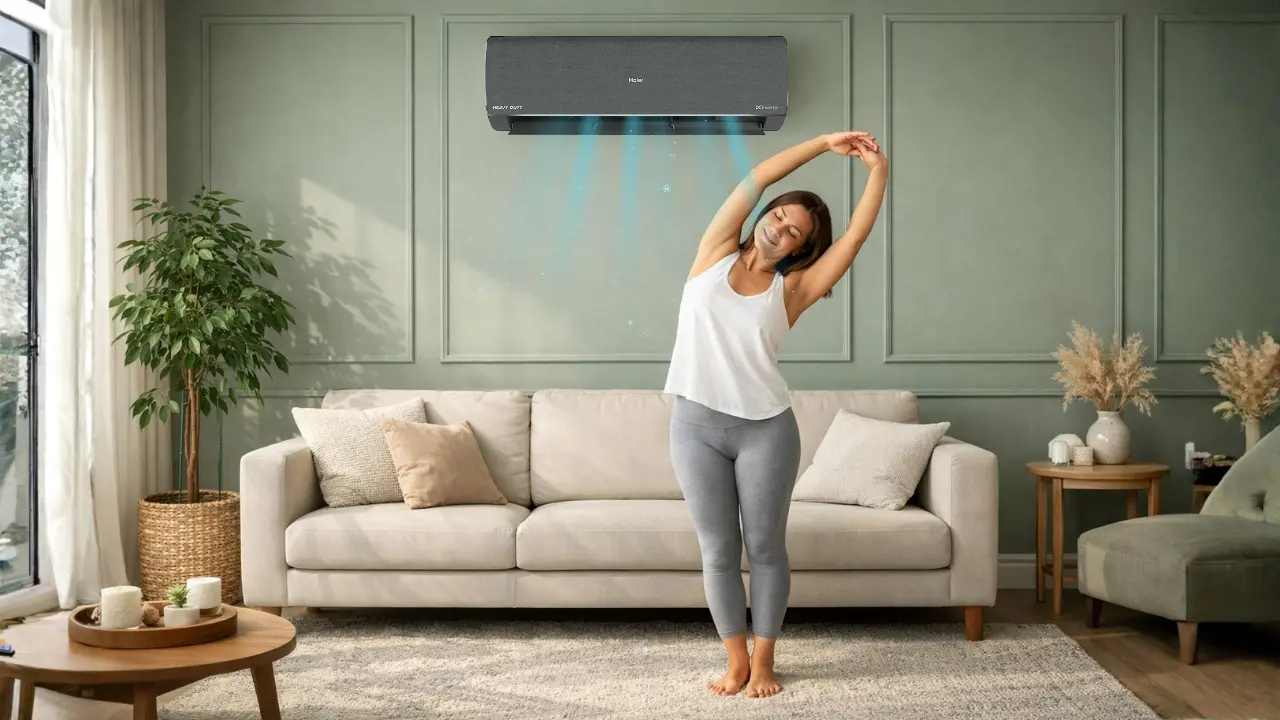

AI Target Cooling prevents overcooling by directing cool air only where it is needed, instead of chilling the entire room.
It analyses room layout, installation position, and user presence to deliver focused comfort. The result is simple. Faster cooling where you sit. Less energy wasted where you do not.
Overcooling stops being a habit. It becomes a solved problem.
Why do Indian homes overcool in the first place?
Picture a typical May evening in Mumbai.
You return home after traffic. The room feels like an oven. You lower the temperature to 18°C. The AC roars to life. Ten minutes later, you reach for a blanket.
This is not comfort. This is compensation.
According to India’s Bureau of Energy Efficiency, every 1°C lower setting can increase electricity consumption by nearly 6 percent. Yet many households set temperatures far below the recommended 24°C because cooling feels slow.
Overcooling is not a preference issue.
It is a system response to delayed comfort.
Traditional ACs cool the entire room uniformly. They do not know where you are sitting. They do not understand the layout. They simply push cold air everywhere.
And everywhere is expensive.
What Exactly Is AI Target Cooling?
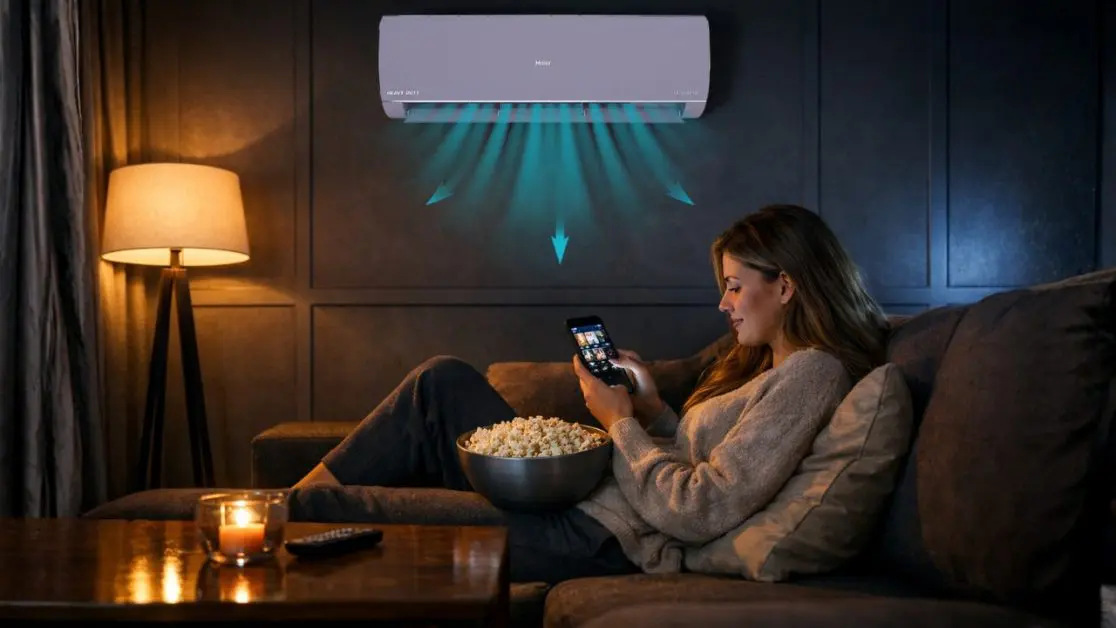
Focused Cooling Instead of Blanket Cooling
AI Target Cooling changes the logic.
Instead of cooling the whole room equally, it identifies the desired zone and sends air directly there. According to the AI Atmox overview, the system uses installation position data and AI cloud services to deliver targeted airflow precisely to the chosen area.
This matters more than it sounds.
Because cooling a sofa is different from cooling an empty corner.
How It Works in Real Homes
Imagine three scenarios:
1. One person working on a laptop at the dining table.
2. Two kids watching cartoons on the floor.
3. A couple sleeping at night.
Traditional cooling treats all three the same.
AI Target Cooling adjusts direction and intensity based on need.
The AC becomes responsive. Not reactive.
The Hidden Cost of Overcooling
Overcooling feels harmless. It is not.
Let us break it down clearly.
| Impact Area | What Overcooling Does | Long-Term Cost |
| Electricity | Runs compressor harder | Higher bills |
| Health | Causes throat dryness and sleep discomfort | Poor rest |
| Equipment | Increases runtime stress | Shorter lifespan |
| Habits | Normalizes extreme settings | Energy waste |
India’s power demand peaks sharply during summer evenings. According to the Central Electricity Authority, cooling appliances drive a significant portion of urban peak load.
Every unnecessary degree matters.
Cooling is not just a comfort decision.
It is a resource decision.
Three Ways People Try to Fix Overcooling
One Option Is Manual Adjustment
Lower temperature. Raise it again. Adjust fan speed. Repeat.
Cost: Time and constant attention.
Benefit: Limited.
Manual control assumes you have energy left after work. Most evenings, you do not.
The Second Option Is Timers
Set a timer for one hour. Hope the room balances.
Cost: Guesswork.
Benefit: Moderate energy control.
Timers operate on clock logic. Not human logic.
The Third Option Is AI Target Cooling
Let AI understand layout and airflow patterns. Direct cooling precisely.
Cost: Smart system investment.
Benefit: Faster comfort and lower waste.
It is economically efficient and requires no constant input.
The difference is not technology.
It is intentional.
What Makes AI Target Cooling Different from Regular AC Swing Modes?
Swing mode moves air left to right.
AI Target Cooling calculates spatial positioning.
According to the technical description, the system leverages installation data and AI cloud analysis to optimize airflow direction.
That means:
- It understands where the AC is mounted.
- It factors in room geometry.
- It prioritizes occupied zones.
It cools the person. Not the plaster.
That shift alone reduces unnecessary compressor cycles.
Comfort Is Not About Cold. It Is About Precision.
Indian households are multi-layered ecosystems.
Morning sunlight floods east-facing rooms. Afternoon heat traps itself in concrete walls. Night brings humidity changes.
A fixed cooling pattern cannot handle this complexity.
AI systems like AI Climate Control, analyse environmental data and user habits in real time to prevent overcooling without manual input.
This combination matters.
Target Cooling handles direction.
AI Climate Control handles adaptation.
Together, they remove guesswork.
How AI Target Cooling Impacts Electricity Bills
Let us look at numbers.
If an average split AC consumes around 1.5 units per hour, and overcooling extends runtime by even 30 minutes daily, that adds roughly 22 units monthly.
At ₹8 per unit, that is ₹176 per month.
Over a year, that crosses ₹2,000.
Now imagine reducing that waste through targeted airflow and smarter compressor cycles.
Small precision.
Large savings.
Electricity monitoring 2.0 features allow users to track consumption in graphical and calendar formats.
Awareness changes behaviour.
When you see usage clearly, you stop chasing extreme settings.
Where AI Target Cooling Fits into Everyday Indian Life
Work-From-Home Days
Laptop open. Video calls running. You sit in one zone for hours.
Target cooling maintains comfort without freezing the entire room.
Cricket Nights
Five people in one area. Empty corners everywhere else.
Focused cooling supports gathering energy without excess power.
Afternoon Naps
Only the bed area needs cooling. Not the wardrobe.
Precision improves sleep quality. According to sleep research from global climate-health studies, moderate temperature control improves deep sleep cycles.
Overcooling disrupts them.
The Bigger System at Work
AI Target Cooling does not operate alone.
It integrates with:
- AI Pre-Cooling, which anticipates arrival using geofencing
- AI Eco 2.0 modes that adjust power dynamically based on temperature gaps as seen
- AI Human Detection that shifts to energy-saving mode when the room is empty
This is not a feature list.
It is a layered system.
Each layer reduces overcooling from a different angle.
Why Overcooling Is Actually a Design Problem
People do not set 18°C because they love cold air.
They set it because comfort feels delayed.
When airflow reaches you directly and instantly, there is no need to shock the room.
Precision eliminates panic settings.
It is the same logic as adjusting a spotlight in a theatre. You illuminate the actor. Not the entire stage.
Cooling should behave the same way.
What This Means for the Future of Indian Homes
As cities grow denser and electricity demand rises, smarter cooling becomes essential.
India experiences some of the fastest AC adoption rates globally. Industry projections estimate residential AC ownership could triple by 2030.
If those systems overcool, demand spikes.
If they cool intelligently, infrastructure breathes easier.
AI Target Cooling is not about luxury.
It is about alignment.
Aligning comfort with efficiency.
Aligning lifestyle with responsibility.
A Simple Insight to Remember
Cold is easy.
Comfort is intelligent.
When airflow follows presence instead of habit, rooms feel balanced.
Overcooling disappears quietly.
And that is the point.
Smart appliances do not shout about innovation. They reduce friction so life flows smoothly.
In modern Indian homes, that shift matters.
Because the future of cooling is not colder air.
It is smarter.
Frequently Asked Questions
Why do I keep lowering my AC to 18°C even though I know 24°C is recommended?
Because comfort feels delayed. Traditional ACs cool the entire room uniformly, so you reduce the temperature drastically to feel faster relief. It’s a reaction to slow airflow reaching you, not a preference for extreme cold.
How much extra electricity am I using when I reduce my AC temperature by 1°C?
According to India’s Bureau of Energy Efficiency, every 1°C lower setting can increase electricity consumption by nearly 6%. Over time, this adds up significantly.
Why does my room feel freezing after 10 minutes of turning the AC on?
Because the system overcompensates. It cools the whole room aggressively instead of focusing on where you’re sitting.
Is overcooling actually a design issue rather than a habit?
Yes. Most users are reacting to delayed comfort caused by uniform cooling systems that don’t account for room layout or user position.
Why do Indian households commonly set ACs below 24°C?
Because cooling feels slow initially. Users compensate by lowering the temperature drastically to feel immediate airflow impact.
Does overcooling increase electricity demand nationally?
Yes. According to the Central Electricity Authority, cooling appliances drive a major portion of urban summer peak electricity load.
Is overcooling common in cities like Mumbai?
Yes, especially during peak summer evenings when rooms trap heat throughout the day.