
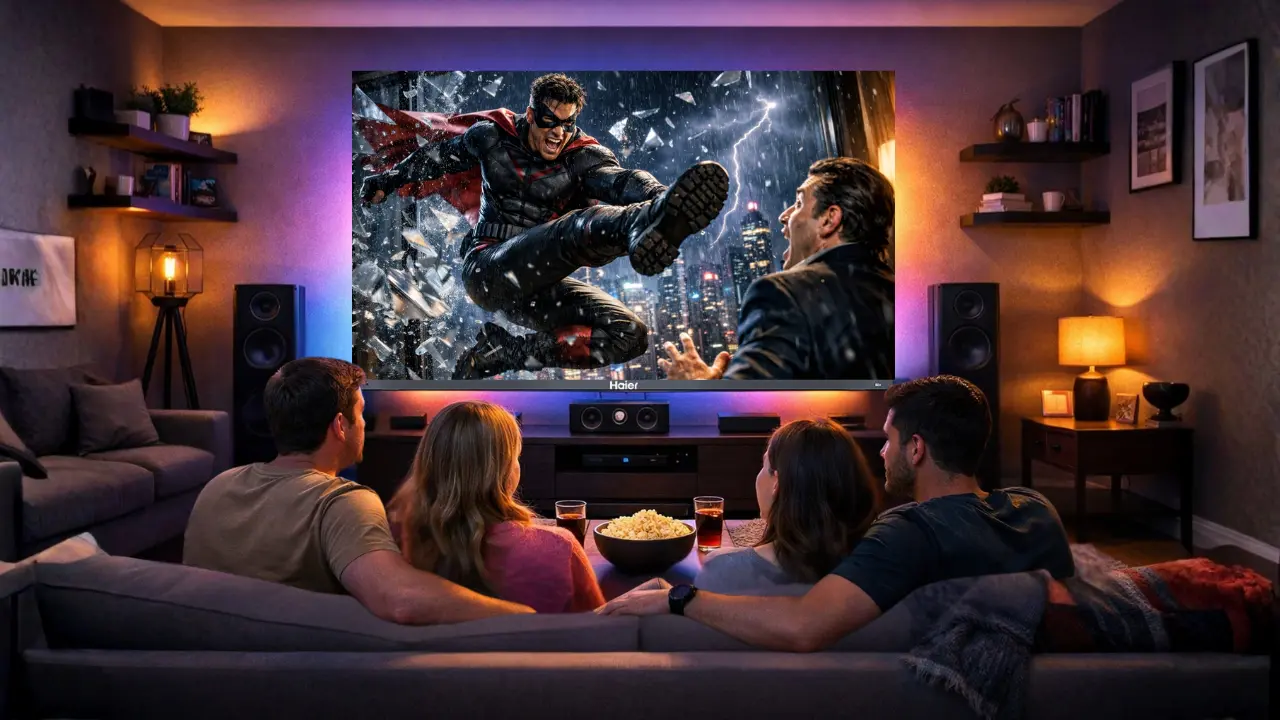

Sound by KEF delivers balanced and natural sound by engineering precision speakers, tuned acoustic chambers, and intelligent audio processing that reproduce dialogue, bass, and ambient detail exactly as intended.
The result is clarity without harshness, depth without distortion, and immersion without overwhelming your room.
That is the short answer.
The longer answer lives in your living room. In the way a cricket stadium roar feels wide, but commentary stays crisp. In this way a late night OTT show sounds intimate without waking the entire house.
Balanced sound is not louder.
It is the right sound.
Why does most TV sound feels off even when the picture looks stunning?
Picture technology has raced ahead. Mini LED. Dolby Vision. 4K HDR.
But audio often lags behind.
In Indian homes, the TV does not live in a soundproof theatre. It shares space with ceiling fans, pressure cookers, traffic outside, and family conversations.
According to industry usage data, Indian households open and adjust TV volume multiple times per hour during live sports. That is not preference. That is compensation.
The problem is not volume.
It is an imbalance.
What imbalance actually sounds like
- Dialogue that feels buried under background music
- Bass that thumps but lacks control
- High notes that feel sharp after 20 minutes
- Stadium noise that overwhelms commentary
The human ear is sensitive between 2 kHz and 5 kHz. That is where speech clarity lives. When that range is poorly tuned, you strain. Listening fatigue sets in.
Balanced sound removes strain.
What Does “Balanced & Natural Sound” Really Mean?
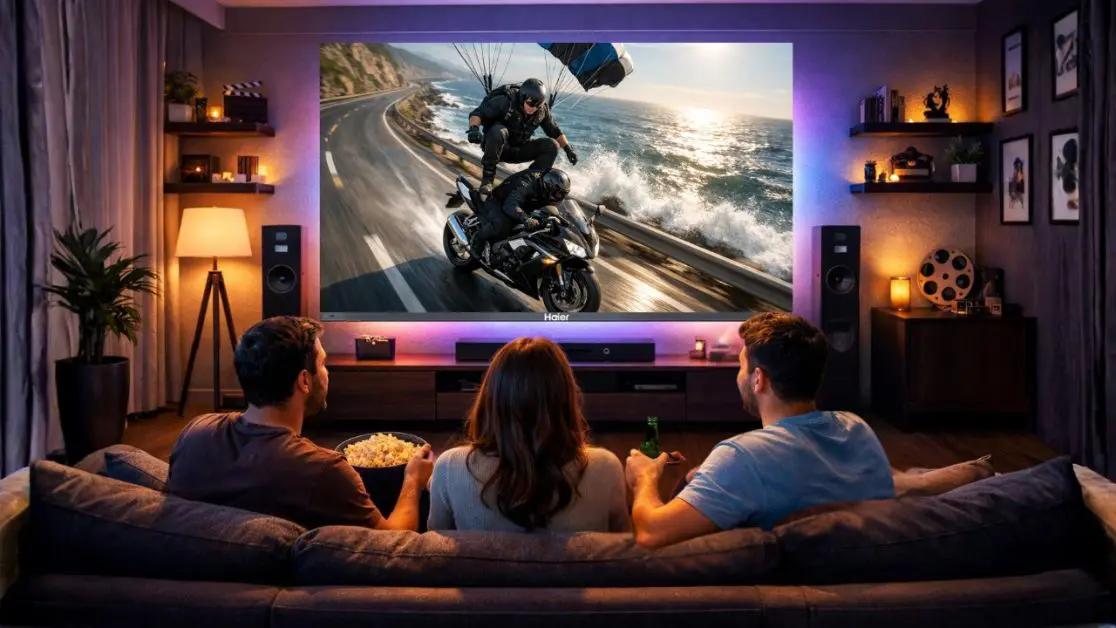
Balanced sound means no frequency dominates. Bass supports. Mids clarify. Highs add detail.
Natural sound means it feels real. Voices sound like voices. Applause sounds like a crowd, not static.
KEF, a British audio brand with over 60 years of acoustic engineering, built its reputation on speaker precision. When that expertise integrates into televisions as Sound by KEF, the goal is not to impress for five minutes.
The goal is to sustain comfort for five hours.
The system behind Sound by KEF
In models like the Haier M80F Mini LED 165cm (65) Google TV Sound By KEF (H65M80FUX) , audio is not an afterthought. It includes:
- 2.1 channel stereo speakers
- 50W total audio output
- Dedicated woofer for controlled bass
- Dolby Atmos integration
The 2.1 channel design separates bass from mids and highs. That separation matters. When bass has its own path, it stops interfering with dialogue clarity.
Separation creates balance.
Why a Dedicated Woofer Changes Everyday Watching
Most televisions rely on slim built-in speakers. Physics limits them. Small drivers struggle with low frequencies.
A 2.1 channel woofer system, like the 50W setup used in the M80F series , adds depth without distortion.
Here is what that means practically:
| Scenario | Without Woofer | With 2.1 Channel Woofer |
| Cricket match | Crowd noise muffled | Stadium atmosphere feels wide |
| Action film | Bass distorts at high volume | Controlled, cinematic impact |
| News channel | Voices sound flat | Clear speech with body |
| Music streaming | Weak low end | Full-bodied rhythm |
The cost of adding a woofer is space and engineering complexity.
The benefit is immersion without external soundbars.
How Dolby Atmos Supports Natural Sound
Dolby Atmos does not just increase volume. It positions sound in three dimensions.
That means rain falls from above. A helicopter passes overhead. Dialogue stays centered.
According to Dolby Labs research, spatial audio increases perceived immersion by over 30 percent compared to stereo alone. When paired with Sound by KEF tuning, Atmos avoids the common trap of exaggerated effects.
It feels placed. Not pushed.
Why Balance Matters More in Indian Homes
Indian living rooms are dynamic.
Morning news plays with sunlight streaming in. Afternoon cartoons run in the background. Evening IPL matches draw neighbours in. Late night films need softer tones.
Balanced sound adapts to context.
In larger screens like the Haier M80F Mini LED 189cm (75) Google TV Sound By KEF (H75M80FUX) , the 50W 2.1 system works with 264 local dimming zones on the visual side. That balance between picture precision and audio clarity creates a consistent sensory experience.
Visual sharpness without audio clarity feels incomplete.
Systems work best when aligned.
From Entry Premium to Flagship: Audio Scales With Screen
Audio needs grow as screens grow.
The flagship New M96 Series 254cm (100) QD-Mini LED AI Smart Google TV (H100M96FUX) features:
- 6.2.2 channel speaker architecture
- 90W audio output
- Dolby Atmos
- Sound by KEF tuning
A 6.2.2 channel configuration introduces vertical and horizontal sound layers. That matters in larger rooms where audio must travel further.
Here is the difference clearly:
| Model | Audio Power | Channel Configuration | Ideal For |
| M80F 55 or 165cm (65) | 50W | 2.1 Channel | Compact living rooms |
| M80F 75 or 215cm (85) | 50W | 2.1 Channel | Medium spaces |
| M96 254cm (100) | 90W | 6.2.2 Channel | Large family halls |
Bigger screens demand a wider soundstage.
Balanced scaling prevents audio from feeling small against a massive display.
The Hidden System: Why Tuning Matters More Than Raw Wattage
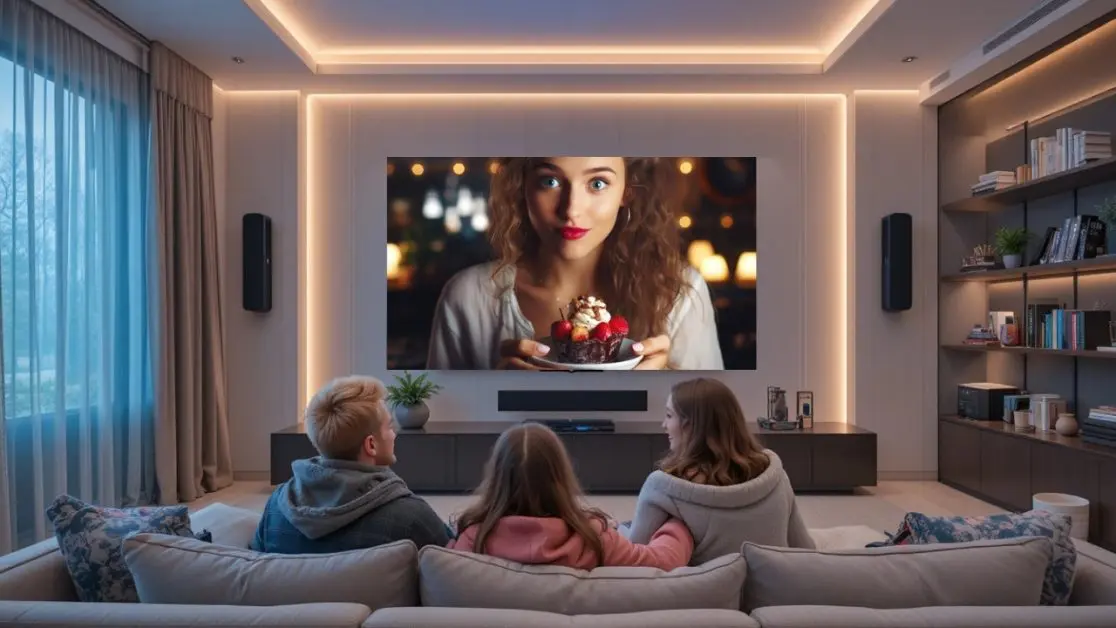
Wattage attracts attention. Tuning earns trust.
Sound by KEF’s speaker design focuses on acoustic accuracy. That includes:
- Precise driver alignment
- Controlled resonance
- Optimized cabinet structure
- Frequency response balancing
Human hearing fatigue often results from harsh treble spikes. Balanced tuning smooths those peaks.
The cost of proper tuning is time and engineering discipline.
The benefit is long term listening comfort.
Three Ways Homes Usually Solve TV Sound
One option is raising volume.
It is immediate. It solves nothing long term.
The second option is adding an external soundbar.
It improves depth. It adds cables, remotes, and cost.
The third option is choosing integrated audio designed intentionally from day one.
Sound by KEF belongs in that third category.
Integrated systems remove friction.
Where Balanced Sound Shows Up Most Clearly
You notice balance in quiet scenes.
In a dramatic film conversation. In devotional music during festivals. In classical ragas where instruments must remain distinct.
You also notice it during gaming.
The M96 Series integrates AMD FreeSync Premium Pro alongside immersive audio . When visuals refresh at 144Hz and audio placement remains accurate, response feels immediate.
Lag in sound breaks immersion faster than lag in visuals.
Balanced audio maintains timing integrity.
Why Natural Sound Reduces Daily Friction

Think about how often someone says, “Increase volume,” then two minutes later, “Reduce it.”
That back and forth is not a habit. It is an imbalance correction.
Natural sound reduces micro adjustments.
Less adjustment means less cognitive load.
Small relief compounds over time.
The Role of Smart Processing in Modern Audio
In AI-powered systems, processors recognize scene changes. That includes speech emphasis and background intensity.
The AI Ultra Sense Processor in the M96 Series integrates picture and audio intelligence. When visuals brighten, audio does not spike unpredictably.
Systems thinking matters here.
When picture, sound, and refresh rate align, experience stabilizes.
Cost and Benefit: Integrated KEF Audio vs External Setup
| Factor | Integrated Sound by KEF | External Soundbar Setup |
| Cost | Built into TV | Additional purchase |
| Cables | Minimal | Extra wiring |
| Tuning | Factory calibrated | Manual adjustments |
| Space | Clean aesthetic | Extra footprint |
| Performance | Balanced for room size | Depends on placement |
Integrated design reduces complexity.
Complexity often hides in cables.
The Larger Principle Behind Balanced Sound
Technology often chases extremes.
More bass. More brightness. More power.
But homes thrive on balance.
Balanced sound reflects emotional intelligence in design. It respects conversation. It respects neighbours. It respects ears.
The right system does not shout.
It supports.
What This Means for Modern Indian Homes
Millennial couples setting up new apartments want simplicity. Parents want clarity without noise. Professionals working from home want immersion after hours without fatigue.
Sound by KEF delivers that through:
- 2.1 channel depth for mid sized rooms
- 6.2.2 channel immersion for large spaces
- Dolby Atmos spatial positioning
- Precision acoustic tuning
Not louder.
Clearer.
The Memorable Insight
Great sound is invisible when it works.
You do not notice it.
You feel it.
Balanced and natural sound is not a feature. It is an experience design choice. It reduces friction in shared spaces. It makes movie nights richer. It makes cricket commentary sharper. It makes daily living calmer.
And in homes that already juggle work calls, school schedules, and late night OTT binges, calm design choices matter more than flashy ones.
Because the best technology does not demand attention.
It earns it quietly.
Frequently Asked Questions
I just bought a 4K Mini LED TV. Why does my audio still feel flat?
Even with stunning visuals like Mini LED or Dolby Vision, built-in speakers often lack depth and proper frequency balance. Systems like Sound by KEF focus on tuning mids (speech clarity), bass control, and treble smoothness so dialogue doesn’t get buried and highs don’t feel sharp after 20 minutes.
Is balanced sound actually different from just louder sound?
Yes. Louder sound increases volume across frequencies. Balanced sound ensures bass supports, mids clarify speech, and highs add detail without harshness reducing listening fatigue.
Should I buy a soundbar or choose a TV with integrated premium audio?
A TV like the Haier M80F Mini LED 165cm (65) Google TV Sound By KEF (H65M80FUX) offers 2.1 channel audio with a dedicated woofer built-in. That means fewer cables, factory calibration, and cleaner aesthetics compared to adding an external soundbar.
Is 50W enough for my living room, or should I look for 90W?
For compact to mid-sized rooms, 50W in a 2.1 setup is typically sufficient. Larger family halls benefit more from 90W and multi-channel systems like the Haier M96 Series 254cm (100) QD-Mini LED AI Smart Google TV (H100M96FUX) with its 6.2.2 configuration.
Why do I keep adjusting the volume during IPL matches?
Because imbalance makes commentary (2–5 kHz speech range) compete with crowd noise. Balanced tuning ensures speech stays clear even when the stadium atmosphere expands.
Why does bass feel heavy but dialogue still sounds weak?
Without a dedicated woofer path, low frequencies interfere with mids. A 2.1 system separates them creating cleaner dialogue.
I feel tired after watching TV for an hour. Is that normal?
Listening fatigue often comes from sharp treble spikes or poorly tuned mids. Precision acoustic tuning (a KEF strength for over 60 years) smooths harsh peaks, making long viewing comfortable.
Why do voices sound different at night compared to daytime?
Ambient noise (fans, traffic, conversations) masks certain frequencies. Balanced sound adapts better without forcing you to increase volume dramatically.