
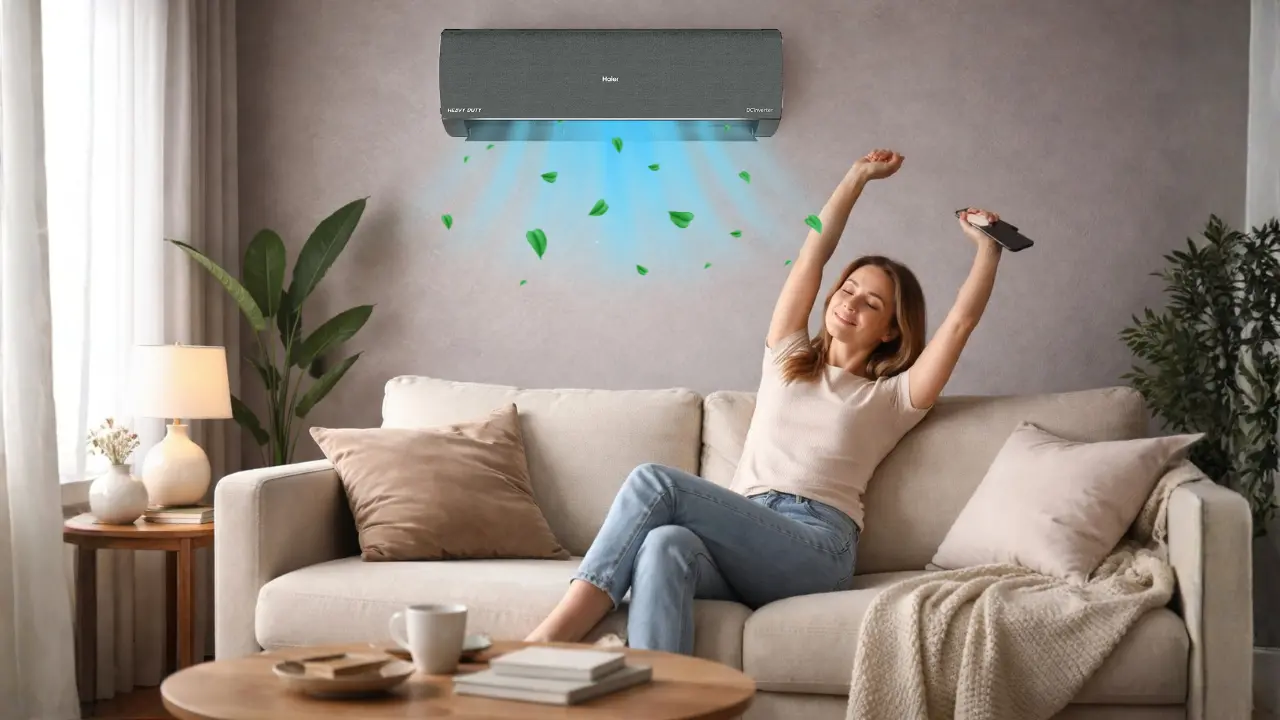

Uniform cooling throughout a space occurs when sophisticated sensors constantly monitor temperature, air movement, and occupant activity, subsequently modifying the air conditioning unit instantly so chilled air is distributed equally to everyone, rather than pooling in a single area.
Contemporary technology powered by AI examines the room’s state and redirect airflow without intervention, guaranteeing comfort, optimized energy use, and uniform temperature across the whole area.
A room conveys a narrative.
Position yourself close to the cooling unit. It feels chilly.
Shift to the furthest edge. It feels milder.
Pass by the settee. The air current shifts anew.
This patchy cooling has long been an unaddressed annoyance in many residences.
The majority of older air conditioning units cool the room’s volume. However, individuals sense the cooling where they are situated. That distinction makes a significant difference.
And that is precisely the point where cutting-edge sensors become essential.
Why Traditional Cooling Often Feels Uneven

Walk into any Indian living room in May.
One person sits under the AC vent. Another sits near the dining table. Someone else sits by the balcony door.
Three people.
Three completely different comfort levels.
The reason is simple. Traditional AC technology works on a fixed assumption.
They measure the temperature near the indoor unit. Then they push cool air outward.
But rooms do not behave like laboratory boxes.
Furniture blocks airflow. Sunlight heats certain walls. People themselves generate heat.
The result is predictable.
| Situation | What Happens |
| Person sitting under AC | Feels too cold |
| Person sitting far away | Feels warm |
| Room corners | Poor airflow |
| Large living rooms | Uneven cooling pockets |
Cooling technology designed for uniform rooms struggle in real homes.
Because homes are dynamic environments.
Sensors Turn Cooling Into a Living technology
The biggest shift in modern air conditioning is simple.
Cooling technologies are no longer static machines.
They are responsive technology.
Advanced sensors collect data about the room continuously and adjust the airflow accordingly.
Think of it like a conductor leading an orchestra.
Each instrument plays differently depending on the room’s acoustics.
Similarly, modern AC sensors constantly read signals from the room.
These signals include:
- Temperature variation across the space
- Airflow direction and velocity
- Human movement and presence
- Heat pockets caused by sunlight or electronics
The AC then adjusts fan speed, airflow direction, and compressor intensity.
In short.
Sensors transform cooling from fixed output to adaptive comfort.
Three Key Sensors That Balance Cooling Across a Room
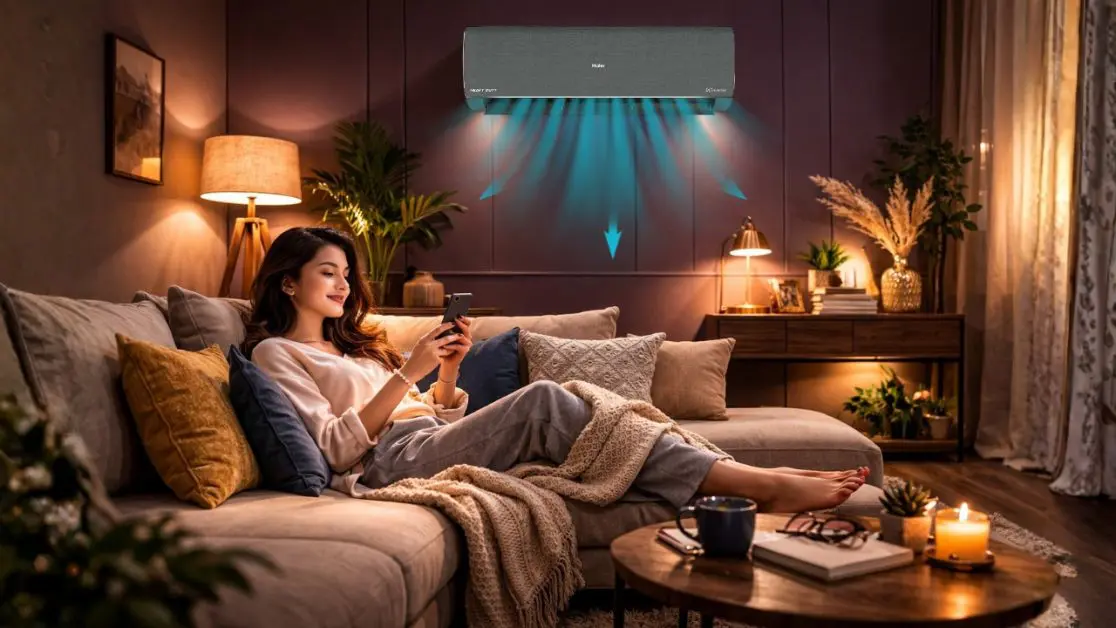
Balanced cooling does not rely on a single sensor.
It works because several sensors collaborate.
Each one plays a specific role.
1. Human Detection Sensors
A surprising fact about room cooling.
People are the biggest source of heat.
Human bodies emit warmth constantly.
Sensors that detect human presence can adjust cooling based on occupancy.
For example:
| Scenario | Sensor Response |
| Person enters room | Cooling intensifies near seating area |
| Room becomes empty | Energy saving mode activates |
| Multiple people present | Airflow distribution increases |
Modern AI technology can detect movement up to 12 meters away and optimize cooling based on occupancy patterns.
This is where comfort and efficiency begin to work together.
2. Environmental Sensors
Rooms react to external conditions.
Afternoon sunlight heats walls.
Kitchen appliances release warmth.
Even humidity affects perceived cooling.
Environmental sensors analyze the room’s surroundings and automatically adjust cooling intensity to maintain optimal comfort and energy efficiency.
These sensors detect:
- Ambient temperature
- Seasonal climate conditions
- Humidity levels
- Heat generated inside the room
The result is simple.
Cooling adapts to the environment instead of fighting against it.
The Invisible technology Behind Balanced Cooling
Most people think air conditioners simply blow cold air.
In reality, cooling is a distribution problem.
The real challenge is not generating cool air.
It is delivering it precisely where it matters.
Advanced technology now approaches cooling like logistics.
Imagine a delivery network.
Packages should reach the right address at the right time.
Airflow behaves the same way.
Advanced cooling technology now includes technologies that deliver air exactly where comfort is needed.
For example, targeted airflow technology can direct cooling toward a specific seating area rather than spreading it randomly across the room.
This method has two clear benefits:
- Faster comfort for occupants
- Lower energy waste from cooling unused areas
Cooling becomes focused rather than excessive.
What Balanced Cooling Feels Like in Real Homes
Technology matters only when it improves daily life.
So what does balanced cooling actually feel like?
Let us step into a few familiar Indian scenarios.
Evening Family Time
The living room is full.
Parents sit on the sofa. Kids sit on the floor watching TV.
Instead of one cold spot near the AC, the airflow spreads evenly across the room.
Everyone feels comfortable.
No arguments over the remote temperature.
Work From Home Afternoon
A professional sits at a desk near the window.
Sunlight heats the area slightly.
Sensors detect the warmer pocket and redirect airflow toward that zone.
Comfort stays consistent without lowering the entire room temperature.
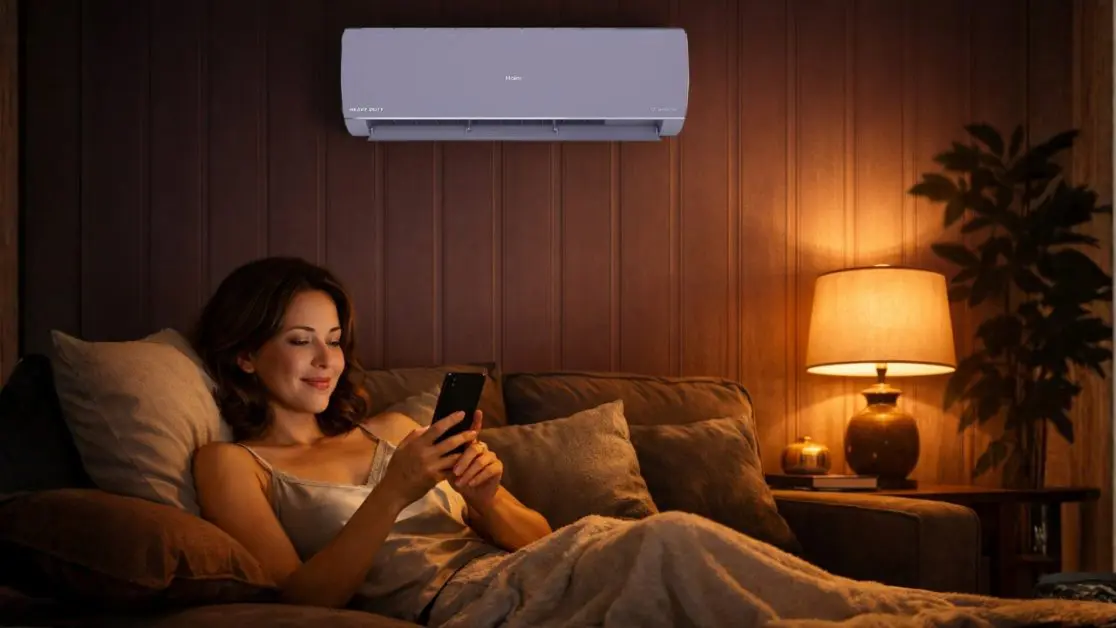
Late Night Bedroom Cooling
Two people sleep in different parts of the room.
Instead of blasting cold air downward, the AC adjusts airflow direction to maintain gentle cooling across the entire space.
Balanced cooling often feels softer.
More natural.
Almost invisible.
How AI Is Making Cooling Smarter
Sensors collect data.
Artificial intelligence interprets it.
That combination is where the real shift is happening.
Modern climate technology analyzes room conditions, user habits, and environmental data to automatically adjust cooling performance without manual intervention.
This learning ability introduces several benefits:
- The AC understands your preferred temperature patterns
- Cooling adjusts automatically during seasonal changes
- Energy consumption becomes optimized over time
Instead of reacting, the technology starts anticipating.
A powerful difference.
The Cost and Benefit Equation of Sensor Based Cooling
Smart cooling is not just about comfort.
It is also about efficiency.
Here is the tradeoff clearly.
| Factor | Traditional Cooling | Sensor-Based Cooling |
| Temperature control | Single-point measurement | Multi-zone sensing |
| Air distribution | Fixed airflow | Adaptive airflow |
| Energy use | Higher | Optimized |
| Comfort level | Uneven | Balanced |
| Human detection | Not available | Occupancy-based cooling |
The benefits compound over time.
Less energy waste.
More consistent comfort.
Smarter climate management.
Where Haier’s AI Climate Approach Fits In
Modern technology such as Haier AI Climate Control powered by AI Atmox focus on exactly this balance.
These platforms combine human sensing, environmental monitoring, and AI learning to automatically optimize cooling and maintain the right comfort level without manual adjustments.
Features like:
- AI Pre-Cooling
- AI Target Cooling
- AI Eco optimization
- Human detection sensors
work together to create an adaptive cooling environment.
Instead of forcing the room to behave.
The technology learns how the room actually behaves.
The Hidden Insight About Comfort at Home
Here is the real insight.
Cooling is not about temperature.
It is about distribution.
Two rooms can have the same temperature reading and feel completely different.
Balanced cooling solves that invisible problem.
It ensures that comfort reaches every corner of the room.
Not just the area directly under the air conditioner.
The Future of Cooling in Indian Homes
Homes are changing.
Living rooms are larger.
Open kitchens are common.
Hybrid work has turned bedrooms into offices.
Cooling technology must adapt to these new realities.
Sensor driven climate technology is the next step in that evolution.
They transform air conditioning from a simple appliance into a responsive environment manager.
One that listens.
Learn.
And quietly adjusts the room around you.
Because the best technology in a home rarely announces itself.
It simply makes everyday life feel easier.
Frequently Asked Questions
How do I know if I actually need sensor-based cooling or a regular AC is enough?
If your room often feels uneven (too cold in one spot, warm in another), sensor-based ACs can significantly improve comfort. Regular ACs work fine for small, simple spaces.
Is it worth paying extra for AI cooling features in India’s climate?
Yes, especially in larger or sun-exposed homes. The energy savings and comfort consistency often justify the higher upfront cost over time.
Why does my AC cool differently depending on where I sit?
Because traditional ACs measure temperature near the unit, not where you are. Sensors fix this by tracking conditions across the room.
Will sensor-based ACs reduce my electricity bill or just improve comfort?
Both. By cooling only occupied areas and adjusting dynamically, they avoid unnecessary energy usage.
How do human detection sensors actually work in ACs?
They detect body heat or motion and adjust airflow toward occupied areas.
What is AI pre-cooling and does it really help?
It predicts when you’ll need cooling and prepares the room in advance for comfort.
Can ACs really “learn” my habits?
Yes. AI systems track usage patterns and adjust automatically over time.
Do these sensors work in large Indian living rooms?
Many modern systems detect movement up to ~10–12 meters, suitable for large spaces.