
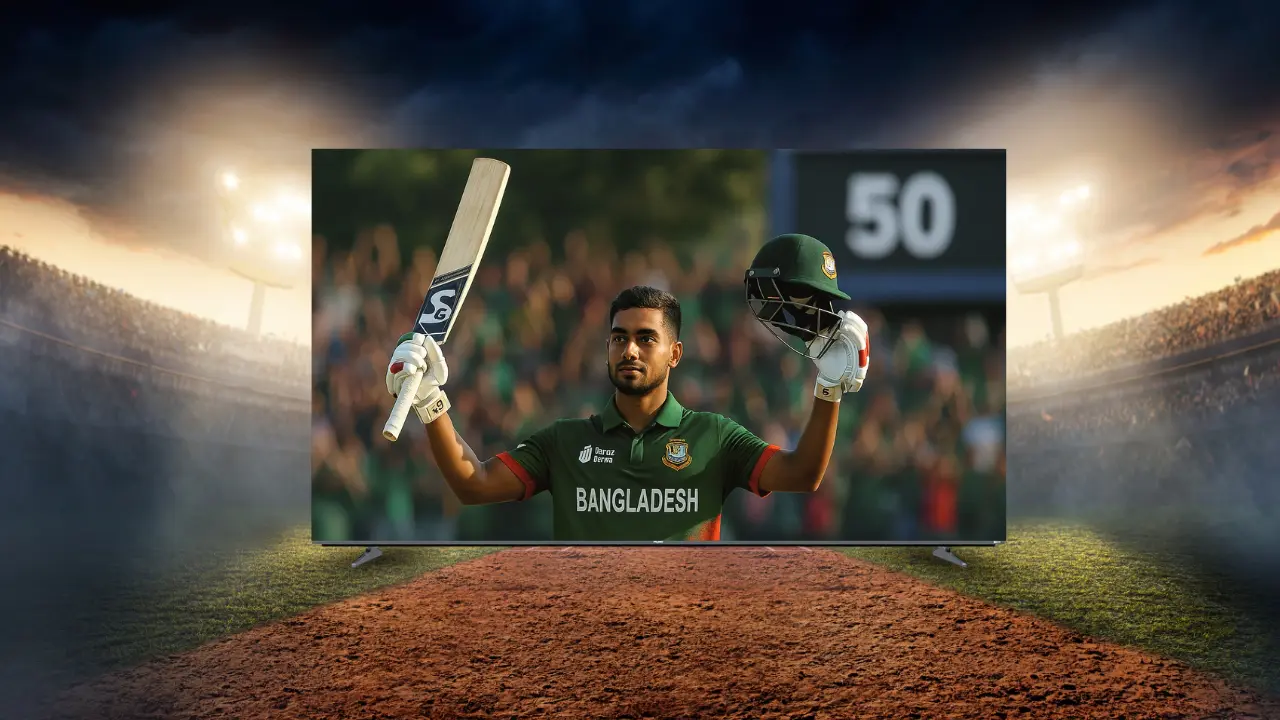

Bangladesh’s thrilling 8-run win over Afghanistan in the Asia Cup 2025 wasn’t just a cricket match it was a reminder of how much detail, drama, and emotion gets unlocked when you watch in 4K.
Every six, every wicket, every crowd cheer becomes a living-room experience when your TV can keep up.
Cricket matches aren’t just watched – they’re lived
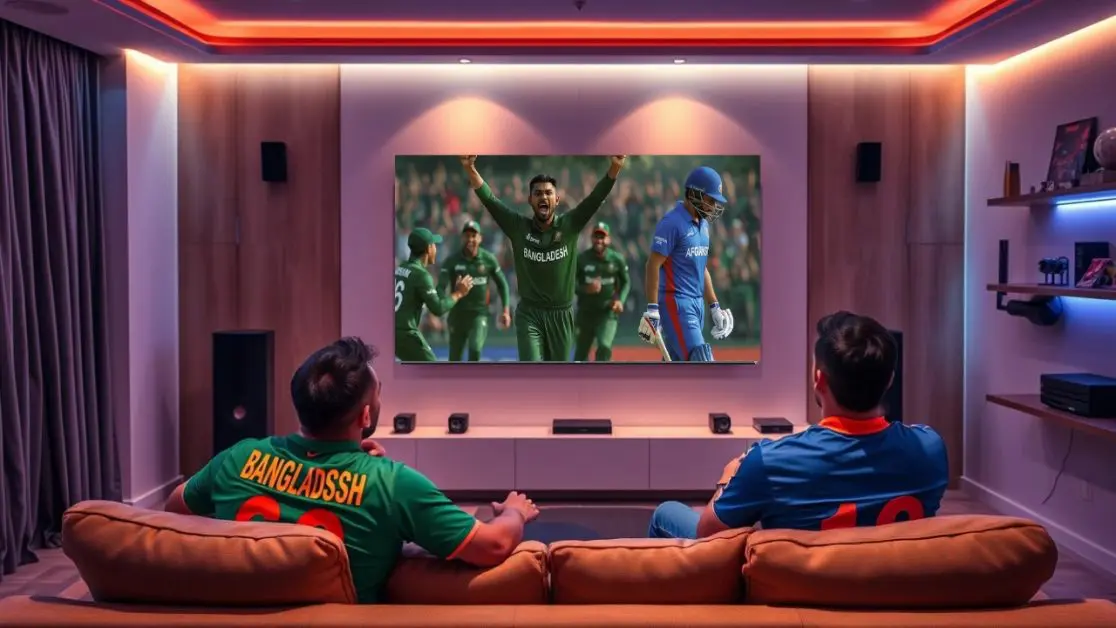
If you caught the Bangladesh vs Afghanistan game, you know it was a heart-stopper. Bangladesh set 154/5, Afghanistan fell short by 8 runs, all out for 146.
Tanzid Hasan’s explosive 52, Rahmanullah Gurbaz’s valiant 35, Rashid Khan’s late sixes each moment was the kind that makes you lean forward on the sofa.
But here’s the twist: on a modern 4K TV, these weren’t just highlights. They felt like memories etched in glass.
Why? Because ultra-high definition and next-gen sound let you see not just the ball flying but the bowler’s eyes, the crowd’s wave, even the grass trembling after a dive.
Why 4K changes the way you watch cricket
Let’s be honest. Most of us grew up watching cricket on standard definition TVs, where a mistimed shot and a clean cover drive almost looked the same.
4K flips that. Every pixel tells a story. And when you add Dolby Vision HDR and 60Hz refresh rates, those slow-motion replays of Mustafizur Rahman’s yorkers look like art installations.
Here’s what 4K really gives you:
- Sharper detail: You can track the seam on the ball as it swings under the floodlights.
- Richer colour: The green outfield and blue jerseys pop without oversaturation.
- Smooth motion: No blur when Rashid Khan swings hard and the camera pans.
- Immersive audio: Dolby Atmos makes it sound like the crowd is in your living room.
Watching cricket in 4K isn’t about bigger screens. It’s about fuller moments.
Reliving BAN vs AFG through a 4K lens

Take a few turning points from the match:
- The first-over duck: When Sediqullah Atal was dismissed, you could almost see the disbelief in his walk back.
- Gurbaz’s resistance: His 35 off 31 balls looked composed in 4K, every pull shot felt like it might clear your balcony.
- Omarzai’s sixes: That late flurry of three sixes in 16 balls wasn’t just a score boost. In 4K, you see the ball vanish into the floodlit stands.
- Rashid Khan’s cameo: His 20 off 11 balls lit up the chase. On a Sound by KEF-powered sound system, the crack of the bat meeting ball is thunder, not echo.
Each of these moments was dramatic in the stadium. On a Haier M80 4K Mini-LED TV, they’re cinematic at home.
Why modern TVs matter more for Indian homes now
Here’s the bigger picture: cricket isn’t just entertainment in India. It’s family time, neighbourhood watch parties, and even solo de-stress after work.
When the screen can handle detail, contrast, and sound with theatre-like clarity, the game feels personal. And that’s exactly why many households are moving to 4K TVs:
1. Shared living rooms: Big screens like 215cm (85) make sure the last row of sofas doesn’t miss a single ball.
2. Festive gatherings: From Durga Puja to Diwali, match nights merge with celebrations. A crisp TV makes it seamless.
3. Smart controls: Voice commands and Google TV integration mean less fiddling, more watching.
4. Future-proofing: With cricket streaming shifting to HDR and 4K as the default, anything less feels outdated.
A TV isn’t just another gadget anymore. It’s the stage where national moments play out.
What this means for your next cricket night

Here’s the takeaway: matches like Bangladesh vs Afghanistan prove that cricket is no longer just about scorecards. It’s about how you experience the game.
- On a regular screen, you’re updated.
- On a 4K Mini-LED with Dolby Atmos, you’re transported.
It’s why families in India are choosing TVs that don’t just fit a wall but fit a lifestyle.
Haier’s M80 4K Mini-LED Google TV, with Dolby Vision, Sound by KEF, and 60Hz motion, is one example of how technology bridges this gap. But the principle is bigger: the right screen turns sport into shared memory.
Final thought
Every run, every wicket, every roar of cricket is detailed. And detail deserves a canvas worthy of it.
The next time Bangladesh and Afghanistan lock horns, or India plays a decider, ask yourself: Do I want to watch this, or do I want to live it?
Because in 2025, the answer isn’t about who wins. It’s about how clearly you can see victory.