


On rainy days, when natural light is diffused and reflections creep in, the best TV display modes are Dolby Vision and HDR10, paired with local dimming settings that adapt brightness scene by scene.
Together, they preserve contrast, colour, and clarity so your viewing experience feels cinematic even when the weather outside dulls everything else.
Why rain changes the way we watch TV
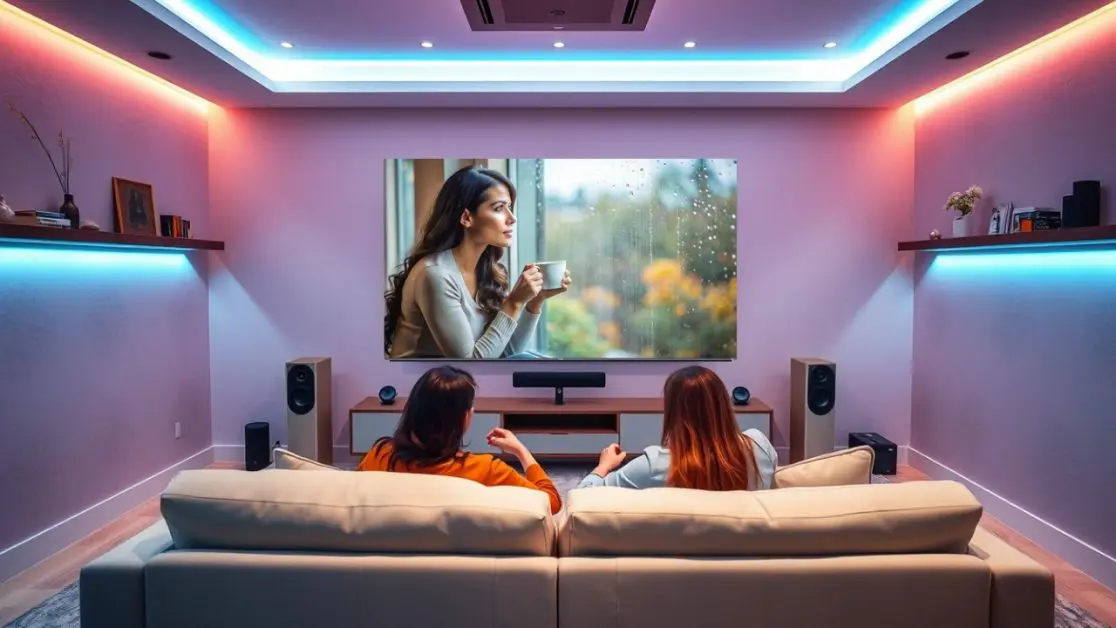
Think of a July afternoon in Mumbai.
Rain lashes against the balcony grill, the sky is grey, and the living room feels dim but strangely reflective. Curtains are drawn, but droplets on windows scatter stray beams of light.
You switch on the TV for a cricket rerun, only to notice the picture feels flat.
Whites look grey, colours lose their punch, and dark scenes become muddy.
It’s not your eyes playing tricks. It’s physics.
Rainy outdoor light is softer, more diffused, and less predictable than the harsh direct sun. It reduces contrast in the room, amplifies reflections, and makes it harder for standard displays to maintain depth.
The good news? Modern TVs, especially Mini LEDs, come with modes built precisely for such lighting challenges.
What makes rainy light different from sunny light?
- Sunlight floods a room with high-intensity beams. TVs fight glare but benefit from the extra luminance.
- Rainlight diffuses through clouds and droplets, scattering across surfaces, lowering ambient contrast.
- Result: The eye struggles to distinguish bright from dark on-screen, and colours seem washed out.
The invisible system at work is simple: ambient light alters the perceived dynamic range of your display. So the solution isn’t just more brightness. It’s a smarter brightness.
The display modes that shine in rainy conditions
1. Dolby Vision – cinema, even in a storm
Dolby Vision isn’t just about colour. It’s about adaptation.
Each scene is mapped with dynamic metadata, which means your TV adjusts brightness and contrast frame by frame. On a rainy evening, this ensures that:
- A candle-lit dinner scene still glows without looking flat.
- A cricket highlight reel maintains sharp whites on jerseys, even with diffused daylight.
- Shadows stay inky instead of turning into grey mush.
Haier’s Mini LED TVs from the 140cm (55) H55M80FUX to the 215cm (85) H85M80FUX bring Dolby Vision as standard. It’s why they feel equally at home in a brightly lit afternoon and a monsoon twilight.
2. HDR10 – the open standard that gets the basics right
HDR10 is less dynamic than Dolby Vision but still powerful.
It stretches the contrast ratio, meaning:
- Whites stay crisp against a cloudy background.
- The greens of a rain-soaked football pitch look alive.
- Details in mist or foggy scenes remain visible.
On Haier’s 140cm (55) Mini LED (H65M80FUX), HDR10 works with 180 local dimming zones and tiny pockets of brightness control to ensure even tricky rainy lighting doesn’t wash the picture out.
3. Local dimming – your invisible ally
If Dolby Vision is the director, local dimming is the backstage crew.
Mini LED TVs come with hundreds of dimming zones 144 on a 140cm (55), 264 on a 189cm(75) , and 360 on a 215cm (85). Each zone brightens or darkens independently.
What does this mean during rain?
The grey light filtering through your curtains doesn’t force the entire panel to brighten. Only the zones that need it adjust, preserving depth where it matters most. Result: Blacks look black. Whites pop. And rain-soaked dramas don’t blur into monotone.
Everyday scenarios where modes matter

- Family binge night: Parents watching Bigg Boss during an August thunderstorm. Dolby Vision keeps the neon house lights looking vivid instead of hazy.
- Gaming solo: A Gen Z gamer in Delhi playing FIFA on a drizzly afternoon. HDR10 with low-latency settings ensures stadium lights shine against a moody digital sky.
- Couple’s Sunday: Netflix movie marathon while rain drums outside. Local dimming ensures romantic candlelight scenes look intimate, not murky.
- Festive prep: Relatives in Kolkata waiting for Durga Puja while storms roll in. Kids streaming cartoons look at a world still bursting with colour.
Each scenario teaches a principle: great display modes don’t just fight the weather they shape how the weather feels indoors.
How to choose the right mode in practice
1. Start with Dolby Vision
- Best for Netflix, Disney+, and Prime Video originals.
- Adapts frame by frame, perfect for long monsoon evenings.
2. Switch to HDR10 when gaming or streaming older content
- Universally supported.
- Works well with sports replays, YouTube, and most broadcast TV.
3. Let local dimming do its work
- Keep it on “high” during overcast afternoons.
- Dial it down slightly at night to prevent halos around bright objects.
4. Experiment with energy-saving modes
- Haier Mini LEDs include energy saving useful for long festive viewing sessions when power bills matter.
Why Mini LED is uniquely suited for Indian rain
Not all TVs handle monsoons equally
Standard LED TVs have fewer dimming zones. OLEDs offer deep blacks but sometimes struggle with peak brightness in diffused daylight. Mini LED finds the middle ground:
- Vibrant colours and deep blacks even when rain dulls ambient contrast.
- Wide viewing angles so family members lounging in different corners still see clarity.
- Higher brightness reserves to cut through rainy gloom without blowing out whites.
This balance matters in India, where monsoon isn’t a one-week affair. It’s months of grey afternoons, wet balconies, and tea sessions around the TV.
Beyond picture: why sound matters too
Rain doesn’t just affect light. It changes sound.
The constant patter masks dialogue and lowers immersion. That’s why Haier’s partnership with Sound by KEF Audio and Dolby Atmos is relevant here.
- Voices cut through raindrops.
- Thunder on-screen doesn’t drown in real thunder outside.
- A 50W 2.1 channel woofer makes even quiet scenes resonate.
The system insight here: picture clarity alone isn’t enough in rainy light audio balance completes the immersion.
The human pattern: why rain calls for smarter choices
Rain slows us down.
It pulls families together indoors, forces us to find joy in screens, and reminds us that the atmosphere around us shapes what we see and hear.
Choosing the right display mode isn’t about being a tech geek. It’s about making sure those indoor memories whether it’s a match, a movie, or a festival livestream feel vivid, not faded.
And that’s what a well-designed TV does. It doesn’t just play content. It adapts to context.
Final takeaway: don’t fight rain, frame it
Rainy outdoor light doesn’t have to be an enemy of clarity.
With Dolby Vision, HDR10, and local dimming on a Mini LED, it becomes a background artist. It softens the room while your TV sharpens the story.
The real principle here?
Great technology doesn’t overpower nature. It balances it.
For Indian households whether you’re a millennial setting up your first home, parents keeping kids entertained during school closures, or professionals winding down after late monsoon commutes, that balance is what makes a house feel sorted.
And in 2025, Haier’s Mini LED line quietly ensures it.