
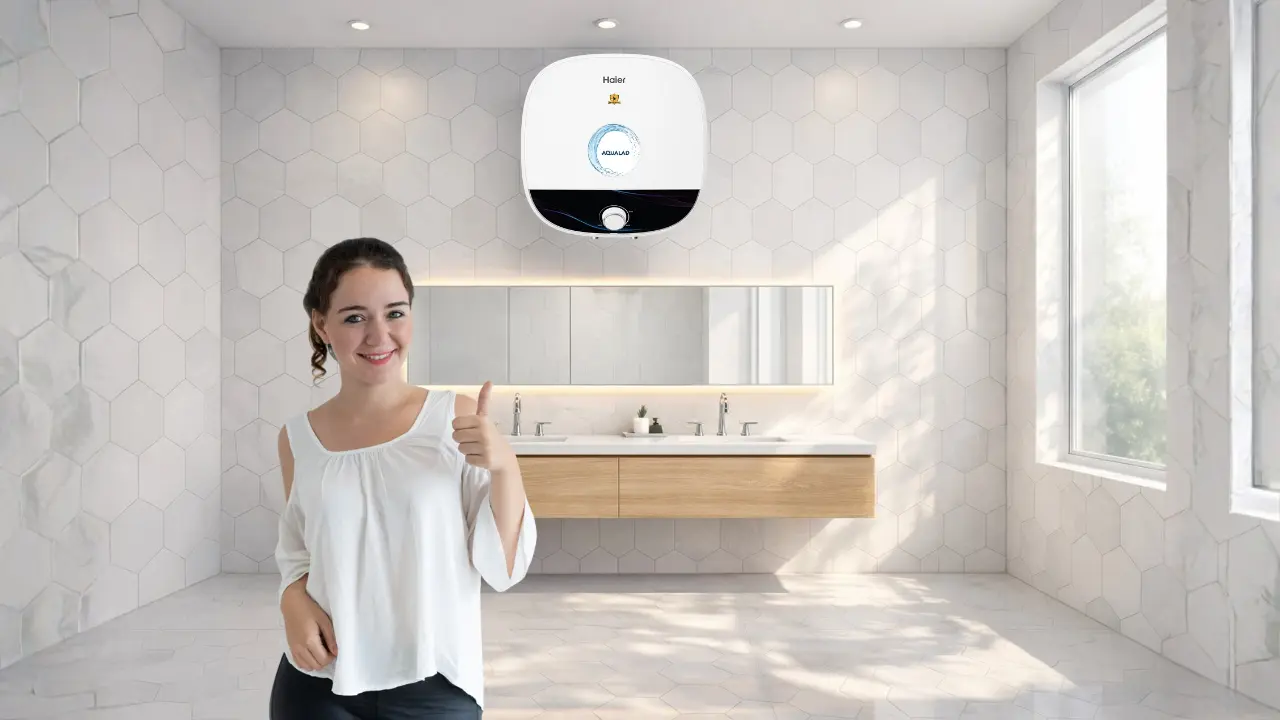

High-efficiency water heaters for large families combine large capacity, fast heating, strong insulation, and safety systems.
Storage heaters in the 20–25 litre range with high energy ratings and fast heating elements work best.
Models like the Haier 25L Square AQUALAD PRO 5 Star Water Heater balance efficiency, safety, and consistent hot water for multiple back-to-back showers.
Because the real challenge is not heating water.
The real challenge is heating enough water, fast enough, without wasting electricity.
And large families know this problem well.
Morning rush hour.
Two kids getting ready for school.
One parent preparing for work.
Someone was already shouting from the bathroom.
“Is the water still hot?”
Hot water is not a luxury in Indian homes.
It is a system.
When the system fails, the house slows down.
The right water heater quietly keeps everything moving.
Large Families Run on Timing, Not Just Water
Visit a typical Indian household on a winter morning.
Someone wakes early to boil milk.
Someone packs lunch boxes.
Someone fills school bottles.
And in the middle of this choreography sits the bathroom.
Hot water determines how smoothly the morning runs.
Here is the hidden pattern.
Large families do not just need hot water.
They need:
- Enough water for multiple showers
- Fast reheating between uses
- Minimal electricity consumption
- Safety for children and elders
A small water heater can heat water.
But a high-efficiency water heater manages demand.
That distinction matters.
Why Standard Water Heaters Struggle in Large Homes
Most traditional heaters were designed for smaller usage cycles.
One shower.
Then time to reheat.
Large households break this assumption.
Four showers in twenty minutes.
Now the heater is stressed.
Here is what typically goes wrong:
| Problem | What Happens | Result |
| Small tank capacity | Hot water runs out quickly | Cold showers |
| Slow heating element | Reheating takes time | Bathroom queue |
| Poor insulation | Heat escapes quickly | Higher electricity bills |
| Weak pressure tolerance | Struggles in high-rise apartments | Inconsistent water flow |
Efficiency is not just about electricity ratings.
It is about how well the system handles real life usage.
The Three Features That Matter Most
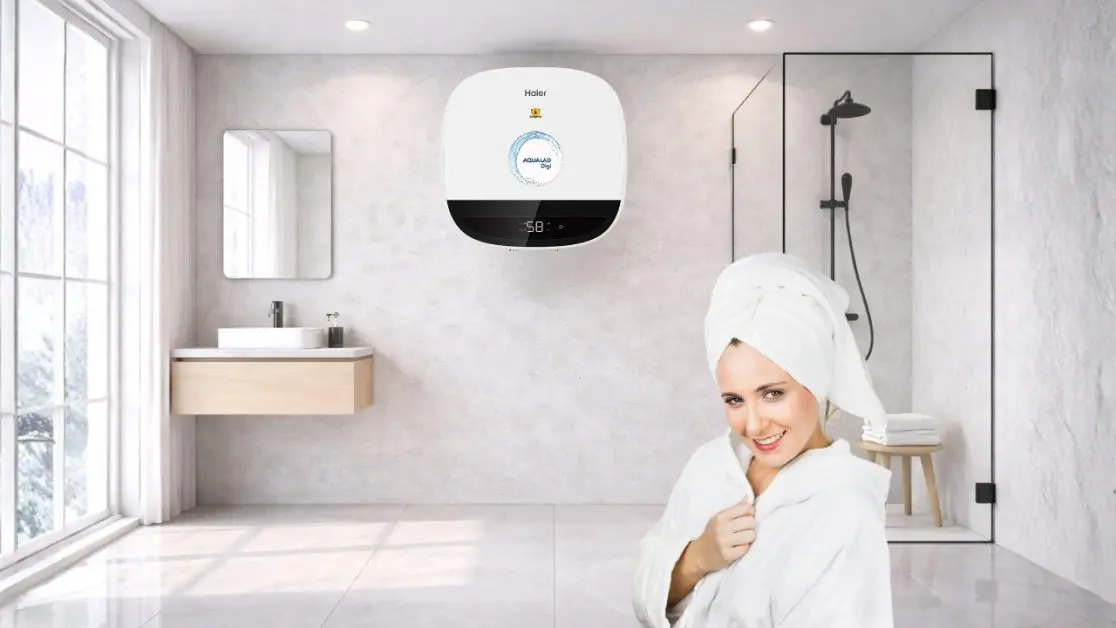
Every high-efficiency water heater for large families solves three core problems.
1. Capacity That Matches Real Usage
Large families need larger tanks.
Not as a luxury.
As a practical buffer.
Typical usage pattern:
- One shower uses roughly 15–20 litres
- A family of four to five may use 60–80 litres within an hour
A 20–25 litre heater becomes the sweet spot.
Large enough to handle sequential use.
Small enough to remain energy efficient.
This is why many modern homes choose models like the Haier 25L Square AQUALAD PRO 5 Star Water Heater, designed for larger households.
Capacity alone, however, is not enough.
2. Faster Heating Changes Everything
Speed determines comfort.
High-efficiency heaters use powerful heating elements around 2–3 kW, allowing water to heat quickly even after multiple uses.
Think of it like boiling tea.
A weak flame takes forever.
A strong flame finishes the job quickly.
Modern heaters apply the same principle.
Fast heating means:
- Less waiting between showers
- Reduced electricity wastage
- Predictable hot water supply
Efficiency is not just about consuming less energy.
Efficiency is about finishing the job faster.
3. Insulation That Keeps Heat Inside
Heating water repeatedly wastes electricity.
The smarter approach is simple.
Keep the heat inside.
High-efficiency heaters use PUF or EPS insulation, which helps retain hot water temperature for longer periods.
That means:
- Less reheating
- Lower electricity bills
- Consistent water temperature
In practical terms, insulation converts your water heater into a thermal battery.
Heat stored now is heat available later.
Safety Matters More in Large Homes
More people using an appliance increases risk.
Children.
Elders.
Guests unfamiliar with the system.
Safety is not optional.
High-efficiency water heaters include layered protection systems.
Consider these important features.
Multi-layer electrical safety
Some modern heaters include shock-proof technology, which reduces voltage during leakage conditions and protects users from electrical shocks.
That protection matters in humid bathroom environments.
Dual overheating protection
A second safety layer activates if the first fails.
For example, dual thermostat protection stops heating at around 75°C and automatically cuts power if temperatures reach 95°C.
Safety systems like this quietly prevent accidents.
You rarely notice them.
That is exactly the point.
Pressure resistance for high-rise apartments
Urban India is building vertically.
Many apartments experience higher water pressure.
High-efficiency heaters rated for 8 bar pressure perform better in such environments.
That ensures consistent performance even in tall buildings.
How Modern Water Heaters Improve Water Quality
Hot water is not only about temperature.
It is also about hygiene.
Many advanced heaters include antibacterial heating cycles.
For example, some systems heat water to around 80°C periodically to reduce bacterial growth inside the tank.
That matters more than people realize.
Warm water tanks can become breeding grounds for bacteria if untreated.
High-efficiency heaters solve this quietly.
Clean water.
Consistent heating.
Better hygiene.
Choosing the Right Water Heater Size for Your Family
Capacity decisions should match household size.
Here is a simple guide.
| Family Size | Recommended Capacity | Ideal Use |
| 1–2 people | 10–15 litres | Single bathroom usage |
| 3–4 people | 15–20 litres | Sequential showers |
| 4–6 people | 20–25 litres | Back-to-back use |
| Large joint families | 25+ litres or multiple heaters | Multiple bathrooms |
A mistake many buyers make is choosing smaller heaters to save money upfront.
But that leads to daily inconvenience.
Hot water shortages become routine.
The smarter decision is to size the heater for real usage.
What Makes a Water Heater Truly Efficient
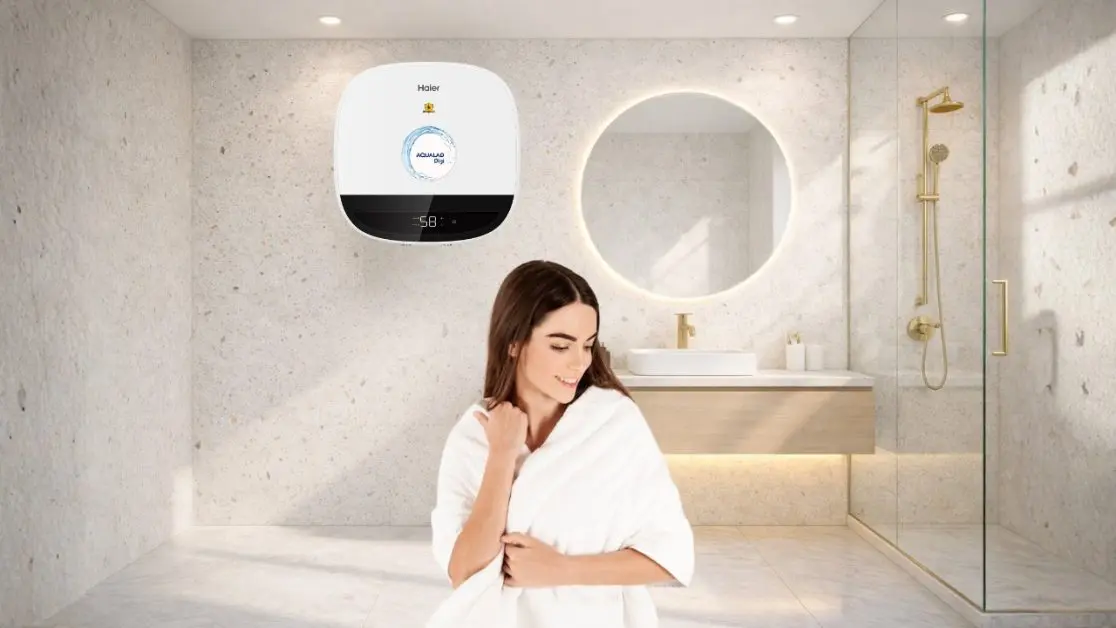
People often think efficiency means only one thing.
Energy rating.
But high-efficiency systems combine several layers.
The Efficiency Stack
A truly efficient water heater balances five systems:
- Capacity planning
Enough water for the household. - Fast heating element
High power for quick recovery. - Thermal insulation
Heat retention. - Smart water circulation
Prevents stagnant water and improves temperature consistency. - Safety and durability systems
Some modern heaters include water circulation technologies that prevent stagnant water and maintain consistent temperature flow inside the tank.
Efficiency is rarely a single feature.
It is a system of small decisions working together.
Why Large Families Benefit Most from High-Efficiency Models
Small households rarely notice the difference.
Large households do.
Here is why.
Every inefficiency multiplies.
If a heater wastes energy once, a family of five experiences that waste five times every morning.
That adds up.
Electricity consumption increases.
Waiting time increases.
Frustration increases.
High-efficiency water heaters remove these friction points.
The home runs smoother.
Morning routines become predictable.
And predictability is underrated.
The Quiet Role Appliances Play in Modern Homes
Most appliances are invisible when they work well.
You do not celebrate your water heater.
You simply expect it to work.
That expectation is the real measure of design.
In modern Indian homes, appliances do more than perform tasks.
They remove friction from everyday life.
Hot water arrives when needed.
Electricity consumption stays controlled.
Safety systems operate quietly.
The best appliances never demand attention.
They simply make life easier.
The Bigger Insight: Efficiency Is About Systems
Large families teach a simple lesson.
Comfort does not come from bigger machines.
It comes from better systems.
A water heater with the right capacity, insulation, heating speed, and safety layers becomes more than an appliance.
It becomes infrastructure.
Something the household depends on.
Something that quietly supports everyday life.
The lesson applies beyond bathrooms.
The best technology does not shout.
It solves problems before they appear.
And when that happens, mornings run smoother.
Showers feel better.
And homes feel just a little more sorted.
Frequently Asked Questions
Why does my water heater run out of hot water every morning when my family uses it back-to-back?
This usually happens because the tank capacity is too small for the household’s usage cycle. Each shower uses around 15–20 litres, so a family of four may need 60–80 litres within an hour. A 20–25 litre high-efficiency heater can handle sequential use better.
How do I choose the right water heater size for my family of five?
A 20–25 litre storage heater is generally ideal for a family of 4–6 people. It provides enough buffer capacity for multiple showers while maintaining good energy efficiency.
Should I install one large water heater or multiple smaller ones in my house?
If you have multiple bathrooms, installing separate heaters for each bathroom often works better than relying on a single unit.
I left hot water sitting in the tank overnight. Is it still safe to use?
Yes, but modern heaters often include antibacterial heating cycles that periodically heat water to around 80°C to reduce bacterial growth inside the tank.
Can bacteria grow inside water heaters? Should I worry about hygiene?
Warm water tanks can become a breeding ground for bacteria if temperatures stay too low for long periods. High-efficiency heaters combat this with periodic high-temperature heating cycles.
Does faster heating mean higher electricity consumption?
Not necessarily. High-power heating elements (2–3 kW) heat water faster, which means the heater runs for a shorter period, often resulting in similar or even lower energy usage.
Why does my heater take so long to reheat after one shower?
Older heaters may have low-power heating elements or poor insulation, which slows reheating.