
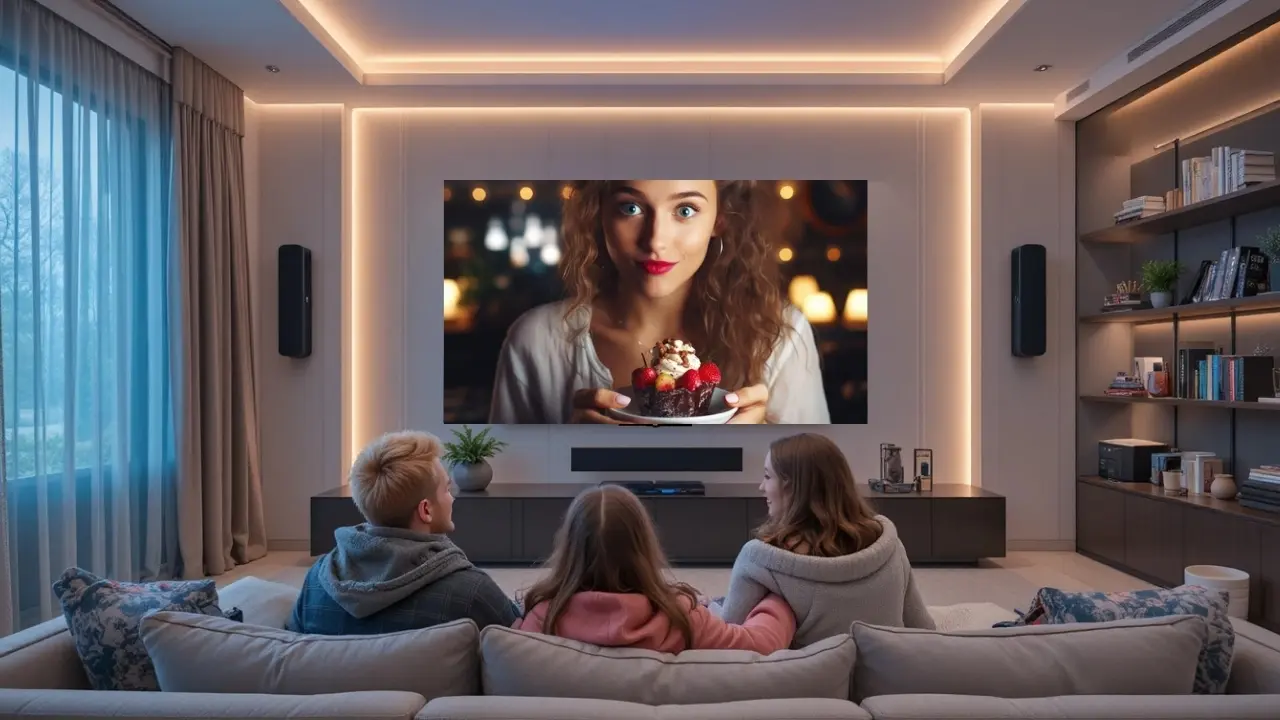

The real upgrade your living room needs is not more furniture or decor. It is a big screen TV that reshapes how your home feels, how people gather, and how everyday moments turn into shared experiences.
A large screen does not just show content. It changes the scale of living, watching, resting, and celebrating.
The living room has changed. Have we noticed?
There was a time when the living room had one clear job.
Sit. Watch. Leave.
That room now does everything.
It is where parents unwind after work.
Where kids stream cartoons after homework.
Where friends crowd in during a match.
Where couples end long days with quiet shows and warm food.
The living room is no longer a space you pass through.
It is the space you return to.
And when a space becomes central, the tools inside it matter more.
A small TV once made sense when attention was limited.
Today, attention is shared, stretched, and layered.
A bigger screen matches the scale of modern living.
Why bigger screens feel better, not excessive
People often assume large TVs are indulgent.
They are not.
They are proportional.
Think of it like reading.
A paperback works on a train.
A coffee table book works in a living room.
The distance between your sofa and your TV has increased over the years.
Rooms are wider. Seating is deeper. Layouts are more open.
A small screen forces your eyes to work harder.
A big screen relaxes them.
That is not luxury. That is ergonomics.
What changes when the screen gets bigger
- Text becomes easier to read from anywhere in the room
- Faces feel natural instead of compressed
- Sports feel immersive instead of distant
- Movies stop feeling like clips and start feeling cinematic
A bigger screen does not shout.
It settles.
Cinema is no longer a place. It is a setting
Ask anyone who has upgraded to a large screen.
They did not buy it for one reason.
They bought it because everything else changed after.
Movie nights replaced scrolling.
Cricket nights pulled people off their phones.
Family time became anchored instead of scattered.
The screen did not demand attention.
It earned it.
Large OLED and premium LED displays today bring contrast, clarity, and depth that older TVs simply could not manage.
Blacks look intentional.
Colours feel balanced.
Motion stays smooth during fast scenes.
That combination matters more on a big screen because flaws scale up too.
When the technology is right, size amplifies beauty.
When it is not, size exposes weakness.
The hidden system behind immersive viewing
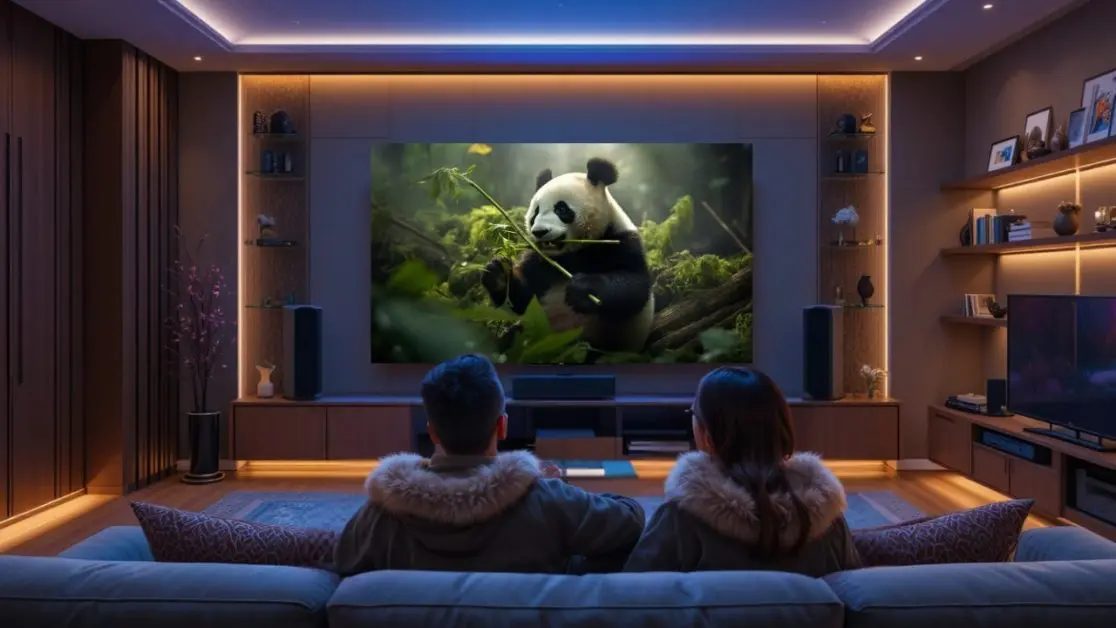
Here is what most buying guides miss.
Size alone does not create immersion.
Three systems work together.
System one: Screen size and viewing distance
There is a sweet spot where the screen fills your field of vision without overwhelming it.
For most Indian living rooms, screens above 65 finally align with modern seating distances.
Anything smaller feels undersized once you experience the difference.
System two: Picture intelligence
Large screens need smart processing.
Technologies like Dolby Vision IQ adjust brightness and contrast based on room lighting.
That means a Sunday afternoon movie and a late night match both look right without manual tweaks.
The TV adapts.
You do not.
System three: Motion handling
Big screens magnify motion.
If refresh rates and motion processing are weak, blur becomes obvious.
High refresh rates and technologies like MEMC keep movement fluid during sports and action scenes.
The result feels calm, not chaotic.
When these three systems align, bigger feels better.
Why sound suddenly matters when screens grow
A larger picture changes expectations.
Sound has to keep up.
Thin TVs once struggled here.
Modern big screen TVs now integrate more powerful speaker systems, often with dedicated woofers.
Dolby Atmos adds vertical depth.
Dialogue feels anchored to faces.
Crowd noise feels layered instead of flat.
You stop reaching for subtitles.
That alone changes the experience.
A large screen TV does not just show more.
It demands better balance between sight and sound.
One option, three mindsets

When people think about upgrading, they usually fall into one of three camps.
Option one: The cautious upgrader
This person worries about space, power usage, and practicality.
The reality is that modern big screen TVs are thinner, lighter, and more efficient than older mid sized models.
Energy saving modes, low standby consumption, and adaptive brightness make large screens surprisingly efficient.
The fear is outdated.
Option two: The experience seeker
This buyer wants a cinema at home.
They care about OLED panels, pixel level dimming, rich blacks, and accurate colours.
For them, size unlocks emotional payoff.
Movies feel intentional.
Shows feel premium.
Games feel responsive.
Option three: The future planner
This buyer knew about the screens last year.
Streaming quality improves.
Content formats expand.
Living spaces evolve.
A big screen bought today still feels relevant tomorrow.
A small screen rarely does.
Where Haier fits into this shift
Haier’s approach to big screen TVs is not about spectacle.
It is about balance.
Take the Haier C90 OLED 194cm (77) Google TV.
On paper, it sounds impressive.
OLED display.
Dolby Vision IQ and HDR10+.
120Hz refresh rate with MEMC.
2.1 channel 50W sound with Dolby Atmos.
Google TV with hands free voice control.
But what matters is how those features behave together in real homes.
Large OLED panels ensure deep blacks even during night viewing.
Adaptive picture tech adjusts to Indian lighting conditions automatically.
High refresh rates keep sports smooth.
Integrated sound fills the room without clutter.
It is designed for how homes are actually used, not how showrooms look .
The emotional payoff people underestimate
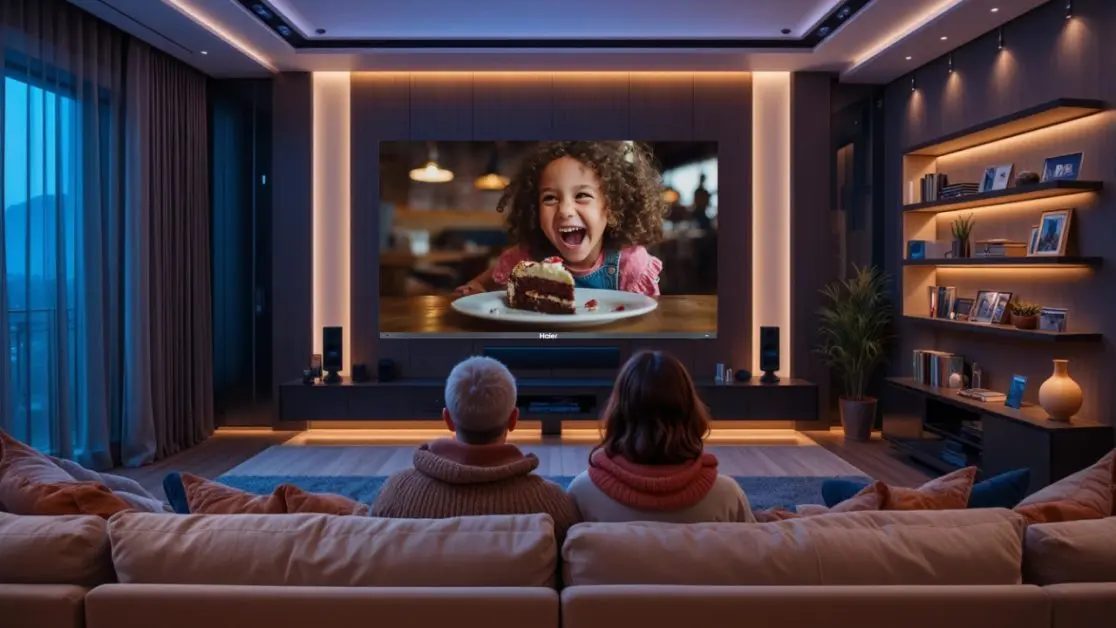
Most upgrades promise improvement.
Big screen TVs deliver transformation.
They change how people sit.
How long they stay.
How often they gather.
The living room becomes magnetic.
You notice it when guests stop checking phones.
When kids rewatch scenes instead of skipping.
When silence feels comfortable during end credits.
That is not technology at work.
That is design meeting human behavior.
Bigger screens and smaller effort
Another quiet benefit.
Ease.
Modern big screen TVs simplify everything else.
Smart interfaces reduce searching.
Voice control removes friction.
Built in casting avoids cables.
Less effort means more use.
And more use is the real return on investment.
What this means for modern homes
Homes today are doing more emotional labor than ever.
They absorb stress.
They host celebrations.
They anchor routine.
Every upgrade should support that.
A big screen TV does not just fill a wall.
It fills moments.
It turns everyday watching into intentional living.
And once that shift happens, going back feels impossible.
The insight worth remembering
Small screens fit old lifestyles.
Big screens fit how we live now.
Not louder.
Not flashier.
Just more human.
When the living room matters, the screen at its center does too.