
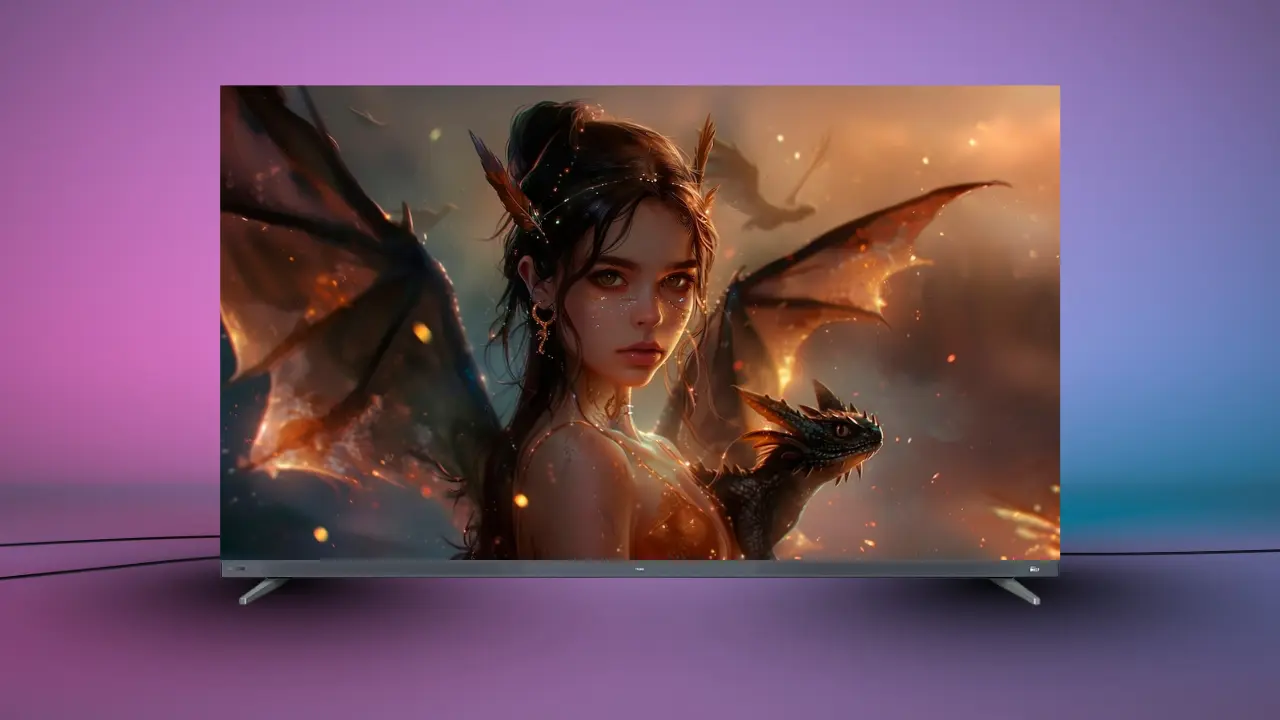

Big screens work in modern Indian homes because our homes now do many jobs at once.
They host morning news, office calls, afternoon cartoons, evening cricket, late night movies, and quiet solo downtime. A large TV is no longer an indulgence sitting on the wall. It has become the centre of how everyday life unfolds.
The shift is not about screen size alone.
It is about how Indian homes have evolved.
Indian homes are multitasking spaces now.
Walk into a typical Indian apartment today.
The living room doubles as a workspace.
The sofa becomes a family gathering point.
Phones, tablets, and laptops move in and out all day.
Yet one thing remains constant.
The screen.
A big screen works because it absorbs complexity. It allows different people, different distances, and different activities to coexist without tension.
Small screens demand attention.
Big screens create a shared presence.
That difference changes behaviour.
From background noise to shared moments
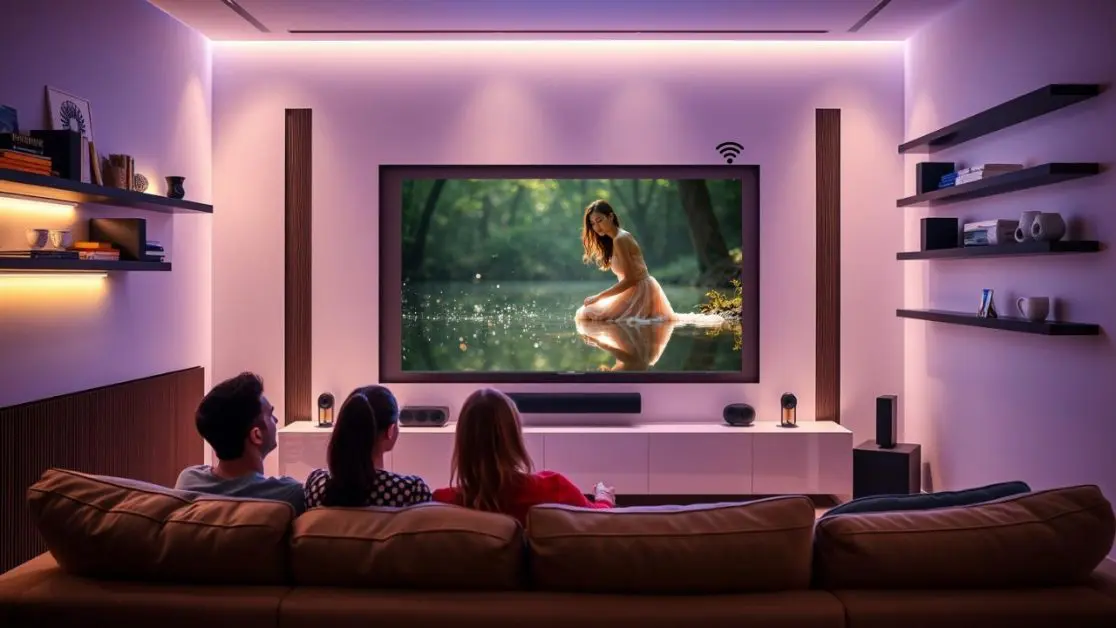
Television used to run quietly in the background.
Today, it anchors rituals.
- The Friday night match where neighbours drop in
- The Sunday movie that brings three generations together
- The post work binge that marks the end of a long day
Large screens shift watching into participation.
No leaning forward.
No squinting at subtitles.
No constant volume adjustments.
You sit back.
The screen meets you halfway.
Comfort becomes a real luxury.
Big screens quietly solve a space problem
Here is the paradox.
Homes are getting smarter.
But not necessarily bigger.
Urban Indian homes prioritise efficiency. Every corner has a purpose.
A large screen helps by consolidating experiences.
One screen replaces:
- Regular theatre visits
- Separate gaming monitors
- Secondary TVs in bedrooms
- External streaming setups
Instead of spreading entertainment across devices, everything converges into one shared surface.
Good systems reduce effort.
They do not add layers.
Why size actually improves comfort
Bigger does not mean overwhelming.
In fact, the opposite is true.
A large display offers:
- Wider viewing angles, so everyone sees clearly
- Reduced eye strain since content feels natural at distance
- Better clarity even in bright Indian living rooms
Studies on viewing comfort consistently show that larger screens viewed from the right distance reduce visual fatigue compared to smaller screens viewed up close.
Scale, when balanced well, creates calm.
Indian content today is built for scale

Entertainment itself has changed.
- OTT shows are shot cinematically
- Sports broadcasts capture stadium wide motion
- Visual storytelling relies heavily on contrast and detail
Modern content expects space.
On a big screen:
- Expressions land better
- Action scenes feel grounded
- Fast sports motion stays readable
This is where intelligent processing and high refresh rates quietly matter, especially during cricket or gaming sessions.
For example, the Haier New M96 Series 254cm (100) QD Mini LED AI Smart Google TV uses advanced picture processing and a 144Hz refresh rate to keep fast moving visuals smooth and comfortable during long viewing sessions .
The benefit is subtle but real.
Your brain works less to keep up.
Why families benefit the most
Indian homes rarely watch alone.
Different ages.
Different eyesight.
Different seating positions.
A large screen solves this by default.
- Elders do not struggle with text
- Children stay at a healthy distance
- Everyone sees clearly, regardless of seat
When technology removes the need for constant adjustment, it stops feeling like technology.
It starts feeling like furniture.
Designed for Indian lighting, not dark rooms
Indian homes are bright.
Natural sunlight.
Ceiling lights.
Open layouts.
Large modern screens now adapt to this reality.
Features like adaptive brightness and low reflection panels ensure visuals remain balanced throughout the day.
Morning news stays crisp.
Afternoon cartoons stay colourful.
Late night movies remain immersive without glare.
The screen adjusts itself.
You do not have to.
That is what smart design looks like in practice.
Energy efficiency at larger sizes
A common concern still lingers.
A big screen equals high power usage.
That assumption no longer holds.
Modern large TVs are designed with:
- Intelligent backlight control
- Energy saving picture modes
- Content aware brightness tuning
Instead of running at peak output all the time, the TV responds to what is on screen.
In everyday terms:
- Sports get brightness
- Dialogue scenes stay softer
- Standby consumption remains minimal
Efficiency today is about precision, not sacrifice.
Big screens age better with technology
Technology moves fast in India.
What feels premium today becomes standard quickly.
A larger screen offers breathing room for the future.
- Higher resolution content
- Advanced gaming formats
- New streaming standards
They scale naturally.
You are not forced into an upgrade cycle because your screen feels outdated too soon.
Future readiness is invisible.
Until it is missing.
Fewer devices, fewer headaches
One underrated advantage of a big smart TV.
Simplification.
A single screen now manages:
- Streaming apps
- Mobile casting
- Voice control
- Smart home connections
Instead of juggling remotes, cables, and boxes, everything flows through one interface.
This matters in Indian homes where multiple people use the same screen daily.
Complexity never scales well.
The emotional logic behind going big
This is where logic meets feeling.
Large screens feel generous.
They quietly communicate:
- This home welcomes people
- This space is meant for togetherness
- This room allows you to slow down
In a world dominated by handheld screens, a big display pushes back.
It restores a sense of scale to everyday life.
Three ways big screens change daily living
One option is immersion.
Ordinary viewing becomes something you look forward to.
The second option is inclusivity.
Everyone sees clearly. No one feels left out.
The third option is ease.
Less adjustment. Less strain. Less thinking.
Each benefit compounds quietly, day after day.
Where Haier fits into modern Indian homes
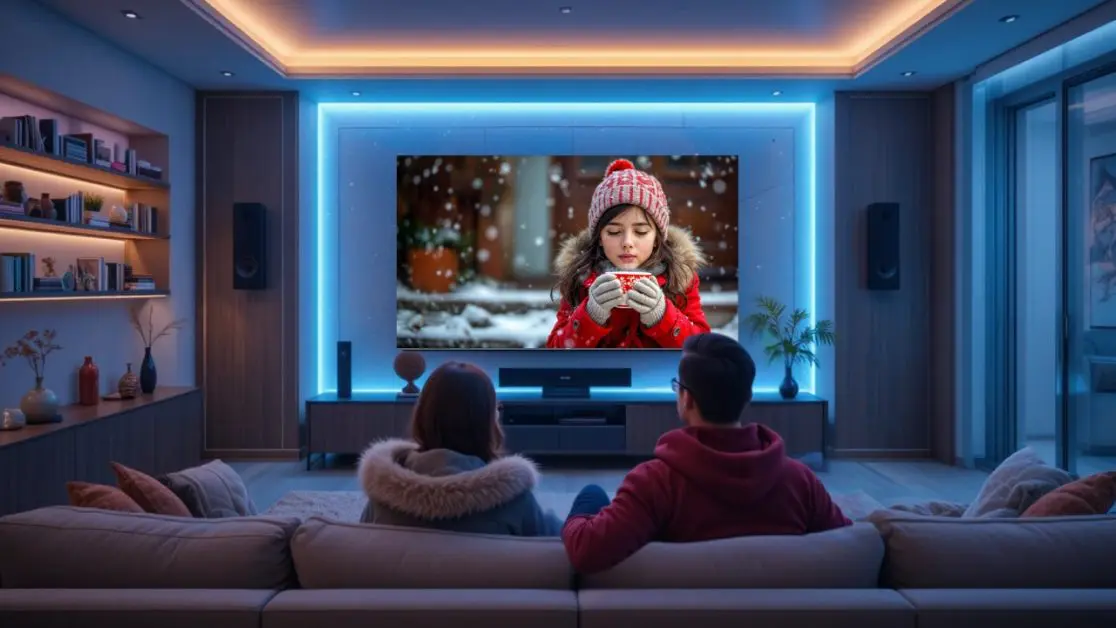
Haier’s philosophy with large TVs mirrors how Indian homes actually function.
Not louder.
Not flashier.
More thoughtful.
The Haier New M96 Series 254cm (100) QD Mini LED AI Smart Google TV focuses on intelligent picture tuning, smooth motion handling, and immersive room filling sound so the technology stays in the background while life takes centre stage .
That restraint builds long term trust.
The bigger insight
Big screens are not about indulgence.
They are about alignment.
Alignment between how homes are used and how technology behaves.
When a screen understands:
- Shared viewing
- Changing light
- Long hours
- Multiple users
It stops feeling like a gadget.
It becomes part of the home system.
The thought worth holding onto
Homes do not need more devices.
They need fewer interruptions.
Big screens work because they simplify how we gather, watch, and unwind together.
And once you experience that sense of ease and scale, smaller screens begin to feel like a compromise you no longer want to make.
Frequently Asked Questions
Why does a big TV feel more useful now than it did earlier in Indian homes?
Because homes aren’t single-purpose anymore. The same living room handles work calls, kids’ cartoons, cricket matches, and late-night movies. A big screen adapts to all of it without demanding attention.
Why do big TVs make family time feel different?
They shift viewing from passive to participative. Nobody strains to see or hear. People sit back, relax, and stay longer, which naturally turns watching into a shared ritual.
How does one big screen simplify a small Indian apartment?
Everything converges into one surface, streaming, gaming, casting, and even smart home controls.
Is a big TV harder on the eyes?
No. Viewed from the right distance, larger screens reduce eye strain because text and visuals feel natural instead of compressed.
Why do OTT shows and sports look better on large TVs?
Today’s content is cinematic. Facial expressions, fast motion, and contrast-heavy visuals are designed to be seen at scale.
Can one big smart TV really replace multiple devices?
Yes. Streaming apps, casting, voice control, and smart home connections all live in one interface.