


Bigg Boss isn’t just about the contestants anymore. It’s about the screens that shape their world, and ours.
Week after week, Season 19 proves this point. Contestants argue, form alliances, and plot their next moves.
But behind every twist, there’s another silent player, the giant display that beams their reality back to millions of living rooms. It doesn’t just show the drama. It amplifies it.
When a TV stops being furniture and starts being a character

Think about it. A typical Indian living room TV was once a box in the corner. Useful, yes, but invisible. Now? It’s the centrepiece. It hosts fights, reunions, and the kind of cinematic moments Salman Khan serves up during Weekend Ka Vaar.
In Bigg Boss, the display acts like an omnipresent storyteller, framing every glare, every whisper, every tear. At home, a good TV does something similar. It turns routine evenings into experiences you don’t forget.
Why Bigg Boss looks different on today’s screens
The reason a task feels more intense or a fight feels more real has less to do with the housemates and more with how today’s displays handle detail.
- Dolby Vision + Dolby Atmos: Adjusts brightness to the light in your room while balancing audio so no word or gasp gets lost.
- 144Hz and MEMC: Keeps fast movements, whether it’s a cricket replay or Uorfi Javed entering with a surprise task, free from blur.
- Harman Kardon speakers: Add depth and dimension, making the living room sound like the Bigg Boss stage.
When combined, these aren’t specs. They’re invisible stagehands making sure drama feels larger than life, without you noticing the trick.
In the Bigg Boss house, screens control the narrative
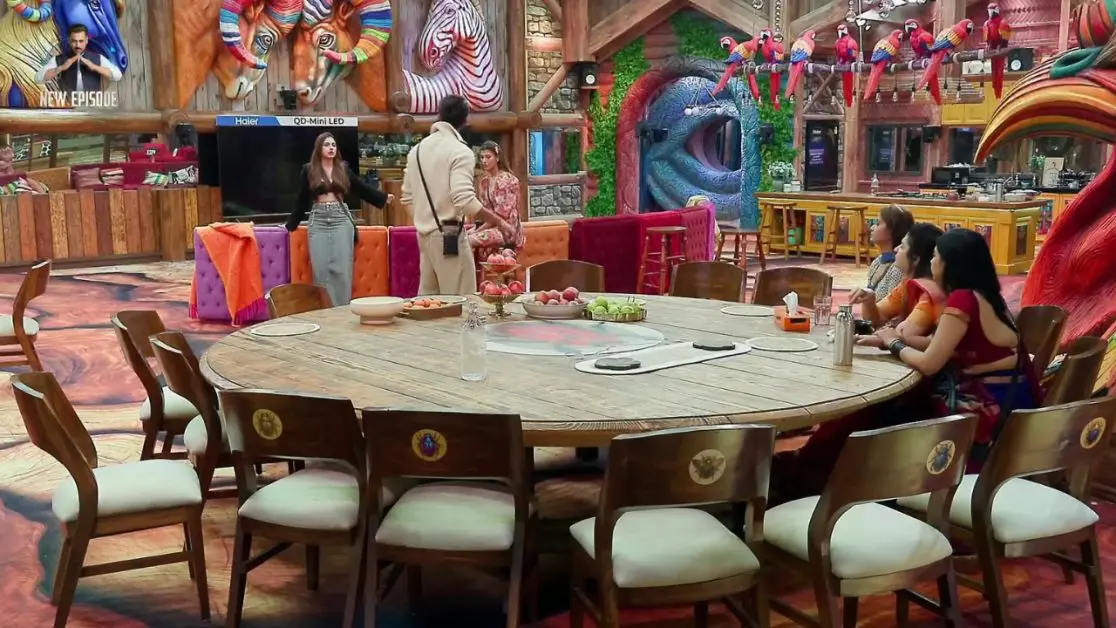
Inside the house, the display isn’t a passive object. Contestants wait for it to flash instructions, reveal tasks, or announce eliminations. One twist in Episode 29? A contestant whisked to the Secret Room while others stared nervously at that glowing wall of truth.
That’s the subtle power of a display. It dictates rhythm. It signals authority. It becomes part of the psychology of the game.
At home, the same principle applies. Your TV can either be background noise, or the thing that shapes the way your family, friends, or roommates gather, talk, and remember the night.
What it means for Indian households
Here’s where it gets real. A screen like the one in Bigg Boss isn’t only for reality TV.
- For parents: It’s weekend cricket with commentary so clear you hear every edge.
- For couples setting up homes: It’s movie nights where black tones look like velvet, not grey fog.
- For working professionals living solo: It’s switching from a heated debate in the house to a calming nature doc after a long day.
In each case, the TV isn’t just showing content. It’s designing moods.
The hidden system – entertainment is only as strong as the frame around it
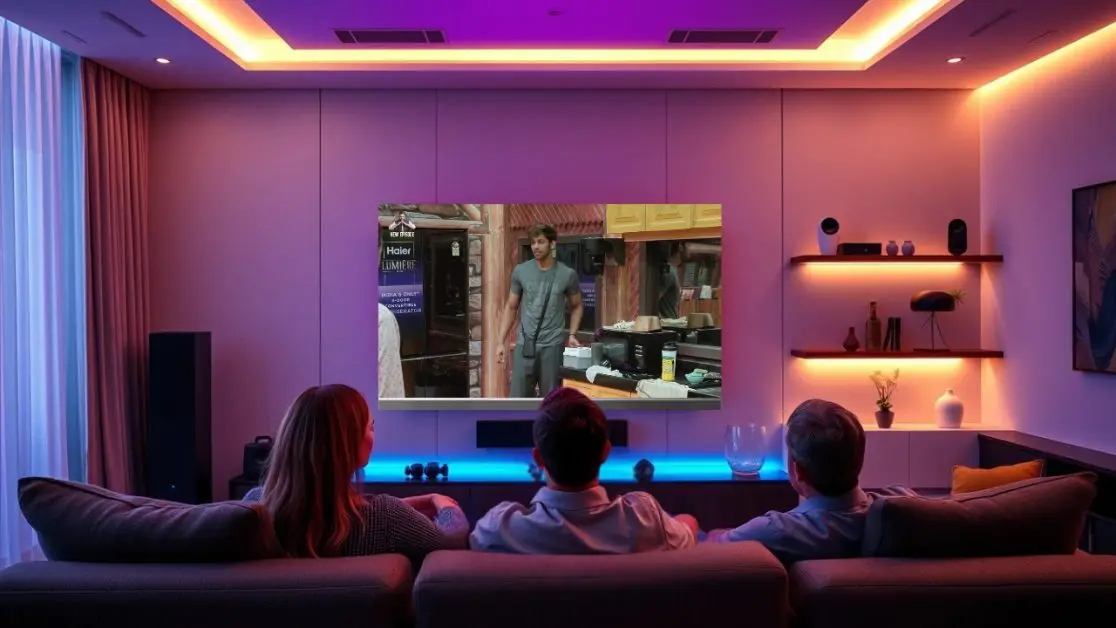
Here’s the aphorism, A show is only as powerful as the screen it plays on.
Bigg Boss knows this, which is why the TV inside the house feels as scripted as the contestants themselves. Haier knows this too, which is why their Mini LED H65M92FUX and H75M92FUX aren’t marketed as mere panels, but as complete storytelling partners.
These aren’t upgrades for the sake of tech. They’re about making sure the narrative, whether it’s Salman’s sharp one-liner or your child’s laughter at a cartoon, lands with full weight.
So what’s the takeaway?
Bigg Boss has taught us many things, alliances crumble, tempers flare, and nothing is permanent. But the biggest revelation might be that the display is no longer the background.
It’s a character. In the house. And in ours.
The real question for modern households is simple, when entertainment itself is becoming more immersive, do you want a silent bystander, or a screen that steps into the spotlight?