


A bigger screen does not just make things look larger. It reveals details your eyes were already missing.
From facial expressions in a late night series to the subtle spin of a cricket ball, larger screens with higher resolution let every frame breathe, making viewing feel closer to real life rather than compressed into a rectangle.
That is the real promise behind bigger screens today. Not excess. Clarity.
Why do bigger screens suddenly feel essential, not optional?
Think about how your living room has changed.
The TV is no longer just for prime time news or Sunday movies. It is where cricket matches stretch for hours, where children watch animated worlds, where working professionals unwind after long days, and where families gather during festivals.
Usage has expanded.
Screens had to evolve.
A larger screen does one important thing.
It aligns with how much visual information modern content actually carries.
Streaming platforms shoot in 4K. Sports broadcasts use multiple camera angles. Even YouTube creators frame content assuming larger displays. Small screens hide these details. Bigger screens reveal them.
Details are not created by the TV. It is unlocked.
The hidden math behind better detail
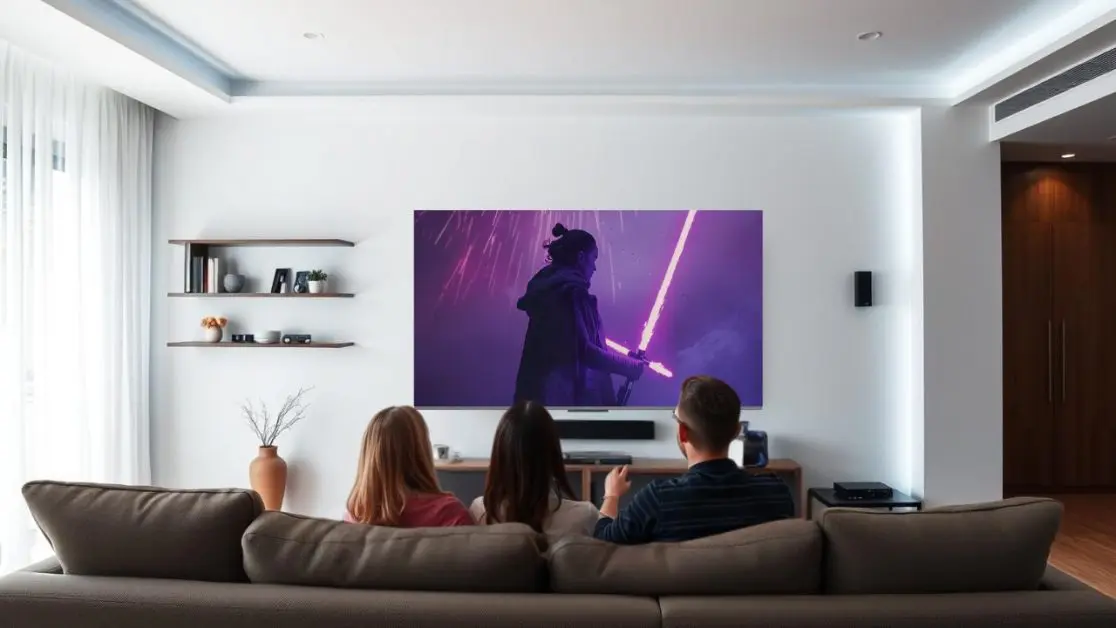
Resolution numbers often get all the attention. 4K. HDR. Dolby formats.
But here is the system most people miss.
- A 4K image has over 8 million pixels
- On a small screen, those pixels are tightly packed
- On a bigger screen, they spread out just enough for your eyes to distinguish fine differences
This is why a larger 4K screen looks sharper, not softer.
Your eyes finally get space to work.
According to display research, the optimal viewing distance for a 75 to 194cm (77) 4K screen aligns closely with typical Indian living room layouts, around 8 to 10 feet. At that distance, the eye resolves more detail without strain.
Big screens work because rooms are caught up to content.
Why detail changes emotion, not just picture quality
The details are not technical. It is emotional.
You notice it when:
- An actor’s silence says more than dialogue
- A slow motion replay makes sense instantly
- A shadow in a thriller feels intentional, not muddy
- Animated textures suddenly feel handcrafted
On larger OLED displays, pixel level lighting allows blacks to stay truly black while highlights stay crisp. This contrast gives depth, not brightness.
That depth changes how scenes feel.
Clarity builds trust between what you see and what the creator intended.
Sports is where bigger screens prove their worth fastest
Cricket exposes weak displays instantly.
The ball moves fast. The field is wide. Camera cuts are frequent.
On smaller screens:
- The ball disappears mid air
- Motion blur flattens detail
- Replays feel confusing
On larger screens with high refresh rates and motion enhancement:
- Ball tracking becomes natural
- Jerseys stay sharp during sprints
- Crowd reactions add context
Technologies like MEMC and 120Hz refresh rates exist for one reason. Motion clarity.
A bigger screen gives these systems room to perform properly.
When Haier introduced large OLED formats like the 194cm (77) C90 series, the emphasis was not size alone. It was how size allows motion and detail systems to finally work at full potential
Movies and series reward attention when screens get bigger
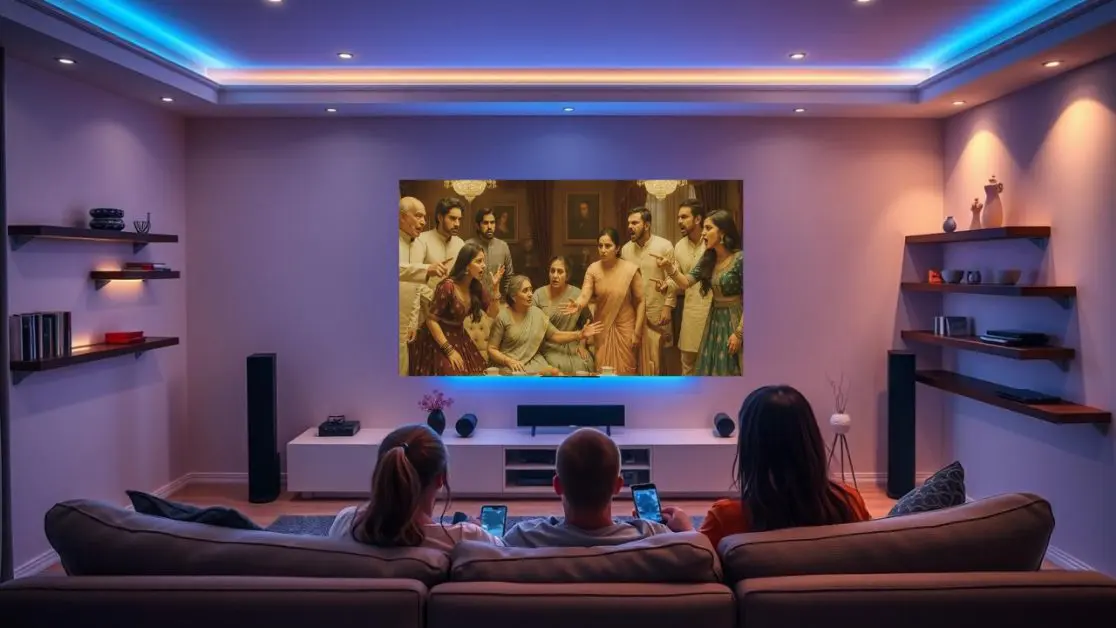
Modern cinema is framed for immersion.
Wide shots. Long takes. Visual storytelling.
On a larger screen:
- You stop scanning the frame
- Your eyes settle naturally
- You notice what matters
This matters even more at home because distractions exist. Phones. Conversations. Movement.
A bigger screen quietly pulls attention back.
Not forcefully.
Effortlessly.
Dolby Vision IQ, for example, adapts picture settings based on room lighting so details remain visible whether you watch during daylight or late night. On larger screens, these adjustments feel subtle and human rather than artificial
Gaming shows the practical side of detail
Gaming does not forgive lag or blur.
Players care about:
- Response time
- Frame consistency
- Visual cues
Large screens with technologies like AMD FreeSync Premium reduce tearing and stutter by syncing frame output. On a smaller display, these gains are less noticeable. On a bigger screen, they become obvious.
Edges stay clean. Motion stays smooth.
Gaming becomes readable, not overwhelming.
The screen stops fighting the player.
One screen size does not fit every home
Bigger does not mean reckless.
There are practical choices.
Option one: Moderate upgrade
- Best for compact apartments
- Immediate clarity improvement
Option two: Living room centerpiece
- 65 to 194cm (77)
- Balanced immersion and comfort
- Ideal for shared family viewing
Option three: Full immersion
- 194cm (77) and above
- Designed for movie lovers and sports fans
- Works best with 4K content and proper spacing
The cost difference is not just money.
It is how central the screen becomes to daily life.
Why Indian homes are ready for bigger screens now
Two shifts made this inevitable.
1. Room layouts evolved
Open living spaces allow longer viewing distances.
2. Content quality improved
4K streaming is common. Data costs dropped.
When systems change, habits follow.
The TV is no longer a background object. It is a shared experience surface.
That is why large format TVs are no longer niche purchases. They are practical upgrades aligned with how homes function today.
Detail is also about comfort
Sharp does not mean harsh.
OLED displays reduce eye strain by controlling light at the pixel level. No backlight bleeding. No uneven brightness.
This matters in real homes where viewing sessions last hours.
Parents notice it during long animated movies.
Professionals notice it after late workdays.
Elderly viewers notice it immediately.
Comfort scales with screen quality.
What bigger screens quietly change in everyday life
- Movie nights become planned, not accidental
- Sports viewing becomes social again
- Children sit farther away, not closer
- Conversations happen around content, not around phones
A bigger screen subtly reshapes behavior.
Not because it demands attention.
Because it earns it.
The bigger idea behind bigger screens
This is not about showing off size.
It is about respecting detail.
Content creators are putting more thought into frames.
Technology is delivering more information.
Homes finally have space to receive it.
When screen size, resolution, and motion systems align, something shifts.
You stop watching pixels.
You start watching moments.
That is why bigger screens matter now more than ever.
Frequently Asked Questions
Am I upgrading for clarity or just falling for size marketing?
Clarity. On a larger 4K screen, pixels spread out just enough for your eyes to separate fine textures, facial expressions, and motion. That’s why a bigger 4K TV often looks sharper, not softer.
Won’t a bigger screen strain my eyes if I watch for hours?
Not if the panel quality is good. OLED TVs control light at the pixel level, avoiding harsh backlight bleed. That means smoother brightness, deeper blacks, and less eye fatigue, even during long sessions.
I sit about 8–10 feet away, is that too close for a 75–77 inch TV?
That distance is actually ideal for a 4K screen of that size. Your eyes can resolve more detail without strain, which is why larger screens now feel comfortable instead of overwhelming.
Why does detail feel ‘calmer’ on a big screen instead of busy?
Because your eyes stop scanning. On a larger display, important visual cues are easier to find. Your brain works less to interpret the frame, which feels calmer, not louder.
Do high refresh rates actually matter, or is it a spec gimmick?
They matter most on large screens. Features like 120Hz panels and MEMC reduce blur so jerseys stay sharp during sprints and crowd reactions add context instead of chaos.
Why does sports look more ‘real’ on a larger OLED screen?
Contrast + motion clarity. True blacks, crisp highlights, and smooth motion give depth to the field. You’re not just watching play, you’re reading it instantly.
Does Dolby Vision IQ actually make a difference at home?
Yes, especially on large screens. Dolby Vision IQ adapts brightness and contrast based on room lighting, so detail stays visible in daylight and at night, without looking artificial.