


Built-in premium sound changes everything because it removes friction from everyday entertainment.
When sound is engineered into the screen itself, movies feel fuller, sports feel closer, and even casual viewing becomes immersive without extra boxes, wires, or setup stress.
In real homes with limited space and busy lives, great audio built in is not a luxury. It is a lifestyle upgrade that quietly improves how people relax, gather, and unwind.
The moment most living rooms break the experience.
It usually happens five minutes in.
The picture looks sharp. The colours pop. Everyone settles in.
Then the dialogue sounds thin.
Crowd noise feels flat.
Background music disappears into the room.
So someone reaches for the remote.
Volume goes up.
Clarity does not.
This is the invisible problem with most TVs. Screens got smarter. The sound stayed behind.
And Indian homes feel this gap more than most.
Apartments are compact. Walls are close. Extra speakers mean extra wires. Soundbars compete with décor, furniture, and space. So people settle. They accept average audio because improving it feels complicated.
That compromise shapes the entire experience.
Sound is not an accessory. It is half the story.
Why built-in sound matters more than add-ons
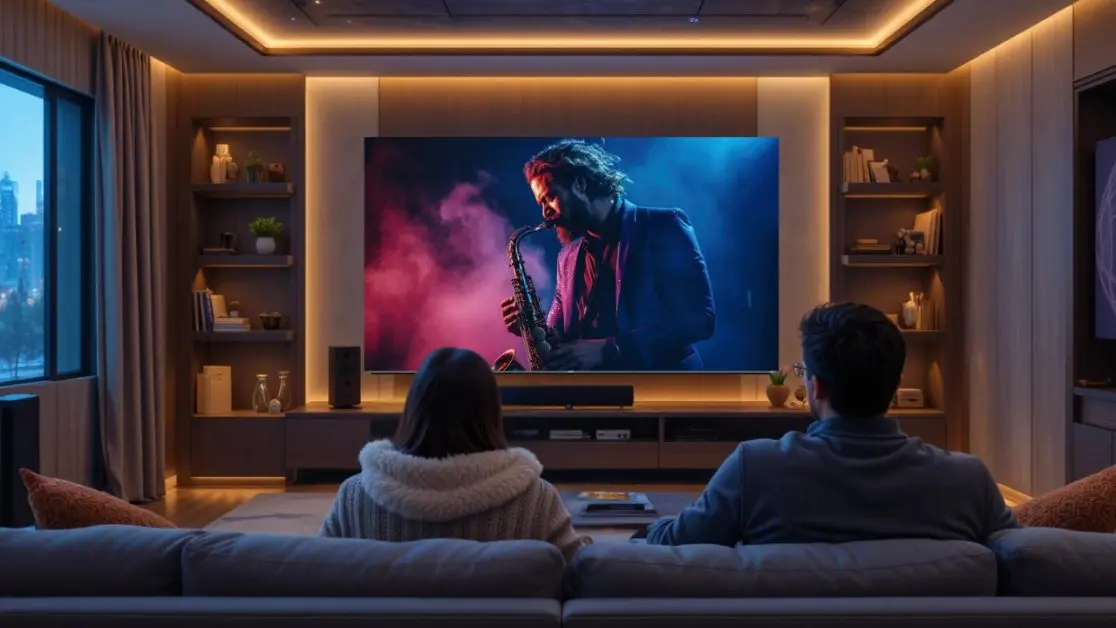
There are three ways people usually approach TV audio.
One option is built-in basic speakers
They are fine for news and background viewing. They struggle with movies, sports, and music.
The second option is external soundbars or speaker systems
They sound better but require space, power points, setup, and constant adjustment.
The third option is premium sound designed into the TV itself
This is where things change.
Built-in premium sound works because it is not an afterthought. Engineers tune the audio to the screen, cabinet, and processor. Everything works as one system.
The result is balance.
Dialogue stays clear.
Bass feels present without shaking walls.
Sound fills the room instead of firing forward.
In real homes, simplicity is not laziness. It is intelligence.
The hidden system behind immersive sound
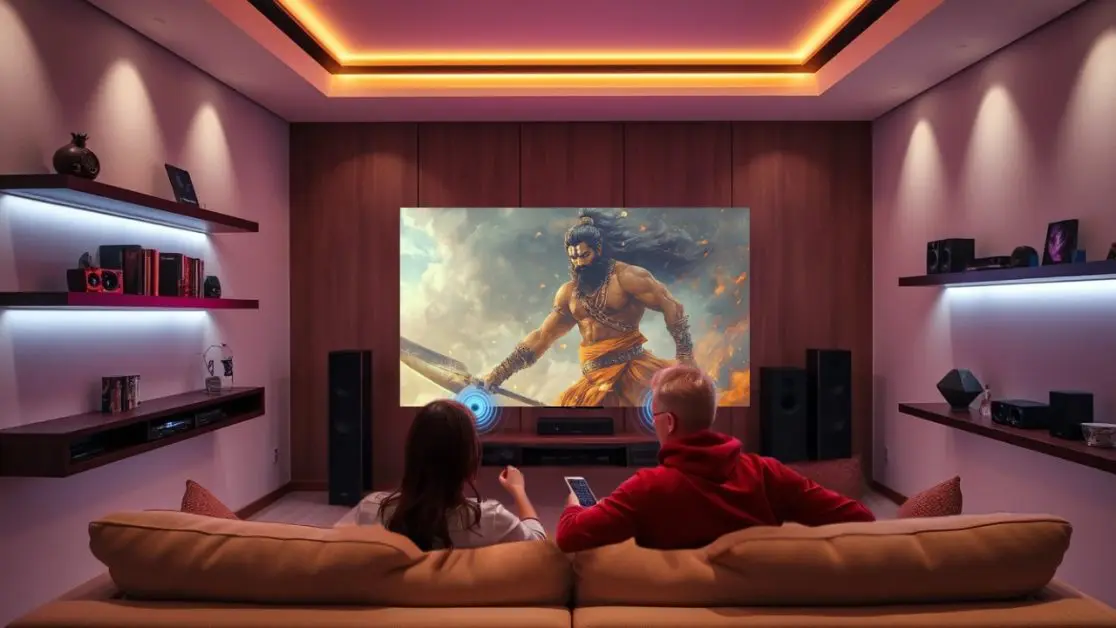
Great sound is not about loudness. It is about precision.
Most people assume bigger speakers mean better audio. That belief misses the system underneath.
Premium built-in sound relies on three invisible layers.
The first layer is speaker design
High-quality drivers reproduce voices, instruments, and effects without distortion.
The second layer is tuning
Sound is calibrated for the TV enclosure so nothing feels sharp or hollow.
The third layer is processing
Technologies like Dolby Atmos place sound spatially so it feels three-dimensional.
When these layers work together, audio stops drawing attention to itself.
It just feels right.
This is why partnerships with audio specialists matter. For example, Haier’s M80F Mini LED TVs integrate Sound by KEF with a 2.1 channel system and 50W output, tuned specifically for the screen sizes from 55 to 215cm (85) .
You do not hear the technology.
You feel the result.
How premium sound changes everyday moments
This is not about cinema nights alone.
Built-in premium sound reshapes small, ordinary moments.
Cricket evenings
The crack of the bat carries weight. Crowd reactions feel layered. Commentary stays clear even during chaos.
Late-night streaming
Voices remain intelligible at lower volumes. No more riding the volume button between dialogue and background music.
Family movie nights
Everyone hears evenly. No one sits in the “bad sound” corner.
Solo downtime
Music sounds fuller. Podcasts feel closer. The room feels calmer.
Sound influences emotion more than visuals. When audio improves, stress drops. Attention stays.
That is not a feature. That is a system effect.
Why Indian homes benefit more than global averages
Premium built-in sound solves local realities.
Indian living rooms often serve multiple roles. TV room. Dining spillover. Workspace. Play area.
Adding extra audio equipment adds friction.
- More cables to manage
- More remotes to juggle
- More visual clutter
Built-in sound respects space.
It also respects neighbours. Well-tuned audio delivers depth without needing excessive volume. Bass feels present, not aggressive.
This balance matters in apartments, gated communities, and shared buildings.
Good sound adapts to homes. A great sound belongs to them.
What to actually look for in built-in premium sound
Specs alone do not tell the story. But they hint at intent.
Here is a simple framework.
Speaker configuration
Look for at least a 2.1 channel setup. Dedicated woofers add depth that small speakers cannot fake.
Audio power
Around 40 to 50W is a sweet spot for medium to large rooms. It delivers fullness without strain.
Audio tuning partnerships
Brands that collaborate with established audio specialists take sound seriously.
Spatial audio support
Formats like Dolby Atmos add realism by placing sound around you, not just in front.
Haier’s M80F Mini LED range checks these boxes across sizes, which signals a system-first approach rather than a marketing checkbox .
The cost benefit people underestimate
External sound systems feel like upgrades. They often become maintenance projects.
Built-in premium sound shifts cost from accessories to integration.
- No extra purchase
- No installation
- No compatibility issues
- No visual compromise
The value is not just financial. It is mental.
One less thing to manage.
One less decision to revisit.
One less system to troubleshoot.
Good design removes decisions.
Why this matters beyond entertainment
Sound shapes behaviour.
Clear audio keeps families together longer during shared viewing.
Balanced sound reduces listening fatigue.
Consistent audio quality builds habits around content, not devices.
In work-from-home setups, good built-in speakers improve video calls without external equipment. In hybrid homes, the TV becomes a flexible screen for work, learning, and leisure.
This is where appliances stop being objects.
They become infrastructure.
The future points inward, not outward
For years, upgrades meant adding more things.
Another box.
Another cable.
Another remote.
The next phase of smart living moves in the opposite direction.
Fewer devices.
Better integration.
Quieter intelligence.
Built-in premium sound fits this shift perfectly. It delivers impact without asking for attention.
No setup drama.
No aesthetic compromise.
No learning curve.
Just better living.
The insight worth remembering
Screens get headlines. Sound carries memory.
People remember how something felt long after they forget how it looked.
When audio works, it disappears.
When it fails, it dominates.
Built-in premium sound changes everything because it respects real life. The space. The people. The rhythm of everyday moments.
And once you experience that ease, going back feels impossible.
Not because the old way was bad.
But because this one finally feels complete.
Frequently Asked Questions
Why does audio setup feel like work instead of enjoyment?
Because external systems turn entertainment into a project. Built-in premium sound shifts effort from the user to the engineer.
Why does built-in premium sound feel more ‘balanced’
Because it’s calibrated for the exact enclosure it lives in. Nothing is overpowering, voices, bass, and effects stay in proportion.
What role does Dolby Atmos actually play?
Dolby Atmos creates spatial depth, so sound feels layered and three-dimensional, not flat and directional.
Why does cricket sound more intense on some TVs?
Premium sound preserves layers, the bat crack, crowd swell, and commentary stay distinct instead of collapsing into noise.
What am I really paying for with built-in premium sound?
No extra purchases
No installations
No compatibility issues
No visual compromise
Fewer decisions over time