
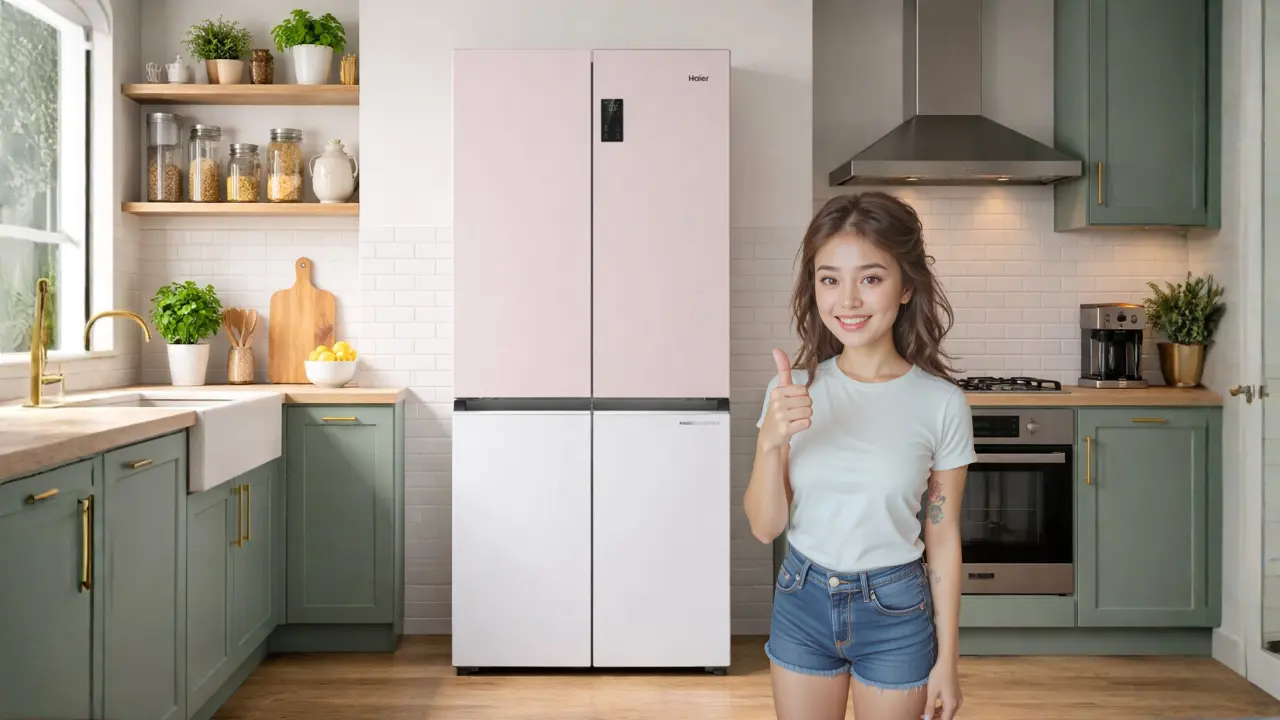

A Clean & Safe Back Design protects what you cannot see, so your home stays safer and more hygienic
A Clean & Safe Back Design seals the rear components of a refrigerator, shielding wiring and cooling systems from dust, moisture, and accidental contact.
It improves hygiene, stabilises energy performance, and enhances safety. In Indian kitchens that run every single day, this invisible layer quietly prevents long term issues.
That is the core idea.
Now let us look at why the back of a refrigerator deserves more attention than it gets.
The back of your refrigerator carries the real workload.
Open your kitchen cabinet.
You see polished doors. Stylish finishes. A neat digital display.
Now imagine the back panel.
That is where heat exchange happens. Where the compressor supports cooling. Where electrical components sit. Where dust collects first.
According to the Bureau of Energy Efficiency, refrigeration can account for up to 15 to 20 percent of a typical Indian household’s electricity usage. That means this appliance never truly rests.
When the rear structure is exposed, dust settles. Moisture seeps in. Wires become vulnerable.
A Clean & Safe Back Design prevents that.
It covers. It protects. It stabilises.
Invisible design. Visible impact.
Why hygiene is not just about the inside
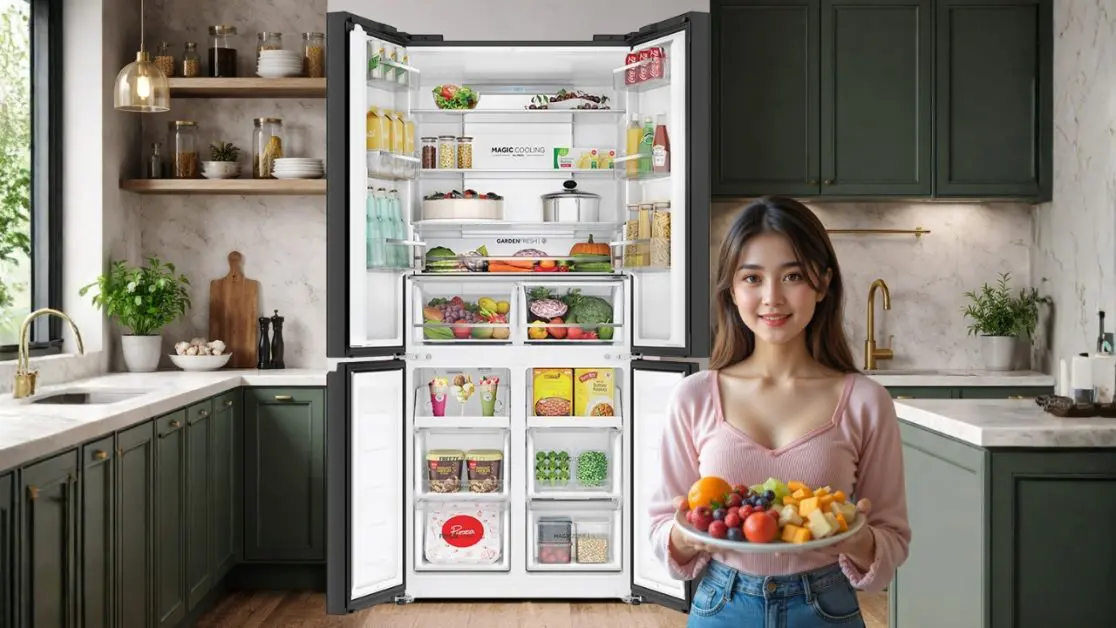
We focus on food freshness.
But hygiene is a system.
When condenser areas collect dust and oil vapour, cooling efficiency drops. The US Department of Energy notes that dirty coils can increase energy consumption significantly over time.
In Indian homes, kitchens deal with:
- High humidity in coastal cities
- Spices and oil vapour daily
- Frequent mopping with water
Add years of neglect behind the fridge, and small inefficiencies become expensive habits.
A sealed rear panel blocks dust entry and reduces moisture exposure.
Less dust means:
- Stable airflow
- Lower compressor stress
- Better long term cooling consistency
Hygiene outside protects hygiene inside.
Safety is a structure, not a slogan
Most families ask one question.
Is it safe?
The smarter question is this.
What happens when something goes wrong?
Consider three everyday situations:
- A child touches the back panel out of curiosity.
- Cleaning staff shift the fridge during mopping.
- A slight water splash reaches the wall behind it.
With exposed wiring, risk increases.
With a Clean & Safe Back Design, components remain shielded.
Protection is not dramatic. It is preventive.
And prevention is the most underrated form of care.
Two design approaches. Two long term outcomes.
Option 1: Partially exposed rear design
Benefits
- Lower upfront manufacturing cost
- Slightly easier servicing
Costs
- Faster dust accumulation
- Increased maintenance frequency
- Higher long term energy instability
- Elevated accidental contact risk
It feels economical.
But five years later, the story changes.
Option 2: Fully sealed Clean & Safe Back Design
Premium refrigerators increasingly adopt sealed rear panels as part of a broader safety system.
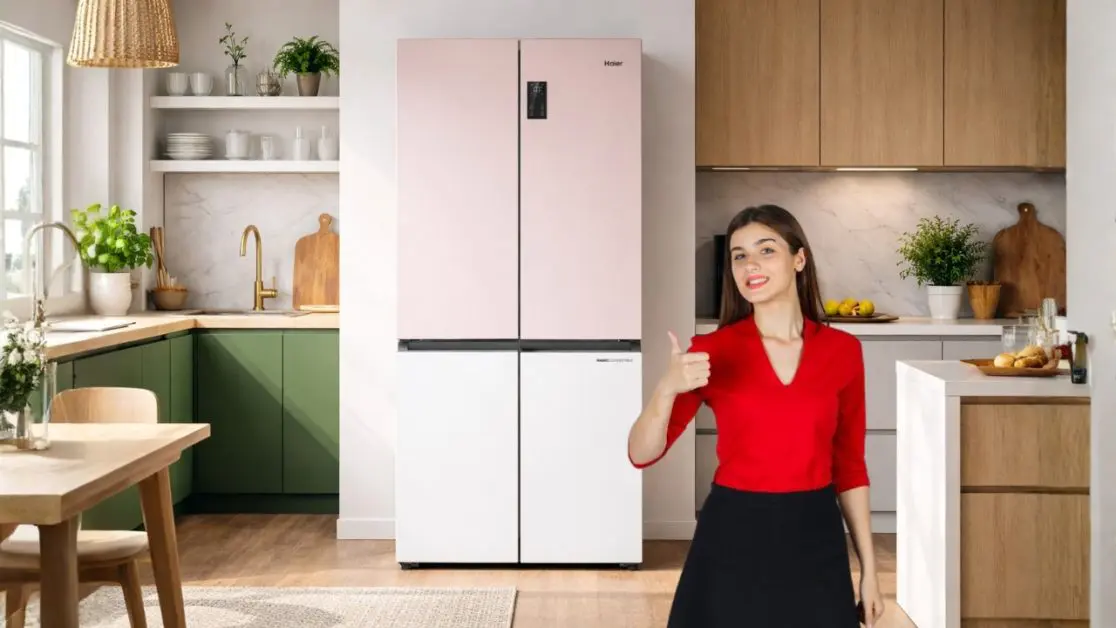
Take the Haier Lumiere 520L Mauve Pink 4 Door Convertible Refrigerator (HRB 600MP) , the Haier Lumiere 520L Pearl White 4 Door Convertible Refrigerator (HRB 600PW) , and the Haier Lumiere 520L Rosette White 4 Door Convertible Refrigerator (HRB 600RW).
These models combine:
- 520 litre capacity
- 85 percent convertible fridge space
- Triple Inverter compressor
- 360 degree cooling
- Toughened glass shelves
- 10 year compressor warranty
When advanced cooling systems meet a protected rear structure, performance remains stable for years.
Benefits
- Reduced dust exposure
- Improved operational safety
- Lower long term maintenance
- Greater energy consistency
Cost
- Slightly higher upfront investment
But refrigerators in Indian homes typically run for 8 to 12 years.
Upfront savings fade.
Reliability compounds.
How Clean & Safe Back Design supports energy stability
Energy waste hides in friction.
When rear coils struggle under dust layers, compressors work harder. Harder work means higher electricity draw.
The Haier Lumiere 520L series uses Triple Inverter technology to maintain precise temperature control.
Add 360 degree cooling into that system.
Now protect the rear components from dust and moisture.
The result:
- Even temperature distribution
- Reduced compressor strain
- Predictable electricity usage
- Longer component lifespan
Efficiency is not luck.
It is structural discipline.
Hygiene in Indian homes is more demanding
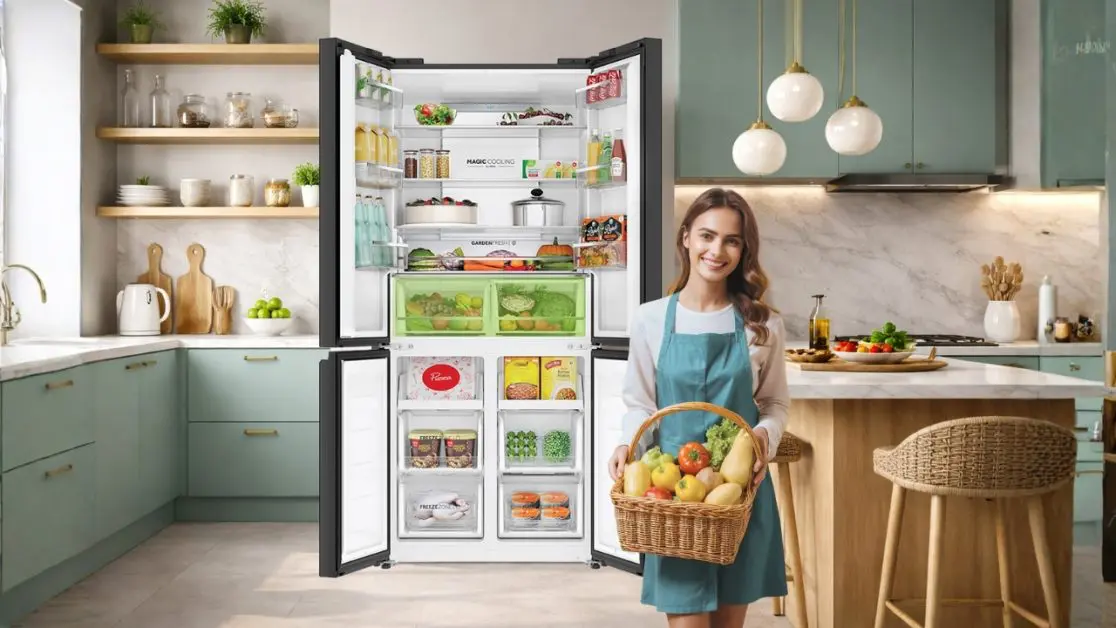
Refrigerators here store:
- Freshly cut vegetables
- Marinated meats
- Homemade sweets during festivals
- Cooked leftovers for busy weekdays
- School tiffin prep
That means frequent door openings. High moisture foods. Strong aromas.
Features like Deo Fresh Technology help absorb odour and maintain freshness.
But odour control alone is not enough.
When the rear system stays clean, airflow remains stable. Stable airflow supports consistent cooling. Consistent cooling protects food safety.
It is all connected.
Five year impact comparison
| Factor | Exposed Rear | Clean & Safe Back Design |
| Dust buildup | High | Low |
| Rear cleaning effort | Frequent | Minimal |
| Energy stability | Fluctuating | Consistent |
| Accidental contact risk | Higher | Reduced |
| Long term reliability | Moderate | Strong |
Small design decisions shape long term outcomes.
Why modern buyers care about invisible safety
Millennial and Gen Z homeowners do not just buy capacity.
They buy peace of mind.
They want:
- Child safe kitchens
- Lower maintenance stress
- Stable electricity bills
- Appliances that last
A Clean & Safe Back Design aligns with that thinking.
It signals foresight.
And foresight builds trust.
The quiet system behind calm homes
Every well run home mirrors a well run organisation.
You rarely see the safeguards.
You see the outcome.
The Clean & Safe Back Design works like an internal compliance layer. It protects critical systems. It prevents small disruptions from turning into larger problems.
The best appliance design feels uneventful.
No drama. No sudden breakdown. No hidden energy spikes.
Just steady performance.
What to check before you buy
When evaluating refrigerators, ask:
- Is the back panel sealed and protected?
- Does the model use inverter technology?
- What is the compressor warranty duration?
- Are cooling and airflow systems well integrated?
- Does the brand emphasise hygiene systems beyond aesthetics?
Models like the Haier Lumiere 520L Mauve Pink 4 Door Convertible Refrigerator (HRB 600MP) and the Haier Lumiere 520L Rosette White 4 Door Convertible Refrigerator (HRB 600RW) demonstrate how rear protection integrates with cooling innovation.
Details reveal intent.
Intent reveals commitment.
The larger lesson: Protect what people do not see
Most buyers judge refrigerators by colour and capacity.
Few examine the back.
Yet longevity hides there.
A Clean & Safe Back Design teaches a universal principle.
Protect the unseen systems.
Because unseen systems decide visible outcomes.
In kitchens.
In households.
In organisations.
Safety meets hygiene quietly.
And when design works silently in the background, life feels more sorted.
That is not marketing.
That is thoughtful engineering at work.
Frequently Asked Questions
Do I really need a sealed back panel in my refrigerator, or is it just a premium add-on?
A sealed back panel is not just cosmetic. It protects critical components like wiring and condenser coils from dust, moisture, and accidental contact improving long-term hygiene, energy stability, and safety.
Is it worth paying more upfront for a Clean & Safe Back Design?
Yes, especially in Indian homes where refrigerators run 24/7 for 8–12 years. The slightly higher upfront cost often results in lower maintenance, fewer breakdowns, and more stable electricity usage over time.
How much difference can rear protection actually make over five years?
Over time, exposed backs accumulate dust, increasing compressor strain and energy use. A sealed design reduces dust buildup, maintains airflow, and supports consistent cooling.
How does the back of a refrigerator affect hygiene inside?
Dust-clogged coils reduce cooling efficiency. Inconsistent cooling can compromise food freshness. Clean airflow supports hygienic storage.
My kitchen has oil vapour and humidity. Does that impact the back panel?
Yes. Indian kitchens often deal with spices, humidity, and frequent mopping. A sealed rear design reduces moisture and dust entry.
Do I need to clean the back of my fridge regularly?
With exposed coils yes. With a Clean & Safe Back Design minimal maintenance is required.
How does a Clean & Safe Back Design support energy efficiency?
It stabilises airflow and protects condenser components, reducing compressor strain.
Does inverter technology work better with a sealed rear design?
Yes. Inverter compressors perform best when airflow and thermal exchange remain consistent.