
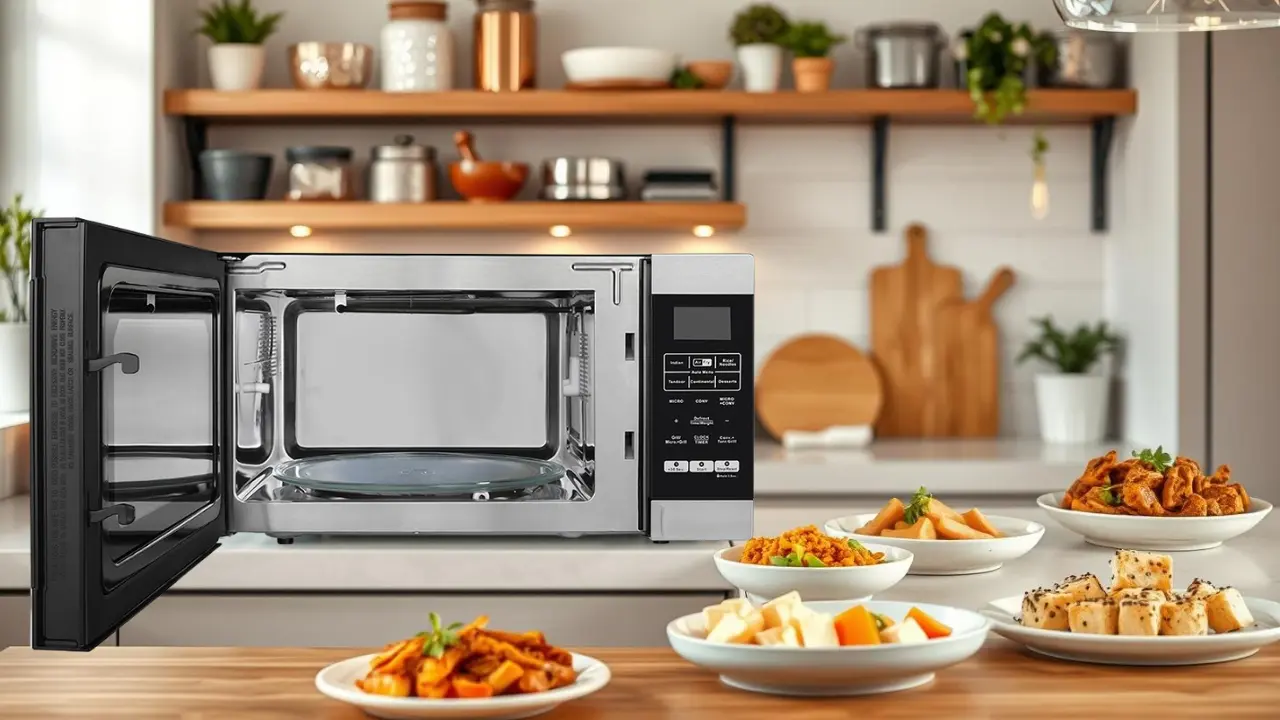

Cold kitchens quietly drain warmth, time, and energy from everyday cooking. Microwaves reverse that loss by delivering focused heat exactly where it is needed.
In winter, they do not just warm food.
They restore comfort, rhythm, and control to Indian kitchens that slow down when temperatures drop.
Why does the kitchen feel colder than the rest of the house?
Walk into the kitchen early on a January morning.
The floor feels sharper than the living room tiles.
The sink chills your palms instantly.
The gas knob feels harder to turn.
This is not imagination. It is design.
Kitchens are built to release heat, not hold it.
Chimneys pull warm air out. Stone counters absorb cold. Windows stay open longer for ventilation. Morning cooking begins before sunlight has done any work.
A cold kitchen is not uncomfortable by accident.
It is engineered that way.
And once heat leaves, it rarely returns on its own.
Cold kitchens do more than lower temperature
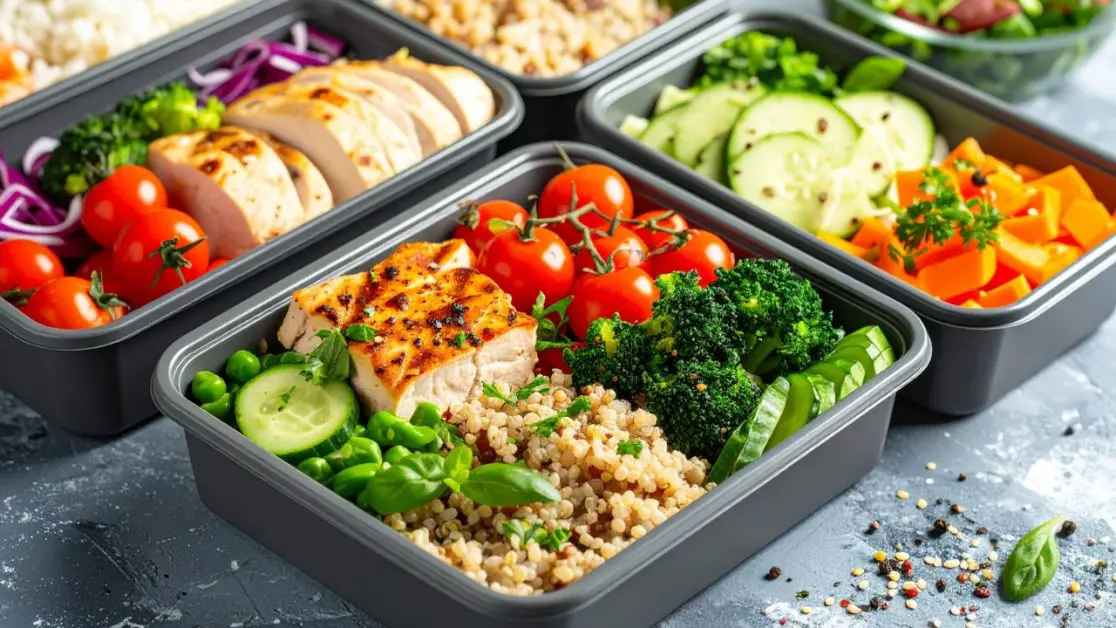
The bigger impact is behavioural.
Cold kitchens quietly change how people cook.
- Breakfast becomes rushed
- Meals shrink to reheating
- Cooking is postponed till night
- Comfort food replaces effort-heavy meals
This is not laziness.
It is friction.
When a space resists you, engagement drops.
That is why winter kitchens reduce nutrition, variety, and joy without anyone consciously deciding to cook less.
Why traditional cooking struggles in winter
Gas stoves depend on presence.
You stand longer.
You stir more.
You wait between steps.
In winter, every extra minute near the stove feels heavier. Cold air makes patience expensive.
There are only three responses.
One option is to push through discomfort.
This costs energy and mood.
The second option is to cook less.
This costs routine and nutrition.
The third option is to change how heat is delivered.
This changes everything.
Microwaves rewrite how heat works
Microwaves do not heat the room.
They heat the food directly.
This is the quiet shift.
Instead of warming air, cookware, and your hands first, energy goes straight into the meal. Heat becomes contained, controlled, and fast.
Less standing.
Less waiting.
Less exposure to cold surfaces.
The kitchen stops stealing warmth from you.
Why speed becomes comfort in winter
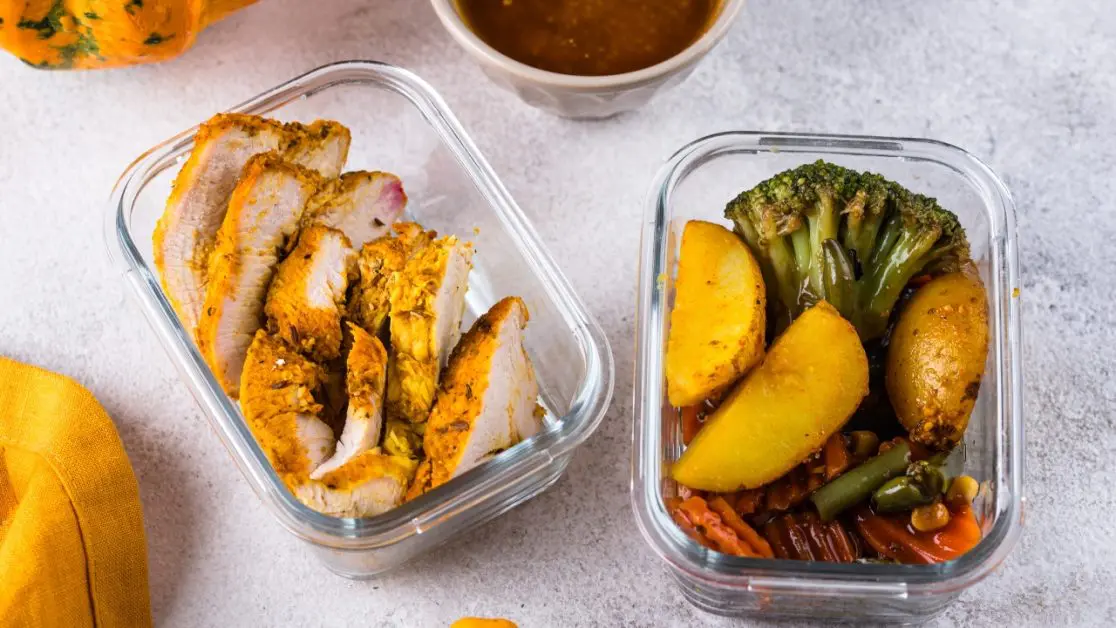
Time and temperature are connected.
The longer you stay in a cold kitchen, the more resistance builds. Shorter cooking cycles reduce that friction before it turns into avoidance.
Microwaves compress time.
- Leftovers warm in minutes
- Frozen parathas soften predictably
- Milk reheats without supervision
- Breakfast finishes before fingers go numb
Speed is not convenient.
Speed is warmth management.
The psychological impact of instant warmth
Warm food signals safety.
This is why chai feels different in winter. Why dal calms faster. Why hot meals improve mood without explanation.
Microwaves deliver immediate warmth with minimal effort. That reduces stress before hunger turns into irritation.
Food arrives hot.
The kitchen stops demanding endurance.
Cooking becomes supportive instead of draining.
This emotional relief matters more than most people realise.
How modern microwaves fit Indian winter routines
Indian kitchens are layered systems.
They handle reheating, defrosting, softening, grilling, baking, and quick fixes between meetings.
Modern convection microwaves are designed for this reality.
Stainless steel cavities allow faster, even heating. Auto cook menus remove guesswork when mental energy is low. Combination cooking shortens time by using multiple heat modes together.
These are not luxury features.
They are winter adaptations.
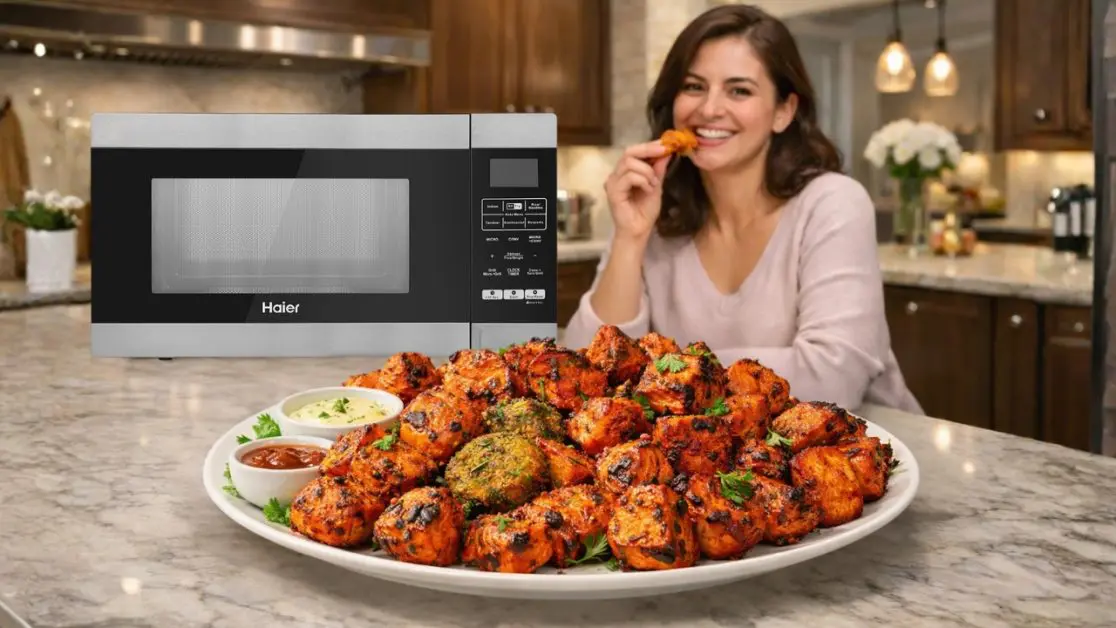
For smaller households and quick reheating needs, the Haier 20L Convection Microwave With Mirror Glass Design (HIL2001CSSH) focuses on fast, hygienic heating in compact kitchens .
For families balancing variety and speed, the Haier 25L Convection Microwave Oven With Bread Basket (HIL2501CBSH) supports Indian breads, combination cooking, and time savings of up to 30 percent on complex meals .
For larger households and festive winter cooking, the Haier 30L Convection Microwave With In Built Air Fryer (HIL3001ARSB) adds dedicated air fryer menus, rotisserie support, and higher convection power for heavier dishes without prolonged stove use .
Microwaves reduce winter kitchen risks
Cold kitchens increase mistakes.
- Slower reflexes
- Stiff fingers
- Rushed handling of hot vessels
Microwaves reduce manual steps. Less transferring. Less open flame. Less exposure.
Safety improves as effort decreases.
This matters in homes with elders, children, and early morning routines.
The hidden energy advantage in winter
Winter cooking stretches stove time. Gas stays on longer. Chimneys pull more warm air out repeatedly.
Microwaves work in short, intense bursts.
Energy is used precisely. Then it stops.
This efficiency matters during winter months when household energy consumption is already high.
Focused heat saves time, fuel, and warmth together.
Three clear winter cooking choices
Option one: Push through cold kitchens
- Cost: discomfort and fatigue
- Benefit: familiar habits
Option two: Reduce cooking effort
- Cost: nutrition and routine
- Benefit: less exposure
Option three: Use focused heat systems
- Cost: minimal appliance usage
- Benefit: speed, warmth, consistency
Most modern households choose the third option without naming it.
Why microwaves feel essential now
Homes have changed.
Work hours stretch.
Meals happen in fragments.
Cooking fits between calls and commutes.
Winter amplifies these shifts.
Microwaves support flexible schedules without demanding physical endurance. Warmth arrives when needed, not when the kitchen finally heats up.
That is alignment, not convenience.
The system behind the comfort
Cold kitchens reveal a deeper truth.
Spaces shape behaviour more than motivation.
When kitchens resist, cooking declines. When tools adapt, habits return.
Microwaves succeed because they remove friction without asking people to change who they are.
They work quietly in the background. Especially in winter.
A warmer kitchen is not about temperature
It is about response time.
How quickly warmth arrives.
How little effort it takes.
How predictable the result feels.
Microwaves win because they respect time, energy, and comfort equally.
What this means for Indian homes
Winter will always arrive uninvited.
But how homes respond has evolved.
Smart appliances today do not announce themselves. They blend into routine. They make everyday decisions easier without demanding attention.
A microwave that gives warmth back to a cold kitchen does not feel like technology.
It feels like relief.
And relief is the quiet luxury modern Indian homes are built around.