
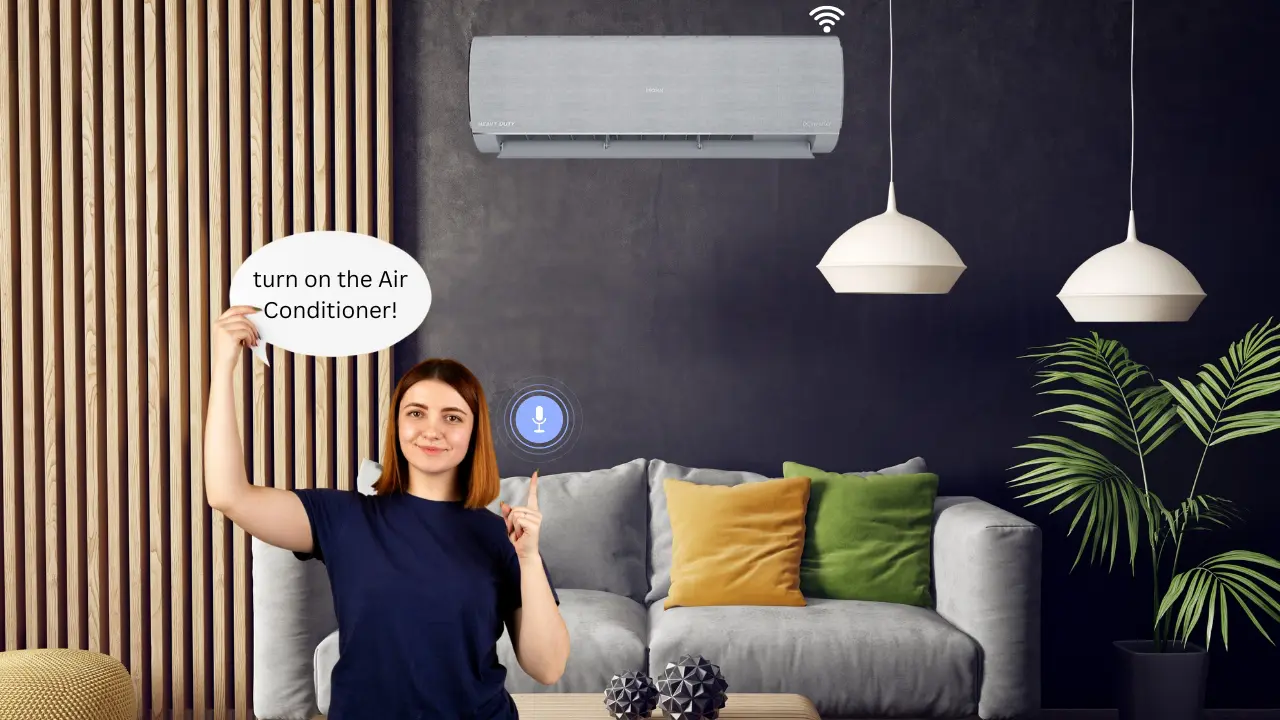

You can control your AC without a remote or app through built-in voice control, physical buttons on the unit, smart presets that learn your habits, and AI driven automation that responds to presence, temperature, and time of day.
In newer systems, the AC does not wait for commands. It anticipates comfort and acts on its own.
Now let us slow down.
Because this question usually comes from a very real moment.
The familiar problem nobody plans for
It is 11:45 pm.
The remote is missing.
Your phone is charging in another room.
The AC is already on, but the room feels colder than it should.
You stand there thinking, Surely there has to be a simpler way.
This is not a technology problem.
It is a control problem.
For years, we have assumed that comfort needs constant input.
Press this. Adjust that. Fine tune everything.
But the best systems do not ask for attention.
They remove friction.
Why controlling an AC should not depend on a remote
The remote is a single point of failure.
It slips between sofa cushions.
Children treat it like a toy.
Batteries die exactly when you need them.
And apps, while powerful, are not always immediate.
WiFi drops. Notifications distract. Phones are not always nearby.
This is where modern AC design quietly changes direction.
From command based control
to environment based control.
From telling the machine what to do
to let it understand what is needed.
Method one: Physical controls still matter
Let us start with the most basic option.
The control panel on the indoor unit
Most split ACs still include physical buttons hidden behind the front panel or along the side.
These usually allow you to:
- Power the AC on or off
- Switch between basic modes like Cool or Fan
- Adjust temperature in fixed steps
This is not about elegance.
It is about reliability.
When everything else fails, physical control remains.
The cost is simplicity.
The benefit is certainty.
Method two: Preset behavior replaces manual control
Here is where things get interesting.
The idea of preset intelligence
Instead of adjusting the AC every night, many users settle into patterns.
Same bedtime.
Same preferred temperature.
Same room usage.
Smart systems learn this.
They observe:
- When cooling is used
- How long it runs
- What temperature changes follow human activity
Over time, the AC builds a comfort profile.
This means that even without a remote or app, the AC continues to behave the way you usually want.
Comfort becomes a habit, not a command.
Method three: Voice control without depending on WiFi
This is the part most people do not expect.
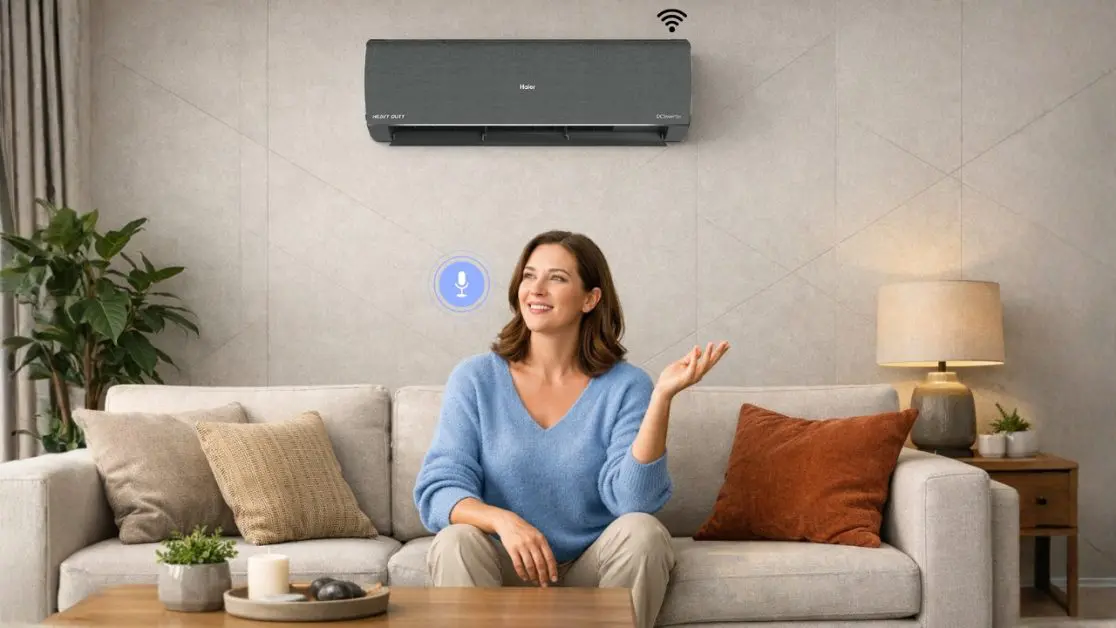
Direct voice control built into the AC
Some modern ACs allow you to control them using simple voice commands spoken directly to the unit.
No phone.
No app.
No WiFi dependency.
You speak.
The AC listens.
Commands like turning the unit on, changing modes, or adjusting cooling levels can be handled locally by the AC itself.
This is especially useful at night, during power fluctuations, or in homes where connectivity is inconsistent.
According to Haier’s AI AtmoX platform, select models support Direct Voice Control that works even without WiFi, allowing users to manage cooling through simple spoken instructions at the unit itself.
The benefit is immediacy.
The cost is learning a few simple phrases.
Method four: Letting the AC decide on its own
Here is the shift most people do not notice until they live with it.
AI driven climate control
Instead of asking, What temperature do you want, the AC asks something else.
Is someone in the room?
Is the outside temperature rising or falling?
Is it night or day?
Has cooling already achieved balance?
Modern AI climate control systems use sensors and machine learning to answer these questions continuously.
They adjust:
- Cooling intensity
- Energy usage
- Airflow direction
All without manual input.
According to the AI AtmoX system overview, the AC analyses environmental data, usage patterns, and real time temperature to automatically optimize cooling and prevent overcooling, with no manual effort required.
The implication is simple.
Control shifts from you
to the system.
Method five: Presence based control removes wasted cooling
Think about how often this happens.
You leave the room.
The AC keeps running.
Nobody benefits.
Human detection and auto adjustment
Some ACs now use human detection sensors to identify whether a room is occupied.
When no movement is detected:
- Cooling reduces
- Energy saving modes activate
- In some cases, the AC powers down automatically
When you return, cooling resumes.
This removes the need to remember switches, remotes, or apps.
The room responds to presence, not instructions.
The result is quieter efficiency and lower electricity bills without conscious effort.
A simple comparison of control methods
| Control method | Needs remote | Needs phone | Works offline | Effort level |
| Physical buttons | No | No | Yes | High |
| Preset behavior | No | No | Yes | Low |
| Direct voice control | No | No | Yes | Very low |
| AI climate automation | No | No | Yes | Minimal |
| Human detection | No | No | Yes | Minimal |
The pattern is clear.
The less you touch the system,
the better it works.
What this says about modern homes
We often talk about smart homes as feature lists.
But the real upgrade is emotional.
Less interruption.
Fewer decisions.
More quiet consistency.
When you can control your AC without a remote or app, you stop managing comfort and start trusting it.
That trust matters in real homes.
In homes with children.
In homes with elders.
In homes where days are long and evenings are precious.
The bigger insight worth remembering
The future of control is not more interfaces.
It is fewer.
The best systems fade into the background.
They learn.
They adapt.
They act.
And when they do it right, you stop thinking about control altogether.
That is not just better cooling.
That is better living.