
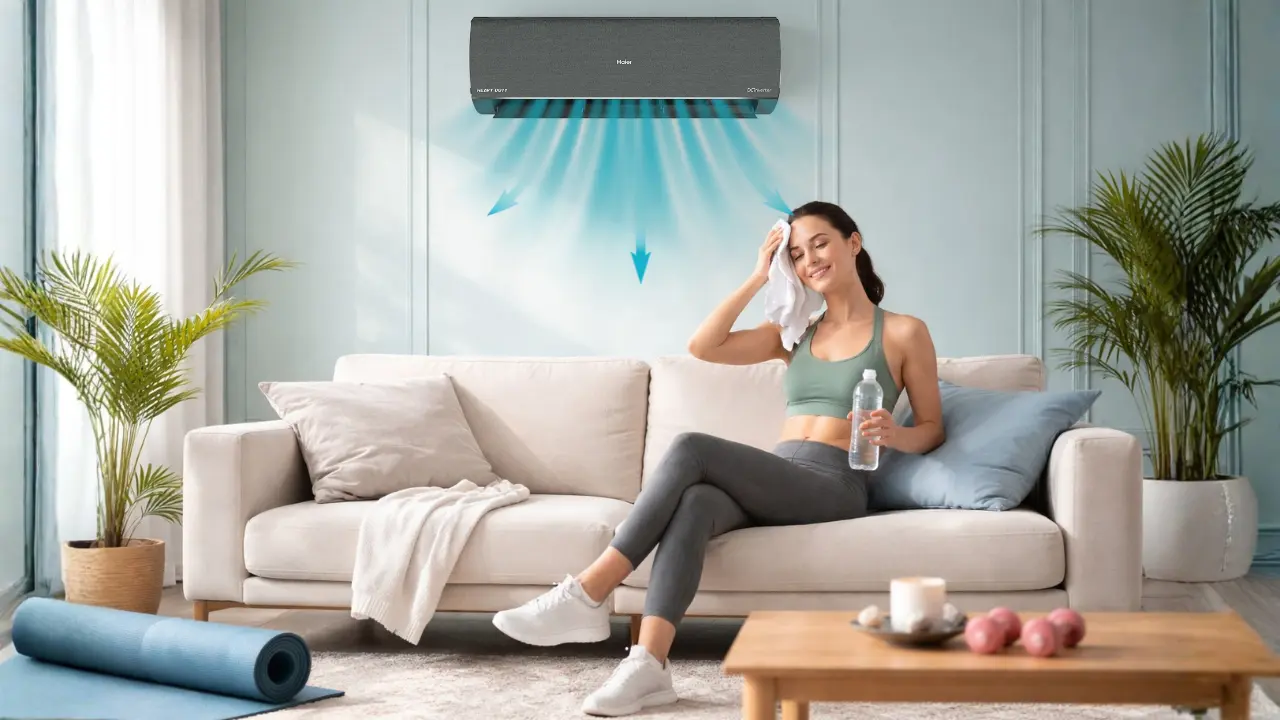

Intelligent insights help you control cooling costs by tracking electricity usage in real time, predicting room occupancy, and automatically adjusting performance to avoid energy waste.
When your AC learns your habits, monitors power in currency terms, and switches modes based on real conditions, cooling becomes precise, not expensive.
That is the short answer.
The longer answer begins at 11:30 pm on a Tuesday.
The house is quiet. The AC hums. No one has checked the thermostat in hours. The bill will arrive next month, but the cost is accumulating right now.
Cooling costs rarely feel urgent. They feel invisible.
Until they are not.
Why do cooling bills feel unpredictable in Indian homes?
Cooling costs spike because most systems react. They do not anticipate.
India’s residential electricity consumption has steadily increased over the last decade, with air conditioning driving peak summer demand in metro cities. According to data from the Bureau of Energy Efficiency, AC usage accounts for a major share of household power use during peak months.
But here is the hidden system.
Most air conditioners:
- Cool the entire room, even when one corner is occupied
- Run at fixed capacity, regardless of real temperature gaps
- Depend on manual switching or timers
Manual control works for fans. It fails for systems.
And cooling is a system.
When systems rely on guesswork, costs fluctuate.
What Intelligent Cooling Actually Means
Intelligent cooling does three things at once:
- It learns your habits,
- adapts to your environment,
- and cools accordingly.
That shift changes everything.
Haier’s AI Atmox powered platform for air conditioning is built on this principle. As outlined in the AI Atmox , the system combines machine learning, occupancy sensing, Electricity monitoring 2.0, and adaptive eco modes to optimize performance without manual effort.
It learns. It adapts. It cools.
That sequence matters.
The Real Cost of Overcooling
Overcooling is the silent expense.
When the room temperature drops far below what comfort requires, power usage spikes. Studies from energy agencies worldwide show that reducing AC temperature by just 1°C can increase energy consumption by 6 to 10 percent.
Let that sink in.
One degree. Ten percent.
Intelligent systems correct this automatically.
How AI Eco 2.0 Modes Reduce Waste
According to the AI Atmox details :
- If the temperature gap exceeds 3°C, it shifts to L1 ECO mode
- When the gap narrows to 1–3°C, it moves to L2
- When the difference is 1°C or less, it shifts to L3
This layered response prevents aggressive cooling once comfort is achieved.
It is precise. It is economical. It requires no reminders.
And precision is cheaper than excess.
Electricity monitoring 2.0 Turns Awareness into Control
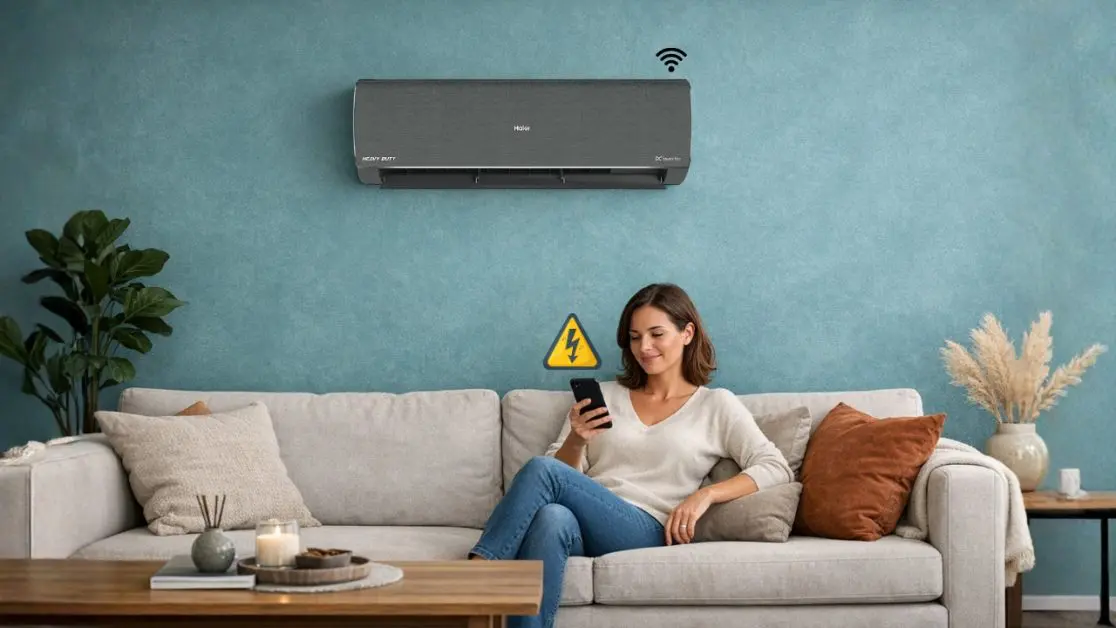
You cannot control what you cannot see.
Electricity monitoring 2.0 changes behaviour.
Haier’s AtmoX Power Manager displays:
- Power usage in graphical formats
- Calendar-based tracking
- Running duration of Normal vs Eco modes
- Consumption displayed in currency
- Custom energy-saving targets
These features are clearly detailed in the Electricity monitoring 2.0 section of the AI Atmox platform.
When cost is visible in rupees, not just kilowatt-hours, decisions sharpen.
Imagine opening your app and seeing:
| Mode Used | Hours | Estimated Cost |
| Normal | 48 hrs | ₹1,120 |
| Eco | 62 hrs | ₹740 |
The insight changes the conversation at home.
Not emotionally.
Practically.
Cooling becomes measurable.
And measurement reduces waste.
Predictive Cooling Saves Before You Notice
One of the most overlooked cooling costs is timing.
You return home at 7 pm. The AC runs full blast for 20 minutes to bring the room down from 34°C to 24°C. That initial surge consumes significant power.
AI Pre-Cooling avoids that spike.
As described in the AI Atmox system , geofencing technology detects when you enter a 100-metre radius and starts cooling in advance.
The benefits are simple:
- Gradual cooling consumes less peak power
- Immediate comfort reduces high-capacity bursts
- No manual scheduling required
Cooling before arrival is not a luxury.
It is load management.
Target Cooling vs Whole-Room Cooling
Traditional ACs cool volume.
Intelligent ACs cool intention.
AI Target Cooling uses installation data and cloud intelligence to direct airflow precisely where it is needed.
Consider three scenarios:
- One person reading on the sofa
- Two children studying at a table
- An empty room during dinner time
Whole-room cooling treats all three situations the same.
Target cooling adapts.
Focused airflow reduces wasted circulation. Less unnecessary cooling equals lower compressor strain. Lower strain equals longer life.
Efficiency compounds quietly.
Human Detection Prevents Silent Energy Drain
How often does the AC run in an empty room?
More often than we admit.
AI Human Detection technology identifies occupancy and automatically switches to energy-saving mode. If no activity is detected for 15 minutes, it shifts to Auto L3. After 30 minutes, it powers off.
That automation eliminates:
- Forgotten switches
- Overnight wastage
- Cooling during short errands
It removes human error from the equation.
And human error is expensive.
Self-Cleaning Systems Protect Long-Term Efficiency

Cooling costs are not only about electricity.
They are also about maintenance.
Dust accumulation on condenser coils reduces efficiency and increases power draw. According to HVAC maintenance research, dirty coils can raise energy consumption by up to 15 percent.
The AI Atmox platform includes:
- IDU Frost Self Clean
- ODU Cyclone Clean
The outdoor unit reverses airflow after shutdown to remove dust. Cleaner coils mean faster cooling and lower consumption.
Clean systems cool better.
Better cooling costs less.
Three Ways Households Typically Approach Cooling Costs
One option is reactive control.
Adjust settings only when the bill feels high.
The second option is rigid discipline.
Set fixed temperatures and hope for the best.
The third option is intelligent automation.
Let the system observe, learn, and optimize continuously.
The third option requires trust.
But it delivers consistency.
And consistency wins over time.
Cooling Costs Are About Decisions, Not Degrees
Cooling is no longer just about temperature.
It is about:
- Data visibility
- Adaptive modes
- Occupancy awareness
- Predictive timing
- Long-term efficiency
When these pieces align, cooling becomes strategic.
Not emotional.
Not reactive.
Strategic.
In many Indian homes, air conditioners now run 6 to 8 hours daily during peak seasons. Multiply that across 120 days of summer. Small inefficiencies magnify.
Small optimisations compound.
That is the system at work.
The Bigger Insight
Intelligent insights do more than reduce bills.
They reduce friction.
No constant remote adjustments.
No anxiety before the electricity statement arrives.
No arguments over 22°C vs 24°C.
When cooling adapts automatically, households feel calmer.
And calm homes make better decisions elsewhere.
That pattern extends beyond appliances.
Systems that observe and optimise quietly outperform systems that demand constant supervision.
The AC becomes a lesson in management.
Let intelligence handle repetition.
Let humans focus on what matters.
Cooling costs shrink when insight replaces guesswork.
And that is the shift.
From control to clarity.
Frequently Asked Questions
Why does my AC bill fluctuate so much even when my usage feels the same?
Because traditional ACs react instead of anticipate. They cool at fixed capacity, ignore occupancy, and rely on manual settings which creates inconsistency and hidden overuse.
Why do I feel like I’m constantly adjusting my AC temperature?
Manual control doesn’t adapt to real-time room conditions. Intelligent cooling systems learn habits and auto-adjust to reduce that mental load.
Is it better to set a fixed temperature like 24°C all summer?
Not necessarily. Temperature gaps change throughout the day. Smart eco modes adjust output dynamically instead of relying on rigid settings.
Does a dirty AC really increase my electricity bill?
Yes. Dust on coils can increase energy consumption by up to 15% because the compressor works harder.
How often should I clean my AC to maintain efficiency?
Ideally before peak summer and periodically during heavy use. Systems with self-cleaning features reduce maintenance burden.
What is IDU Frost Self Clean and ODU Cyclone Clean?
They are automated cleaning mechanisms in Haier’s AI Atmox platform that remove dust buildup and reverse airflow to clear debris.
Is maintenance really linked to cooling costs?
Absolutely. Cleaner systems cool faster, reducing runtime and electricity use.
Is lowering my AC temperature by 1°C really that expensive?
Yes. Studies show reducing by just 1°C can increase energy consumption by 6–10%.
Why does my AC blast at full power when I come home?
Because it’s compensating for a large temperature gap. That initial surge consumes significant power.