
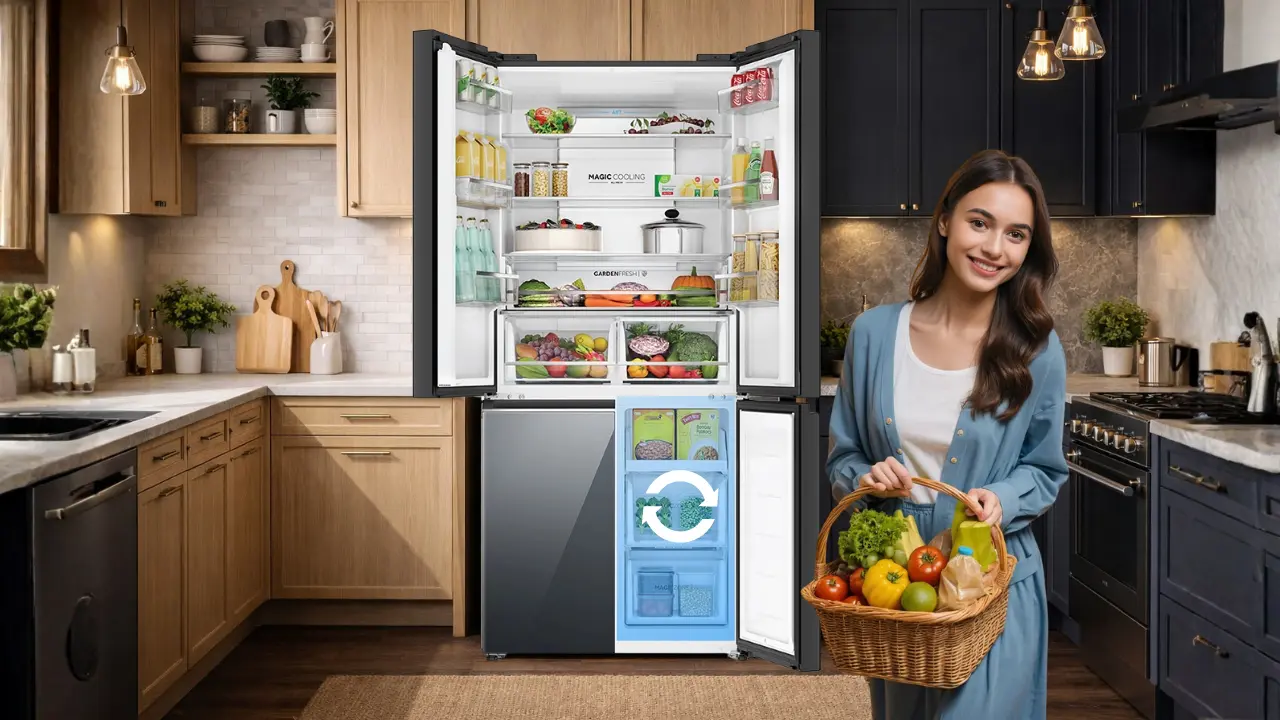

A convertible zone lets your refrigerator adapt to your life, not the other way around.
It is a flexible cooling space that shifts between fridge and freezer modes, based on what your home needs right now.
One week it stores extra vegetables. Next, it handles party ice, desserts, or bulk cooking. Same appliance. Different priorities. Less stress.
That is the quiet promise behind convertible cooling. And it matters more than we admit.
Why do Indian homes need flexibility, not fixed compartments?
Indian kitchens are not predictable systems.
They expand during festivals.
They contract during travel weeks.
They change shape during fasting periods, family visits, health resets, and budget months.
Yet most refrigerators are designed as if life runs on a straight line.
It does not.
A convertible zone exists because modern households refuse to live inside fixed boxes. Food habits change weekly. Storage needs to swing fast. Appliances that cannot adapt start to feel heavy, wasteful, and oddly outdated.
Flexibility is not a luxury anymore. It is a baseline expectation.
What exactly is a convertible zone and why does it feel different?
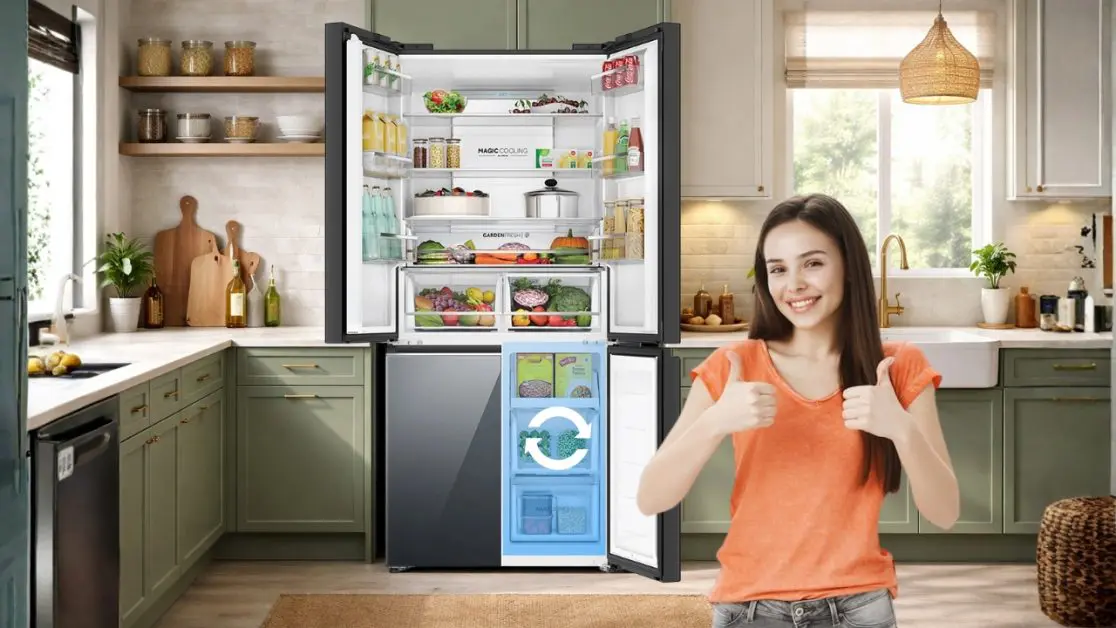
A convertible zone is a dedicated section inside the refrigerator that can switch temperature modes.
Not metaphorically. Literally.
Depending on the setting, it can function as:
- Extra fridge space for fresh produce and cooked meals
- A freezer for long term storage, ice cream, or meats
- A customised cooling zone for specific temperature ranges
In Haier’s 4-door convertible refrigerators, this zone typically offers up to 90 litres of flexible space and can operate across a wide temperature band, from deep freeze to gentle cooling.
The result is simple.
You stop reorganising your life around the fridge.
The fridge reorganises itself around you.
A familiar moment that explains everything
Picture a Friday evening before a long weekend.
The fridge is full.
The grocery app shows one more delivery arriving.
Cooked food from the morning still needs space.
Ice trays are already maxed out.
This is where traditional refrigerators quietly fail.
You start stacking.
You start compromising.
You start wasting time.
A convertible zone solves this without drama.
One setting change.
One zone switches roles.
Suddenly there is room again.
Good design does not shout. It rescues you quietly.
The system most people miss about cooling
Cooling is not one uniform need.
Different foods require different care:
- Vegetables need steady, humid cooling
- Dairy needs consistent mid range temperatures
- Ice cream needs deeper freeze
- Cooked food needs quick cooling but not freezing
Traditional layouts force all these needs into two rigid compartments.
Convertible zones acknowledge a deeper truth.
Food storage is a system of trade-offs.
Flexible zones reduce those trade-offs.
Three real life ways convertible zones change daily routines
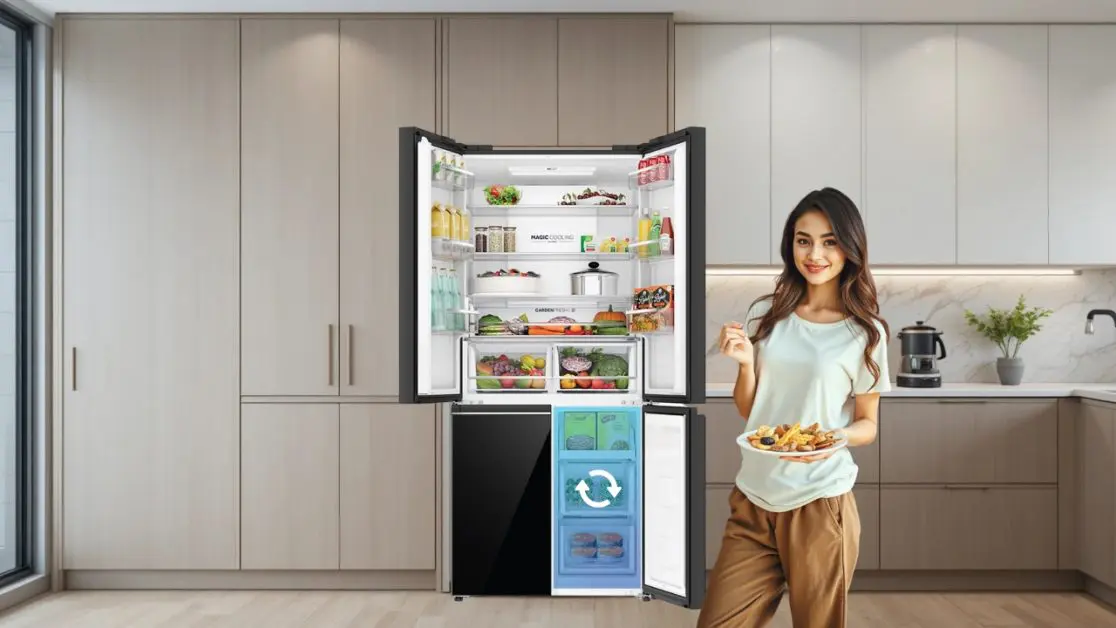
1. Festive weeks without fridge anxiety
During Diwali, Eid, Christmas, or weddings at home, storage demand spikes overnight.
Convertible zones help because:
- Freezer space can expand instantly
- Desserts, mithai, ice cream, and snacks get proper storage
- Fresh produce still stays organised
No extra chest freezer. No borrowing space. No panic.
Just temporary expansion, then a return to normal.
2. Weekday efficiency for working professionals
For solo professionals and couples, the pattern flips.
Bulk cooking on Sunday.
Light eating on weekdays.
Frequent ordering. Less fresh produce.
In this case, the convertible zone works better as:
- Additional fridge space for ready meals
- Beverage cooling during late work nights
- Reduced freezer usage to save energy
The fridge mirrors your rhythm instead of forcing one.
3. Health driven eating phases
Detox weeks.
Protein heavy diets.
Fresh vegetable phases.
These phases need more controlled cooling, not more freezing.
Convertible zones allow:
- Dedicated vegetable storage at optimal temperatures
- Separate space for cooked food to avoid mixing smells
- Flexible temperature control for changing diets
Health habits stay consistent because storage supports them.
What flexibility really saves, beyond space
People think flexible cooling is about capacity.
It is not.
It is about reducing friction.
Here is what a convertible zone actually saves:
- Time spent reorganising shelves
- Energy wasted on half empty freezers
- Food waste from improper storage
- Mental load of managing overflow
These savings compound quietly.
And that is where good appliances earn trust.
The energy conversation nobody finishes
There is a misconception that more features mean higher power use.
In reality, flexible zones often reduce waste.
Why?
Because cooling unused freezer space is inefficient.
Because inverter compressors adjust better when zones are optimised.
Because one adaptable appliance replaces the need for add-on storage.
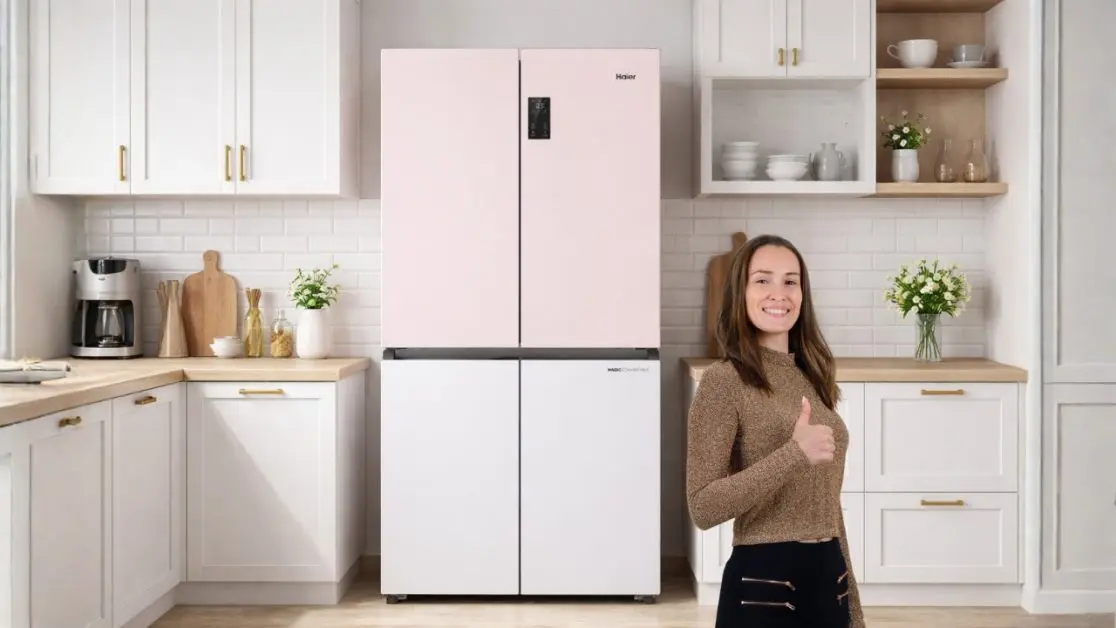
Haier’s triple inverter systems are designed to manage these shifts efficiently, keeping temperatures stable while avoiding unnecessary power spikes.
Energy efficiency is not about fewer features.
It is about smarter ones.
Design matters more when appliances become flexible
A flexible appliance is touched more often.
Settings are changed.
Zones are accessed frequently.
Doors open and close more.
This is where design stops being cosmetic and starts becoming functional.
Features like:
- Four-door layouts that reduce cold air loss
- Anti tipping shelves for heavy Indian utensils
- Wide drawers for bulk storage
- Interior lighting that actually reaches corners
These details matter because flexibility increases interaction.
Haier’s Lumiere series treats design as part of the system, not decoration.
One option is rigid. The other is adaptive.
When choosing a refrigerator today, there are two philosophies.
Option one
Fixed compartments. Predictable layout. Minimal decision making.
Works best if your life never changes.
Option two
Convertible zones. Adjustable capacity. Responsive cooling.
Works best if your life is real.
Most modern households already know the answer.
Why convertible cooling feels future ready
The future of appliances is not smarter screens or louder claims.
It is adaptable.
Homes are getting smaller.
Lifestyles are getting faster.
Food habits are getting more fluid.
Convertible zones fit into this future because they are built on one idea.
Constraints should create freedom, not stress.
When an appliance adapts quietly, it stops feeling like a purchase and starts feeling like infrastructure.
The deeper principle at work
Convertible zones reveal a larger pattern.
Systems that allow reversible decisions feel safer.
Fixed systems feel risky.
This applies to work, homes, investments, and even food storage.
Flexibility reduces regret.
And regret is expensive.
What this means for how we choose appliances
Choosing a refrigerator is no longer about litres alone.
It is about:
- How often your needs change
- How much mental effort storage takes
- How gracefully your home handles peak moments
A convertible zone is not a feature you notice on day one.
It is something you appreciate on day ninety.
And then every week after.
The insight worth remembering
A good refrigerator keeps food fresh. A great one keeps life flexible.
Convertible zones are not about showing off technology.
They are about respecting how unpredictable modern homes really are.
And designing for that reality.
Quietly. Thoughtfully. Reliably.
That is how everyday appliances earn long term trust.
Frequently Asked Questions
Why do fixed refrigerator layouts feel outdated?
Modern households change weekly, while fixed layouts assume static routines. Convertible zones align better with real life.
How do convertible zones help prevent smell mixing?
They allow separation of cooked food and fresh produce at appropriate temperatures, reducing odour transfer.
Why does ice cream soften when my fridge is crowded?
Overloaded freezers struggle to maintain deep-freeze temperatures. Convertible zones let you expand freezer space when needed.
Is fast cooling harmful to food quality?
Not when temperatures are controlled. Convertible zones balance speed and care better than fixed compartments.
Do convertible refrigerators consume more electricity?
No. They often save energy by avoiding cooling of unused freezer space.
Is a convertible zone something I’ll actually use regularly?
Yes. Most users begin using it more after a few months as routines change.
How do I know if I need a convertible zone?
If your food habits, household size, or routines change often, flexibility becomes more valuable than fixed capacity.