
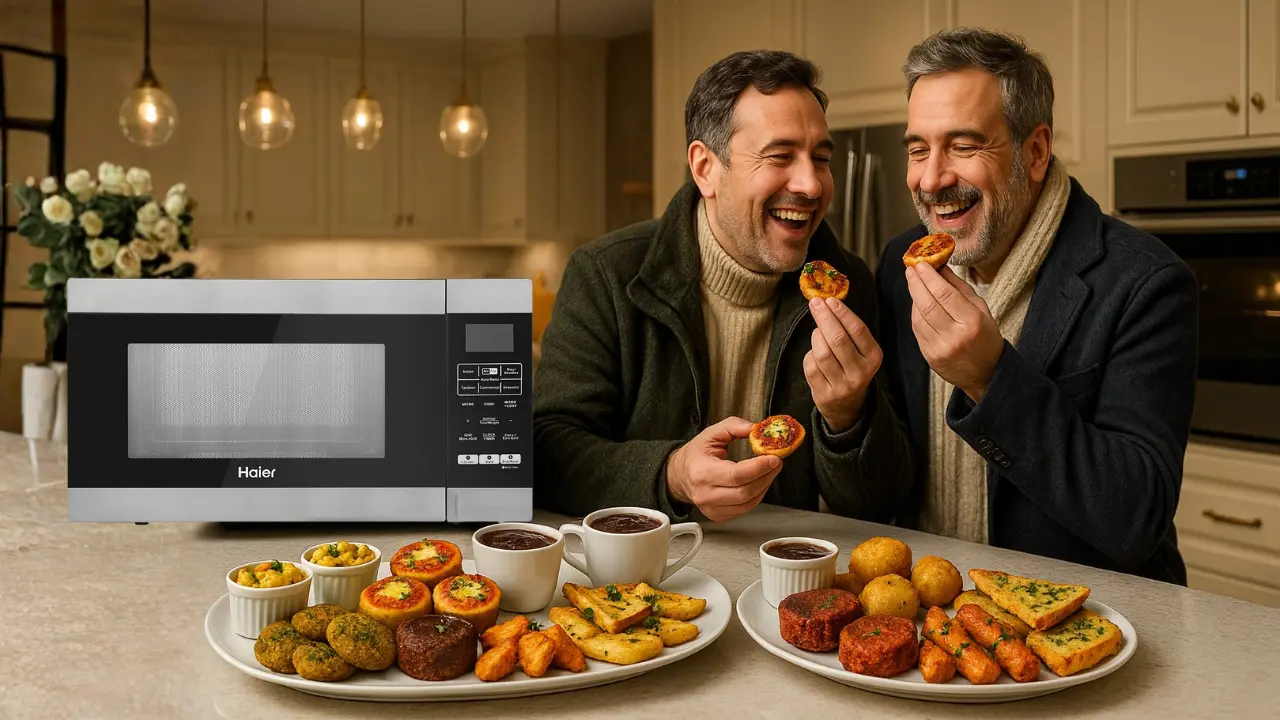

February makes cooking feel easier because routines settle down, evenings stretch just enough, and energy slowly returns after the year’s chaotic start.
A microwave fits this moment perfectly. It supports lighter meals, faster prep, and flexible cooking without demanding constant attention. In real Indian homes, it becomes less of a shortcut and more of a quiet system that keeps daily food flowing.
February is not a lazy month. It is a practical one.
January is loud.
New habits. New rules. New expectations.
February is calmer. The pressure drops. The body adjusts. The kitchen feels different too.
You are not trying to reinvent your diet.
You are trying to stay consistent.
This is the month where people want food that is warm, quick, and forgiving. Something that works between meetings. Between school pickups. Between deciding whether today needs effort or rest.
That is where the microwave quietly earns its place.
Not as a backup.
As a system.
Why cooking feels heavier than it should in everyday homes
Cooking stress is rarely about recipes.
It is about timing.
A weekday evening looks like this:
- One person wants dinner early
- Another is still on a call
- Someone else wants leftovers reheated
- And nobody wants to wash too many vessels
Traditional cooking assumes focus.
Modern homes operate on overlap.
Microwaves work well in overlap.
That is not accidental.
The microwave works because it removes small decisions
Most kitchen fatigue comes from micro choices.
How much oil
How much heat
How long to wait
Whether to stir again
Microwaves reduce this mental load.
You place the food.
You choose the intent.
You let the system handle the rest.
This matters more in February because motivation is moderate, not extreme.
You are not pushing.
You are maintaining.
And maintenance needs simplicity.
February food is about balance, not indulgence
Winter heaviness starts to fade.
Summer restraint has not yet arrived.
This in-between season changes what people cook.
Think about what actually shows up on plates:
- Leftover rajma reheated properly, not dried out
- Steamed vegetables finished with light seasoning
- Paneer dishes warmed without overcooking
- Evening snacks that feel warm, not oily
Microwaves handle gentle food well.
Especially convection microwaves that allow reheating, baking, grilling, and light frying in one place.
According to appliance usage data shared by Indian retailers, reheating and light cooking cycles increase by over 25 percent between January and March as households shift from heavy winter cooking to quicker weekday meals.
This is not about speed.
It is about rhythm.
What microwaves actually do well in Indian kitchens
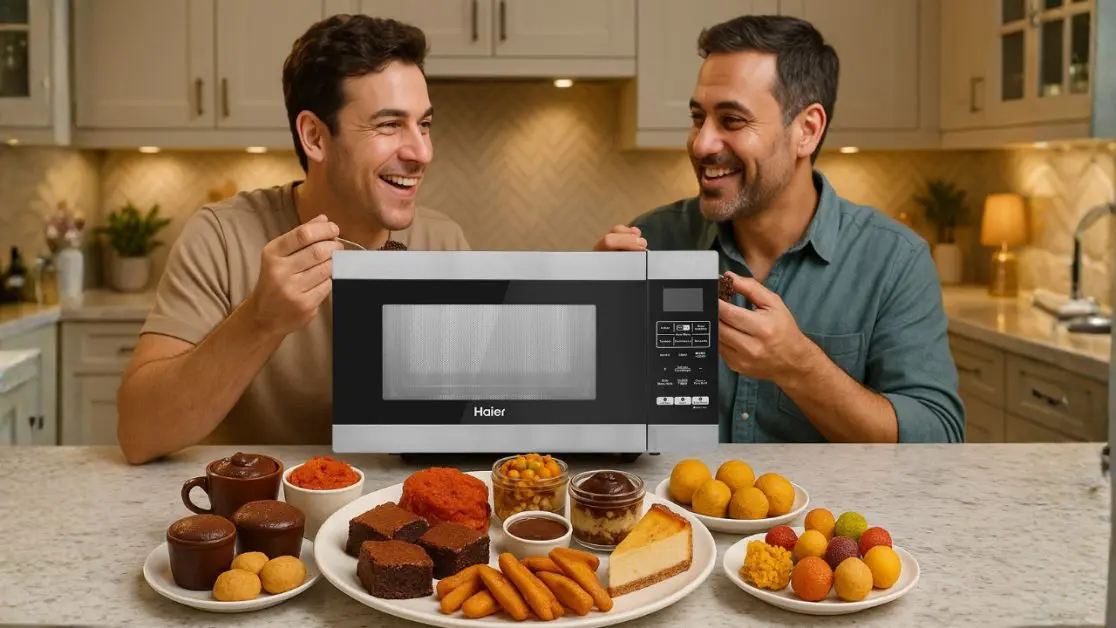
There is a misconception that microwaves are only for leftovers.
That idea is outdated.
Modern convection microwaves handle a wide range of everyday Indian cooking tasks.
Here is where they fit naturally:
1. Reheating without destroying texture
Rice stays soft.
Curries stay layered.
Rotis do not turn rubbery when handled correctly.
The key is even heat distribution, which stainless steel cavities support by reflecting heat efficiently and evenly.
2. Light cooking without standing around
Vegetables, dals, and one-bowl meals can be cooked with minimal supervision.
For working professionals and parents, this removes the need to hover near the stove.
3. Baking that feels achievable
February often triggers small celebrations.
Birthdays. Anniversaries. Quiet weekends.
Microwaves with convection modes allow simple baking without preheating an entire kitchen or managing complex temperatures.
4. Snacks that feel indulgent but lighter
Oil-free or low-oil cooking options allow snacks without guilt.
This becomes especially relevant after January detox enthusiasm fades but health awareness remains.
Why combination cooking changes weekday evenings
Combination modes blend microwave, grill, and convection functions.
The benefit is not just speed.
It is predictability.
Depending on the dish, combination cooking can reduce cooking time by up to 30 percent while maintaining texture and browning, according to manufacturer specifications and user manuals .
That means:
- Less waiting
- Less checking
- Less correction
For households cooking after work, predictability matters more than novelty.
February cooking is about reuse, not reinvention
The smartest kitchens do not cook fresh every time.
They reuse well.
Leftovers become lunches.
Dinner becomes tomorrow’s base.
Snacks reappear with small upgrades.
Microwaves support this system.
They allow:
- Safe reheating without burning edges
- Portion control without extra vessels
- Quick adjustments without restarting
This keeps food waste low and routines realistic.
According to India Food Loss Index estimates, reheating inefficiencies contribute significantly to household food waste. Appliances that enable controlled reheating help reduce this loss in small but meaningful ways.
Small savings scale quietly.
Where Haier fits into this everyday reality
Haier’s convection microwaves are designed around how Indian households actually cook.
Not aspirational cooking.
Functional cooking.
For example:
- Models with 20L to 30L capacity suit nuclear families and shared homes
- Auto cook menus reduce guesswork for common Indian dishes
- Stainless steel cavities improve hygiene and ease of cleaning
- Deodorizer functions help manage strong food aromas after cooking
These features are not flashy.
They are relieving.
That is the difference.
Choosing the right microwave depends on how you live
There is no universal best option.
There are use cases.
If you live solo or cook light
A compact convection microwave handles reheating, light cooking, and baking without occupying too much space.
If you cook for a small family
Mid-capacity models with auto cook menus reduce daily friction.
If weekends mean experiments
Larger models with air frying and grilling options allow flexibility without adding appliances.
The cost-benefit equation here is simple.
One appliance replaces several actions.
Less clutter.
Less switching.
Less cleanup.
Microwaves support energy-aware cooking habits

February is also when people start noticing electricity usage again.
Winter heaters are off.
Summer cooling has not peaked.
Microwaves consume less energy for short cooking cycles compared to prolonged stovetop use, especially for reheating and small-batch cooking.
This makes them suitable for daily use without guilt.
Energy efficiency here is not dramatic.
It is consistent.
Consistency is what households trust.
The hidden system microwaves enable
Good appliances do not demand attention.
They return attention.
Microwaves do this by:
- Compressing time
- Reducing monitoring
- Simplifying outcomes
This frees up energy for things that matter more.
Rest.
Conversation.
Downtime.
In February, when people are not chasing extremes, this balance feels right.
Cooking feels easier when the kitchen stops negotiating
The kitchen becomes heavy when it keeps asking questions.
What next
How long
Is this enough
Microwaves reduce negotiation.
They respond to intent, not effort.
That is why February cooking feels easier with one.
Not because people care less about food.
Because they care more about flow.
The takeaway
February is not about shortcuts.
It is about sustainable ease.
Microwaves fit this season because they respect time, energy, and attention without demanding perfection.
In real homes, that matters more than any feature list.
Cooking feels easier when the system works quietly.
That is what stays.
Frequently Asked Questions
Why does cooking feel more manageable in February compared to January?
February feels calmer. The pressure of resolutions fades, routines stabilize, and people shift from reinvention to maintenance. Cooking becomes about consistency, not perfection.
Why do I feel tired of making food decisions every evening?
Because cooking stress isn’t about recipes it’s about timing and micro-decisions. Heat level, oil quantity, stirring, waiting these add up. Microwaves reduce those small choices.
My family eats at different times. How do I manage dinner without cooking twice?
A microwave supports staggered schedules. You can cook once and reheat safely without ruining texture, reducing stress and repetition.
I don’t want to cook something elaborate, but I don’t want junk either. What works?
Light, warm, low-effort meals reheated rajma, steamed vegetables, paneer dishes strike the February balance.
Is microwave cooking just about speed?
Not really. In February, it’s about rhythm predictable cooking without hovering.
Can I bake a cake in a convection microwave without ruining it?
Yes. Convection mode supports controlled baking for small celebrations.
Will my rotis turn rubbery if I reheat them?
Not if you manage moisture and timing properly.
Is microwave grilling actually effective for Indian snacks?
Combination modes (microwave + grill + convection) help maintain browning and texture.