

Cooling ready when you need it most means your home feels right the moment you walk in, without waiting, guessing, or overpaying.
It means comfort that anticipates your return.
It means cooling that adapts to weather, presence, and usage patterns automatically.
It means lower friction, lower bills, and fewer adjustments.
In modern Indian homes, cooling is no longer seasonal. It is strategic.
The 8:30 PM Moment We All Know
You return from work. The lift is warm. The corridor holds the day’s heat.
You unlock the door.
The room is still carrying afternoon warmth.
You switch on the AC. You wait. You scroll your phone. You adjust the temperature twice.
This delay is normal. But it should not be.
India has seen record-breaking heat in recent years.
According to IMD data, several cities now experience longer heat waves than they did a decade ago. Residential electricity demand jumps sharply during peak summer months. Air conditioners account for nearly 40 percent of household electricity consumption during this period.
Cooling ready when you need it most is not about colder air.
It is about smarter timing.
Why Traditional Cooling Feels Outdated
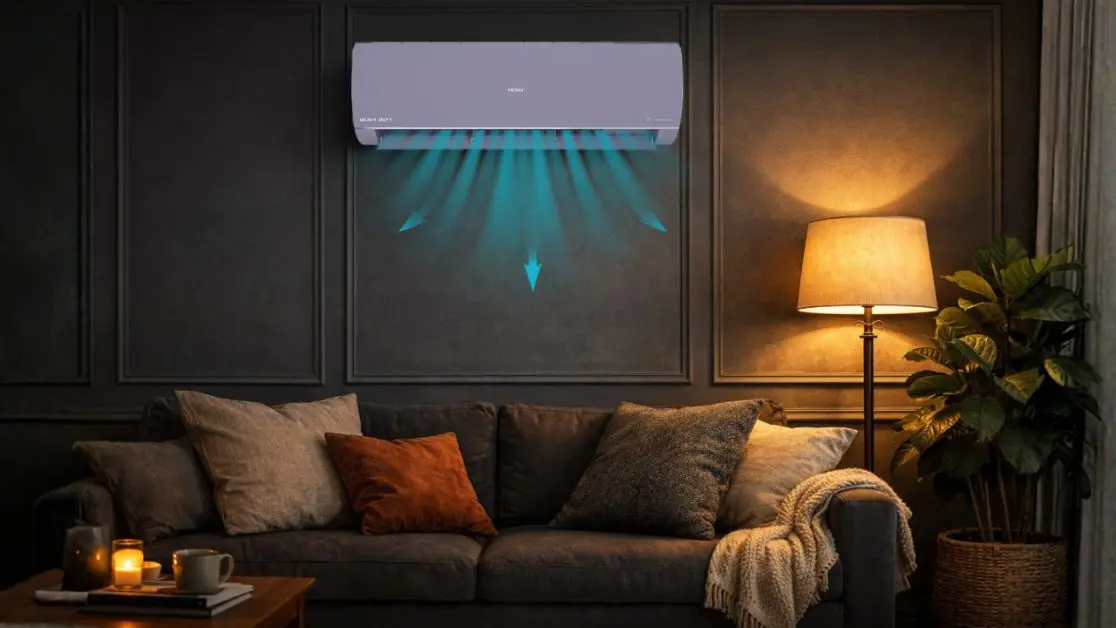
Reactive systems create hidden costs
Most ACs operate on a simple logic.
You switch them on.
They cool at a fixed rate.
They stop when you tell them.
That model ignores three realities:
- Weather changes daily.
- Room occupancy changes hourly.
- User behavior changes constantly.
One option is manual control. Full responsibility. Frequent adjustments.
The second option is fixed timers. Helpful on predictable days, wasteful on irregular ones.
The third option is intelligent adaptation.
The third option scales better because life is not fixed.
Cooling ready when you need it most requires systems that learn, adjust, and optimize in real time.
When Cooling Learns Your Habits
Modern AI-powered systems, such as Haier’s AI Atmox platform , introduce a different approach.
Instead of reacting to temperature alone, AI Climate Control analyses:
- Environmental conditions
- Geo-based weather data
- User habits
- Mode usage patterns
It builds a personalized consumption model.
The impact is practical:
| Situation | Manual Cooling | AI Climate Control |
| Sudden weather shift | Manual temperature change | Auto-adjusted performance |
| Changing occupancy | No adaptation | Learns behavior patterns |
| Seasonal variations | Reset settings | Geo-optimized cooling |
| Energy management | Guesswork | Dynamic optimization |
Cooling ready when you need it most is about adaptation, not aggression.
Overcooling wastes energy. Under-cooling wastes comfort.
Intelligent balance saves both.
AI Pre-Cooling: Comfort Before You Enter
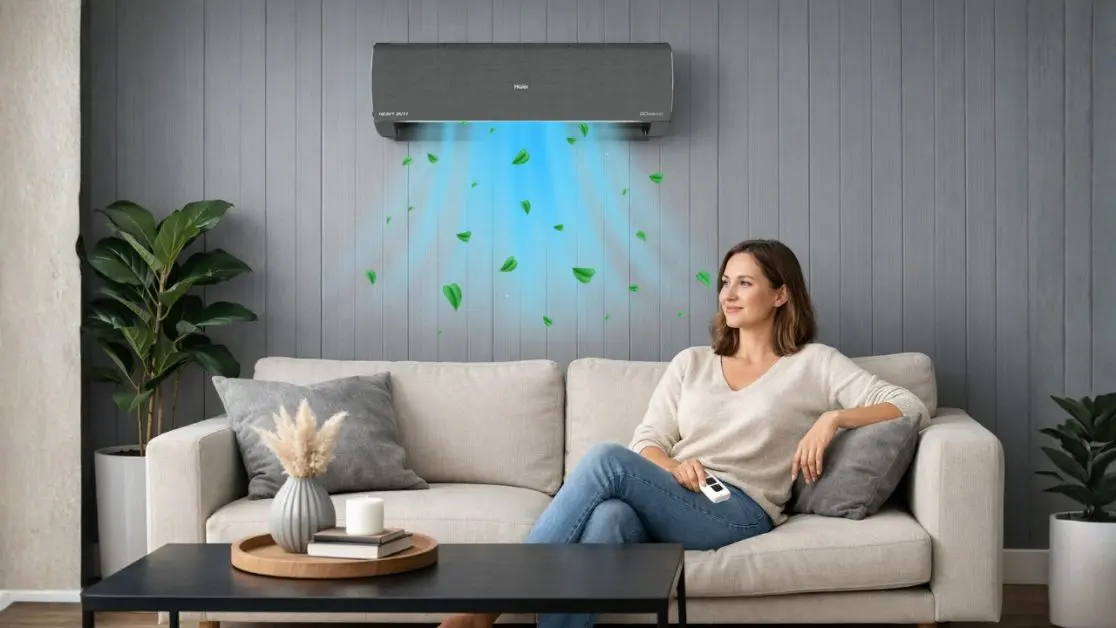
Anticipation changes experience
Imagine this.
You are 100 metres away from home. The system recognizes your approach and starts pre-cooling automatically.
No timer setup.
No app tapping.
No reminder.
AI Pre-Cooling anticipates room occupancy and prepares the space in advance.
Why does this matter?
Because the first five minutes at home set the tone for the entire evening.
Consider three scenarios:
1. Working professionals after a long commute.
Immediate relief improves mood.
2. Parents returning with children.
Kids enter a cool space instantly.
3. Elderly family members are sensitive to heat.
Reduced exposure lowers health risk.
Cooling ready when you need it most transforms arrival into recovery.
Prepared environments reduce mental load.
AI Target Cooling: Precision Over Power
Rooms are not uniform. Why should cooling be?
In most Indian homes, one corner is occupied. The rest remains unused.
Traditional ACs cool everything equally.
AI Target Cooling directs airflow exactly where needed.
The benefits are clear:
- Faster comfort
- Reduced energy waste
- Sharper temperature control
Precision cooling is economically efficient and requires no extra effort from the user.
Cooling ready when you need it most depends on direction, not just power.
AI Eco 2.0 Mode: Energy That Adjusts Itself
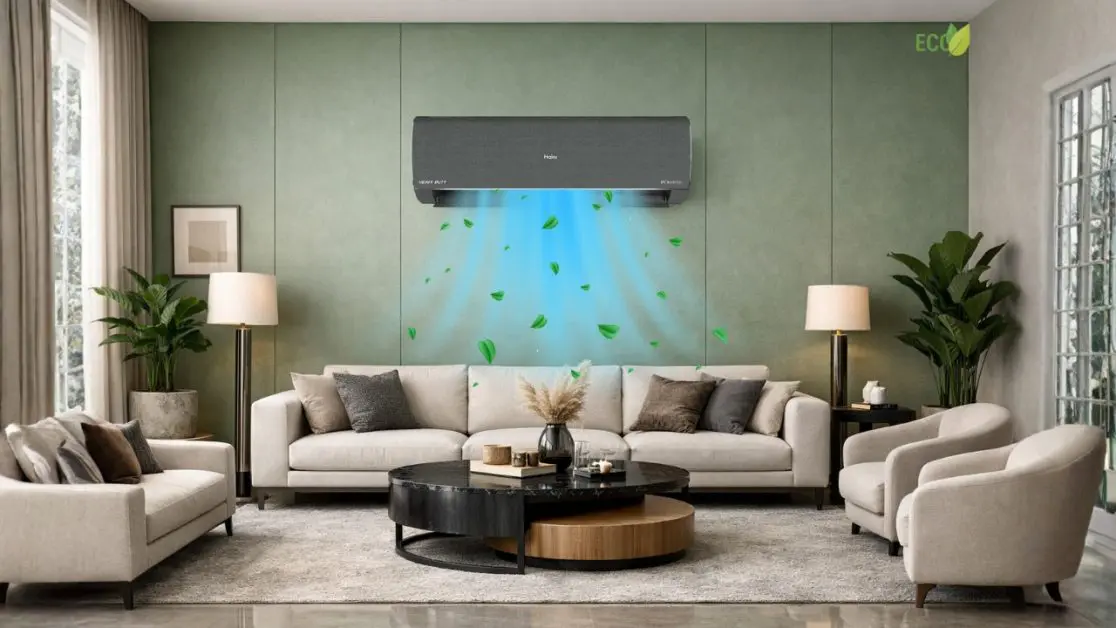
Real-time power logic reduces bill shock
Electricity bills create anxiety during summer.
AI Eco 2.0 adjusts cooling intensity based on the temperature gap between the room and the set point.
If the gap is high, it runs stronger.
As the gap reduces, it shifts to lower power modes automatically.
This dynamic control prevents unnecessary overcooling.
According to Bureau of Energy Efficiency insights, optimized AC usage can reduce power consumption by up to 15 percent annually in typical households.
AI Eco 2.0 aligns performance with actual need.
Less waste.
Lower peak draw.
Longer compressor life.
Cooling ready when you need it most also means cooling responsibly.
Electricity Monitoring: Visibility Changes Behavior
You manage what you measure
Many households do not know how much electricity their AC consumes daily.
Electricity Monitoring provides:
- Graphical usage tracking
- Calendar-based analysis
- Mode duration comparison
- Cost display in currency
- Custom energy-saving targets
When usage becomes visible, habits shift.
Research in behavioral energy studies shows that visual consumption tracking alone can reduce household electricity use by 5 to 12 percent.
Cooling ready when you need it most becomes sustainable when you understand its cost in real time.
AI Human Detection: Comfort That Knows When to Stop
Empty rooms should not run at full power
AI Human Detection monitors occupancy and adjusts cooling when no movement is detected.
After inactivity, the system shifts to energy-saving mode.
If absence continues, it powers off automatically.
Clear benefits:
- Reduced wasted electricity
- No manual reminders
- Seamless efficiency
Traditional ACs depend on discipline.
Intelligent ACs depend on data.
Cooling ready when you need it most includes knowing when to step back.
Self-Cleaning Systems: Efficiency That Sustains Itself
Clean systems cool better
Dust accumulation reduces heat exchange efficiency. That increases energy consumption.
AI IDU Frost Self Clean and AI ODU Cyclone Clean automatically remove accumulated dust and maintain condenser efficiency.
The outcomes are measurable:
- Faster cooling cycles
- Lower electricity bills
- Reduced servicing frequency
- Better long-term performance
Maintenance without effort preserves performance.
Cooling ready when you need it most depends on systems that stay efficient internally.
The Bigger Pattern in Modern Homes
Look at how homes are evolving.
Lighting adapts to daylight.
Security systems alert proactively.
Appliances connect to apps.
Cooling follows the same shift.
Manual control creates friction.
Predictive intelligence removes it.
One option is to manage cooling actively.
The second option is to rely on fixed automation.
The third option is adaptive systems that learn and adjust continuously.
The third option defines future-ready homes.
Cooling ready when you need it most is part of that transformation.
What This Means for You
When evaluating cooling systems, ask three direct questions:
- Does it anticipate arrival?
- Does it optimize power automatically?
- Does it maintain itself efficiently?
If the answer is yes, comfort becomes invisible.
Invisible systems are powerful because they protect attention.
And attention is the most valuable resource in modern life.
Haier’s AI Atmox ecosystem demonstrates how cooling can evolve from mechanical output to intelligent experience.
Not louder.
Not complicated.
Just smarter.
Because in the end, the most satisfying moment is simple.
You open the door.
The air feels right.
That is cooling ready when you need it most.
Frequently Asked Questions
Why do I feel mentally drained just managing my AC settings every day?
Because traditional ACs require constant manual adjustments. Temperature, fan speed, timers all demand attention. Smart adaptive systems reduce micro-decisions by learning your patterns and auto-optimizing cooling.
Do I really need AI in my AC, or is it just marketing?
If your schedule, weather, or occupancy changes frequently, AI-based cooling reduces friction and energy waste. If your routine is fixed and predictable, basic timers may suffice.
Is smart cooling actually practical for Indian homes, or is it overkill?
With longer heat waves and rising electricity costs in India, adaptive cooling helps balance comfort and cost. It becomes practical when cooling is used daily, not seasonally.
Why does my AC always feel either too cold or not cool enough?
Traditional systems cool at fixed rates. AI systems adjust output dynamically based on room conditions and usage patterns, reducing overcooling and undercooling.
If my AC isn’t cooling like before, does that mean it’s dirty?
Likely yes. Dust buildup reduces heat exchange efficiency, increasing energy consumption and cooling time.
How often should I realistically clean my AC? I keep forgetting.
Filters ideally every 2–4 weeks during peak summer. Self-cleaning systems reduce the burden by automating internal cleaning cycles.
Does self-cleaning technology actually lower electricity bills?
Yes. Cleaner coils maintain efficient heat transfer, reducing compressor strain and lowering power consumption.
Why does my electricity bill spike even when my usage feels the same?
Dust accumulation, extreme weather, or inefficient cooling patterns can increase runtime and energy draw.