
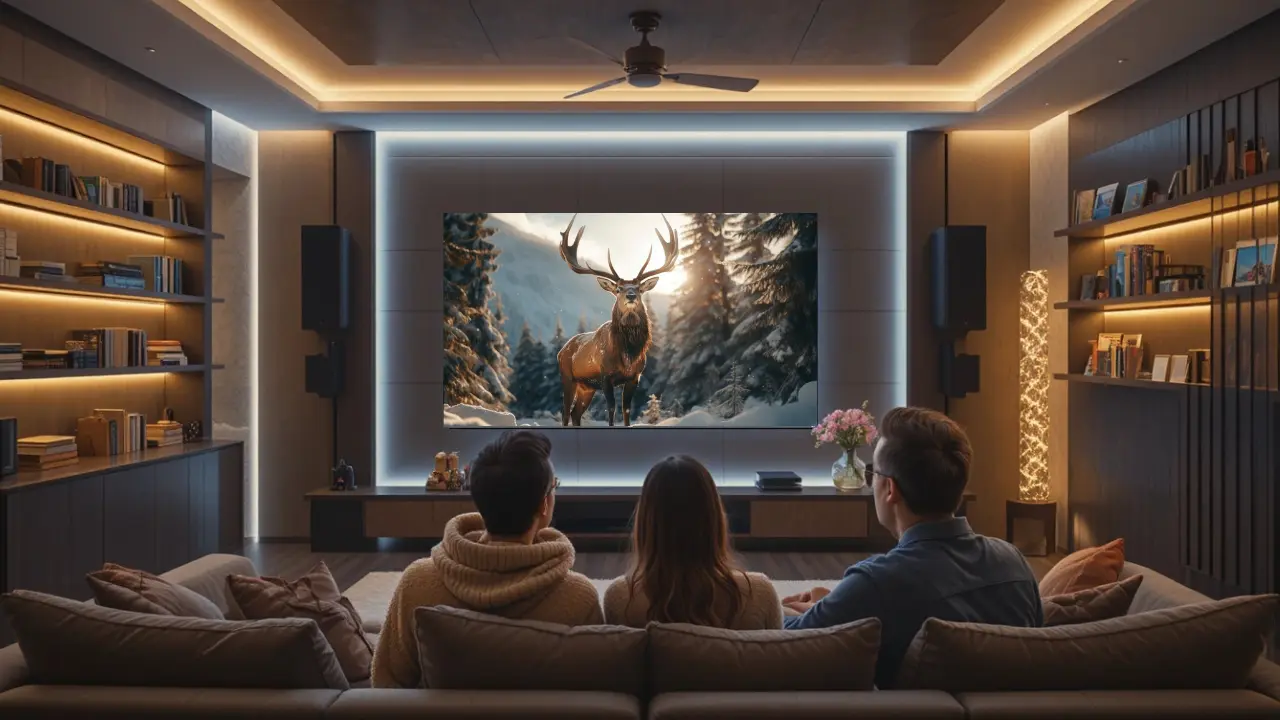

A cozy living room cinema begins with three choices that change how a winter weekend feels: warm lighting, intentional seating, and a screen that can turn ordinary movie nights into full sensory experiences.
When these elements work together, the room stops being a room. It becomes an escape.
Winter sets the stage for this transformation.
The season slows everything down. Evenings arrive earlier. Families sit closer. And the living room becomes the one place that quietly negotiates between comfort and entertainment.
The question is simple.
How do you turn this everyday space into a small, reliable cinema that surprises you every single weekend?
This guide answers that question through real homes, real constraints, and real possibilities.
What Makes a Living Room Feel Like a Cinema?
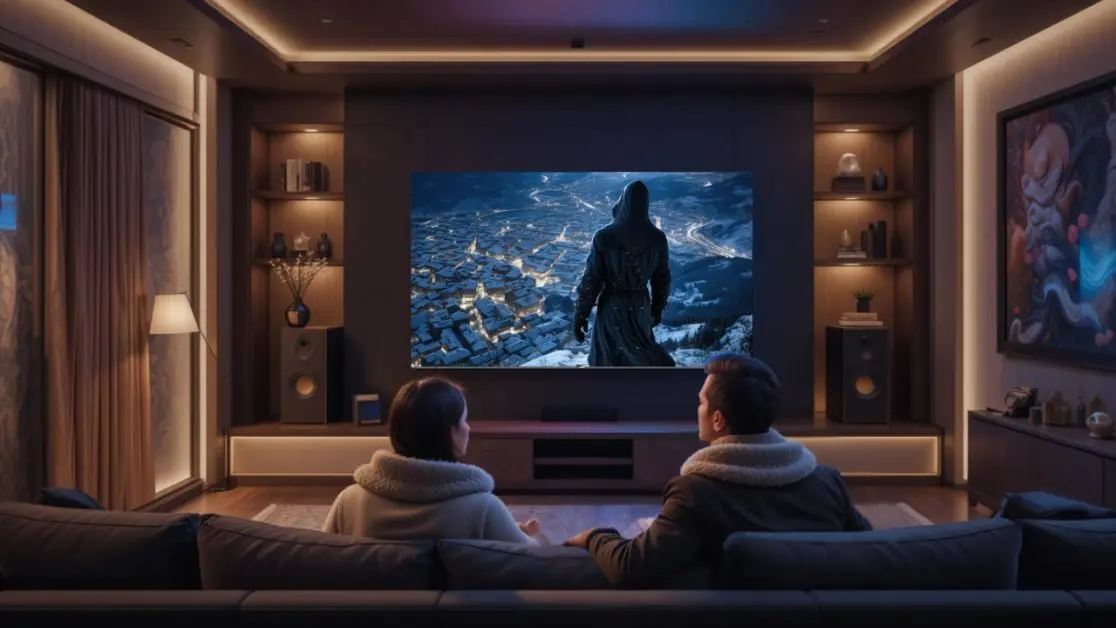
Cinemas work because they manage attention.
They dim what is distracting. They amplify what matters. They choreograph comfort.
A living room can do the same thing when we design it with intention.
Three elements shape the experience:
- What you see
- What you hear
- How you feel while watching
Change these three, and you change the weekend.
Let’s break them down systematically.
1. The Screen Sets the Mood
A cinema begins with clarity.
Not just brighter colours but deeper contrasts, sharper motion, and visuals that feel alive.
This is where modern displays matter.
Mini LED technology, for example, creates vibrant colours, deep blacks, and wide viewing angles that mimic a true theatre ambience. Haier’s Mini LED lineup brings this cinematic sharpness home with Dolby Vision for high dynamic range, richer brightness and lifelike picture depth.
Pair that with Sound by KEF powered audio, which enhances dialogue, bass response, and clarity, and suddenly the entire room feels like intentional design rather than lucky lighting.
A living room cinema needs a screen that can:
- Hold darkness without losing detail
- Handle motion without blur
- Enhance colours without strain
- Carry sound without distortion
These aren’t luxuries. They are the foundations of immersion.
What this means in everyday Indian homes
- Couples who stream a new show after dinner want nuanced details even at low brightness.
- Parents watching animated films need vivid colours that make the frame feel alive.
- Cricket or football fans want smooth motion so their winter weekends don’t feel pixelated.
Mini LED checks all these boxes.
Dolby Vision deepens the emotional detail.
Sound by KEF fills the room without extra speakers.
This is the first step towards your winter cinema.
2. Seating: The Most Underestimated Element
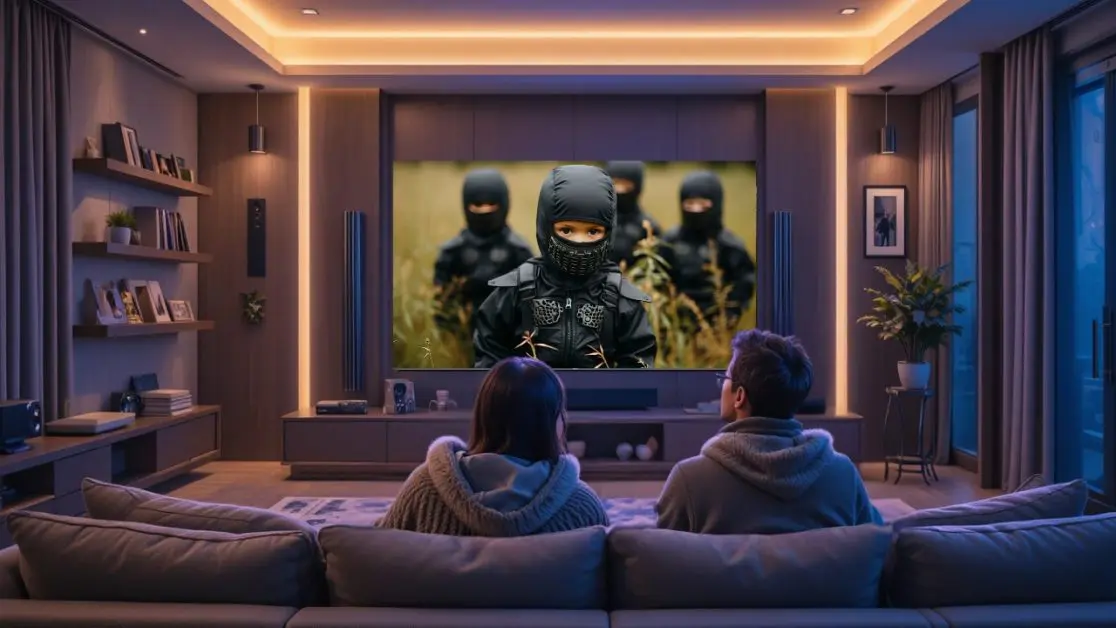
We assume seating is about comfort.
It’s not.
It’s about sustained comfort.
A cinema isn’t good because you sit.
It’s good because you forget you are sitting.
Three seating formats work beautifully in Indian homes:
1. The Layered Sofa Setup
- Add throws and cushions in textured winter fabrics.
- Keep seating low to the ground. Lower seating feels more intimate.
2. The Floor Lounge Format
- Perfect for smaller apartments.
- Floor mattresses, diwans, bean bags.
- Works especially well with warm carpets.
3. The Hybrid Family Layout
- Sofa at the back, floor setup in front for kids.
- Creates depth and replicates staggered seating.
A quick comparison
| Setup | Best for | Cost | Comfort Duration |
| Layered Sofa | Couples & solo viewers | Medium | High |
| Floor Lounge | Small living rooms | Low | Medium |
| Hybrid Layout | Families | Medium | High |
This is where the cinema experience becomes personal.
Not everyone needs the same format.
Everyone needs the same outcome: ease.
3. Lighting: The Silent Architect of Mood
Winter lighting has its own psychology.
Soft. Dim. Warm.
Good cinema lighting works in layers:
- Primary layer: warm white ceiling lights on low intensity
- Secondary layer: table lamps, floor lamps, LED strips behind the TV
- Ambient layer: candles, fairy lights, or indirect wall washes
Each layer softens the room.
Each layer reduces distraction.
Each layer improves immersion.
Lighting is the difference between watching a movie and entering it.
4. Sound: The Closest Thing to Magic

If visuals set the stage, sound sets the emotion.
Most living rooms fail here because laptop speakers and budget TVs flatten the experience.
Sound by KEF integrated sound in Haier’s Mini LED TVs changes that equation with richer bass and clearer vocals. Dolby Atmos uses multidirectional audio to place sound around the viewer, not just in front of them.
Why this matters in winter:
Closed windows and colder air naturally boost acoustic absorption. Your room becomes an organic sound chamber.
A cinema experience becomes real only when:
- Dialogue feels present
- Background music fills the room
- Action scenes carry depth
- Silence has texture
Great audio is emotional engineering.
5. Snacks: The Ritual That Completes the Experience
Every cinema visit has a ritual.
Popcorn. Nachos. Coffee.
Living room cinemas need their own rituals too.
Winter weekends invite warm snacks:
- Air fried samosas
- Hot chocolate
- Caramel popcorn
- Paneer tikka
- Grilled sandwiches
A microwave or OTG becomes an unspoken supporting actor in this story. It keeps the break short and the comfort long.
The ritual is small. The impact is large.
6. Declutter the Space to Expand the Experience
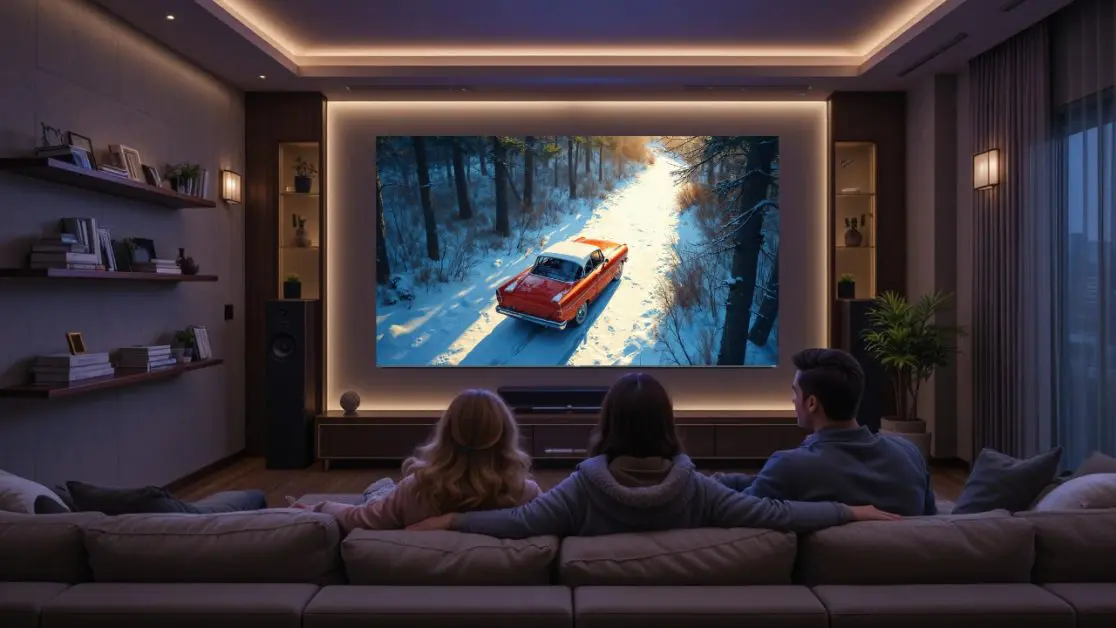
A cinema feels big even when the room is small.
Here is the invisible trick:
Remove visual noise.
A few simple choices:
- Hide remote controllers in a small basket
- Coil and clip wires behind the console
- Reduce the number of table objects
- Add one signature decor piece instead of many
Clean lines create mental space.
Mental space improves immersion.
What you remove is as important as what you add.
7. Temperature and Comfort Matter More Than We Admit
Winter weekends have a rhythm.
Cold evenings. Warm rooms. Soft blankets.
A cinema is not just visual. It’s sensory.
Temperature plays a larger role than people think. Families naturally gather in the warmest room. A temperature controlled space keeps everyone comfortable for longer.
Even something as small as a warm rug changes how the room feels underfoot.
Don’t treat temperature as an afterthought.
Treat it as part of your cinema design.
8. Rituals That Make Winter Weekends Memorable
Every home builds its own cinema culture.
Some ideas:
- Friday Feature Night
Everyone takes turns picking the movie. - Saturday Sports Night
Perfect for large Mini LED screens with smooth motion and high peak brightness. - Sunday Rewind
Classic films, regional favourites, old family videos.
The ritual doesn’t need rules.
It needs consistency.
Rituals make rooms meaningful.
9. Practical Checklist for Creating Your Winter Cinema
A simple list to make this real:
Screen Experience
- Mini LED display
- Dolby Vision
- Sound by KEF sound or similar high clarity audio
- Dolby Atmos enabled setup
Comfort Experience
- Layered seating
- Warm throws
- Soft carpet
Atmosphere Experience
- Two layer lighting
- Decluttered tabletop
- Temperature controlled
Snack Setup
- Microwave ready
- Warm quick snacks
- One signature drink
A Living Room Cinema Is Not About Luxury. It’s About Intention
The biggest misconception is that a cinematic living room needs expensive elements. It does not.
It needs intentional ones.
The right lighting.
The right seating.
The right screen.
The right atmosphere.
When these elements align, even a small Indian apartment feels expansive.
When they don’t, even a large space feels flat.
Haier’s Mini LED range is an example of how technology blends into everyday winter routines without announcing itself. Features like Dolby Vision, Sound by KEF, and Google TV integration work quietly in the background while the viewer enjoys the experience.
This is what modern Indian homes want.
Technology that supports the moment, not steals it.
The Bigger Insight: Homes Become Cinemas When People Slow Down
Winter does something valuable.
It gives us reasons to gather.
Reasons to unwind.
Reasons to watch something together without rushing.
A cozy living room cinema is really a social system.
It brings families closer.
It turns couples into co-creators of weekend rituals.
It gives solo professionals a way to decompress without stepping out.
It transforms weekends into something softer, warmer, slower.
The real upgrade isn’t the screen. It’s an experience.