
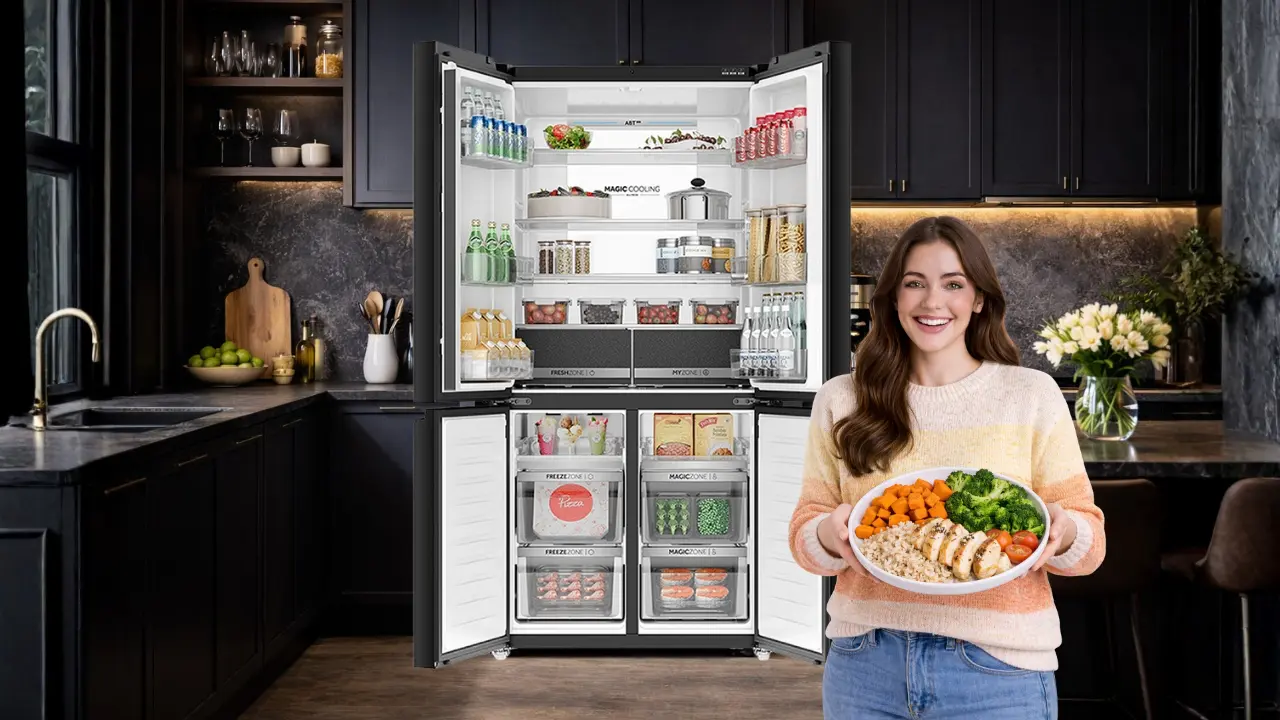

December meal prepping becomes easier when your refrigerator works like a system, not a single cold box.
Multi-zone cooling lets families store vegetables, leftovers, festive dishes, and weekly preps at the right temperature, at the same time. The result is less waste, fewer rushed dinners, and a kitchen that feels calmer even during the busiest month of the year.
December is not busy. It is layered.
School holidays overlap with office deadlines. Guests come over without notice. Lunchboxes still need packing. Dinner still needs to happen.
December does not reduce daily work. It adds to it.
Meal prepping feels like the obvious solution. Cook once. Eat many times. Save time.
But most families stop halfway.
Not because they lack discipline.
Because storage breaks the plan.
Leftovers mix with raw vegetables. Gravies absorb smells. Cut fruits lose freshness. Frozen items compete for space.
The system fails quietly.
Meal prep fails when storage treats all food the same
Most refrigerators cool uniformly. That sounds efficient. It is not.
Different foods age differently.
Leafy vegetables need humidity.
Cooked dals need a stable cold.
Marinated paneer needs separation.
Frozen snacks need consistent freezing.
When all of them share one zone, compromise begins.
Food does not spoil dramatically.
It degrades slowly.
Taste dulls. Texture changes. Motivation drops.
And the meal prep habit disappears by week two.
Multi-zone cooling changes how December kitchens work
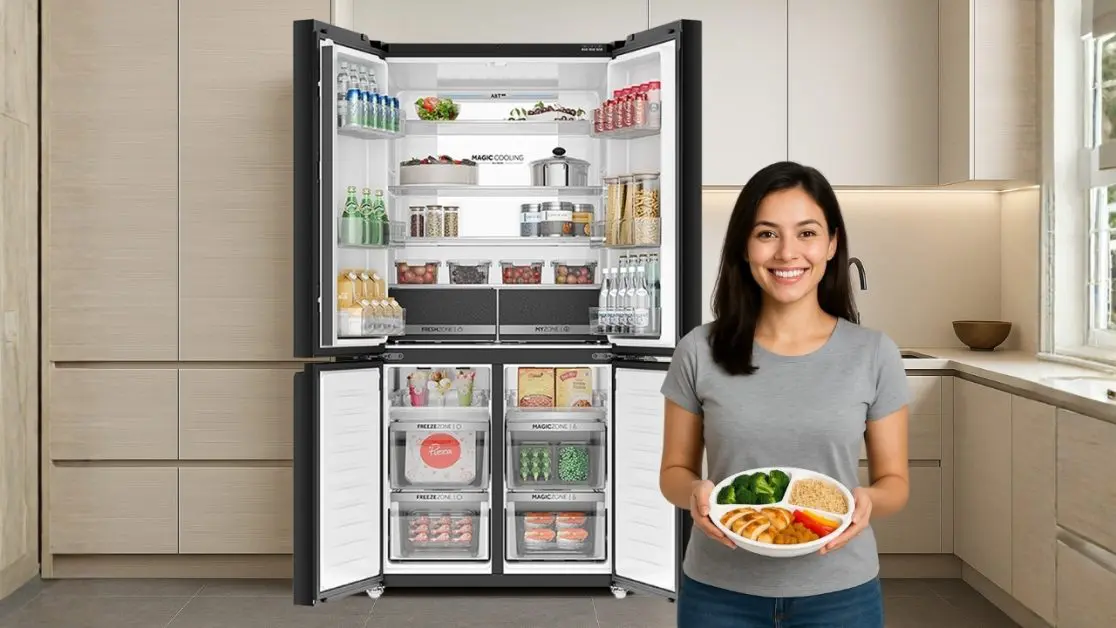
Multi-zone cooling works on a simple principle.
Different foods deserve different environments.
Instead of forcing everything into one temperature, the refrigerator adapts to food behaviour.
One zone stays colder for cooked meals.
Another stays gentler for fruits and vegetables.
A flexible zone switches roles based on the week.
This is not about features.
It is about flow.
When storage aligns with cooking habits, meal prep becomes sustainable.
The hidden December pattern most families miss
December cooking follows a rhythm.
Weekdays
Simple breakfasts. Packed lunches. Reheated dinners.
Weekends
Batch cooking. Festive experiments. Extra groceries.
Midweek surprises
Office parties. Guests. Order-in meals.
A rigid fridge struggles with this variability.
A flexible fridge absorbs it.
Multi-zone cooling turns storage into a responsive system, not a static box.
How multi-zone cooling supports real meal prep scenarios
Let us ground this in everyday December moments.
Scenario 1: The Sunday prep marathon
Sunday afternoon. Pressure cooker running. Sabzi on the stove. Rice cooling on the counter.
You prep for four days.
With multi-zone cooling:
- Cooked curries go into a colder zone for longer freshness
- Chopped vegetables stay crisp in a humidity-controlled section
- Dough and batters stay usable without over-drying
The fridge does not force trade-offs.
It accommodates intent.
Scenario 2: The festive overlap problem
Christmas sweets. Regular meals. Party leftovers.
Everything enters the fridge together.
Without zoning, smells mix and textures suffer.
With dedicated zones, desserts stay protected, daily food stays practical, and leftovers stay usable.
Boundaries create order.
Why flexible zones matter more than large capacity
Bigger fridges feel like the solution.
They are not.
Space without organisation becomes clutter.
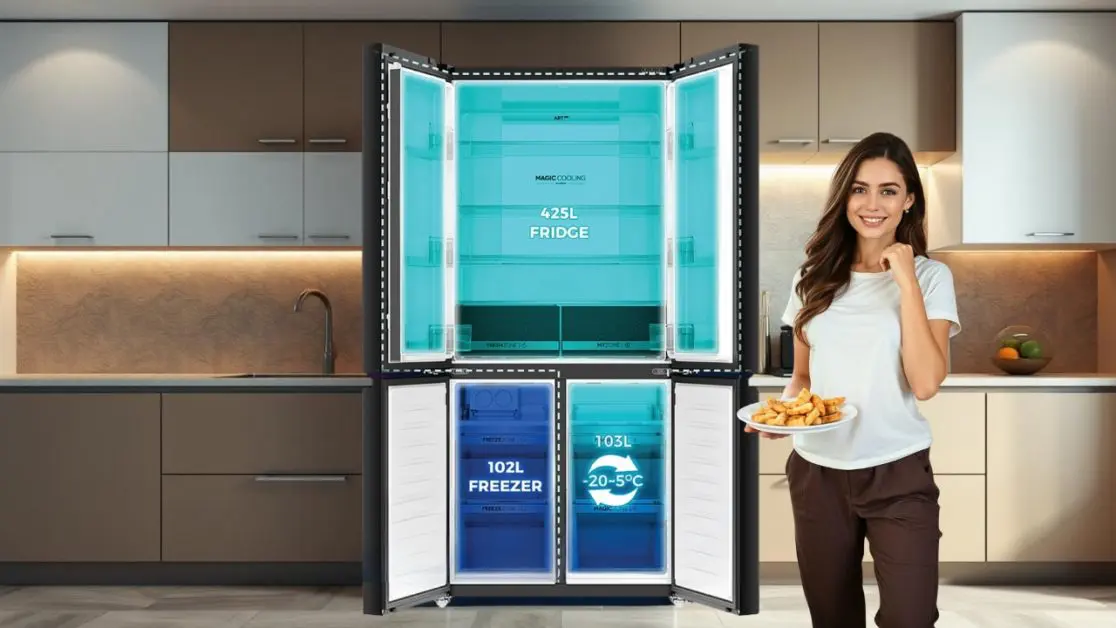
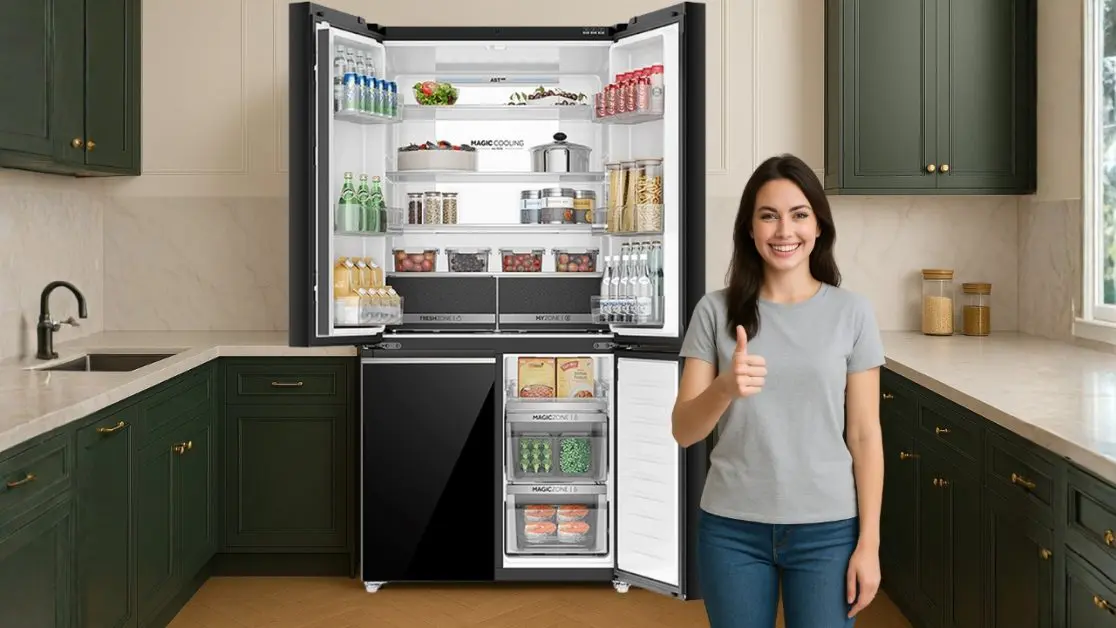
Multi-zone cooling works even better when paired with convertible storage, where a section can shift between fridge and freezer based on need.
For example, a four-door refrigerator with a convertible zone lets families switch priorities during December. More fridge space during party-heavy weeks. More freezer space when stocking snacks or pre-made meals.
This kind of adaptability is built into models like the Haier 630L Lumiere 4-Door Refrigerator, which allows space to function as fridge storage when required .
Capacity supports volume.
Zoning supports behaviour.
Behavior always wins.
The cost of poor storage is not food waste. It is a waste of time.
Food waste is visible.
Time waste is invisible.
Every time food spoils early, you cook again.
Every time vegetables wilt, plans change.
Every time leftovers smell off, ordering in feels easier.
December time is already scarce.
Multi-zone cooling protects time by protecting intention.
When storage works, habits stick.
One fridge. Three roles. All December long.
A well-designed multi-zone refrigerator quietly plays three roles.
Role one: The weekday stabiliser
Keeps routine food predictable.
Lunchboxes stay consistent.
Reheated dinners taste fresh.
Mornings feel less rushed.
Role two: The festive buffer
Absorbs unpredictability.
Extra groceries. Party leftovers. Sudden guests.
Nothing spills into chaos.
Role three: The health guardian
Fresh produce stays usable longer.
When fruits and vegetables remain crisp, families snack better by default.
Health does not need motivation.
It needs availability.
Why Indian kitchens need zoned cooling more than most
Indian cooking is complex.
Gravies. Dry sabzis. Fermented batters. Raw produce. Cooked rice.
Each demands different storage conditions.
Uniform cooling is a Western assumption.
Zoned cooling respects Indian food diversity.
It also respects Indian kitchens, where refrigerators are opened frequently, loaded heavily, and used continuously.
Systems designed for this reality perform better long-term.
Smart cooling is not about control. It is about trust
The best appliances disappear into routine.
You stop thinking about them.
Smart multi-zone refrigerators adjust temperatures based on usage patterns, door openings, and load changes. Some even integrate food management tools through apps, helping families track stored items and reduce overbuying .
This is not automation for novelty.
It is automation for relief.
When the fridge handles the background thinking, families focus on living.
A simple December meal prep framework that actually lasts
Forget rigid schedules.
Use this instead.
One prep day.
Batch cooks core meals.
Two flexible zones.
Separate cooked and raw.
One adaptive zone.
Change its role weekly.
Zero guilt days.
Leftovers are optional, not mandatory.
Systems that forgive lapses survive longer.
Multi-zone cooling supports this forgiveness.
The deeper lesson December teaches us
December exposes weak systems.
Not because we fail.
Because pressure reveals design flaws.
Meal prep does not fail due to laziness.
It fails due to poor infrastructure.
When tools align with reality, behaviour improves naturally.
This applies beyond kitchens.
Good systems reduce friction.
Great systems feel invisible.
Why this matters beyond December
Families who fix storage in December often carry the habit into January.
Less chaos.
Better planning.
Lower stress.
A refrigerator that adapts to life stages, festive cycles, and daily routines becomes more than an appliance.
It becomes quiet support.
And quiet support scales.
The insight worth remembering
Meal prep is not a cooking problem. It is a storage problem disguised as discipline.
Fix storage.
Habits follow.
In December and beyond.
When cooling zones match how families actually live, the kitchen stops feeling like work and starts feeling like home.