


When Delhi slips below 9°C, the first comfort people reach for each morning is a long, steady hot shower. It resets the body, cuts the shock of winter air, and turns a cold start into something warm and bearable.
Which is why water heaters are no longer winter extras. They have quietly become winter essentials in every Delhi home.
Why cold mornings change the way Delhi wakes up
- There is a moment every winter when the city shifts.
- You feel it before the news reports confirm it.
- The bathroom floor turns colder.
- The first sip of tea feels stronger.
- And the idea of stepping into a shower without warm water feels unreasonable.
- This is the invisible pivot of winter life in Delhi.
The mornings slow down. People wake up earlier just to heat water. Parents remind kids to bathe quickly. Working professionals stretch a five minute shower into ten because that heat is the only thing keeping them functional.
Hot showers are no longer indulgence.
They are surviving.
What a hot shower really does to the body

The science behind this ritual is simple and powerful.
1. It restores circulation
Warm water increases blood flow and reduces muscle tension. In a city where winter mornings are stiff and sluggish, that boost matters.
2. It stabilises mood
Research from the University of Freiburg notes that warm showers trigger the release of serotonin, the body’s natural mood stabiliser. In Northern Indian winters, that burst of warmth can shift your whole morning.
3. It improves immunity
Warm water increases lymphatic movement, which supports immune function. Delhi’s air quality and cold winds make this tiny advantage meaningful.
A simple shower turns into a system reset.
The hidden system behind winter morning routines
What looks like a personal habit is actually a seasonal pattern.
Every Delhi household adjusts its winter system in three predictable ways.
One. Longer heating cycles
People need water ready at 6 am instead of 8 am.
Two. More people bathing back to back
This stretches the load on any ordinary geyser.
Three. Temperature variation throughout the day
Temperatures rise slightly by noon, fall again after sunset, and water heaters end up working in irregular cycles.
This is why many families find their old water heaters failing.
Not because they are faulty. But because the pattern of use changes and the appliance is not designed for it.
What modern Delhi homes now expect from a water heater
The shift is quiet, yet clear.
Homes want reliability, speed, and safety.
Here is what families are now prioritising.
- Fast heating so nobody waits in the cold.
- Shock proof safety because winter moisture and old wiring mix poorly.
- Better insulation to hold heat longer and reduce reheating.
- Pressure resistance for high-rise apartments.
- Smart scheduling so the water is ready before anyone wakes up.
This is where modern water heaters, especially smart models, change the experience entirely.
Where Haier naturally fits into this winter story
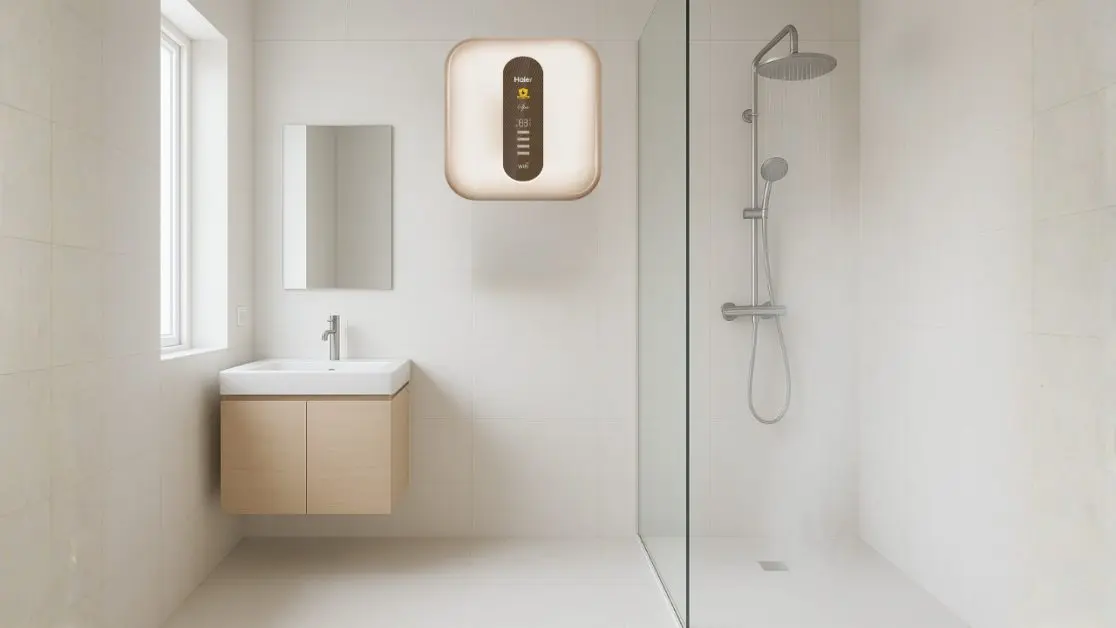
Consider the Haier 15L Smart WiFi Water Heater.
It is built around the exact problems Delhi homes face every winter.
Not a sales pitch. Just a practical example of design aligning with real habits.
How it helps Delhi winters specifically
- Shock proof technology for older bathrooms and fluctuating wiring.
- Dual thermal protection which cuts off heating smartly at 75°C and provides a second layer at 95°C.
- Smart timer and smart memory which let families schedule morning heating without touching the device.
- PUF insulation that holds water temperature far longer, reducing reheating cycles and saving electricity.
- 8 bar pressure support for high-rise apartments in areas like Dwarka, Noida and Gurgaon.
- Bacteria proof system that heats water at 80°C to keep it fresh during winter storage.
This turns hot showers from a chore into a dependable routine.
The deeper pattern behind Delhi’s winter behaviour
Winter reveals something fundamental about how households work.
People are not looking for luxury.
People want stability.
A warm bathroom.
Predictable mornings.
Water that does not fluctuate between warm and cold mid-shower.
When temperatures fall below 9°C, these small comforts change the whole emotional tone of a day.
Hot water becomes a morning anchor.
How Delhi homes adapt their routines in small but powerful ways

To understand winter behaviour, watch the small choices.
1. Families preheat earlier
Instead of switching on the geyser at 8 am, they switch it on at 6.
This shifts the entire energy cycle of a home.
2. Everyone bathes closer together
Kids before school. Parents before office.
Timing becomes critical.
3. Energy bills rise
Reheating water is what pushes electricity usage up, not the heater itself.
This is why insulation and smart scheduling matter.
4. People prefer bucket baths less
Because the time it takes to fill a bucket in winter is too long.
Showers have become faster, warmer, and more efficient.
These behaviours reveal something important.
Winter comfort is not about temperature.
It is about predictability.
The takeaway for modern Indian households
Hot water will remain the quiet hero of Delhi winters.
As temperatures slide, the routines of entire families depend on one invisible system: how fast, how safely, and how consistently the home can deliver warm water.
Modern water heaters are not winter products anymore.
They are winter infrastructure.
And the homes that upgrade early feel the difference immediately.
Not just in warmth.
In rhythm.
Because when your mornings begin smoothly, the whole day follows.