
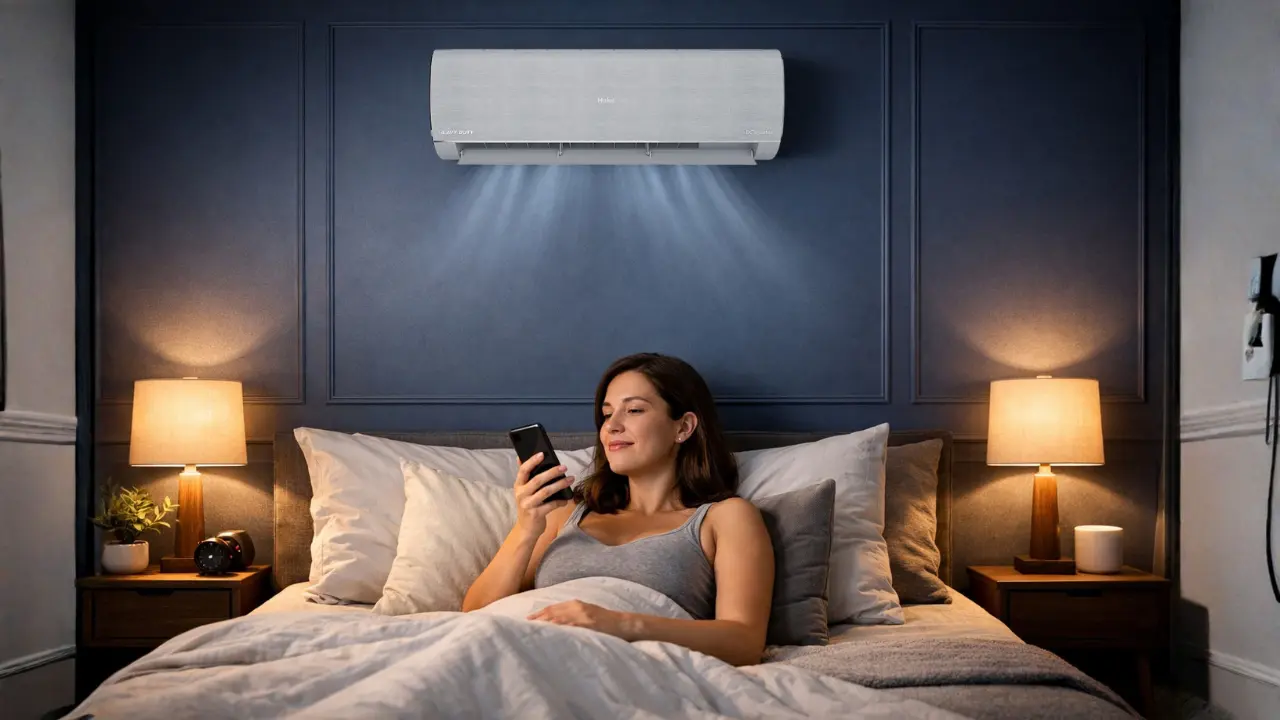

Directional cooling enhances sleep quality by delivering cool air exactly where your body needs it, instead of cooling the entire room.
This reduces temperature swings, prevents overcooling, and creates a stable sleep environment that supports deeper, uninterrupted rest. With systems like Haier Smart AI Climate Control AC powered by AI Atmox, cooling becomes adaptive, precise, and personal.
Sleep breaks when comfort becomes inconsistent.
It is 2:17 am.
You turn.
Adjust the blanket.
Push it away.
Pull it back.
The AC is on. The room is cool. But something still feels off.
This is not about temperature.
It is about where the cooling is going.
Most bedrooms are not evenly used. The bed is in one zone. The wardrobe blocks airflow. Curtains trap heat. Yet traditional ACs cool everything equally.
And that is the problem.
Because comfort is never evenly distributed.
Why Traditional Cooling Disrupts Your Sleep Cycle
Most air conditioners follow one rule.
Cool the entire room to a fixed temperature.
It sounds logical. It fails quietly.
What actually goes wrong at night
- Cooling spreads to unused spaces
- Airflow misses your exact sleeping position
- Temperature drops too much after midnight
- Blankets become necessary in peak summer
- The body keeps adjusting instead of resting
Sleep research shows the body naturally cools down at night to initiate deep sleep. But sudden cooling or uneven airflow interrupts this process.
The result is familiar.
You sleep.
But you do not feel rested.
Directional Cooling Changes the Question Entirely
Instead of asking:
“How cold is the room?”
It asks:
“Where is the person?”
Directional cooling focuses airflow exactly where it matters.
On your bed. On your body. In your comfort zone.
What this changes instantly
- Faster cooling where you lie
- Stable temperature around your body
- Reduced cooling in empty areas
- No sudden cold bursts
- Balanced comfort through the night
This is where systems like Haier Smart AI Climate Control AC powered by AI Atmox step in.
They do not just cool.
They learn, adapt, and direct airflow intelligently.
The Science Behind Better Sleep and Better Airflow
Sleep is not random.
It follows a system.
Three systems working together
| System | Role | Impact on Sleep |
| Body temperature regulation | Drops naturally at night | Needs stable cooling, not fluctuations |
| Airflow direction | Controls where cool air reaches | Direct airflow improves comfort precision |
| Environmental consistency | Maintains steady conditions | Prevents sleep interruptions |
When these align, sleep improves.
When they conflict, sleep breaks.
Directional cooling brings alignment.
Not All Cooling Works the Same Way
Let us simplify the choices.
One option is uniform cooling
- Cools entire room equally
- Simple to use
- Leads to overcooling
Cost: Energy waste
Benefit: Ease
The second option is manual airflow adjustment
- Adjust vents manually
- Slightly better targeting
- Requires frequent changes
Cost: Effort
Benefit: Partial control
The third option is AI-driven directional cooling
- Detects where you are
- Directs airflow precisely
- Adapts automatically
Cost: Higher upfront investment
Benefit: Maximum comfort and efficiency
Insight:
The future of cooling is not stronger airflow. It is a smarter airflow.
What Happens When Cooling Becomes Personal
Think about a real bedroom.
Two people. Different comfort preferences.
One prefers cooler air.
The other prefers mild cooling.
A child joins in halfway through the night.
Traditional ACs treat all of them the same.
Directional cooling begins to treat them differently.
Systems like Haier Smart AI Climate Control AC powered by AI Atmox use AI Target Cooling to direct airflow to specific zones, focusing comfort exactly where needed.
That means:
- No arguments over temperature
- No uneven cooling across the bed
- No compromise
Just comfort.
Why Pre-Cooling Matters More Than You Think
Sleep does not start when you lie down.
It starts when your environment prepares you.
Imagine entering your bedroom after a long day.
The room is already at the perfect temperature.
Not cold. Not warm. Just right.
That is AI pre-cooling.
The system anticipates your arrival and adjusts temperature in advance.
Why this improves sleep
- No waiting for cooling
- No sudden temperature drop
- Smooth transition into rest
Because comfort should not begin late.
Better Sleep and Lower Bills Come From the Same System
There is a hidden connection.
Energy efficiency and sleep quality often improve together.
Directional cooling avoids wasting energy on empty spaces.
AI systems go further.
They monitor usage, detect human presence, and reduce power when the room is empty.
What you gain
- Lower electricity bills
- Less environmental impact
- Consistent cooling without manual control
A simple truth:
Efficiency is what remains after waste is removed.
Small Changes That Transform Night-Time Comfort
You do not need a bigger room.
You need a smarter system.
What directional cooling quietly fixes
- No midnight blanket adjustments
- No waking up sweaty
- No overcooling discomfort
- No uneven airflow
Instead, you experience:
- Stable comfort
- Faster sleep
- Deeper rest
- Better mornings
And that changes everything.
Why This Matters for Modern Indian Homes
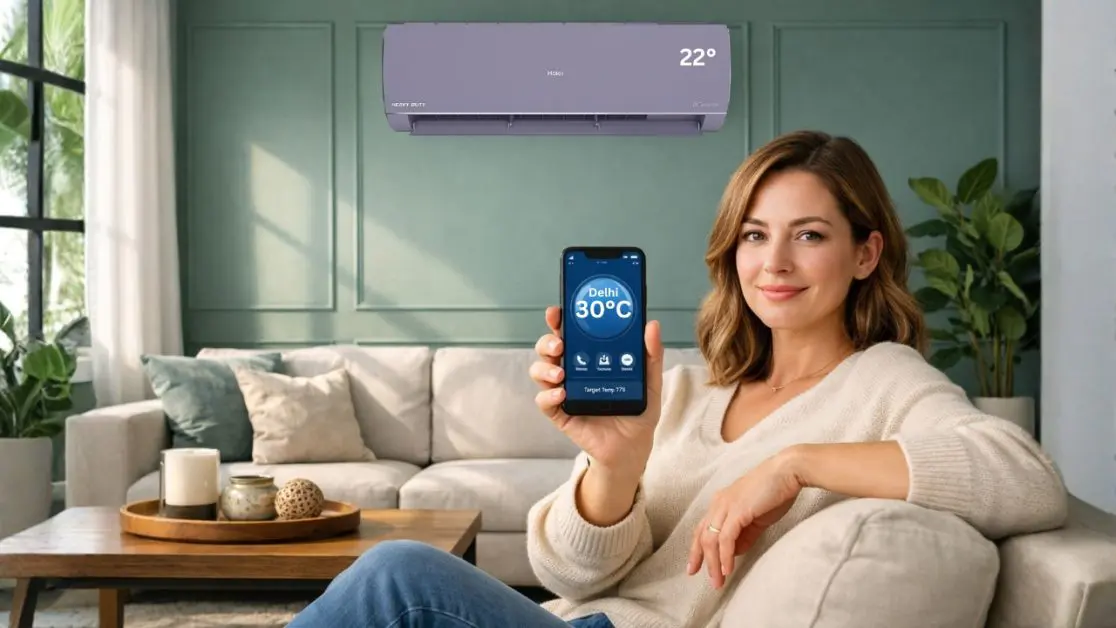
Homes are evolving.
Bedrooms are more compact.
Furniture layouts are tighter.
Usage is dynamic.
Cooling systems must respond to this reality.
Directional cooling is not an upgrade.
It is a correction.
A shift from cooling spaces to cooling people.
The Larger Pattern Most People Miss
We have been solving comfort the wrong way.
Lower temperature.
Higher power.
Stronger airflow.
But comfort does not come from excess.
It comes from alignment.
Between:
- Body and environment
- Space and usage
- Technology and behaviour
Directional cooling works because it understands this.
The One Idea That Changes Everything
Sleep improves when cooling stops treating the room as the priority and starts treating the person as the priority.
Final Thought: The Best Comfort Feels Invisible
The best sleep is the one you do not notice.
The best cooling is the one you do not adjust.
With intelligent systems like Haier Smart AI Climate Control AC powered by AI Atmox, cooling becomes quiet, adaptive, and precise.
It learns.
It adjusts.
It disappears into your routine.
And that is when technology stops being a feature.
And starts becoming a feeling.
A good night’s sleep.
Frequently Asked Questions
Why do I wake up in the middle of the night feeling too cold or too warm?
Traditional ACs often overshoot temperatures or cool unevenly, forcing your body to constantly adjust.
I wake up tired even after 7–8 hours of sleep. Could my AC be the reason?
Yes. Inconsistent cooling can interrupt deep sleep cycles, leaving you feeling unrested.
Why do I keep adjusting my blanket throughout the night?
Because your environment isn’t stable, temperature fluctuations trigger constant micro-adjustments.
What makes AI-powered ACs different from regular ones?
They learn your habits, detect presence, and adjust airflow direction and temperature automatically.
How does directional cooling actually work in real life?
It detects where you are (e.g., on the bed) and directs cool air specifically there instead of across the whole room.
Can smart ACs handle different comfort needs for multiple people?
Advanced systems can adjust airflow zones, reducing conflict between different preferences.
Why do I still feel uncomfortable at night even when my AC is set to the right temperature?
Because comfort isn’t just about temperature it’s about where the cool air reaches. If airflow misses your body or cools unused areas, your sleep gets disrupted.
Should I upgrade my AC just for better sleep, or is it not worth it?
If poor sleep is a recurring issue, upgrading to directional or AI cooling can significantly improve rest quality and reduce long-term discomfort.
Is directional cooling actually better than just lowering the temperature?
Yes. Lowering temperature often leads to overcooling, while directional cooling delivers targeted comfort without unnecessary drops.