


The tricolour isn’t just seen. It’s felt.
Every August, homes across India tune in to the same visual ritual, the saffron, white, and green fluttering against a clear sky, the Republic Day parade marching down Rajpath, the Independence Day flag hoisting from the Red Fort.
The colours matter. The way they look matters even more. Because in those moments, the TV in your living room becomes a window to something far bigger than your four walls.
And in 2025, that window just got a lot clearer.
Why colours define the memory of a moment
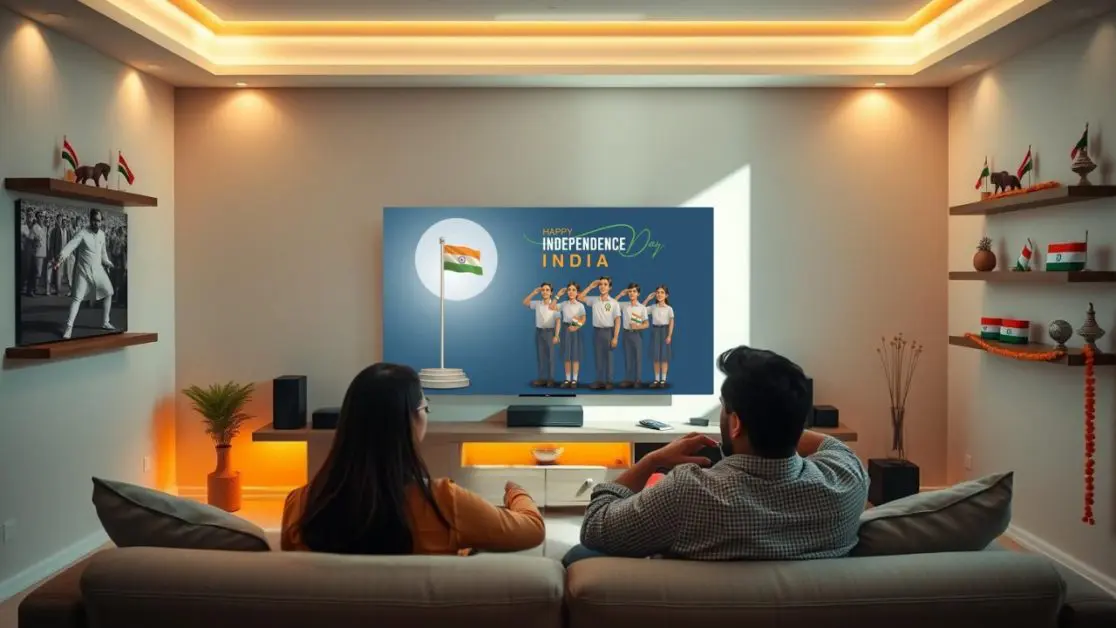
Think about your most vivid memories. A wedding sari shimmering under fairy lights. A cricket jersey’s bright blue against a packed stadium.The warm gold of diyas on Diwali night.
It’s the colours that anchor those memories.
The same applies to national days. The shade of saffron is deep and bold, not faded. The white pure, without a blue tint or grey shadow. The green rich, alive, like monsoon leaves after the rain.
When your TV can’t capture those shades exactly, the emotional connection blurs. Dolby Vision changes that.
Dolby Vision IQ: The tech that adapts to your room, not the other way around
Here’s the thing about celebrations in Indian homes: they happen in real rooms, with real light. Morning sunlight streaming in. Tube lights bouncing off walls. Curtains half drawn because someone is making chai.
Standard picture settings can’t keep up.They’re static.
Dolby Vision IQ uses sensors to read your room’s lighting in real time and adjusts brightness, contrast, and colour accordingly. Watching the parade in a sunlit living room? Colours stay true. Catching a late-night flag-hoisting replay? Blacks stay deep, not grey.
It’s not just picture enhancement, it’s context awareness.
From broadcast flatness to cinema-grade detail

If you’ve ever watched the same film in a cinema and on a regular TV, you know the difference. One feels alive. The other feels flatter.
Dolby Vision uses dynamic metadata, which means it processes colour and brightness scene by scene sometimes even frame by frame. That’s why you can see the subtle fabric folds in the Prime Minister’s kurta or the way sunlight catches the top edge of the flag.
It’s detail that turns “watching” into “being there.”
Sound completes the picture
Visuals pull you in, but sound keeps you there. And national day broadcasts are a soundscape of their own: the drumbeats of the marching bands, the roar of aircraft overhead, the crowd’s cheer after the anthem.
Dolby Atmos turns these from background noise into a 3D experience. You hear the flypast move across your room, not just out of the speakers. The applause comes from behind you, as if you’re seated in the stands.
When paired with a 2.1 channel woofer system, deep bass from a dedicated subwoofer, clarity from satellite speakers the moment becomes more than an image. It becomes a presence.
Why big screens change small moments
There’s a reason families now gather around 55-inch or 65-inch screens instead of a 32-inch in the corner. Bigger isn’t just “better” for bragging rights.
A larger OLED panel means each flag ripple, each uniform’s embroidery, each flash of sunlight fills your field of vision. Your eyes stop seeing a frame when they see a scene.
With a 120Hz OLED display, even the swiftest parade march or aerial display stays crisp. No motion blur. No ghosting. Just fluid, lifelike movement.
OLED: Designed for the way India watches
What makes the OLED range fit for these moments isn’t just the tech specs, it’s the match with how we live.
- Hands-free voice control means you can switch from parade coverage to a patriotic film without hunting for the remote (or pausing the pakora frying).
- Google TV brings together live channels, OTT apps, and YouTube highlights so your Independence Day playlist is one click or one voice command away.
- A solar-powered remote isn’t just convenient; it’s a small nod to sustainability on a day when we think about our country’s future.
These aren’t add-ons. They’re the kind of thought-through features that make technology feel like part of the celebration.
From national days to everyday India
The thing about investing in a better viewing experience is that it doesn’t sit idle after August 15 or January 26.
- That same Dolby Vision detail makes Test cricket look as sharp on a Sunday afternoon as a film premiere on Friday night.
- The same Atmos soundstage turns a K-pop concert stream into a stadium experience.
- The same 4K OLED panel makes your grandmother’s favourite mythological serial look richer than she’s ever seen it.
Once your eyes get used to accuracy, they don’t go back.
Shared screens make shared memories

There’s something quietly powerful about watching national moments together. Whether it’s a flat full of college friends, a family living room, or a society clubhouse, the shared screen is a shared anchor.
Phones are personal. Big screens are collective.
When the tricolour waves and the anthem plays, those few minutes feel different when everyone in the room sees and hears the same thing, in the same quality. It’s not just patriotism. It’s a connection.
Every pixel matters when it’s your flag
Technology can be cold, but in the right moment, it can also be deeply human. Dolby Vision isn’t about numbers and specs it’s about respecting the way colours carry meaning.
And for the tricolour, meaning is everything.
On the biggest days of the year, you deserve to see saffron that feels proud, white that feels pure, and green that feels alive. Not almost right. Not “good enough.” Because when the flag is raised, the picture in your living room is part of the picture in your heart.