
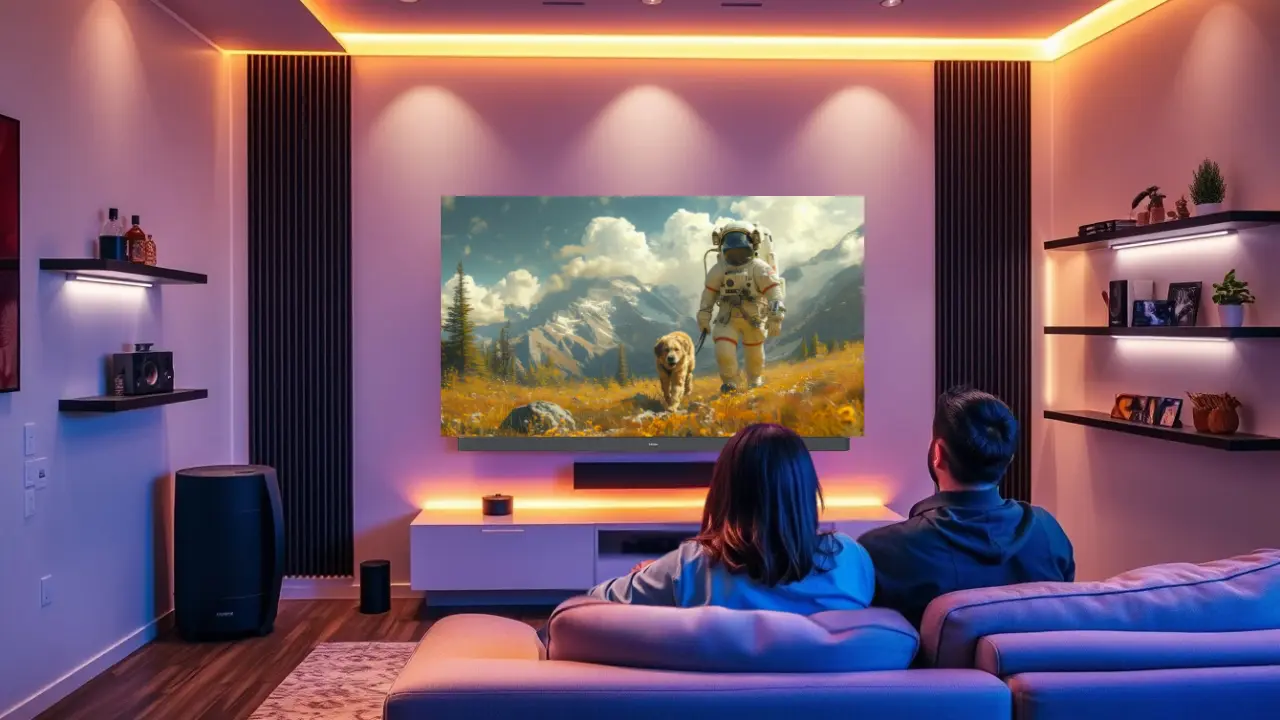

The living room has become the new cinema hall.
Friday nights no longer mean booking multiplex tickets weeks in advance. Instead, families gather around their big screen, dim the lights, and cue up the latest blockbuster on OTT. What used to feel like a compromise watching movies at home now feels like an upgrade.
The reason? Dolby Vision displays have quietly become the crown jewel of Indian living rooms in 2025.
Why does picture quality matter more now than ever?
Think about how you watch content today.
- A cricket final on Disney+ Hotstar.
- A Korean drama trending on Netflix.
- A Hollywood thriller dropping straight to OTT.
These aren’t casual background shows anymore. They’re cultural moments. And when moments matter, clarity counts.
Dolby Vision isn’t just a “better picture.” It’s a different way of experiencing stories. Every frame adjusts in real time to the light in your room, making dark scenes truly dark, bright scenes truly dazzling, and colors so lifelike that they feel painted with light.
The shift in Indian households
This isn’t just about tech specs. It’s about lifestyle.
- Millennials want their homes to double up as weekend theatres.
- Parents want safe family entertainment without the chaos of late-night drives.
- Gen Z wants gaming and bingeing without compromise.
A single technology Dolby Vision sits at the intersection of all these needs.
The invisible system behind the magic

Most people don’t know this, traditional TVs treat every scene the same. Dolby Vision, on the other hand, uses dynamic metadata. That means it adjusts brightness, contrast, and color scene by scene, sometimes even frame by frame.
The result?
- Rain in a cricket match doesn’t look like grey fog. You can see every droplet.
- A dimly lit suspense sequence doesn’t dissolve into black patches. You see the actor’s eyes flicker in fear.
- Animation doesn’t feel flat. It glows with depth and texture.
This is why once you watch in Dolby Vision, standard HD feels dated.
The Haier difference: More than just pixels
2025 OLED range whether the 55-inch, 165cm (65), or 194cm (77) model pushes this even further. They don’t just carry Dolby Vision IQ. They pair it with:
- Dolby Atmos audio: 50W 2.1 channel sound that makes the roar of a stadium or the hush of a forest feel all around you.
- 120Hz refresh rate with MEMC: Sports and gaming scenes move smoother, no blur, no stutter.
- AMD FreeSync Premium: Gamers get lag-free, tear-free action.
- Solar-powered remote: Small, sustainable, and convenient.
- Hands-free Google TV: No need to hunt for remotes; your voice does the work.
It’s not just a display. It’s a system that transforms your living room into an entertainment hub.
Why Indian homes are upgrading in 2025
Three big cultural shifts are driving this adoption:
1. Streaming first: With movies, cricket, and even music concerts premiering online, OTT screens are now the main stage.
2. Bigger homes, bigger screens: As Tier 2 and Tier 3 cities embrace lifestyle upgrades, a 165cm (65) or 194cm (77) TV is no longer “too big.” It’s the new normal.
3. Value in experience, not just price: Indian buyers have become smarter. They’re not asking, “How cheap is it?” They’re asking, “How good does it feel?”
And Dolby Vision delivers that feeling consistently.
Everyday moments, transformed

Consider three scenarios:
- Cricket season: With Dolby Vision IQ, the whites of jerseys pop against lush green outfields, even if you’re watching in daylight.
- Family movie night: Colors don’t wash out even when the ceiling fan light is on. The TV adjusts automatically.
- Gaming marathons: Every shadow in a battle royale feels crisp, giving you both immersion and an edge.
These aren’t small improvements. They change how you experience your leisure.
The bigger picture
At its heart, Dolby Vision isn’t about pixels. It’s about presence.
When technology disappears and the story takes over, that’s when you know a standard has won. That’s why in 2025, Dolby Vision isn’t a luxury spec anymore. It’s the new baseline for how Indian homes choose to see their world.
The takeaway
Indian households aren’t buying TVs anymore. They’re buying experiences.
And as more people demand cinematic quality at home, Dolby Vision displays like Haier’s OLED range are setting the gold standard.
Because in the end, what matters isn’t just watching. It’s a feeling.