
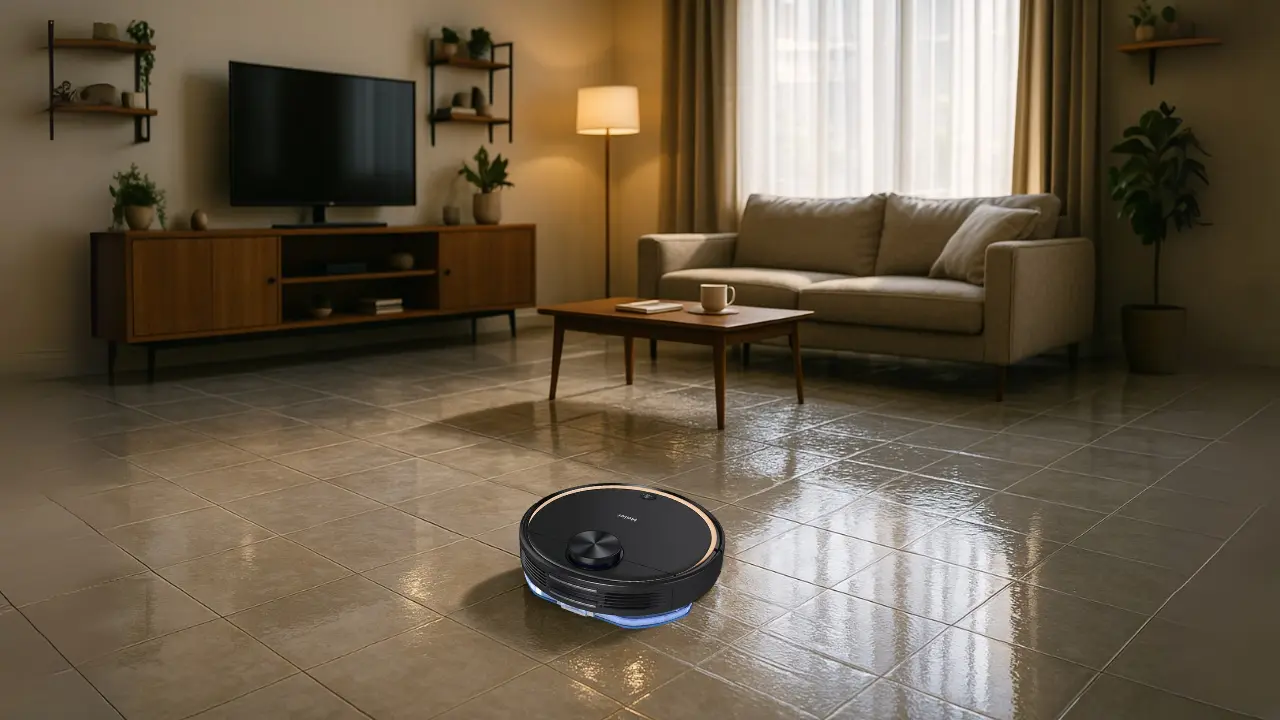

Monsoons make chai taste better. But they also make your floors filthy faster.
That’s the trade-off most Indian households know too well. Slushy sandals. Wet paws. Dust that turns to grime the moment it touches the floor. The season of nostalgia and nimbu chai also brings the dreaded floor mop relay. Swab. Wipe. Squeeze. Repeat.
But this monsoon, something’s changing.
Walk into a home in Mumbai, Pune, Bengaluru or Guwahati, and you might hear the gentle hum of a robot whirring under the dining table. Not a pet. Not a gadget. A vacuum-mop hybrid.
These are not your run-of-the-mill cleaning bots. They’re dual-action robots machines that sweep and mop at the same time. And they’re quietly becoming the monsoon MVPs of modern Indian homes.
What’s driving this surge?
Let’s unpack the real story beneath the spotless floors.
Monsoon isn’t just messy. It’s relentless.
One splash outside and your slippers carry half the road inside. Add pets, school kids, and WFH dads, and you’ve got a floor that needs not just cleaning but re-cleaning. Twice a day. Sometimes more.
Manual mopping isn’t built for this.
Especially when you’re juggling Zoom calls, laundry, school WhatsApp groups, and dinner planning.
Dual-function vacuum robots fill this exact gap. They’re not just saving time. They’re saving sanity.
Why just vacuum when you can mop, too?
Here’s the kicker: most Indian homes are hard-floor dominant. Tiles. Marble. Granite. Which means dry vacuuming alone doesn’t cut it during the monsoons. You need that final swipe, the one that actually gets rid of the wet, sticky muck.
Enter bots like PROBOT DTX, a smart little machine that sweeps up dust and follows up with a wet mop in the same pass.
It’s not just about convenience. It’s about doing the job right.
5 reasons why these bots are exploding in Indian homes this rainy season

Let’s get systematic.
1. They remember your home better than you do.
The latest bots come with 5th-gen laser navigation and multi-map memory. That means your robot can remember different rooms, levels, or layouts even if you live in a duplex or shift your furniture often. One scan, and it’s got the blueprint.
2. They multitask like Indian moms.
Mopping and vacuuming in one go isn’t just efficient, it’s emotional therapy for working parents tired of being the unofficial housekeeper.
3. They’re thinner than your laptop.
At 9.45cm, bots like Haier’s PROBOT can slip under beds, sofas, and side tables exactly where the monsoon dust likes to hide.
4. They detect trouble before it spills.
These bots sense cliffs, rugs, walls, and objects. No more robot suicides down staircases or mop-trails across expensive carpets.
5. They are app-controlled. Or voice-controlled. Or both.
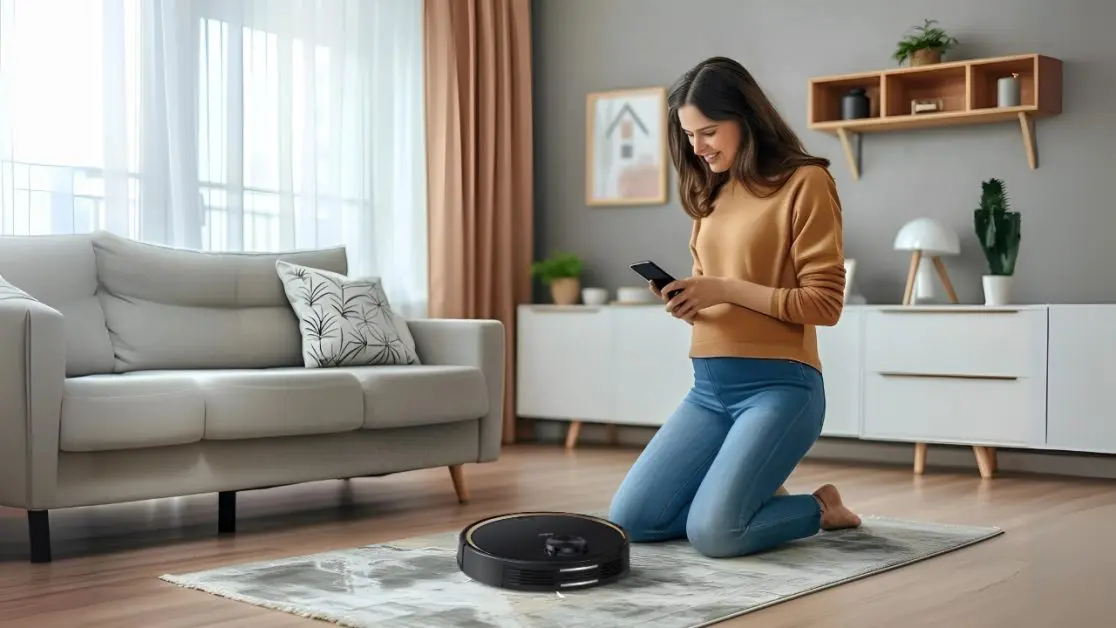
Busy cooking? Tell Alexa to start mopping. Stuck in traffic? Use the Haier Smart app to schedule a cleanup. It’s Jugaad, evolved.
Let’s talk about suction. Because strength matters
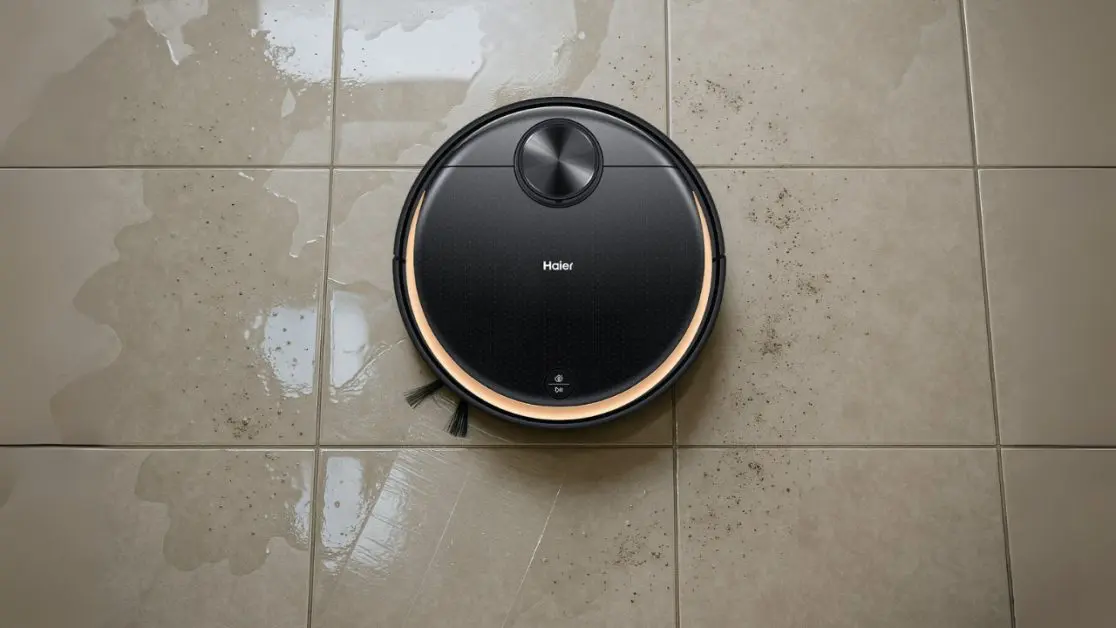
Haier’s PROBOT doesn’t just hum around the room like a lost cousin. It pulls in 5000Pa of suction power, enough to gulp down everything from pet hair to those little bits of onion that never make it to the dustbin.
And for pet parents?
This is a lifesaver. Monsoon + shedding season = hairy floors. PROBOT handles it with the precision of a lint roller on Red Bull.
But isn’t it just for luxury homes? Not really.
This is where assumptions break down.
In 2020, robot cleaners were a status symbol. In 2025, they’re a time-saving appliance category. Just like your mixer-grinder or air fryer.
Price tags have dropped. EMI options are everywhere. And with brands like Haier offering MRP ₹49,999 bots for just ₹22,999 during seasonal offers, this is no longer out of reach for upper-middle-class homes across Tier 1 and Tier 2 cities.
If your time is money, this robot is ROI.
Let’s zoom out. What does this teach us?
Cleaning isn’t just a chore, it’s a system. And monsoon mess reveals the fault lines in that system.
Traditional mopping is:
- Manual
- Repetitive
- Physically draining
- Inflexible (you can’t schedule it remotely)
- Incomplete (it doesn’t suction dust)
Smart vacuum-mop bots flip that entire model. They’re not just automating cleaning. They’re rethinking it as a layered, data-driven, predictable process.
This is what systems thinking looks like at home.
The cultural shift: From “maid + mop” to “smart + self-clean”
This trend isn’t just tech-driven, it’s lifestyle-led.
Young couples living independently. Elderly parents with knee pain. Working moms are tired of micro-managing every square inch. NRI kids gifting appliances instead of sarees.
The mindset is changing:
“Why depend on someone else, when a machine can do it better, cleaner, and quietly?”
Robot cleaners are the new washing machines. Once optional. Now essential.
Haier gets this. That’s why the PROBOT feels Indian-ready.

Let’s be real. Not all bots are built for Indian dust, stairs, thresholds, and floor types.
Haier’s PROBOT DTX checks the right boxes:
- Dry + wet cleaning modes
- 3 cleaning styles for Indian flooring (sweep, mop, combo)
- Large 550ml dustbin + 300ml water tank – perfect for Indian families
- 2cm gradeability – so it climbs over thresholds between rooms
- Quiet operation (<75db) – doesn’t interrupt your meetings or your naps
It doesn’t just clean. It adapts.
Final thought: The cleaner your floor, the clearer your mind
There’s something psychological about a freshly mopped floor. A sense of reset. Control. Calm.
In a season where the weather does what it wants, a robot vacuum isn’t just a gadget. It’s mental hygiene.
You’re not buying a robot.
You’re buying back your evenings. Your energy. Your peace of mind.
So what’s the takeaway?
Dual mop + vacuum bots are trending in Indian homes because they solve a deeply emotional, practical, and seasonal pain point.
They work harder than brooms. Smarter than maids. And cheaper than chronic back pain.
This monsoon, smart homes aren’t about lights or speakers.
They’re about spotless, mop-streak-free floors without lifting a finger.
Curious to see how it works in your home? Check out the Haier PROBOT DTX and experience monsoon cleaning, without the mop tantrums.