
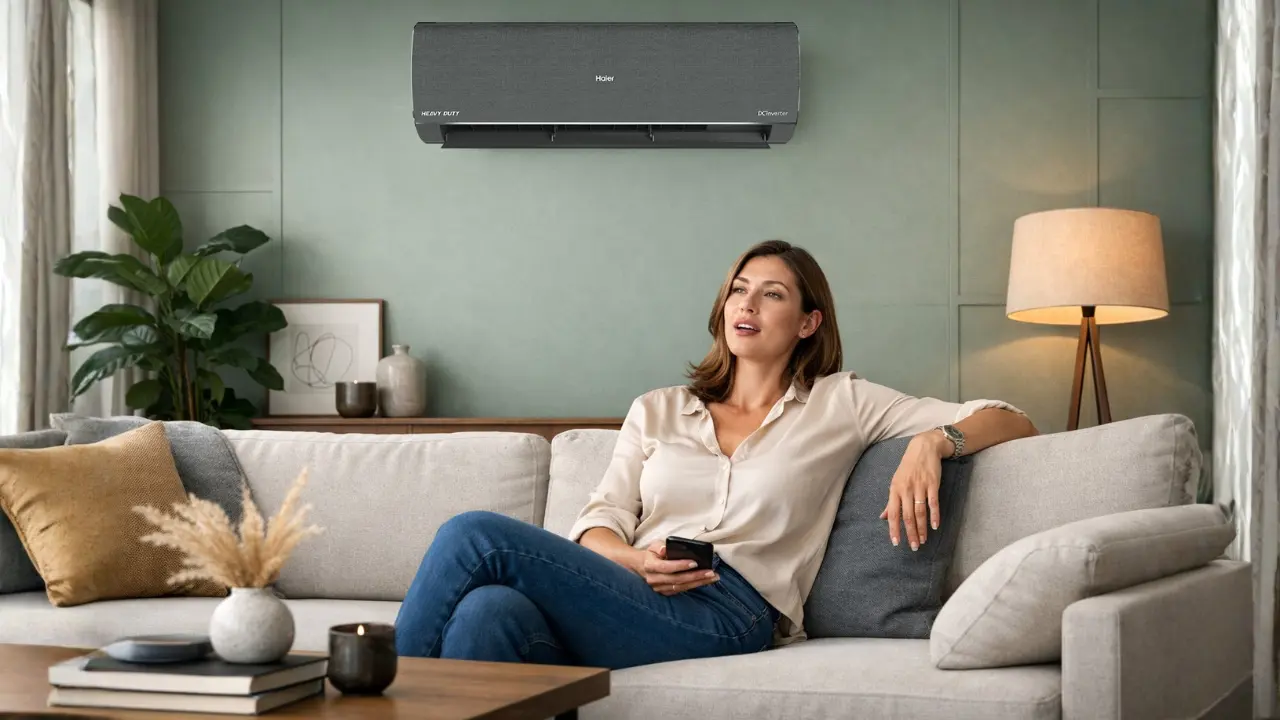

Efficient cooling for Indian homes means achieving steady comfort without constant adjustment, excess power use, or lifestyle compromise.
It is about cooling that understands heat, humidity, occupancy, and daily routines, then responds quietly in the background. The best systems today do not just cool rooms. They adapt to how Indian homes actually live, season after season.
The Indian heat problem is not just about temperature
It starts with a familiar scene.
You come home in May.
The lift is warm.
The corridor holds the day’s heat.
You switch on the AC and wait.
Ten minutes later, the room is cold but uneven.
The sofa feels fine.
The bed does not.
The power meter spins faster than expected.
This is not because Indian summers are harsh.
It is because most cooling systems still assume uniform rooms and predictable behaviour.
Indian homes are neither.
We cook with spices that heat the air.
We open balconies in the evening.
Parents sleep early.
Kids stay up later.
Work-from-home has turned bedrooms into offices.
Efficient cooling begins by acknowledging this reality.
Why traditional cooling struggles in Indian homes
Most conventional AC systems are built around a simple idea.
Cool the entire room.
Hold a fixed temperature.
Repeat.
That logic worked when homes were simpler and electricity was cheaper.
Today, it creates three invisible problems.
Problem one: Overcooling without comfort
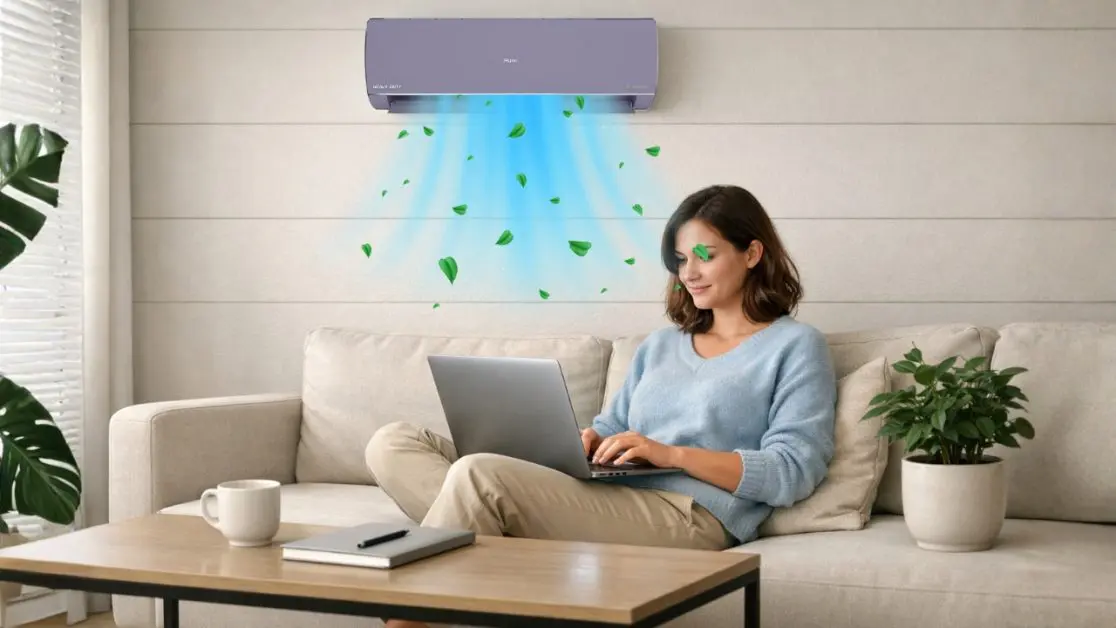
Cooling the entire room wastes energy when only one corner is in use.
A single person on a sofa does not need the whole room chilled.
Problem two: Manual control fatigue
Remote adjustments become a daily habit.
Temperature up.
Fan speed down.
The swing angle changed again.
Comfort should not feel like work.
Problem three: Power bills that surprise
Electricity consumption spikes quietly during long summers.
Most families realise it only when the bill arrives.
Efficient cooling solves all three together, not separately.
Efficient cooling starts with understanding behaviour
The smartest shift in cooling technology is subtle.
Systems now observe before they act.
They look at:
- Room temperature changes
- Time of day
- Occupancy patterns
- Seasonal humidity
- Past usage habits
Then they respond.
This is where modern AI-powered climate systems change the experience entirely.
Not by blasting colder air.
But by reducing unnecessary effort.
According to Haier’s AI-Atmox platform, newer systems can analyse environmental conditions and usage behaviour in real time to prevent overcooling and optimize energy use automatically .
That is a design philosophy shift.
From control to intelligence.
What efficient cooling looks like in real Indian homes
Let us ground this in lived scenarios.
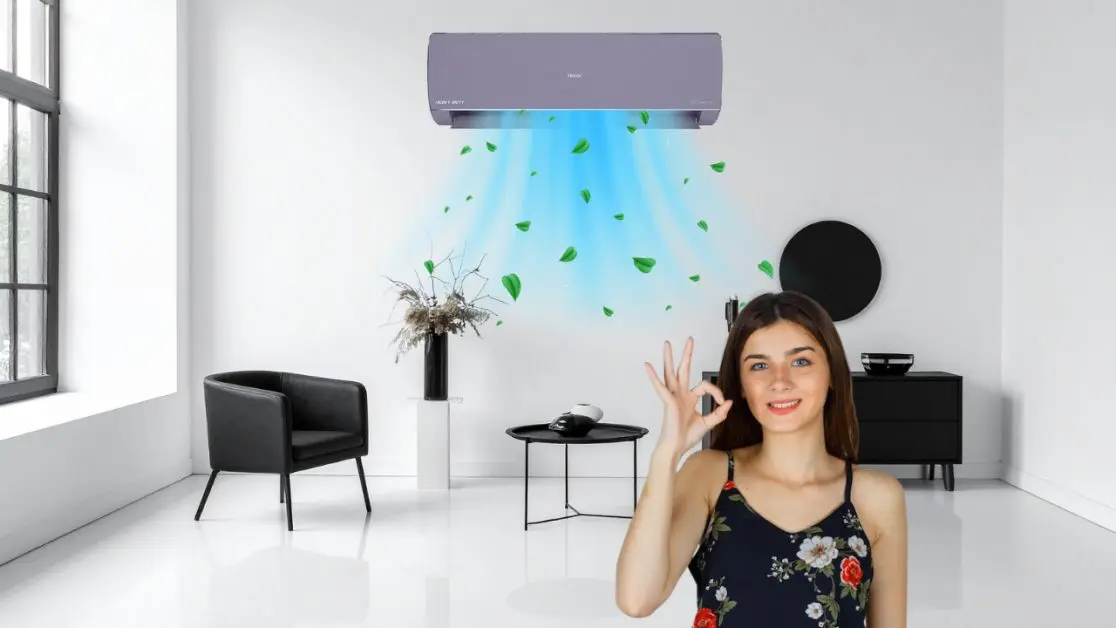
Scenario 1: The work-from-home afternoon
One person.
Laptop open.
Ceiling fan running.
Efficient cooling focuses airflow where the person sits.
It reduces output in unused corners.
Power consumption drops without sacrificing comfort.
Scenario 2: The family evening
Parents in the living room.
Kids moving in and out.
Kitchen heat rises.
An intelligent system adjusts cooling dynamically as occupancy changes.
No one reaches for the remote.
The room stays balanced.
Scenario 3: Late-night sleep
The body cools naturally at night.
The room does not need the same intensity.
Efficient cooling eases output automatically.
Noise reduces.
Energy use drops.
Sleep improves.
This is not luxury behaviour.
It is appropriate behaviour.
The hidden system behind energy savings
Energy efficiency is often marketed as a number.
Five stars.
Four stars.
Annual units saved.
But real efficiency is behavioural.
Three layers of efficient cooling
1. Environmental awareness
Systems read temperature, humidity, and airflow patterns.
2. Human presence awareness
Cooling responds to whether someone is actually in the room.
3. Usage learning
The system remembers preferences and routines over time.
When all three work together, efficiency becomes effortless.
You do not save power by thinking harder.
You save power by removing unnecessary decisions.
Why Indian homes need adaptive cooling, not stronger cooling
The instinctive solution to heat is more power.
Bigger compressors.
Lower temperatures.
Faster cooling modes.
This creates short-term relief and long-term problems.
Indian summers are long.
Humidity fluctuates daily.
Power infrastructure is under strain.
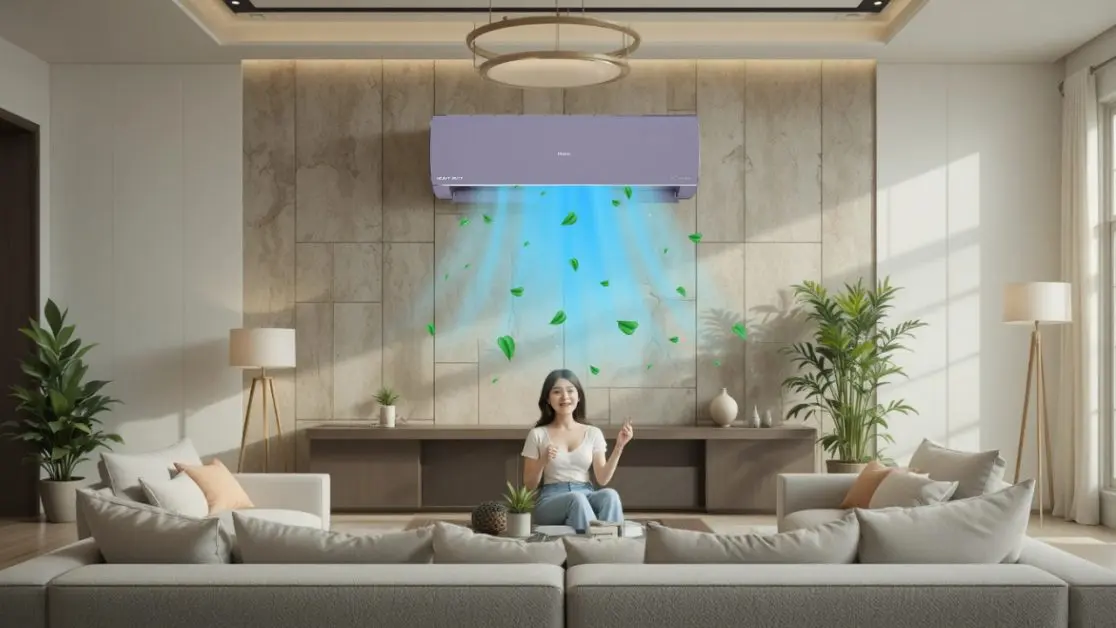
Adaptive cooling solves for duration, not bursts.
It cools:
- Less aggressively when possible
- More precisely when needed
- Intelligently over time
That balance matters.
Efficient cooling is also about cleaner systems
Another overlooked aspect is cleanliness.
Dust accumulation reduces heat exchange efficiency.
Moisture inside units affects airflow.
Performance drops quietly.
Modern systems now include automated self-cleaning cycles for indoor and outdoor units, maintaining efficiency without manual servicing.
Cleaner systems cool faster.
They use less power.
They last longer.
Efficiency is not just electronics.
It is maintenance intelligence.
The cost-benefit equation Indian households actually care about
Let us make this practical.
Costs
- Slightly higher upfront price
- Learning curve of new features
Benefits
- Lower seasonal electricity bills
- Less manual adjustment
- More consistent comfort
- Longer appliance lifespan
Over multiple summers, the math stabilises quickly.
Efficient cooling is not about spending less today.
It is about wasting less every day.
Why efficient cooling feels calmer
There is a psychological layer here.
When systems work predictably, mental load reduces.
No guessing.
No tweaking.
No second-guessing bills.
The room feels settled.
The home feels quieter.
That calm is not accidental.
It is designed.
How Haier fits into this shift without forcing attention
Haier’s approach to cooling does not rely on loud feature lists.
It focuses on:
- Adaptive climate control
- Power monitoring transparency
- Behaviour-based optimisation
- Self-maintaining systems
The result is cooling that blends into daily life instead of demanding interaction.
When technology disappears, trust increases.
The bigger implication for Indian homes
Efficient cooling is not just about appliances.
It reflects a broader shift in how Indian households think about comfort.
From:
- Manual to automatic
- Reactive to predictive
- Excess to balance
Homes are becoming smarter not because they want more technology, but because they want less effort.
The insight worth remembering
Cooling should not make decisions harder.
It should remove decisions altogether.
Efficient cooling succeeds when you stop noticing it.
When the room feels right without explanation.
When the bill feels fair without calculation.
That is not just good engineering.
That is good living.
And in Indian homes, where heat shapes daily rhythms, that quiet intelligence matters more than ever.
Frequently Asked Questions
Is Indian heat really different from other countries, or is that just marketing?
It is genuinely different from long summers, fluctuating humidity, cooking heat, open balconies, and mixed occupancy patterns make cooling more complex.
Why does my electricity bill spike without me feeling extra comfort?
Overcooling unused space wastes power without improving personal comfort.
Are star ratings enough to judge real energy efficiency?
No. Star ratings measure lab conditions, not daily behaviour, occupancy, or usage patterns.
What does ‘AI cooling’ actually mean in a home AC?
It means the system observes temperature, humidity, time, and usage patterns before adjusting output.
How does behaviour-based cooling save energy?
By reducing unnecessary cooling instead of increasing power.
Do I really need full-room cooling when I’m working alone at home?
No. Targeted airflow delivers comfort with lower energy use.
Why does nighttime cooling need to be different?
Because the body naturally cools during sleep excessive cooling disrupts rest and wastes power.