
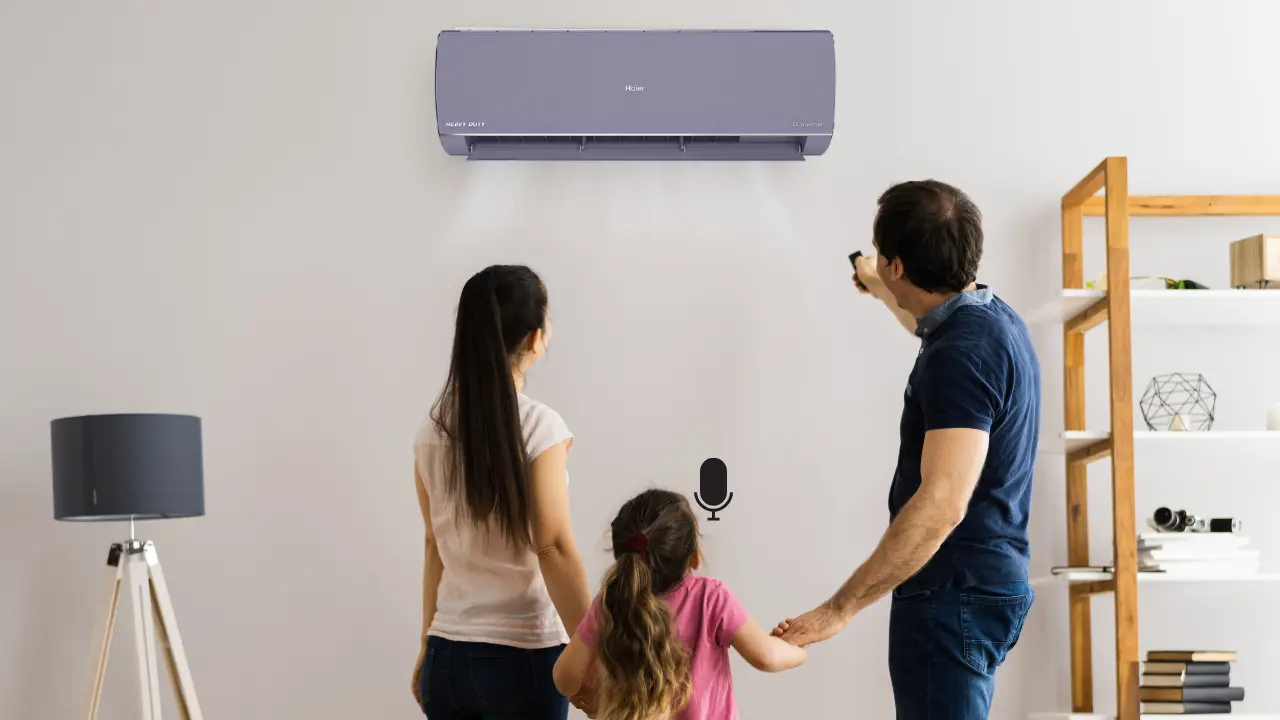

Effortless comfort today means that your home responds the moment you speak, without apps, without screens, without friction.
Direct Voice Control technology lets you manage cooling with simple spoken commands, turning everyday moments into smoother, calmer experiences. No learning curve. No extra steps. Just comfort that listens.
That is the shift modern Indian homes are quietly embracing.
Not louder tech.
Smarter presence.
Why does comfort feel different in Indian homes today?
Indian homes are busy systems.
Morning alarms overlap with pressure cookers.
Evenings mix office calls with homework questions.
Nights are split between OTT shows, ceiling fans, and AC remotes that vanish exactly when you need them.
Comfort used to mean adjusting things manually.
Now it means removing effort entirely.
The real upgrade is not colder air.
There are fewer decisions.
Direct Voice Control changes the relationship between people and appliances. Instead of managing devices, you simply state intent.
“Switch on the AC.”
“Make it cooler.”
“Turn it off.”
The system listens. The room responds.
According to appliance usage studies in India, over 60 percent of users adjust their AC settings multiple times a night during summer months. Each adjustment breaks rest. Voice-based control removes that interruption loop.
Less effort creates better rest.
Better rest changes everything.
What Direct Voice Control actually does differently
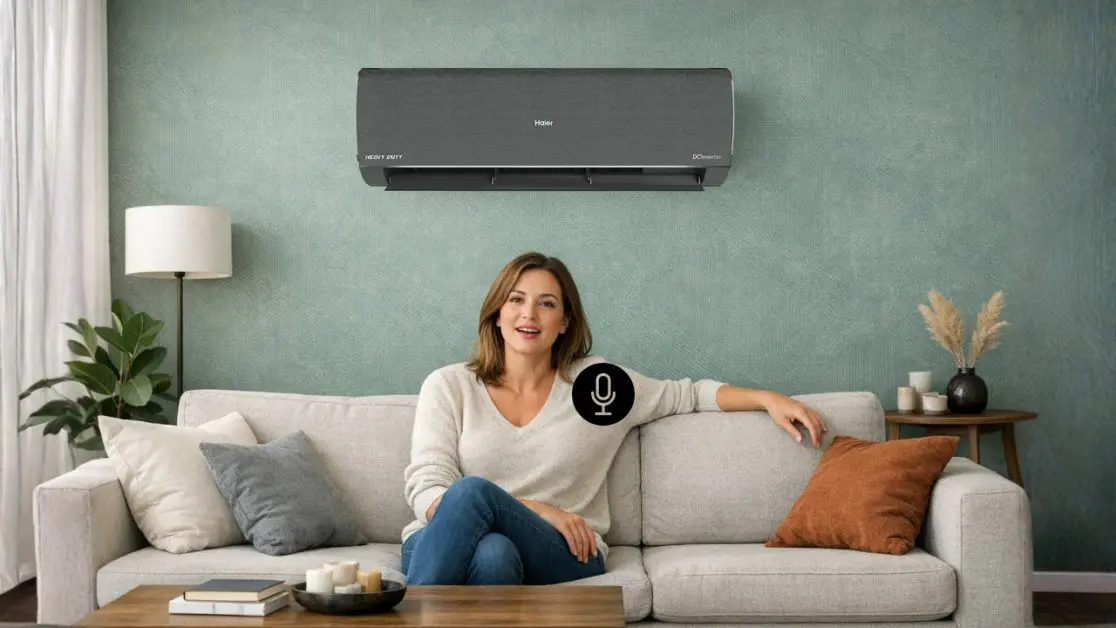
Voice assistants are not new.
What is new is direct voice control built into the appliance itself.
This distinction matters.
Traditional smart control
- Needs WiFi stability
- Depends on apps
- Requires pairing and updates
- Breaks when phones are charging or misplaced
Direct Voice Control
- Works instantly
- Does not rely on constant app access
- Responds in real time
- Feels natural inside daily routines
Some advanced air conditioners now allow voice commands even without WiFi, using inbuilt recognition systems. This removes a major friction point for Indian households where connectivity fluctuates.
When technology disappears into the background, comfort comes forward.
That is the real innovation.
A real evening scenario most homes recognise
You come back after a long commute.
Keys in one hand. Grocery bags in the other.
Humidity follows you inside.
Normally, this is the moment you juggle bags to find the remote.
Now imagine saying one sentence instead.
“Hello. I am here.”
Cooling begins before you even sit down.
This is not a feature.
It is a behavioural shift.
According to smart home adoption data, convenience driven features see higher daily usage than novelty driven ones. Voice control sticks because it fits human behaviour, not because it feels futuristic.
People do not want to manage homes.
They want homes to manage themselves.
The hidden system behind effortless cooling
Direct Voice Control works best when paired with intelligent climate systems.
Here is where the invisible layers matter.
From Haier’s AI powered climate platform, certain ACs integrate voice control with learning algorithms that adjust cooling based on environment, usage, and occupancy patterns. This includes capabilities like AI Climate Control, AI Pre Cooling, and AI Target Cooling as outlined in Haier’s.
Voice is just the trigger.
Intelligence does the rest.
The system learns
- Room size and layout
- Usage times
- Temperature preferences
- Seasonal humidity changes
The result is cooling that feels personal without being programmed.
Effortless comfort is not accidental.
It is designed.
Three ways Direct Voice Control fits different Indian lifestyles
1. Working professionals living solo
Time is scarce. Mental energy is scarcer.
Voice control removes micro decisions at the end of long days. You speak once. Comfort follows.
Benefit:
- Faster transitions from work mode to rest mode
- Fewer interruptions
- Better sleep cycles
Cost:
- Minimal learning time
- Zero behaviour change required
2. Families with kids and elders
Remotes are confusing. Apps intimidate.
Voice is universal.
Children can request cooling without touching controls. Elders avoid complex settings entirely.
Benefit:
- Inclusive usability
- Fewer mistakes
- Safer, simpler interaction
Cost:
- Requires clear voice prompts
- Works best in quieter indoor settings
3. Couples setting up new homes
New homes are full of decisions.
Furniture. Storage. Lighting. Appliances.
Voice enabled appliances reduce decision fatigue later. The home feels responsive instead of demanding.
Benefit:
- Seamless daily routines
- Modern without being overwhelming
- High long term satisfaction
Cost:
- Slight premium for intelligence
- Higher value over years of use
Smart comfort pays back in time saved.
Why this matters beyond convenience
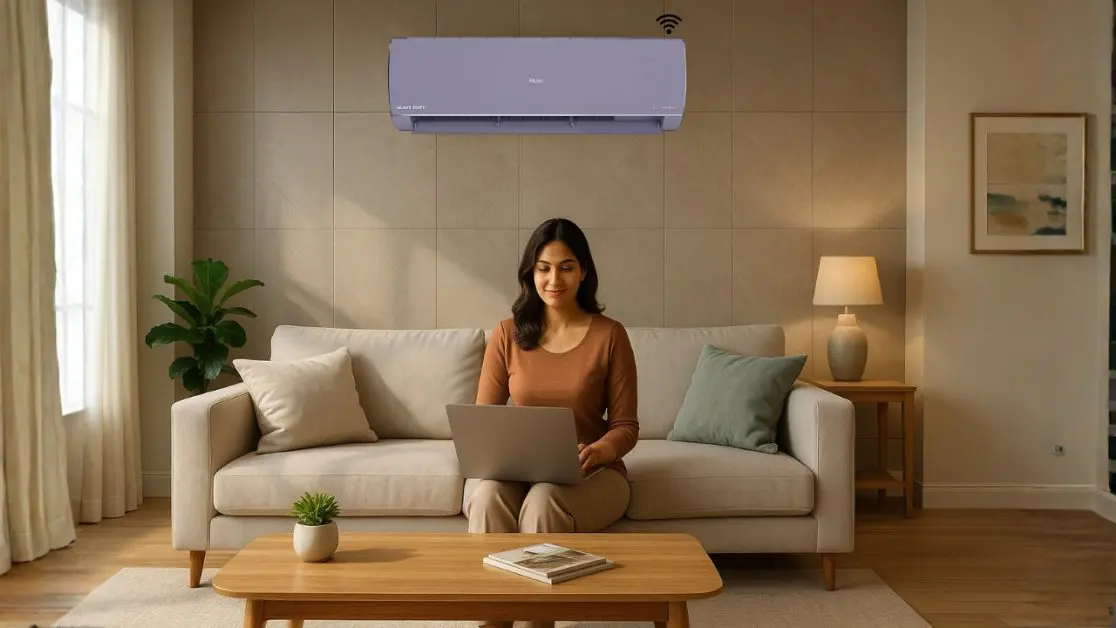
Comfort shapes behaviour.
When cooling becomes effortless:
- People rest better
- Energy use becomes more balanced
- Overcooling reduces automatically
- Bills stabilise
AI driven climate systems combined with voice control optimize usage patterns.
According to internal performance metrics shared by appliance manufacturers, intelligent cooling systems can reduce unnecessary energy consumption by adjusting output dynamically based on occupancy and need.
Less waste.
More comfort.
This is sustainability through behaviour, not sacrifice.
Festive seasons reveal the true value
Indian festivals stress homes in unique ways.
More people.
More cooking.
More heat.
During Diwali or summer weddings, AC usage spikes dramatically. Voice control becomes invaluable when hands are busy and rooms are full.
One spoken command adjusts the environment without disrupting the moment.
Technology should never interrupt celebration.
It should protect it.
The Haier approach to quiet intelligence

Haier India designs appliances with a specific philosophy.
Technology must adapt to life, not the other way around.
In select Haier AC models, Direct Voice Control integrates with AI powered climate management that:
- Predicts arrival and pre cools rooms
- Targets cooling where people sit
- Adjusts power based on occupancy
- Balances comfort and energy use automatically
This layered system approach is detailed in the Haier AI Atmox framework, which focuses on comfort, savings, and service as connected outcomes rather than isolated features .
The appliance becomes a system.
The system becomes invisible.
That is how trust is built.
A simple truth about future homes
The future of smart homes is not about controlling everything.
It is about controlling less.
Voice is the most human interface we have. When appliances respond to voice naturally, they stop feeling like machines and start feeling like part of the home.
Effortless comfort is not luxury anymore.
It is an expectation.
Homes that listen create calmer lives.
Calmer lives make better decisions.
And that is where technology earns its place.
What this means going forward
Direct Voice Control is not a trend.
It is a behavioural correction.
As Indian homes grow smarter, the winners will be appliances that reduce thinking, not add to it. Systems that learn quietly. Interfaces that disappear.
The most powerful technology is the one you stop noticing.
And when comfort arrives the moment you speak, life feels just a little more sorted.
That is not innovation for attention.
That is innovation for living.
Frequently Asked Questions
Will elders and children find this confusing?
No. Voice is the most universal interface. Children and elders can simply speak naturally without learning buttons, apps, or settings.
Will it stop overcooling during the night?
When paired with intelligent climate systems, the AC learns usage patterns and adjusts output automatically, reducing unnecessary cooling while maintaining comfort.
Do I need to learn specific commands?
No. Commands are conversational and intuitive. The system is designed to understand intent rather than rigid phrasing.
Is Direct Voice Control a trend or a long-term shift?
It’s a behavioural correction. As homes get smarter, the winning technologies will be the ones that reduce thinking, not add to it.
What does “effortless comfort” actually mean for future homes?
It means homes that listen, adapt quietly, and let people focus on living, not managing devices.