

Uneven cooling zones at home happen when airflow, room layout, insulation, and appliance design do not work together.
The result is simple: one corner feels chilly, another feels warm.
Modern smart air conditioners solve this by sensing space, adjusting airflow, and directing cooling exactly where comfort is needed.
Cooling is not only about temperature.
It is about distribution.
And most homes quietly struggle with this.
Walk into many Indian living rooms during peak summer. One person sits under the AC and reaches for a blanket. Another person across the sofa still feels warm.
Same room. Same air conditioner. Different comfort.
That small mismatch reveals a larger truth.
Cooling technology does not fail because they are weak. They fail because they are uneven.
And uneven cooling creates invisible discomfort inside otherwise comfortable homes.
The Living Room Problem Every Family Recognises
Picture a familiar evening.
The family gathers for an IPL match. The AC is running. The temperature reads 24°C.
Yet the room feels strangely inconsistent.
- The person near the AC vent feels cold
- Someone sitting near the window still feels warm
- The person in the dining corner complains about humidity
Nothing is technically broken.
But comfort is uneven.
This happens because air moves like water. It follows paths of least resistance.
Furniture blocks airflow. Walls trap pockets of heat. Sunlight warms certain zones faster than others.
Cooling is not a single event.
It is a system of movement.
Why Uneven Cooling Happens in Most Homes
Many people assume the AC temperature setting determines comfort.
It does not.
Comfort depends on how air circulates inside the room.
Several everyday factors quietly create uneven cooling zones.
Common Causes of Uneven Cooling
| Factor | What Happens | Result |
| Poor airflow direction | Cold air blows in one direction only | Certain areas stay warm |
| Furniture blocking airflow | Sofas, wardrobes disrupt circulation | Cold pockets form near AC |
| Sunlight exposure | Windows heat certain areas faster | AC struggles to balance temperature |
| Incorrect AC size | Unit too small or too large | Cooling becomes inconsistent |
| Weak air throw | Air cannot reach distant corners | Far zones remain warm |
These problems are common in Indian homes where layouts combine living, dining, and kitchen areas.
Open floor plans look beautiful.
But they create complex airflow patterns.
Cooling a Room Is Like Lighting a Theatre
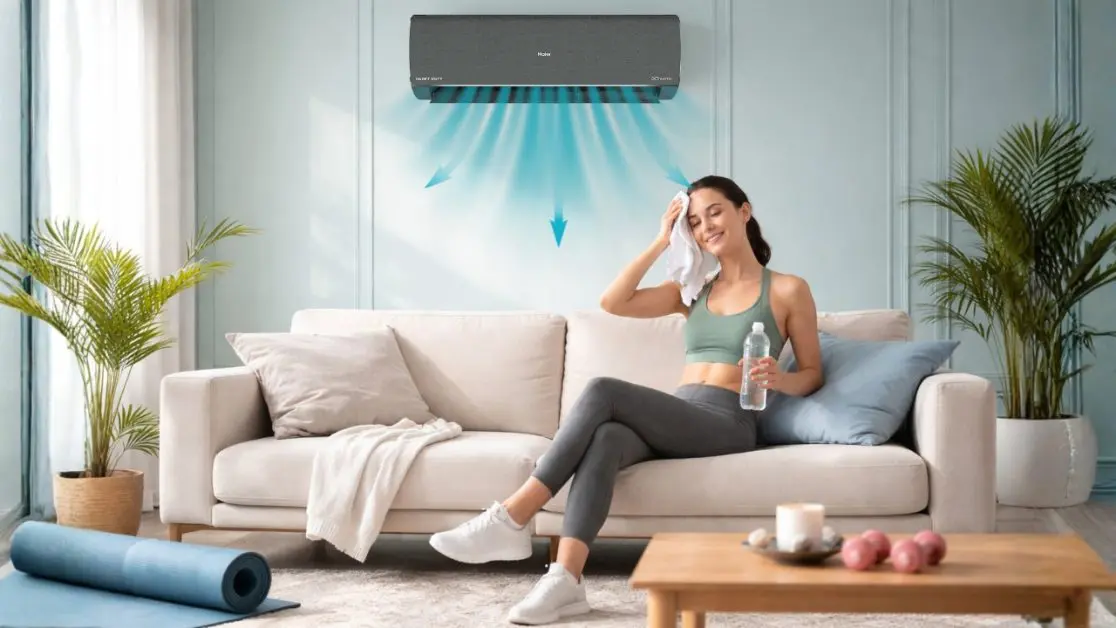
Think about how a theatre works.
The spotlight is not random. It is directed.
The same principle applies to cooling.
Traditional air conditioners cool the entire room blindly.
Smart technology cools strategically.
One approach focuses on power. Another focuses on precision.
Precision wins.
Three Ways Homes Try to Solve Uneven Cooling
Most households attempt solutions without realizing the underlying system.
Here are the three most common approaches.
1. Lowering the Temperature
The first instinct is simple.
Turn the AC down.
From 26°C to 24°C. Then to 22°C.
Cost
- Higher electricity bills
- Overcooling near the AC
- Still uneven comfort
Cooling harder rarely solves uneven airflow.
It simply wastes energy.
2. Adding More Fans
The second approach uses ceiling or pedestal fans to push air around.
Fans help circulation.
But they do not correct airflow direction.
Benefits
- Improved air movement
- Slight temperature balance
Limitations
- Fans move existing air
- They do not create targeted cooling
3. Smarter Cooling technology
The third approach changes the system itself.
Instead of forcing cold air everywhere, smart air conditioners focus on where cooling is needed.
Modern AI-powered technology now analyzes room layout and airflow to direct cooling to specific zones.
Some advanced technology even learns user habits and environmental conditions to adjust automatically.
This is where cooling begins to feel intentional.
How AI Cooling Eliminates Uneven Temperature Zones
Smart air conditioning introduces something traditional technology never had.
Awareness.
Advanced AI cooling technology studies three things:
- Room environment
- User behavior
- Airflow direction
For example, Haier air conditioners powered by AI Atmox technology continuously analyze temperature and environmental conditions to optimize cooling automatically.
Instead of relying on manual adjustments, the system adapts dynamically.
Cooling becomes responsive rather than reactive.
Target Cooling: The Quiet Revolution in Comfort
One of the most effective innovations in modern cooling is targeted airflow.
Traditional air conditioners cool the entire room equally.
But people do not occupy every corner equally.
AI-powered technology solves this by delivering cooling precisely where it matters.
According to Haier’s AI cooling system design, target cooling directs airflow toward the occupied area rather than cooling the entire room unnecessarily, improving comfort while reducing energy waste.
The result is immediate.
Cool air reaches people faster.
Energy consumption drops.
And uneven cooling zones disappear.
The Hidden Role of Human Detection
Here is another invisible system working quietly.
Human presence detection.
Advanced AC sensors can detect whether people are inside the room. When no activity is detected, the system automatically shifts to energy-saving mode.
That means:
- Cooling adjusts automatically
- Energy waste drops
- Comfort remains consistent when people return
Technology begins to behave less like a machine and more like a host.
Five Practical Ways to Reduce Uneven Cooling at Home
Even before upgrading appliances, small adjustments can dramatically improve airflow.
Here are five practical strategies many homes overlook.
1. Adjust AC Airflow Direction
Ensure the AC swing mode distributes air across the room rather than downward only.
Wide airflow prevents cold pockets.
2. Avoid Blocking the Air Path
Large furniture near the AC outlet disrupts cooling.
Maintain clear airflow zones.
3. Close Heat Sources
Sunlight entering through windows warms specific zones.
Curtains or blinds help stabilize room temperature.
4. Use Cross Air Circulation
Fans can help redistribute cooled air toward distant corners.
5. Choose ACs With Long Air Throw
Modern AC designs can push airflow deeper into large rooms.
Long air throw ensures cold air reaches every corner.
Why Modern Homes Need Smarter Cooling technology
Indian homes have changed.
Living rooms connect to dining areas. Kitchens open into common spaces. Apartments grow taller but rooms grow more complex.
Traditional cooling assumes rooms are simple boxes.
Modern homes are not.
They are dynamic environments with sunlight, people movement, furniture layouts, and changing weather patterns.
Smart cooling technology adapts to these variables automatically.
That shift changes everything.
Instead of manually managing comfort, technology manages it quietly in the background.
Comfort Is Not a Temperature. It Is a Balance
Here is the insight most people miss.
Cooling is not about numbers.
It is about balance.
Air movement. Temperature stability. Energy efficiency. Human comfort.
When those technologies align, something subtle happens.
The room feels right.
No one complains about being too cold. No one moves chairs to escape warm corners.
The environment simply works.
The Future of Home Cooling Is Invisible
The best technology disappears.
You do not notice it working. You only notice the comfort it creates.
Smart air conditioners powered by technology like Haier’s AI Atmox climate control quietly learn user habits, monitor environmental conditions, and optimize cooling automatically.
No constant adjustments.
No thermostat battles.
Just balanced comfort across the entire room.
The Real Goal: Even Comfort, Not Just Cold Air
Homes are emotional spaces.
They hold conversations, movie nights, exam preparation, and long summer afternoons.
Comfort shapes how those moments feel.
Eliminating uneven cooling zones does more than fix temperature differences.
It removes friction from daily life.
Because the best living spaces do not demand attention.
They simply support the rhythm of everyday living.
And sometimes, the quietest innovations are the ones that make a home feel perfectly comfortable.
Frequently Asked Questions
Why does my AC say 24°C but my room still feels uneven?
Because your AC controls temperature, not airflow distribution. Cold air may not be reaching all areas equally.
Do I need to replace my AC or just fix airflow issues?
Not always replaced. Start with airflow direction, room layout, and insulation before upgrading.
Is lowering the temperature the only way to feel comfortable?
No. Lowering temperature often increases bills and overcools one area while others stay warm.
How do I know if my AC size is wrong for my room?
If cooling feels inconsistent or takes too long, your AC might be undersized or oversized and cycling poorly.
Should I invest in a smart AC or just use fans?
Fans help circulate air, but smart ACs actively optimize airflow, making them more effective long-term.
What does AI cooling actually do in an AC?
It analyzes room conditions, user behavior, and airflow to adjust cooling automatically.
How does targeted cooling work?
It directs airflow toward occupied areas instead of cooling empty spaces.
Does AI cooling save electricity?
Yes. By avoiding unnecessary cooling, it reduces energy consumption.
What is human detection in ACs?
Sensors detect presence and adjust cooling or switch to energy-saving mode.
Can smart ACs really eliminate uneven cooling zones?
Yes, by continuously adapting airflow and cooling patterns.