
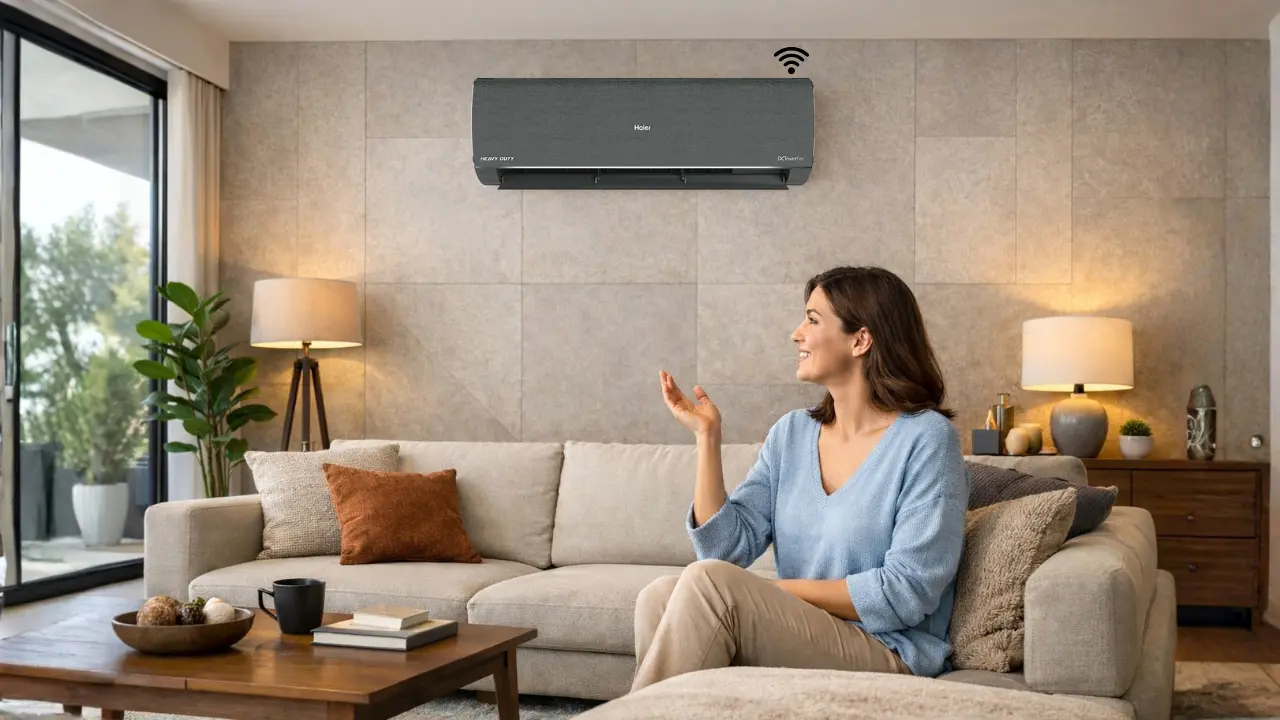

The end of remote control dependency means home appliances are becoming intelligent enough to operate without constant manual input.
Instead of searching for remotes, modern appliances respond to voice, behaviour patterns, and environmental signals. AI-powered systems like Haier’s AI Atmox platform learn how people use their homes and automatically adjust cooling, comfort, and energy usage.
The remote solved one problem.
Standing up.
AI solves the bigger one.
Thinking about settings at all.
The remote control was always a temporary fix.
Walk into any Indian living room around 9 PM.
Someone is looking for the AC remote.
Someone else says it is under the sofa cushion.
Another person presses the temperature button repeatedly.
This moment is small.
But it reveals something important.
For decades, appliances depended on human instructions.
Every temperature change required a button press.
Every cooling adjustment required someone to intervene.
The remote removed physical effort.
But it never removed mental effort.
Modern smart appliances are changing that system.
Why Remote Controls Are Slowly Disappearing
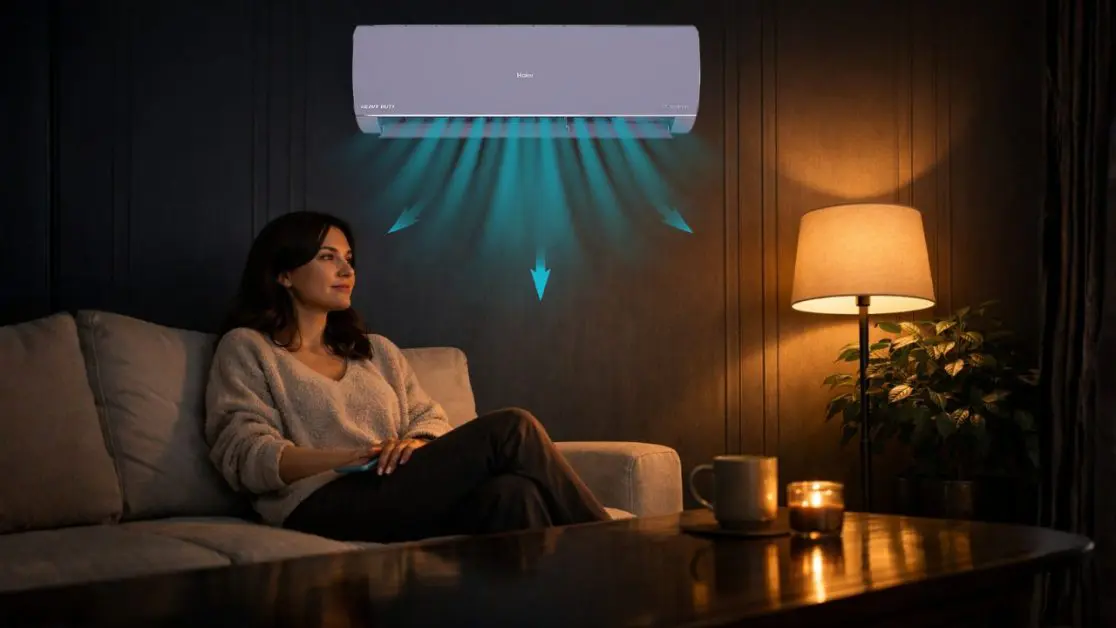
The real shift is not about eliminating a device.
It is about replacing manual control with intelligent automation.
Three forces are driving this change inside modern homes.
1. Homes Are Becoming Context-Aware
Traditional appliances wait for commands.
Smart appliances observe conditions.
They respond to signals like:
- Room temperature changes
- Outdoor weather shifts
- Human movement in a room
- Electricity usage patterns
Instead of asking someone to adjust settings, the system adapts automatically.
This is exactly how Haier’s AI Atmox climate platform works.
AI Atmox analyzes environmental conditions and adjusts cooling performance automatically to maintain comfort while reducing energy waste.
The appliance understands the room.
Then it acts.
2. AI Learns How People Live
A remote assumes users know the perfect setting.
But real life rarely works that way.
Different people prefer different temperatures.
Summer evenings feel different from afternoon heat.
Weekends look different from weekdays.
AI systems study these patterns.
Over time they learn:
- Preferred night temperature
- Daily cooling routines
- Seasonal weather patterns
- Typical energy usage
The result is a personalized cooling model.
AI Atmox continuously learns user behaviour and builds a consumption pattern to generate optimized cooling and energy plans automatically.
In simple terms:
The AC begins to understand the household.
The Invisible System Behind Remote-Free Homes
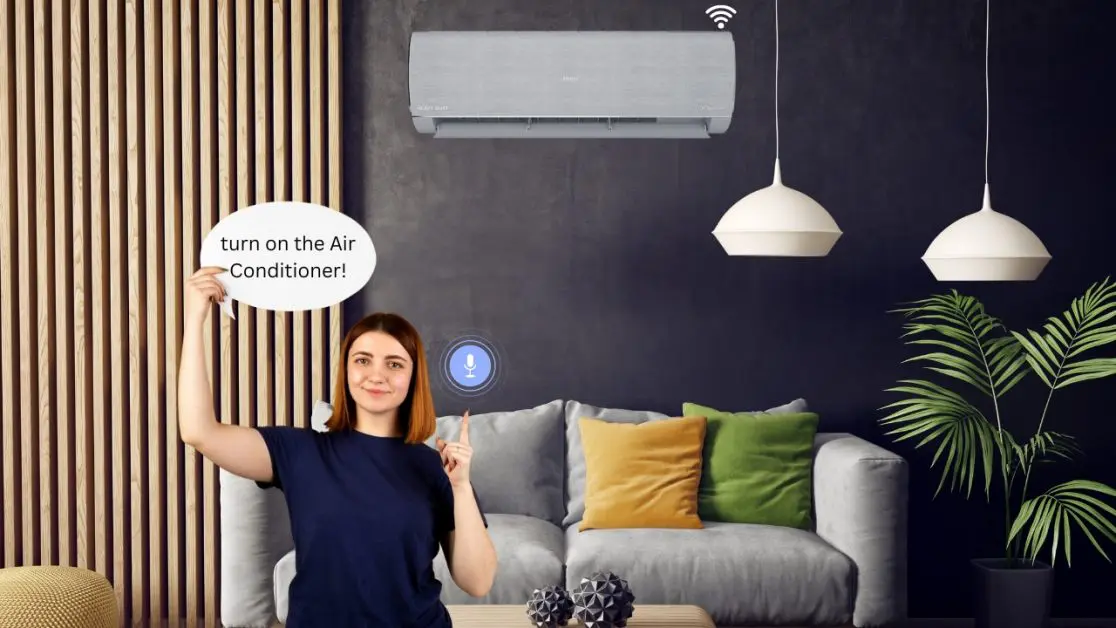
Look closely and you will see that smart homes rely on three hidden layers.
Layer 1: Environmental Sensors
Sensors constantly observe the room.
They measure:
- Temperature
- Humidity
- Air circulation
- Human presence
These signals give appliances awareness.
Without sensors, automation cannot exist.
Layer 2: AI Learning Models
The next layer is intelligence.
AI systems collect and analyse behavioural patterns such as:
| Data Collected | System Response |
| Temperature fluctuations | Cooling optimization |
| Room occupancy | Energy saving mode |
| User schedules | Predictive pre-cooling |
| Power consumption | Electricity monitoring |
These systems turn raw data into decisions.
This is where AI Atmox Neuro technology becomes important.
It combines environmental signals and human behaviour data to maintain balanced comfort and energy efficiency automatically.
Layer 3: Automated Action
Once patterns are understood, the system responds automatically.
For example:
- AI Pre-Cooling prepares the room before arrival
- AI Target Cooling directs airflow toward occupied areas
- AI Eco 2.0 Mode adjusts cooling levels for energy efficiency
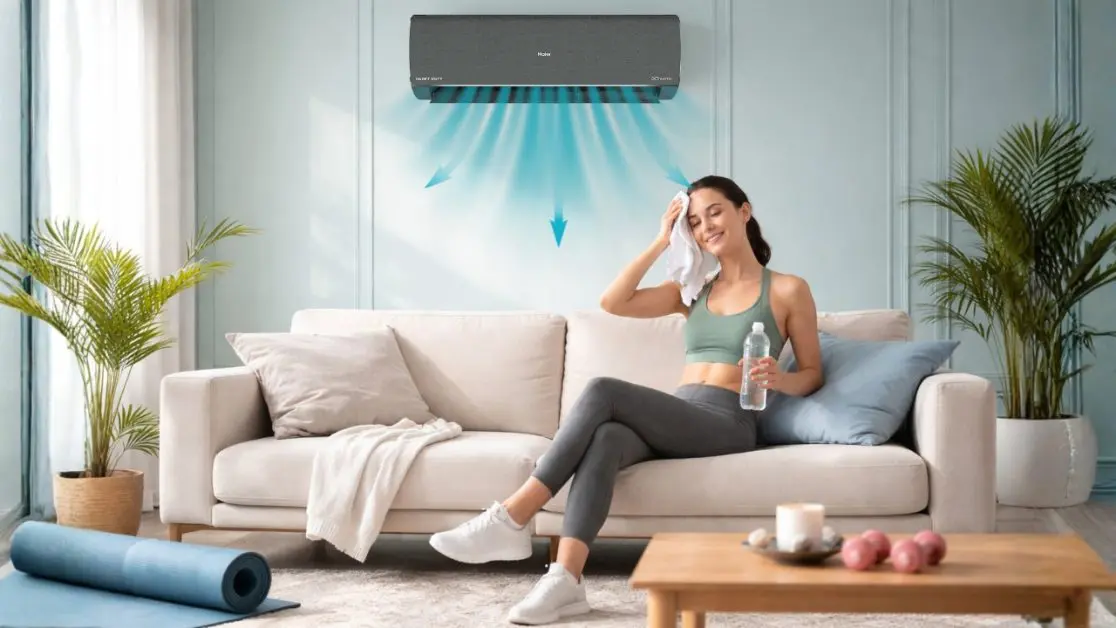
Instead of cooling an entire room blindly, targeted cooling delivers air precisely where comfort is needed.
This reduces both waiting time and electricity usage.
Comfort improves.
Energy waste drops.
The remote becomes unnecessary.
The Three Stages of Home Control Evolution
Modern homes are evolving through three stages of control.
Stage 1: Remote Control Era
The traditional system.
Benefits:
- Simple operation
- Immediate control
Limitations:
- Manual effort required
- No learning or adaptation
- Energy waste common
Stage 2: Smartphone Control
The next step introduced mobile apps.
Benefits:
- Remote operation from anywhere
- Energy tracking
- Advanced settings
Limitations:
- Still requires user decisions
- Manual control remains
Convenience improved.
Automation remained limited.
Stage 3: AI Autonomous Homes
This is where the real transformation happens.
With systems like Haier AI Atmox, appliances can:
- Predict user arrival and pre-cool rooms
- Detect human presence and adjust energy usage
- Track electricity consumption automatically
- Maintain ideal comfort levels without manual input
The system quietly manages itself.
What AI Atmox Looks Like in Real Life
Imagine a common weekday evening.
A working professional leaves the office.
As they approach their apartment building, AI Pre-Cooling begins preparing the room automatically based on location signals.
The AC turns on before arrival.
By the time they walk inside, the temperature is already comfortable.
No remote needed.
Now imagine another moment.
Everyone leaves the room.
AI Human Detection sensors identify the absence and automatically reduce cooling to save energy.
This prevents unnecessary power consumption while maintaining efficiency.
These adjustments happen quietly.
No one notices.
But electricity savings add up over time.
Smart Cooling Also Means Smarter Energy Use
The biggest advantage of AI climate systems is not convenience.
It is efficient.
Manual cooling systems often waste energy.
AI systems optimize it.
Here is the difference.
| Traditional AC | AI Atmox Smart Cooling |
| Manual temperature adjustments | Automatic climate analysis |
| Runs continuously | Occupancy detection saves power |
| Entire room cooling | Targeted airflow |
| No usage visibility | Electricity monitoring dashboard |
AI Atmox Power Manager also provides real-time electricity monitoring, showing usage in graphical formats and helping households understand energy consumption patterns.
Understanding energy use leads to smarter decisions.
Smarter decisions lead to lower bills.
The Psychology of Effortless Homes
Technology becomes powerful when it disappears.
Think about elevators.
Nobody studies the control system.
People press a button.
The elevator moves.
Smart appliances are moving in the same direction.
Instead of asking people to manage technology, technology manages itself.
The goal is simple.
Remove everyday friction.
Because when routine decisions disappear, homes feel calmer.
The Quiet Future of Smart Living
The remote control will not vanish overnight.
But its role will continue shrinking.
Homes are moving toward systems that rely on:
- AI learning
- voice interaction
- environmental sensing
- predictive automation
This is the philosophy behind platforms like Haier AI Atmox.
The system observes.
Learn.
Adapts.
And responds automatically.
A Final Thought
For decades, technology demanded attention.
Now it removes it.
The end of remote control dependency is not about eliminating a gadget.
It is about creating homes that understand people.
Homes that respond quietly.
Homes that work in the background.
Because the best technology does not ask to be noticed.
It simply makes life easier.
Frequently Asked Questions
Why do I feel annoyed every time I have to adjust my AC settings?
Because it creates repeated micro-decisions. Over time, these small actions build mental fatigue, especially when comfort should feel effortless.
Do I really need to keep changing temperature settings throughout the day?
Not with AI systems. Smart ACs learn your routine and automatically adjust based on time, weather, and your preferences.
Why does using a remote still feel like effort even though it’s convenient?
The remote removed physical effort, but not mental effort you still have to think, decide, and act every time.
How does an AC know when I’m entering the room?
Through motion sensors and location-based triggers (like smartphone proximity).
What is AI Pre-Cooling and how does it work in real life?
It uses your location and routine to start cooling before you arrive, so the room is ready.
Can my AC really learn my daily routine?
Yes. Systems like Haier AI Atmox analyze patterns like sleep time, work schedule, and seasonal habits.
What is AI Eco Mode and how does it save electricity?
It adjusts cooling intensity based on occupancy and environmental conditions to reduce power usage.