


Temperature guessing ends when your AC starts thinking for you.
The end of temperature guessing in Indian homes begins when cooling shifts from manual adjustment to intelligent automation.
AI powered climate systems now analyse room conditions, learn usage patterns, detect human presence, and optimise energy in real time. No remote battles. No overcooling. Just comfort that adapts quietly.
That is the short answer.
Now let us talk about the real problem.
Why do Indian homes still guess the right temperature?
Picture a summer evening in Mumbai.
The day touched 36°C. Humidity stayed high. You walk in tired. Someone sets the AC to 18°C. Within 20 minutes, the room feels like Shimla. Another person raises it to 26°C. Now it feels warm. The remote becomes a negotiation tool.
This is temperature guessing.
According to the India Meteorological Department, many Indian cities now face longer heat waves and erratic humidity swings. Peak power demand crossed 240 GW in 2023, as per the Central Electricity Authority. Air conditioning drives a major part of that demand.
Yet most homes still rely on:
- Manual temperature setting
- Fixed timers
- Trial and error
Comfort becomes reactive instead of predictive.
And reactive systems always waste energy.
If comfort depends on constant adjustment, the system is incomplete.
The Hidden Cost of Manual Temperature Control
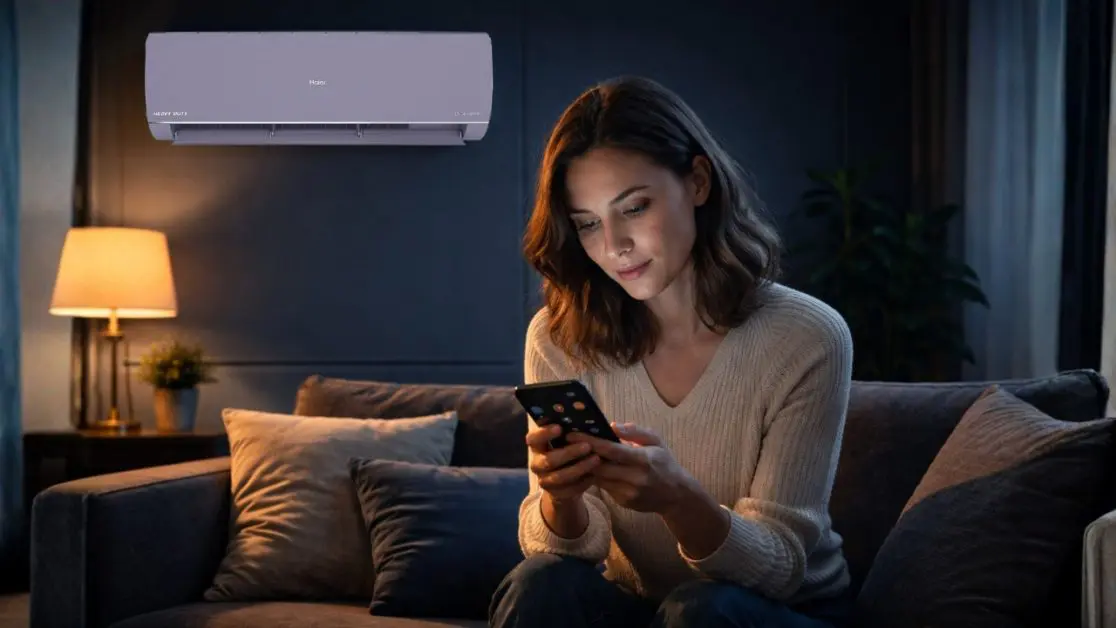
Temperature guessing looks harmless. It is not.
It creates three invisible costs.
1. Energy Waste
Setting 18°C when 24°C would suffice increases compressor load. Bureau of Energy Efficiency estimates show that every 1°C lower setting can increase electricity consumption by 6 percent.
2. Inconsistent Comfort
Rooms cool unevenly. The person near the AC feels cold. The person across the room sweats.
3. Mental Friction
Tiny daily decisions drain attention. Work from home professionals already manage calls, deadlines, children, and devices. Adjusting temperature repeatedly adds noise.
Here is what guessing typically leads to:
| Behaviour | Short Term Impact | Long Term Impact |
| Frequent temp changes | Compressor strain | Higher maintenance |
| Overcooling | Temporary relief | Higher bills |
| Ignoring humidity | Sticky discomfort | Reduced sleep quality |
The system demands supervision.
That is the real problem.
What Happens When Climate Control Becomes Intelligent?
Now imagine this.
You leave the office in Gurgaon. As you enter a 100 metre radius of home, the AC begins pre cooling automatically. By the time you open the door, the room feels balanced.
This is not science fiction.
AI powered systems like Haier’s AI Atmox platform analyse geo location, ambient temperature, and past usage patterns to predict arrival and initiate cooling .
No manual scheduling.
No last minute rush.
No temperature shock.
AI Pre Cooling Changes the Sequence
Traditional logic:
- Arrive home
- Switch on AC
- Wait 10 minutes
AI logic:
- Detect approach
- Start cooling
- Deliver comfort instantly
The order changes. So does the experience.
From Guessing to Learning: Atmox Neuro and AI Climate Control
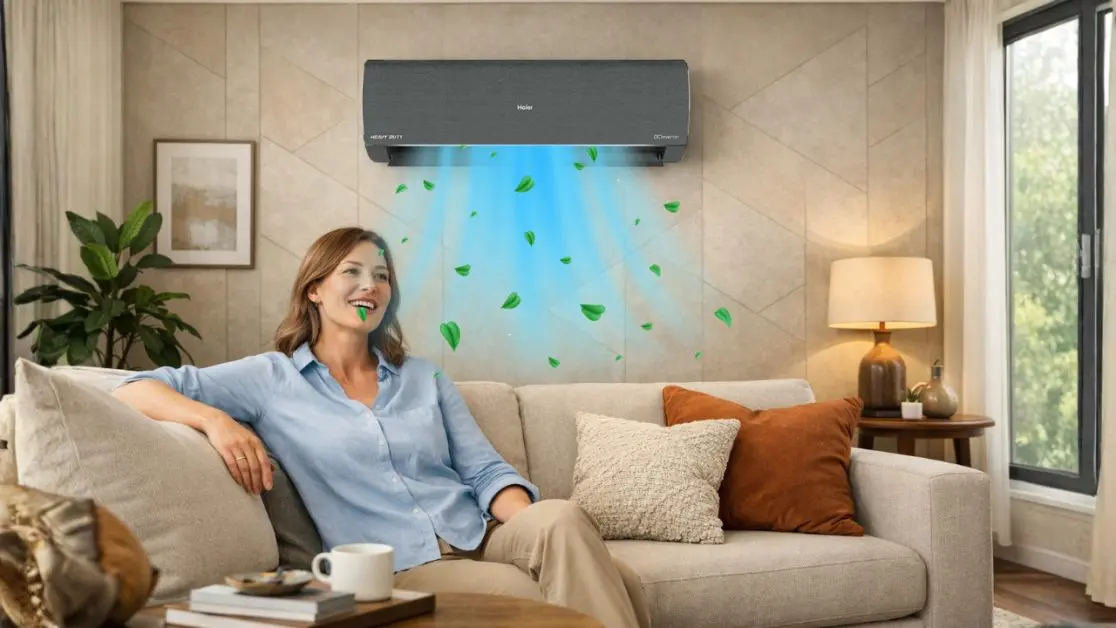
The real breakthrough is not automation.
It is learning.
AI Climate Control collects environmental data and adapts cooling dynamically to prevent overcooling while saving power .
It tracks:
- Mode usage
- Duration
- Temperature preferences
- Power consumption
Then builds a personalised cooling model.
Think of it like a bookstore owner who remembers your favourite authors. You do not explain yourself every time.
The system remembers.
And adjust.
When machines learn habits, homes feel intuitive.
Targeted Cooling Instead of Blanket Cooling
Most ACs cool the entire room uniformly.
But people occupy zones.
Haier’s AI Target Cooling uses installation position data and cloud intelligence to focus cooling on the desired area .
That creates two outcomes:
- Faster comfort
- Reduced energy waste
Instead of cooling empty corners, airflow follows presence.
This is systems thinking in action.
You do not solve discomfort by lowering temperature.
You solve it by directing airflow intelligently.
AI Eco 2.0 Mode: The End of Overcooling
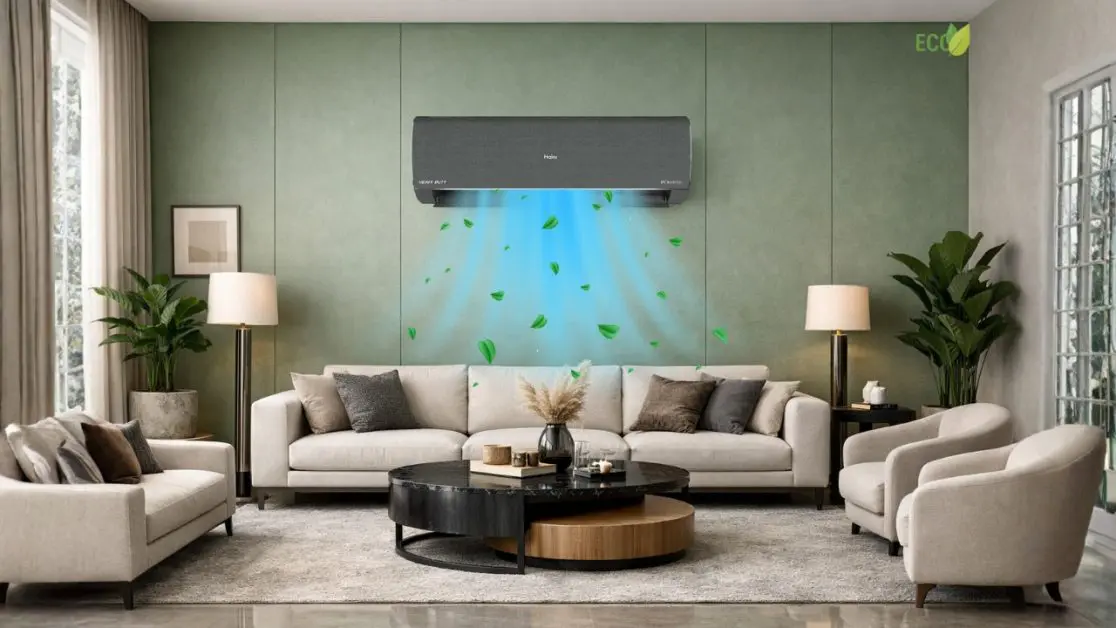
Overcooling happens because fixed settings ignore real time temperature gaps.
AI Eco 2.0 adjusts automatically in layers :
- L1 Mode when gap exceeds 3°C
- L2 Mode when gap is between 1°C and 3°C
- L3 Mode when gap is 1°C or less
If no activity is detected, the system shifts to Auto L3 in 15 minutes and powers off in 30 minutes.
No reminders needed.
Here is what that means practically:
| Scenario | Manual System | AI Eco 2.0 System |
| Room reaches set temp | Keeps running | Reduces intensity |
| Room empty | Continues cooling | Switches to saving mode |
| Long idle | Wastes power | Auto shut down |
Energy conservation becomes predictive.
Not reactive.
Electricity monitoring 2.0 Makes Comfort Transparent
Most households see the electricity bill once a month. Too late to adjust.
Atmox Power Manager provides graphical and calendar views of usage .
It allows:
- Real time cost display
- Mode tracking
- Custom energy targets
- Currency based monitoring
When cooling costs become visible daily, behaviour shifts.
This is behavioural science applied to appliances.
People improve what they can see.
Self Cleaning: The Overlooked Temperature Factor
Dust buildup reduces cooling efficiency. A clogged outdoor unit forces the compressor to work harder.
Haier’s AI IDU Frost Self Clean runs every 240 hours to clean the indoor unit .
AI ODU Cyclone Clean reverses airflow to clear condenser dust automatically .
Cleaner coils mean:
- Faster cooling
- Lower energy consumption
- Longer lifespan
Temperature guessing often hides a maintenance issue.
Clean systems cool smarter.
Why This Matters for Modern Indian Homes
Millennials work hybrid schedules. Gen Z streams content late into the night. Parents juggle school timings. Elders prefer stable room temperatures.
One temperature setting does not fit all.
AI driven climate control respects variability.
Let us break it down.
One option is manual control. It requires attention and increases energy waste.
The second option is timer based cooling. It works on predictable schedules but fails during unpredictable days.
The third option is AI adaptive control. It learns behaviour, predicts presence, optimises airflow, and monitors electricity automatically.
Only one option scales with modern life.
The Broader Shift: From Appliances to Systems
We are witnessing a quiet shift.
Fridges now regulate humidity intelligently. TVs optimize brightness automatically. Air conditioners adapt to temperature dynamically.
Homes are becoming systems, not collections of devices.
Haier’s AI Atmox powered AC represents that evolution.
It is not just cool air.
It orchestrates comfort.
The future of living is less about control and more about trust.
What the End of Temperature Guessing Really Means
It means:
- No more 18°C panic settings
- No more remote arguments
- No more post bill regret
- No more sticky nights
It means a climate that adapts.
It means energy that self regulates.
It means fewer micro decisions in a day already full of them.
And in uncertain, fast moving times, that matters.
Because comfort is not luxury.
Comfort is clarity.
When temperature becomes predictable, focus improves. Sleep deepens. Even family conversations feel lighter.
The end of temperature guessing is not about technology.
It is about reducing friction.
And friction, once removed, reveals how much energy we were wasting not just in watts, but in attention.
That is the real upgrade.
Not colder air.
Smarter air.
And once a home learns how you live, it quietly stops asking you to guess.
Frequently Asked Questions
Why do I keep changing my AC temperature every night?
Because manual AC systems react only to fixed inputs. They don’t adapt to humidity swings, body heat changes, or occupancy shifts. AI-powered systems learn patterns and reduce the need for constant adjustments.
Is setting my AC to 18°C really cooling my room faster?
Not significantly. Lowering the temperature drastically increases compressor load without proportionally improving cooling speed. AI systems optimize cooling intensity instead of overcooling.
Why does my family fight over the AC remote so often?
Because manual systems force comfort negotiation. AI-driven platforms like Haier eliminate this by learning household preferences automatically.
Does temperature guessing actually increase my electricity bill?
Yes. Every 1°C reduction below optimal can increase power consumption by approximately 6%, according to India’s Bureau of Energy Efficiency.
Why does my room feel sticky even when the AC is running?
Manual temperature control ignores humidity balance. AI climate systems factor in ambient conditions to maintain consistent comfort.
I left my AC unused for weeks. Could dust affect cooling efficiency?
Yes. Dust buildup reduces airflow and forces compressors to work harder.
Do AI ACs clean themselves?
Systems like Haier’s AI IDU Frost Self Clean operate periodically (every 240 hours) to remove internal dust. AI ODU Cyclone Clean clears outdoor unit buildup automatically.