
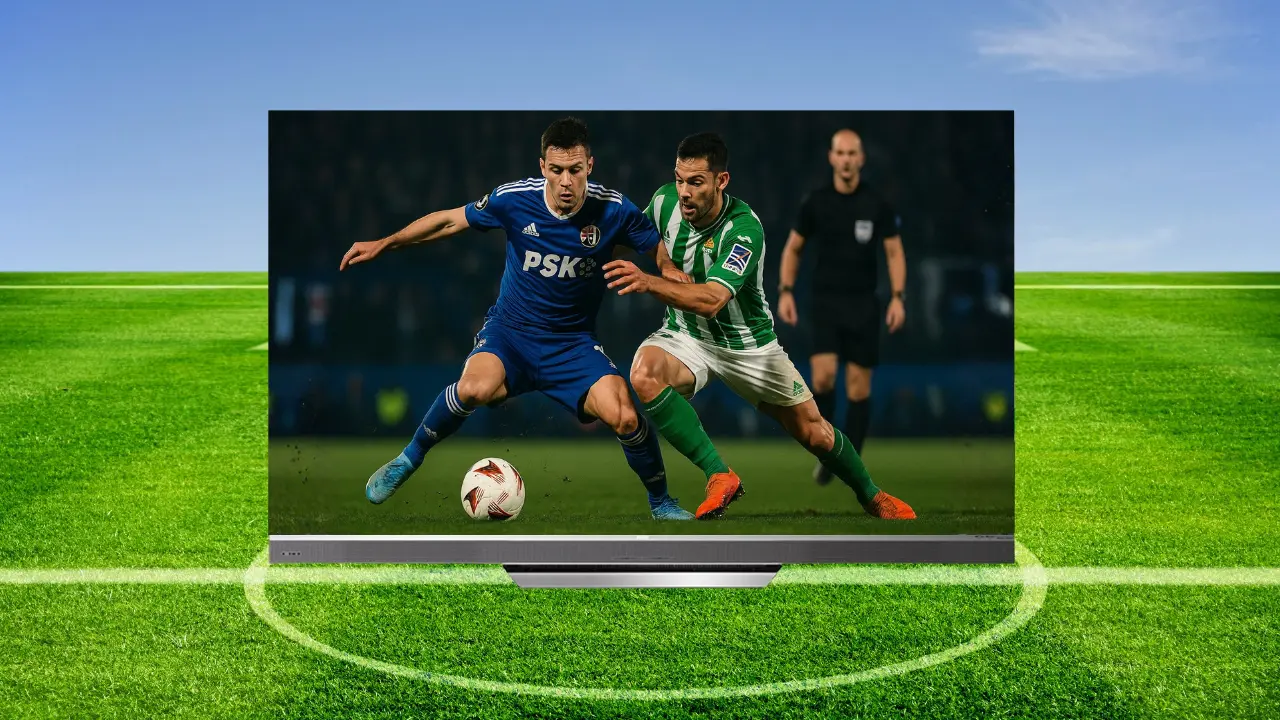

Europa League nights feel different because football slows down just enough for you to notice the craft.
With Dolby Vision IQ, every pass, run, and first touch adapts to your room’s light in real time, so the game looks closer to how it was meant to be seen. Not brighter. Not louder. Just truer.
Why do some matches feel like paintings in motion?
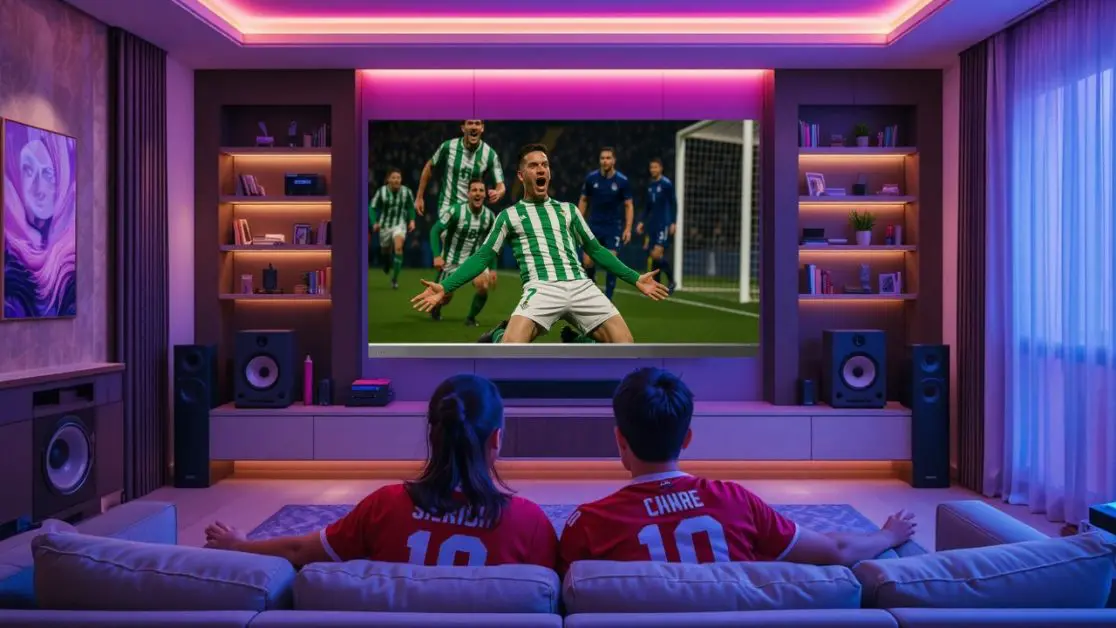
It usually starts quietly.
A midweek night. Dinner plates are still warm. The house is finally still. You switch on a Europa League match thinking it will be background noise. Ten minutes later, you are leaning forward.
Because something changes.
The pitch looks deeper. The shadows feel intentional. The ball seems to glide instead of blur. Football, suddenly, looks composed.
That is not nostalgia. That is visual intelligence doing its job.
Europa football is about detail, not chaos
Champions League nights are fireworks. Europa League nights are brushstrokes.
Take Real Betis’ recent unbeaten Europa League run. The game against Dinamo Zagreb was not frantic. It was controlled. Weighted passes. Calm movement between lines. A goal built not on speed, but timing and space.
These matches reward patience.
And patience only pays off if you can actually see what is happening.
What Dolby Vision IQ really changes
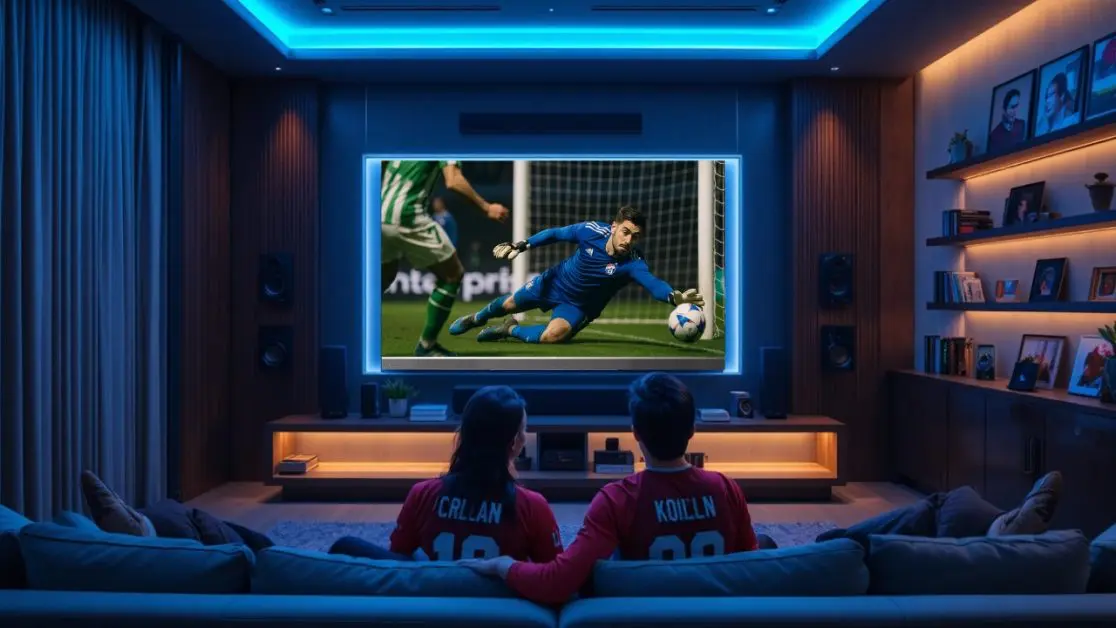
Most people think better TVs mean brighter screens.
That is the wrong mental model.
Dolby Vision IQ adjusts picture quality based on both the content and the lighting in your room. Afternoon sun through the curtains. Warm lamps at night. Complete darkness after midnight. The TV senses it all and fine-tunes contrast, brightness, and colour on the fly.
On screens like the Haier M95 Mini LED 189cm (75) Google TV, this intelligence becomes especially noticeable during night matches.
- Dark jerseys do not disappear into shadows
- Grass texture stays visible even in low light
- Faces stay natural, not washed out or over-lit
Dolby’s engineers describe this as maintaining creative intent across environments. In simpler words, what the camera captured stays intact on your screen, no matter when you watch.
Motion is where football lives or dies
Football is not still photography. It is a continuous movement.
A quick turn in midfield. A one-touch flick. A diagonal run you notice half a second before the defender does.
This is where motion handling matters.
With MEMC running at a high refresh rate, TVs like the Haier M95 Mini LED Google TV keep Europa League transitions smooth without making the picture look artificial. You see the ball travel. You track overlapping runs. Your eyes do less work.
Display researchers consistently point out that higher refresh rates reduce motion blur during sports broadcasts, especially during wide camera pans. That reduction changes how long and how comfortably you can watch.
Your brain is no longer fighting the screen.
Sound fills the room, not just your ears
Here is a quiet truth.
Most of football’s emotion comes from sound.
The thud of the ball. The collective gasp of the crowd. The echo of a chant that arrives a beat late.
With Dolby Atmos paired with Harman Kardon–tuned speakers, audio on the Haier M95 spreads across the room instead of firing straight at you. Commentary stays clear. Stadium noise feels layered. Impact sounds land with weight.
It is not louder.
It is more believable.
Three kinds of viewers. One shared upgrade
Europa nights bring different people to the same screen.
One option is the solo professional
You watch after work. Lights dimmed. Phone face-down. A single match becomes decompression time.
The second option is the family viewer
Dinner stretches longer. Kids drift in and out. Picture clarity matters because no one sits perfectly centered all the time.
The third option is the new-home couple
Your living room is still taking shape. The TV becomes the anchor piece, visually and emotionally.
In all three cases, adaptive picture and sound remove small frictions. You do not keep adjusting settings. The TV learns the room.
That is what smart living actually looks like.
Why this matters more than specs
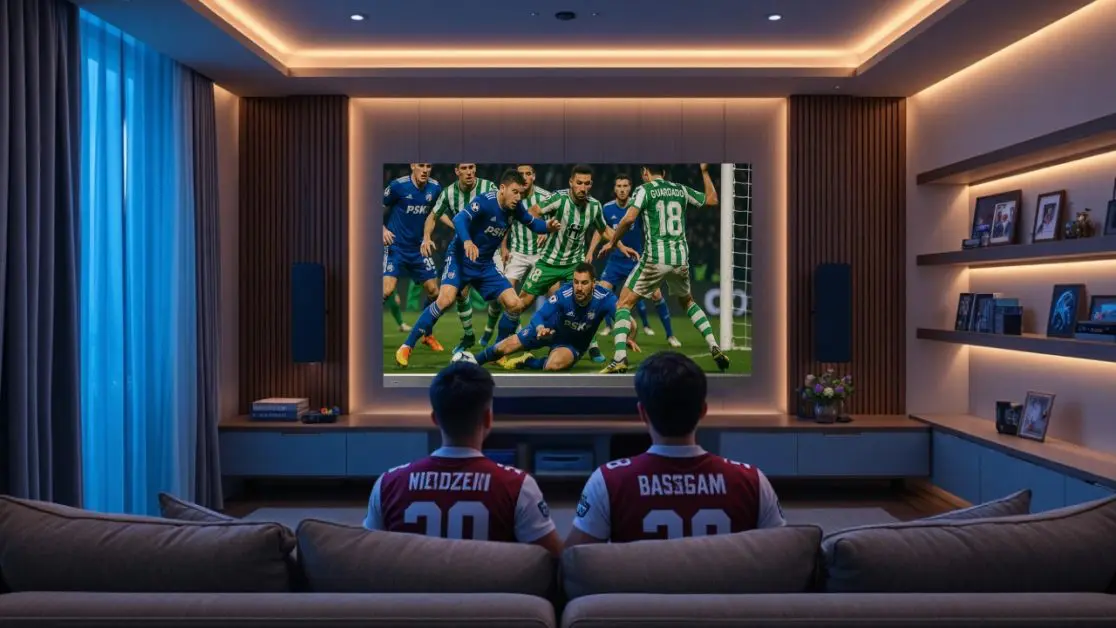
Specs are easy to list. Experience is harder to explain.
What Dolby Vision IQ on the Haier M95 Mini LED 189cm (75) Google TV really does is remove annoyances you did not know you were tolerating.
- Straining to see darker parts of the pitch
- Tweaking brightness every evening
- Losing detail during fast breaks
When those frictions disappear, the match breathes.
Broadcast imaging experts often note that viewers engage longer when visual strain drops, especially during late-night viewing. Less effort leads to deeper immersion.
That is not marketing.
That is human behaviour.
The living room as a modern theatre
Indian homes have changed.
Living rooms are no longer formal spaces reserved for guests. They are work zones by day, family zones by evening, and personal theatres by night.
A TV today has to respect that rhythm.
A Mini LED screen with Dolby Vision IQ does not demand attention. It adapts. It blends. It quietly upgrades how nights feel.
Midweek Europa matches turn into moments you remember the next morning.
Not because of spectacle.
But because everything felt right.
The quiet upgrade that changes how you watch
Here is the line worth remembering.
When technology disappears, experience takes over.
Europa League football is already art. The Haier M95 Mini LED Google TV simply lets you see it clearly.
Every pass looks intentional.
Every movement feels composed.
Every night match feels closer than before.
And that is when watching football stops feeling like consumption.
It starts feeling like a presence.