
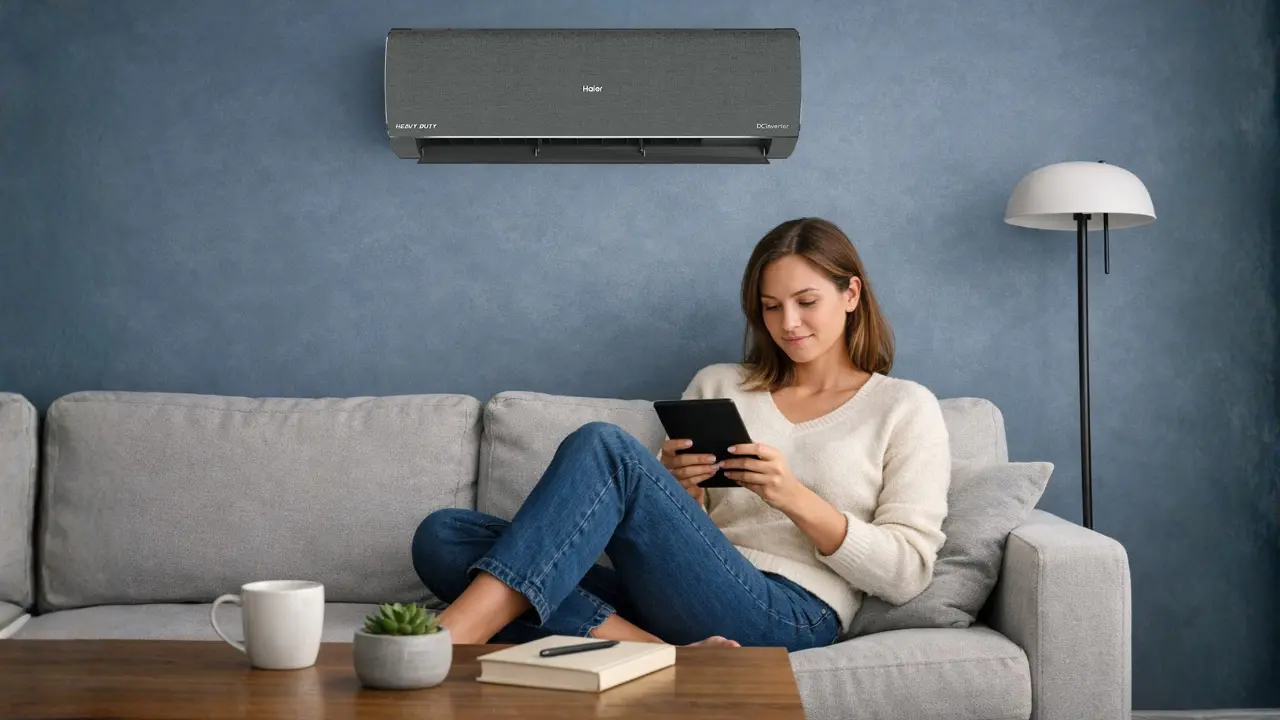

Faster comfort without manual switching means your AC thinks ahead, adjusts instantly, and cools precisely without you touching the remote.
It predicts arrival.
Detects presence.
Optimises temperature gaps.
And it does all of this quietly in the background.
In modern Indian homes, that shift changes everything.
Because comfort is no longer about switching modes.
It is about removing the need to switch at all.
The real problem is not heat. It is friction.
A weekday evening in Gurugram.
You step out of the lift after a long day. The corridor feels warm. The house feels warmer. You open the door and instinctively reach for the remote.
Cool mode.
Fan speed high.
Temperature 18°C.
Ten minutes later, it feels too cold.
So you adjust again.
This is how most air conditioners still operate. They respond only when you tell them to.
According to the Bureau of Energy Efficiency, air conditioners account for nearly 40 percent* of summer residential electricity consumption in urban India. Yet most of that usage is reactive. Manual. Inefficient.
The hidden cost is not just electricity. It is attention.
Manual switching steals focus from what matters.
What Does Faster Comfort Actually Mean?
Faster comfort is not about blasting cold air.
It is about three things:
1. Cooling the right zone.
2. Cooling at the right time.
3. Cooling at the right intensity.
Anything else is waste.
Traditional AC systems treat the entire room equally. They cool empty corners, unused walls, and silent spaces. That works in theory. Not in real homes.
Modern systems like the AI powered Haier AI Atmox platform from Haier are built differently. They learn usage patterns, detect temperature gaps, and adjust cooling dynamically without manual input.
That difference is structural.
And structural differences compound.
How AI Pre-Cooling Changes the Arrival Experience
Think of a bookstore.
If the shopkeeper switches on the lights only after customers walk in, the experience feels late. Slightly off.
AI Pre-Cooling fixes that timing problem.
When the system detects that you are approaching within a preset geofence, around 100 metres, it starts cooling in advance.
No timers.
No reminders.
No guesswork.
The result?
You enter comfort, not heat.
According to industry data from Statista, over 65 percent* Indian AC buyers now prioritise smart features. Predictive cooling directly answers that demand.
Comfort feels faster because it arrives before you ask for it.
That is not convenient.
That is anticipation.
Target Cooling Is About Precision, Not Power
Cooling an entire room when only one sofa is occupied makes little sense.
AI Target Cooling changes airflow direction based on installation position and user location data.
Instead of flooding the room, it focuses on the occupied zone.
Let us break that down.
| Traditional Cooling | AI Target Cooling |
| Cools entire room uniformly | Directs airflow to active zone |
| Higher energy use | Lower energy waste |
| Slower comfort perception | Faster personal comfort |
The cost difference is measurable.
The comfort difference is immediate.
Energy analysts estimate that targeted airflow strategies can reduce cooling load by 10 to 15 percent in medium sized rooms. Over one summer, that translates to significant savings.
But the bigger gain is psychological.
You feel cooled. Faster.
That changes how evenings unfold.
AI Eco 2.0 Mode Eliminates the Need to Monitor
Manual switching often comes from fear.
“Is this consuming too much power?”
“Should I reduce the temperature?”
AI Eco 2.0 mode handles that tension automatically.
It adjusts performance in real time based on the temperature gap:
- If the gap exceeds 3°C, it switches to L1 Eco.
- Between 1 to 3°C, it shifts to L2.
- At 1°C or less, it moves to L3.
The system scales down without waiting for human intervention.
According to the International Energy Agency, optimised temperature control can cut residential cooling energy use by up to 20 percent in warm climates.
That means lower bills without daily micromanagement.
Smarter cooling. Lower bills.
The phrase is simple because the system behind it is complex.
Human Detection Reduces Waste Quietly
Most homes waste cooling when rooms are empty.
People leave for a call. Step into the kitchen. Run an errand. The AC continues at full load.
AI Human Detection identifies occupancy and automatically shifts to energy saving mode. If no activity is detected for 15 minutes, it shifts to L3. After 30 minutes, it powers off.
No reminder required.
Automation plugs that leak.
And leaks compounds.
In large organisations, small inefficiencies drain budgets. In homes, they drain bills. The principle is identical.
Electricity monitoring 2.0 Creates Visibility
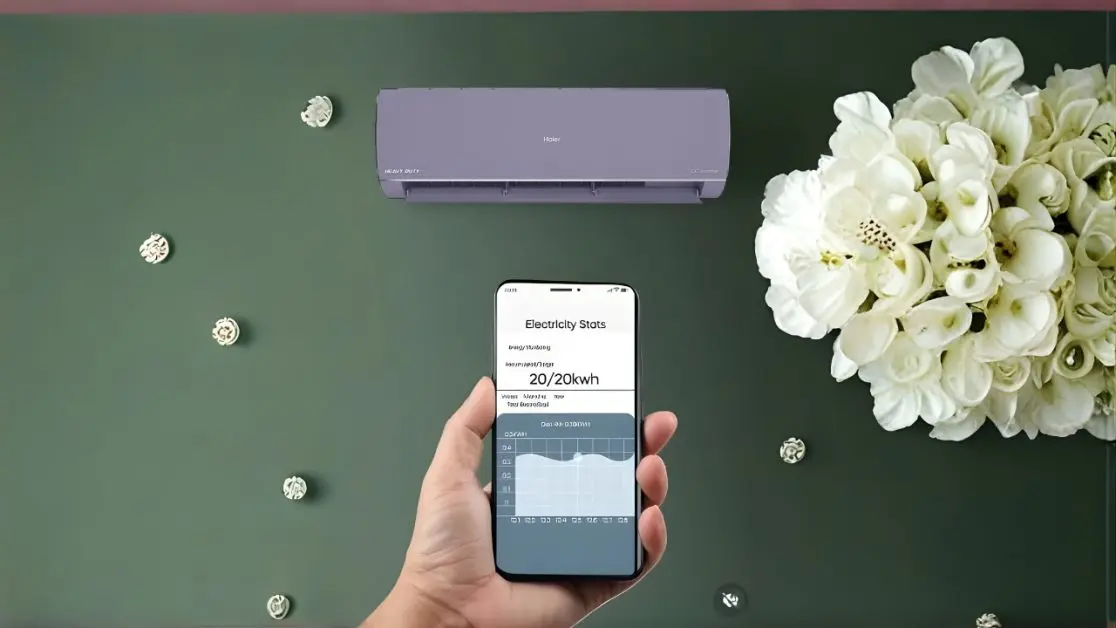
Faster comfort without manual switching is incomplete without awareness.
Haier AI Atmox Power Manager displays usage in graphical and calendar views. It tracks mode duration. It shows consumption in currency terms.
That visibility matters.
When you see the cost in rupees instead of kilowatt hours, behaviour changes.
| Feature | Practical Benefit |
| Calendar tracking | Identify peak days |
| Mode comparison | Measure Eco effectiveness |
| Currency display | Real cost awareness |
| Custom targets | Controlled spending |
According to behavioural research published by the World Bank, households reduce electricity use by 5 to 10 percent when consumption data is made visible in simple formats.
Information shapes decisions.
Silence hides waste.
Auto Clean Protects Long-Term Speed
Cooling speed drops when coils gather dust.
Most users ignore outdoor units. They are out of sight.
AI ODU Cyclone Clean reverses the fan motor after shutdown to blow away condenser dust automatically.
AI IDU Frost Self Clean runs an internal wet wash every 240 hours.
Cleaner coils mean:
- Faster heat exchange
- Lower compressor stress
- Sustained cooling speed
Maintenance is rarely urgent. It is gradual.
Automation protects performance before decline becomes visible.
That is how faster comfort remains consistent.
Why Manual Switching Feels Outdated Now
There are three ways to run cooling systems.
One option is manual control. Constant adjustment. Full attention required.
The second option is timer based control. Slightly better. Still reactive.
The third option is predictive AI control. Anticipates behaviour. Learn patterns. Optimise automatically.
The cost benefit looks like this:
- Manual: Higher energy variance, higher attention cost.
- Timer: Moderate efficiency, moderate friction.
- Predictive AI: Lower energy waste, minimal friction.
When systems remove friction, life feels lighter.
Not dramatic. Just smoother.
The Broader Pattern: Automation Reduces Decision Fatigue
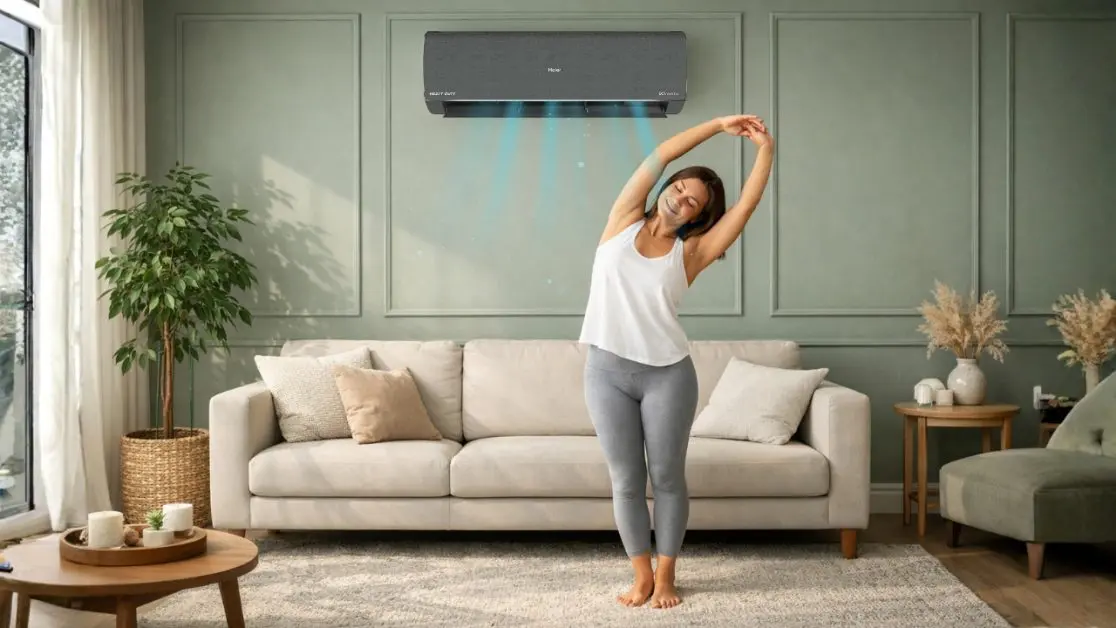
Modern households make thousands of micro decisions daily.
Temperature settings should not be one of them.
Research from the American Psychological Association shows that decision fatigue reduces quality of choices over time. Automation in predictable systems reduces cognitive load.
Cooling is predictable.
Heat arrives every summer.
Evenings follow patterns.
Work hours repeat.
Why not let systems adapt accordingly?
Faster comfort without manual switching is not about luxury.
It is about attention management.
And attention is finite.
What This Means for Indian Homes
In cities where temperatures cross 45°C, cooling is survival.
In high rise apartments with glass facades, heat gain is intense.
In joint families, rooms rarely stay empty for long.
Systems that adapt automatically match that complexity.
Haier’s AI-Haier AI Atmox platform integrates Pre-Cooling, Target Cooling, Eco modes, Human Detection, Electricity monitoring 2.0, and Auto Clean into one cohesive system.
The goal is not more features.
The goal is fewer interventions.
And that distinction defines modern comfort.
The Insight That Stays
Comfort should not demand supervision.
When appliances anticipate instead of waiting, life shifts subtly.
You walk in and the room feels right.
You step out and power scales down.
You forget the remote exists.
That is faster comfort.
Not louder.
Not colder.
Just smarter.
And in a country where seasons are intense and schedules tighter than ever, that kind of quiet intelligence feels less like technology and more like relief.
The future of home appliances is not about more buttons.
It is about fewer reasons to press them.
Frequently Asked Questions
Why do I feel tired of constantly adjusting my AC temperature every evening?
Because manual switching adds micro-decisions after a long day. When your AC reacts instead of anticipates, you become the control system. Over time, that constant adjustment builds decision fatigue.
Is it normal that I keep changing from 18°C to 24°C within 30 minutes?
Yes. Traditional ACs blast cooling first, then overcool the room. Without dynamic adjustment, you’re stuck correcting extremes.
Do smart ACs actually reduce daily stress, or is that just marketing?
Systems like Haier’s AI-powered Atmox platform reduce the need for repeated adjustments by predicting arrival, detecting presence, and scaling performance automatically. Less monitoring = fewer interruptions.
Why does managing my AC feel like another chore in my day?
Because manual control requires attention. Predictive AI removes that responsibility and runs quietly in the background.
If I forget to clean my AC, will it actually cool slower?
Yes. Dust buildup reduces heat exchange efficiency, forcing the compressor to work harder and slowing cooling response.
Do self-cleaning ACs really maintain performance over time?
AI systems like Haier’s ODU Cyclone Clean and IDU Frost Self Clean automate maintenance cycles, helping sustain cooling speed and energy efficiency.
Why does my AC feel weaker after one year?
Likely coil dust accumulation or airflow obstruction. Without maintenance automation, performance gradually declines.