
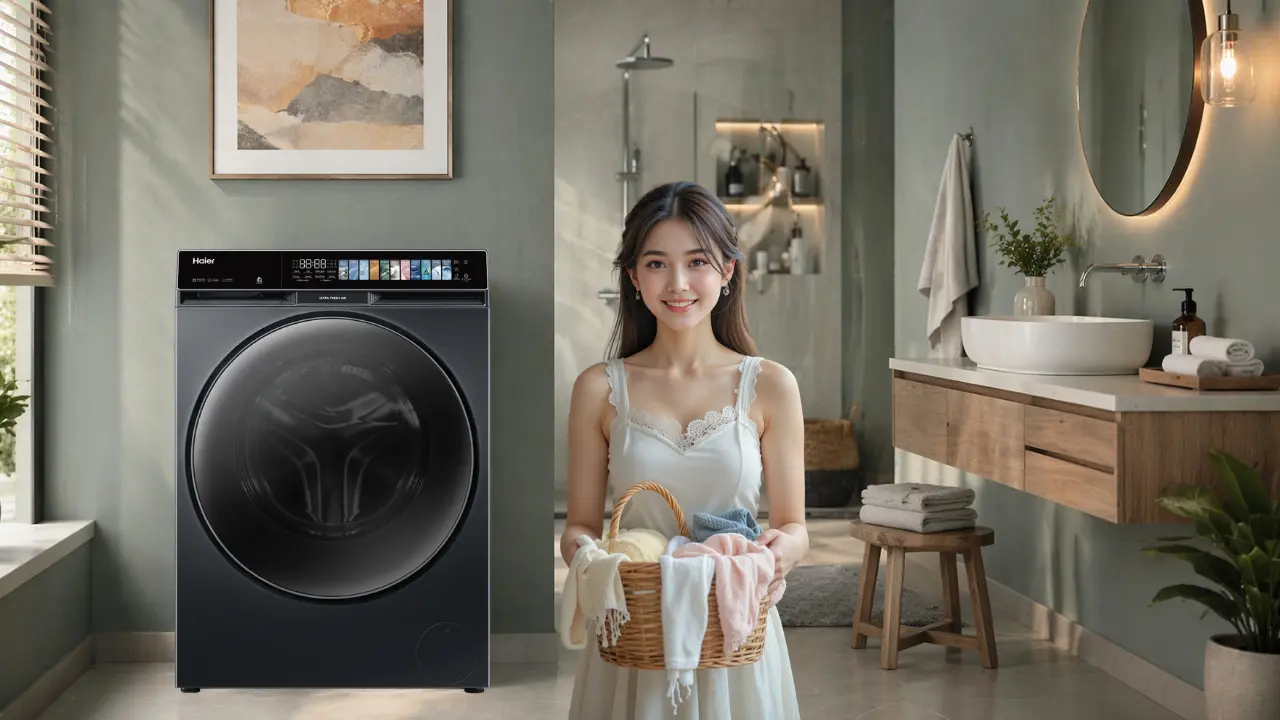

A hygienic washing machine is not just about cleaning clothes. It removes bacteria, prevents odor buildup, controls moisture, and keeps both fabrics and the machine itself fresh.
The best ones combine air circulation, intelligent washing, high-temperature cleaning, and residue control into a single system that works quietly in the background.
Because hygiene is no longer a feature.
It is a system.
Why hygiene in laundry feels more important than ever
It is a Sunday morning.
A pile of gym wear. School uniforms. Kitchen towels. Maybe a bedsheet that has seen a long week.
Everything goes into the same drum.
And that is the moment most people pause.
Is this actually getting clean? Or just looking clean?
Because modern laundry is not just about visible dirt. It is about invisible layers.
- Sweat bacteria
- Detergent residue
- Moisture trapped in the drum
- Odor that builds quietly over time
A washing machine that ignores these layers creates a false sense of cleanliness.
A hygienic washing machine solves for all of them.
Clean is what you see. Hygiene is what you don’t.
The hidden system: What hygienic washing machines actually do
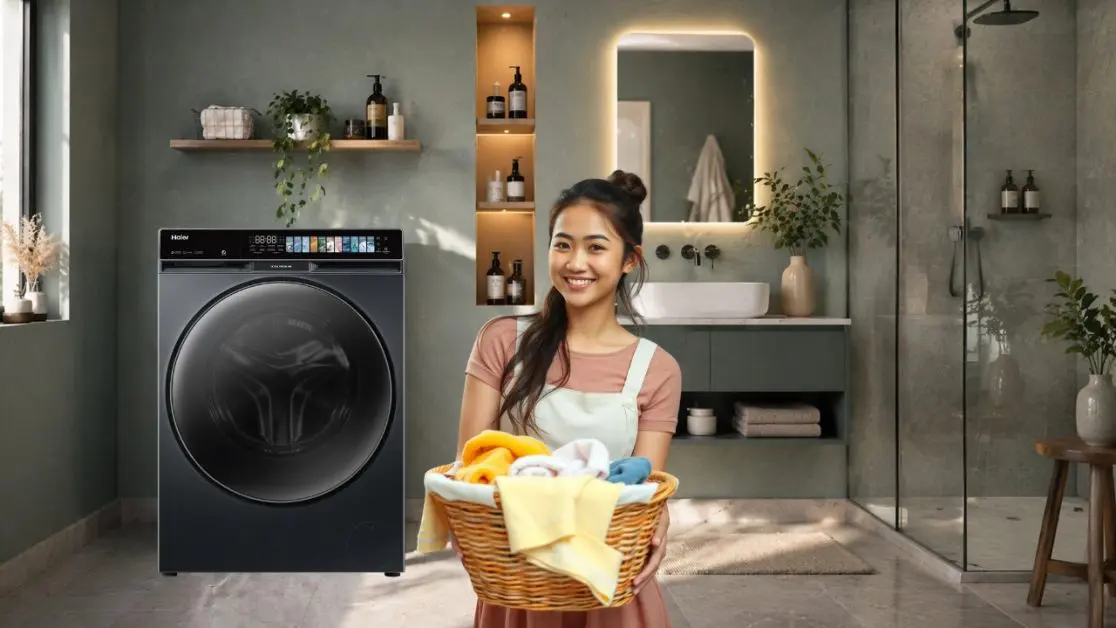
Most people think washing machines perform one job.
They don’t.
They run four systems at once:
| System | What it does | Why it matters |
| Cleaning system | Removes dirt and stains | Visible cleanliness |
| Hygiene system | Eliminates bacteria and allergens | Health and safety |
| Moisture control | Prevents dampness inside drum | Stops odor buildup |
| Residue management | Clears detergent foam and particles | Fabric care and skin safety |
Miss one system, and the entire experience breaks.
This is why modern machines like the Haier 12 Kg F11 Front Load Washing Machine (HW120-DM14F11BKU1) are designed as integrated hygiene systems, not just washers .
1. Air circulation technology is the new hygiene baseline
Why does your washing machine smell even after washing?
Because moisture stays trapped.
Traditional machines close the cycle and lock everything inside. Damp air sits. Bacteria grows. Odor follows.
Now consider a different approach.
Machines with Ultra Fresh Air Technology keep airflow active even after the wash cycle ends. Instead of sealing moisture in, they push it out.
- 360° air circulation inside the drum
- Continuous airflow for up to 12 hours after washing
- Drum refresh cycles every few minutes
This is not a feature. It is a shift in thinking.
The Haier 12 Kg F11 Front Load Washer & Dryer (HWD120-DM14F11BKU1) uses this system to keep clothes fresh long after washing ends .
Freshness is not created during washing. It is protected after it.
2. High-temperature and steam cleaning is non-negotiable
Is cold water enough for hygiene?
Not always.
Cold water cleans surface dirt. But bacteria and allergens need heat.
Modern hygienic washing machines use:
- High-temperature wash cycles up to 90°C
- Steam cleaning for deep fiber penetration
- Allergen removal programs
This matters more in Indian homes than we realize.
Think:
- Dust-heavy urban environments
- Humid monsoon months
- Shared laundry loads across family members
Heat becomes the difference between washed and sanitized.
3. Intelligent wash systems remove human error
What if your washing machine could think for you?
Because most hygiene problems start with incorrect settings.
Too much detergent. Too little water. Wrong cycle. Overloaded drum.
The result is predictable.
Residue. Inefficient cleaning. Fabric damage.
This is where AI-based washing systems change the game.
Machines with One Touch AI Wash:
- Detect fabric type
- Measure load weight
- Adjust water, detergent, and cycle automatically
No guessing. No manual errors.
The system decides what your clothes need.
Good hygiene is consistent. Consistency requires intelligence.
4. Residue control is the most ignored hygiene factor
What remains after washing matters more than what leaves
Most people focus on dirt removal.
Few think about what stays behind.
Detergent residue can:
- Irritate skin
- Trap bacteria
- Reduce fabric life
Advanced machines solve this using:
- Pre-mixed detergent spray systems
- Direct fabric application
- High-efficiency rinsing
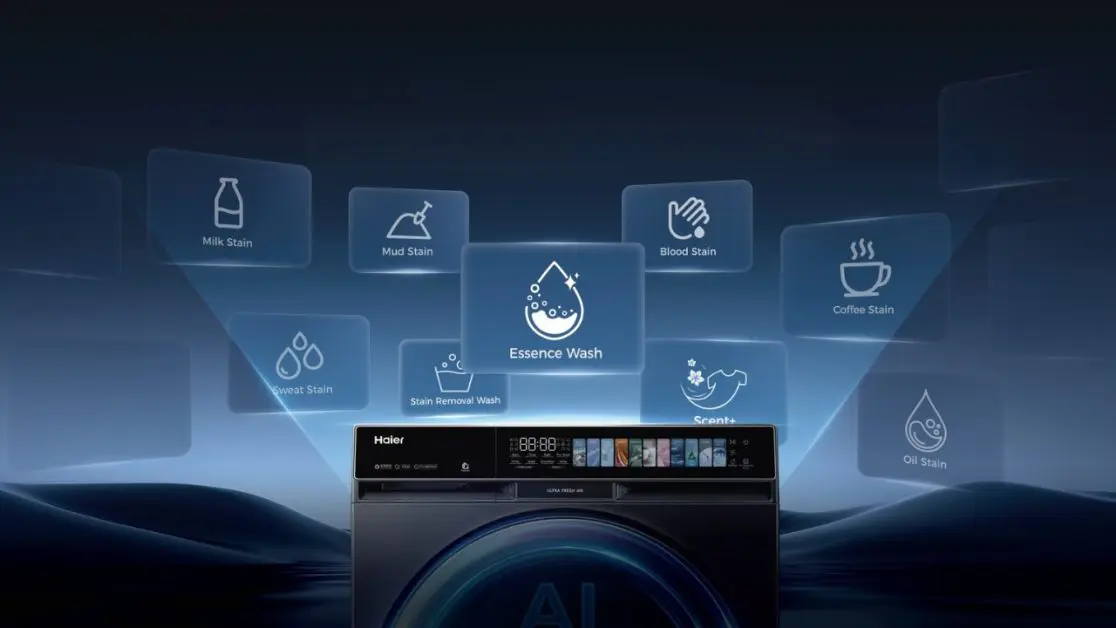
Take Essence Wash, for example.
Instead of dumping detergent into water, it pre-activates cleaning agents and sprays them directly onto fabric.
Result:
- Faster cleaning
- Less residue
- Better hygiene
It sounds small.
It changes everything.
5. Specialized stain removal is actually hygiene technology
Why do stains matter for hygiene?
Because stains are biological signals.
- Sweat carries bacteria
- Food stains attract microbes
- Oil traps dirt inside fibers
Generic wash cycles treat all stains the same.
Hygienic machines treat them differently.
Look for machines that offer:
- Dedicated stain programs
- Automatic parameter adjustment
- Fabric-specific cleaning logic
For instance, machines with stain-specific modes can handle sweat, milk, oil, and mud separately, adjusting wash intensity accordingly .
Different stains need different logic. Hygiene lives in that detail.
6. Drum hygiene matters as much as cloth hygiene
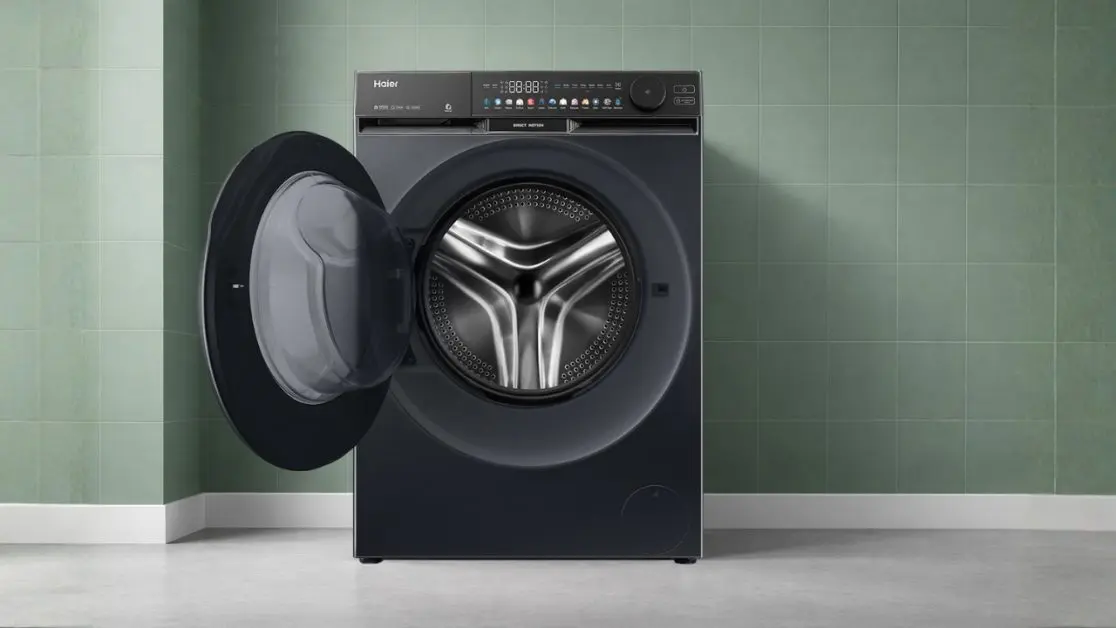
What cleans the machine that cleans your clothes?
Most people never ask this.
But the drum itself is a living environment.
Without cleaning:
- Mold builds up
- Bacteria spreads across loads
- Odor transfers between cycles
Modern hygienic washing machines solve this with:
- Self-cleaning drum programs
- Seamless drum designs to prevent residue buildup
- Anti-bacterial materials
This is not about maintenance.
It is about preventing contamination at the source.
7. Smart dosing prevents invisible hygiene mistakes
Are you using too much detergent?
Almost everyone is.
Too much detergent feels like better cleaning.
In reality, it creates:
- Foam residue
- Fabric stiffness
- Skin irritation
Smart dosing systems fix this automatically.
They:
- Measure load weight
- Adjust detergent quantity
- Optimize every wash
The benefit is simple.
Less guesswork. Better hygiene.
8. Quiet, stable motors improve hygiene indirectly
What does noise have to do with hygiene?
More than you think.
A stable, vibration-free motor ensures:
- Even water distribution
- Better detergent mixing
- Consistent wash performance
Direct Motion Motors do exactly this.
They connect directly to the drum, reducing friction and vibration.
The result is not just silence.
It is precision.
And precision creates consistency.
9. Convenience features shape real-world hygiene
Because real life is messy
You forget laundry inside the machine.
You delay unloading.
You run night cycles.
This is where convenience becomes hygiene.
Look for features like:
- Night wash for silent operation
- Wash and dry in one cycle
- Remote control via WiFi
Because hygiene is not just about technology.
It is about how people actually use that technology.
A quick checklist: What to look for in hygienic washing machines
- Air circulation or post-wash freshness system
- High-temperature or steam wash options
- AI-based automatic wash programs
- Residue-free detergent systems
- Specialized stain removal modes
- Self-cleaning drum technology
- Smart detergent dosing
- Stable, low-vibration motor
- Convenience features like delay, WiFi, or dry cycles
If a machine misses more than two of these, it is not designed for hygiene.
It is designed for basic cleaning.
The bigger shift: Hygiene is becoming invisible infrastructure
There was a time when hygiene meant effort.
Boiling water. Separate washes. Manual checks.
Now, it is becoming invisible.
Built into systems. Automated. Continuous.
Machines like the Haier F11 series do not ask you to think about hygiene.
They remove the need to think about it.
And that is the real upgrade.
The best technology disappears into your routine.
What this means for your next buying decision
You are not choosing a washing machine.
You are choosing a system that will touch your daily life, your health, and your comfort.
One option is to choose based on price.
It is economical. It solves the immediate need.
But it shifts the burden of hygiene back to you.
The second option is to choose based on features.
Better cleaning. More control.
But it is still dependent on how well you use it.
The third option is to choose based on systems.
Machines that think, adapt, and maintain hygiene automatically.
It costs more upfront.
It saves effort every single day.
The one insight to remember
A washing machine does not just clean clothes.
It defines how clean your life feels.
And once you see hygiene as a system, not a feature, the choice becomes obvious.
Frequently Asked Questions
I’m overwhelmed by washing machine features. What actually matters for hygiene?
Focus on systems, not specs. Prioritize airflow, high-temperature wash, AI automation, and residue control. If a machine lacks these, it’s only cleaning not maintaining hygiene.
Do I really need a ‘hygienic’ washing machine or is it just marketing?
If you deal with sweat-heavy clothes, shared laundry, or humid conditions, it’s not marketing, it solves real bacterial and odor problems.
Should I spend more on hygiene features or just buy a basic washer?
Basic washers shift responsibility to you (manual sorting, extra cleaning). Hygienic systems automate this saving time, effort, and reducing mistakes.
My clothes smell fine after washing but are they really hygienic?
Not necessarily. Odor-free doesn’t mean bacteria-free. Without heat or airflow, microbes can still remain.
I mix gym clothes, towels, and daily wear. Am I doing it wrong?
It’s common. A hygienic washing machine compensates for this by using heat, steam, and smart cycles to handle mixed loads safely.
Can AI washing machines really improve hygiene, or is it hype?
They reduce human error, the biggest cause of poor hygiene. Correct detergent, water, and cycle = consistent cleanliness.
I always guess detergent amounts do it really matter?
Yes. Too much creates residue, too little reduces cleaning. Smart dosing systems fix this automatically.
What does ‘intelligent washing’ actually do in real life?
It detects load weight, fabric type, and soil level then adjusts the wash. You press one button, it handles the rest.
Are WiFi and remote controls useful or unnecessary?
They matter more than expected. Remote alerts help you avoid leaving damp clothes sitting too long preventing odor buildup.